
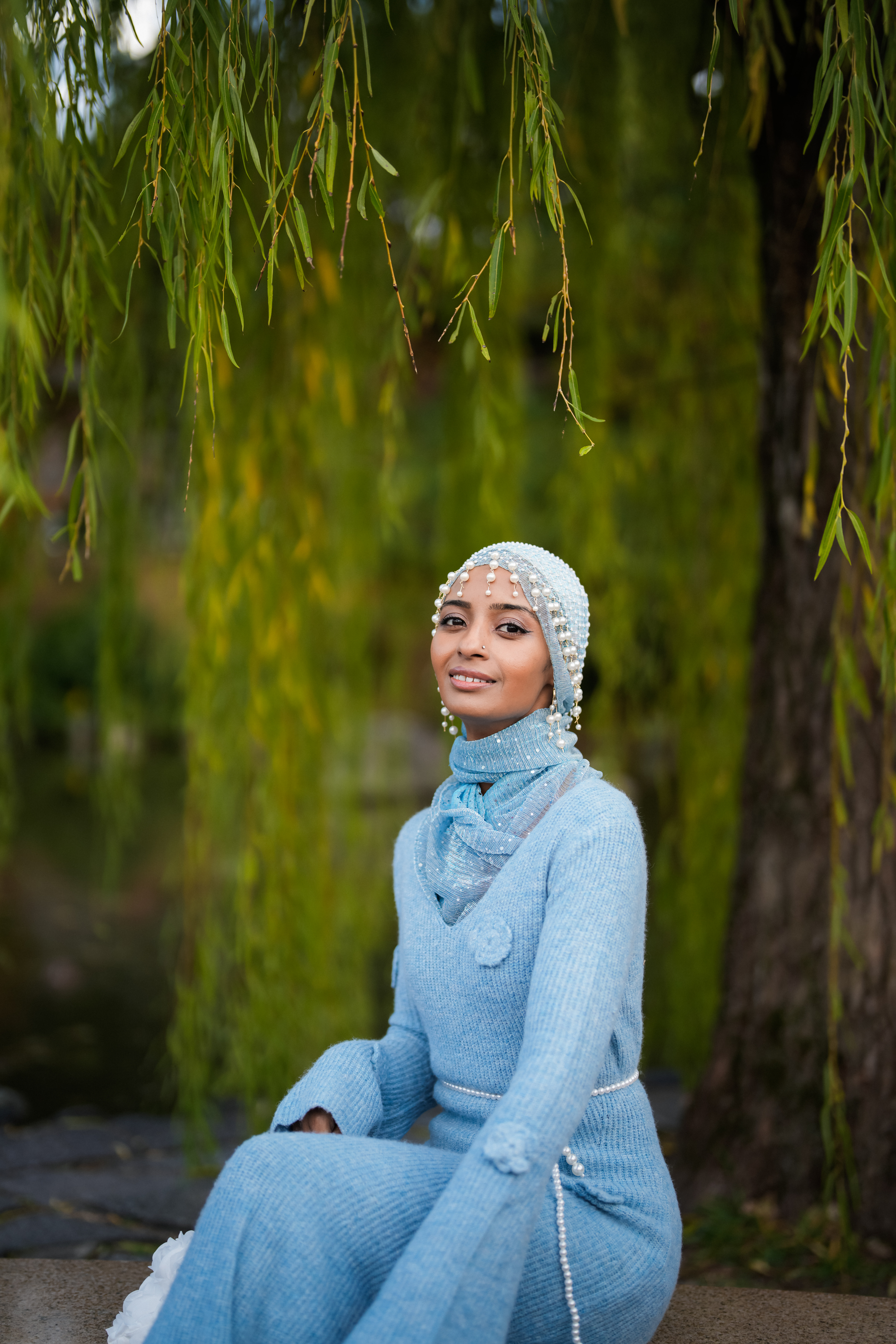
We’re pleased to welcome Khadija Kaffa to the Rural Sociology Group as a visiting scholar from Kyoto University, Graduate School of Agriculture. Khadija is a PhD candidate whose research adopts a feminist lens to examine how rural women farmers in arid regions of Morocco navigate and assert agency at the intersection of resource access, collective action, and power relations, particularly under pressures of climate stress. During her time at RSO, she is expanding her work to explore how patterns of out-migration reshape household dynamics and contribute to transformations in local food systems in migrants’ home communities.
Research focus
Khadija’s research focuses on the experiences and strategies of rural women farmers in Morocco, highlighting the ways they negotiate resource constraints, power relations, and collective action in the context of climate and socio-economic pressures. A recent extension of her work investigates how migration patterns influence household dynamics and drive changes in local food systems, emphasizing women’s agency in shaping outcomes for both livelihoods and community sustainability.
Her work brings a feminist perspective to debates in rural sociology, agrarian change, and food systems studies, connecting local empirical insights to broader theoretical and comparative discussions.
Current work at RSO
During her visiting stay at the Rural Sociology Group, Khadija is developing the new dimension of her research that examines the intersections of food, gender, and migration. She aims to deepen both the theoretical and empirical grounding of this work, particularly in understanding how these dynamics shape transformations in rural food systems under conditions of out-migration. This visit also provides an opportunity to engage with scholars working on critical agrarian, feminist, and food system studies.
Why RSO and Wageningen?
RSO is an international reference for critical and interdisciplinary research on agrarian change, rural development, and sustainability. Khadija was drawn to Wageningen for its rich space for interdisciplinary dialogue, particularly around questions of gender, mobility, and food system transformation. This visit offers valuable opportunities for exchanging ideas with scholars exploring related issues in diverse geographic and social contexts.
Beyond research
Outside academia, Khadija enjoys food and cooking as a way of connecting with others. She also practices stained glass art, which allows her to express emotions and creatively interpret elements from her fieldwork and research in a visual and artistic form.
 Rural Sociology Wageningen University