Colonial Nexus: Control and Surveillance, Deforestation and Securitisation of Dams Through the Military Infrastructural Projects in Northern Kurdistan

This article by Kamuran Akin for the special issue Rural Protest and Contentious Politics edited by Francis O’Connor and Joost Jongerden analyzes the governance of northern Kurdistan through the framework of colonial governmentality. It argues that, for over a century, the Turkish state has administered the region through exceptional legal regimes, coercive policies, and military interventions. Drawing on historical practices such as the General Inspectorates, the 1925 Reform Plan for the East, the Law on the Maintenance of Order, and the 1934 Settlement Law, the article highlights how dispossession, forced displacement, and violence have constituted enduring mechanisms of rule. While acknowledging competing scholarly perspectives that interpret the Kurdish issue through lenses such as nation-state formation, minority politics, and underdevelopment, the article contends that a colonial perspective remains analytically valuable. Building on Foucault’s concept of governmentality, it proposes “colonial governmentality” as a flexible framework that captures the evolving, heterogeneous, and adaptive nature of state power. Focusing on fortified outposts (kalekol) and checkpoints, the article argues that these are modern extension of earlier colonial-style governance tools. They function as spatial instruments of control, similar in purpose to earlier institutions like General Inspectorates or emergency rule zones and embody a permanent security presence, reinforcing surveillance and rapid intervention capacity in rural Kurdish areas.

read more here: https://doi.org/10.1111/sena.70049
Contested Refugeeness in the Lavrio Kurdish Camp After the 2015 Reception Crisis in Greece

This article by Filyra Vlastou-Dimopoulou is written for the special issue Rural Protest and Contentious Politics edited by Francis O’Connor and Joost Jongerden. It explores the meanings of refugeeness among Kurdish residents of the self-managed Lavrio refugee camp in Greece in the aftermath of the 2015 reception crisis. Focusing on how Kurdish camp residents make sense of their political identities and on how they distinguish themselves from those they call ‘non-political refugees’, the article (a) shows how the 2015 reception crisis triggered a broader ideological shift from a ‘refugee’ to a ‘migrant’ crisis, producing the figure of the undeserving migrant; and (b) argues that Kurdish camp residents reclaim their refugeeness as a permanent political condition rooted in collective memory and the Cold War archetype of the persecuted political refugee. Doing so, they mobilize refugeeness as a political resource to distinguish themselves from the depoliticized ‘2015 refugee’, secure the legitimacy of their presence and assert their right to remain amid the threat of eviction from the Lavrio camp.

Read more here: https://onlinelibrary.wiley.com/doi/10.1111/sena.70050 

A Kinopolitical View on the Labour Mobility of Kurdish Seasonal Agricultural Workers Amid Rural Transformation and Climate Change

The article by Ayşegül Aslan for the special issue ‘Rural Protest and Contentious Politics: Land, Nature, and Infrastructure in Kurdistan’ edited by Francis O’Connor and Joost Jongerden has been published.

The article examines the kinopolitical dimensions of Kurdish seasonal agricultural labour mobility in South-eastern Turkey and extends across various agricultural areas. Focusing on rural transformation and climate change. Using Nail’s (2015) kinopolitical framework, the article argues that labour mobility represents a structural circulation within an unstable agrarian regime rather than mere economic migration. For Kurdish workers, this motion functions as an enforced flow, driven by structural shifts that limit agency and reinforce precarious conditions. The study synthesises extensive secondary data sources, reinterpreting existing reporting through a kinopolitical lens to reveal systemic displacement patterns within traditional migration statistics. This approach identifies these workers as mobile subjects within broader struggles, clarifying their socio-environmental vulnerabilities. In Turkish regions with chronic infrastructural neglect, climatic pressures act as structural multipliers of vulnerability. Movement emerges through the convergence of ecological instability and institutionalised dispossession, making labour circulation a functional necessity for agrarian accumulation. The research emphasises vulnerabilities resulting from the intersection of environmental crises and systemic socio-political forces, including restrictive labour policies. Focusing on kinopolitical dynamics, this study highlights the ecological and structural factors contributing to the ongoing marginalisation of Kurdish seasonal agricultural workers. Consequently, labour circulation serves as a stabilised circuit for cheap labour supply, driven by the inescapable intersection of environmental crises and structural inequality in Turkey’s destabilised agrarian environment.

See https://doi.org/10.1111/sena.70045Digital Object Identifier (DOI) 

RSO59030 – Major Works in Social Theory

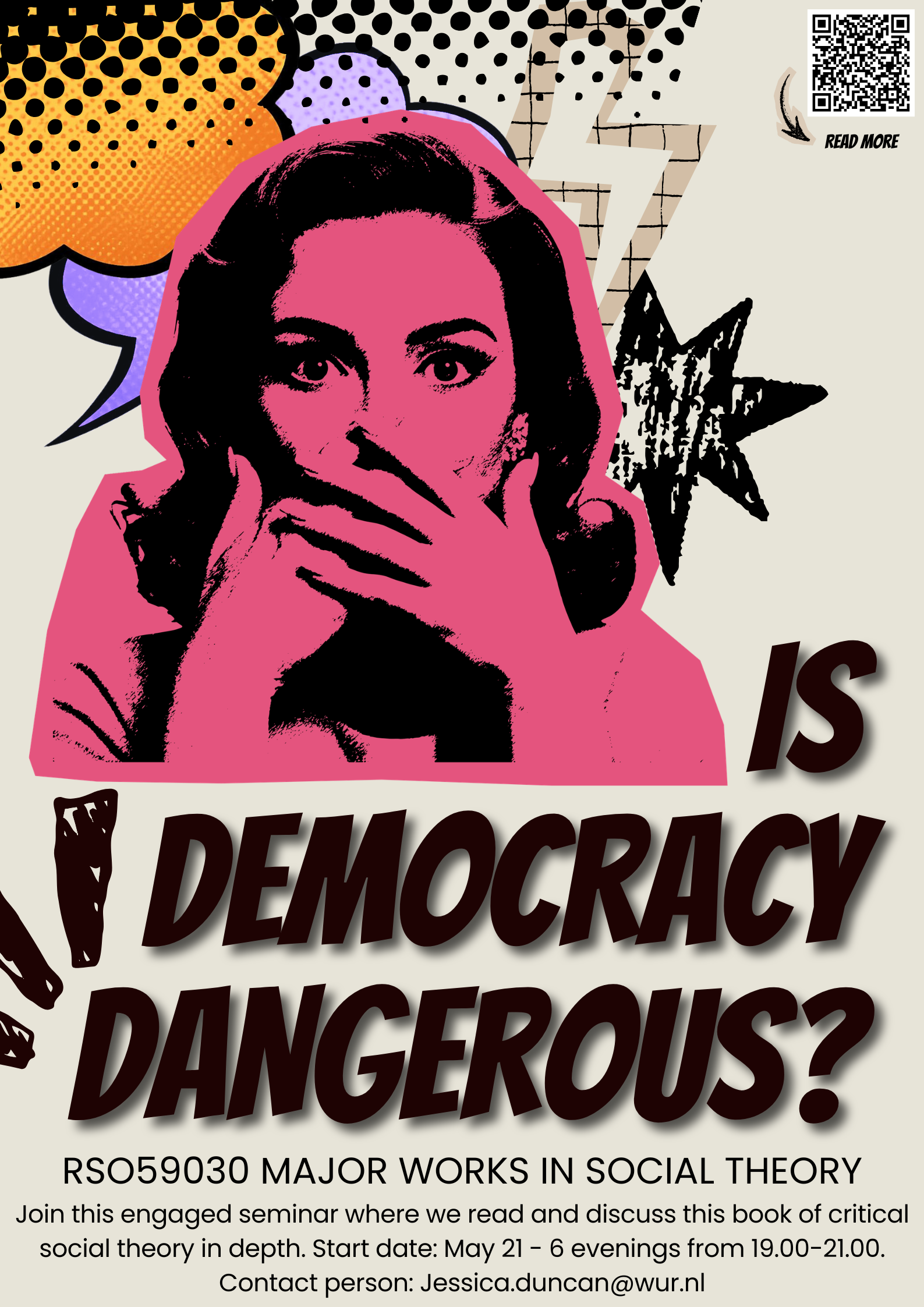
Is democracy dangerous?
Is democracy in crisis?
What even is democracy?

These are the central questions explored in RSO59030 Major Works in Social Theory, an engaging and intellectually challenging course designed for Master’s students who want to actively engage with social theory and critically examine contemporary political debates.

This course focuses on the work of Jacques Rancière, particularly his influential book Hatred of Democracy. Across six weekly evening sessions, students will collectively unpack and critically evaluate Rancière’s arguments and consider their relevance in contemporary society.

Course Format
> 6 weekly meetings (2 hours each)
> Thursdays, starting May 21
> 19:00–21:00
> Location: Clockhouse

The course is organized as a structured conversation around the book. This format requires careful preparation and active participation from all students. After an introductory session, the course proceeds through discussions of the book’s four chapters, encouraging close reading, debate, and theoretical reflection.

As part of the course, students will also participate in the recording of a podcast, translating theoretical insights into a public-facing format.

About the Book
In Hatred of Democracy, Rancière challenges the widespread claim that democracy is in crisis because of popular irresponsibility. Instead, he argues that political and intellectual elites often harbor a deep distrust of democracy itself — understood as the radical principle of equality and the rule of all. What is frequently presented today as “democracy,” he suggests, functions to limit popular power and legitimize governance by a select few.

The book invites readers to radically rethink democracy — not as a stable system, but as an ongoing political struggle over equality.

Course instructors: Jessica Duncan & Joost Jongerden

Registration deadline: April 15

For more information, please contact Jessica Duncan at Jessica.duncan@wur.nl

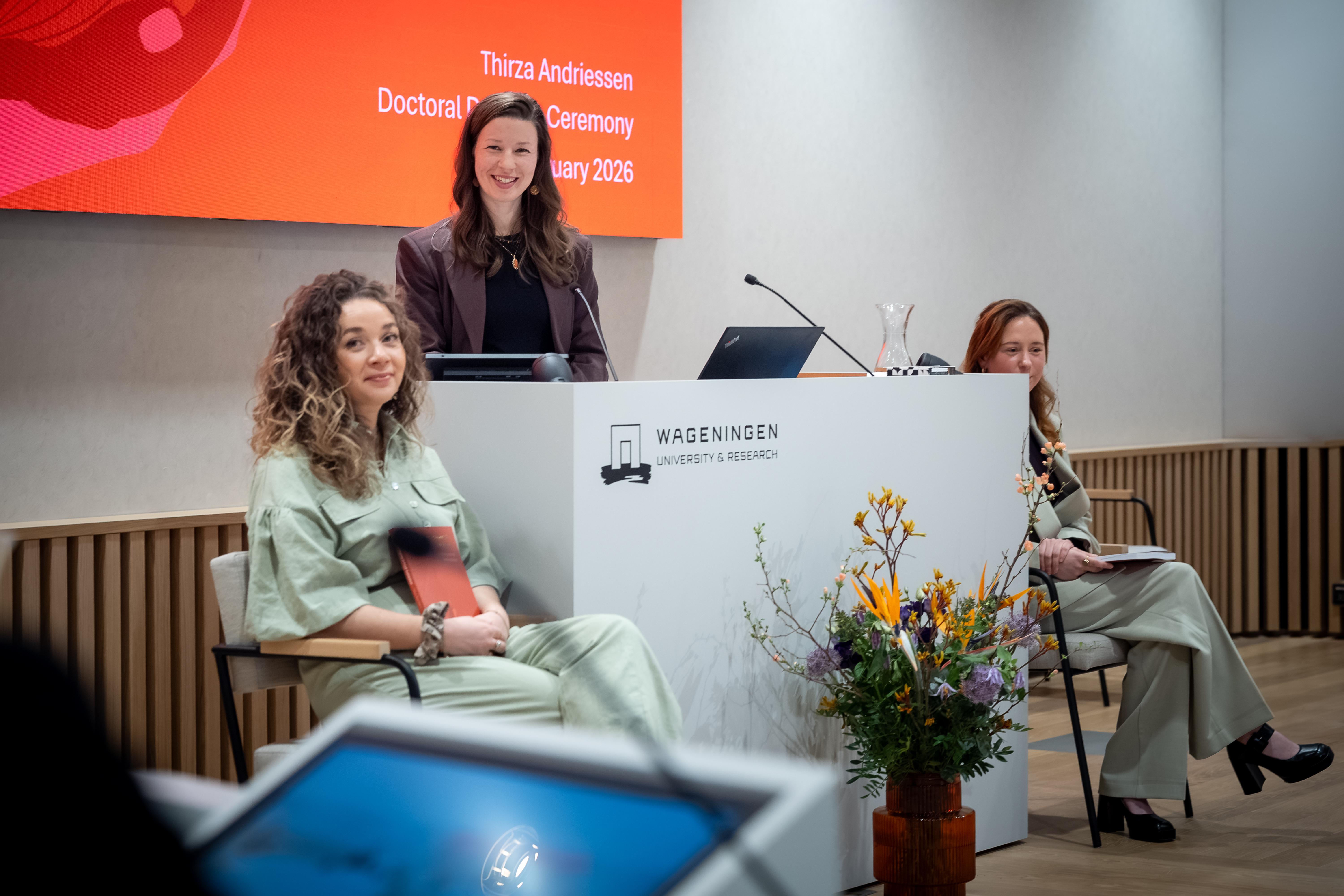
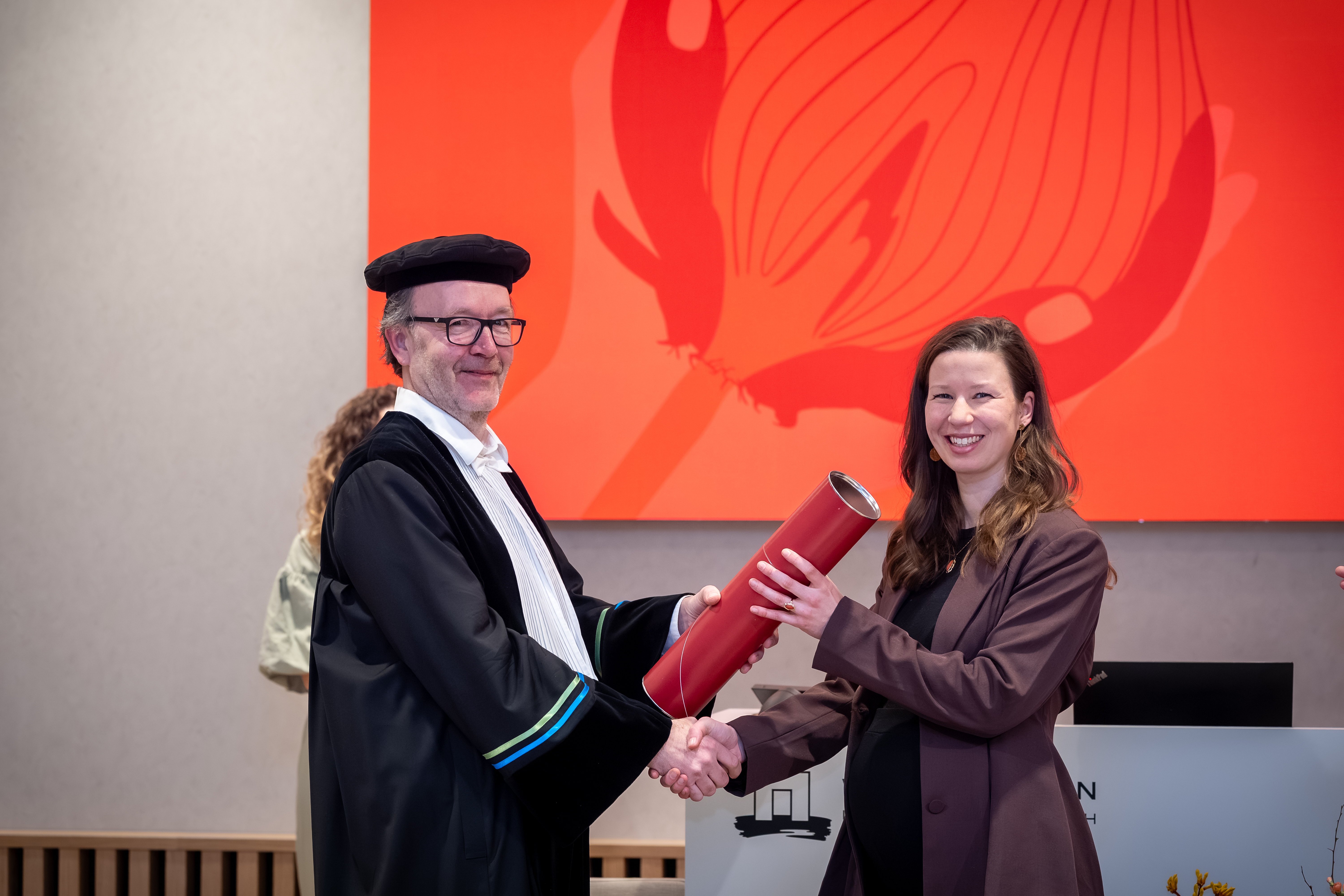
Congratulations to dr. Thirza Andriessen

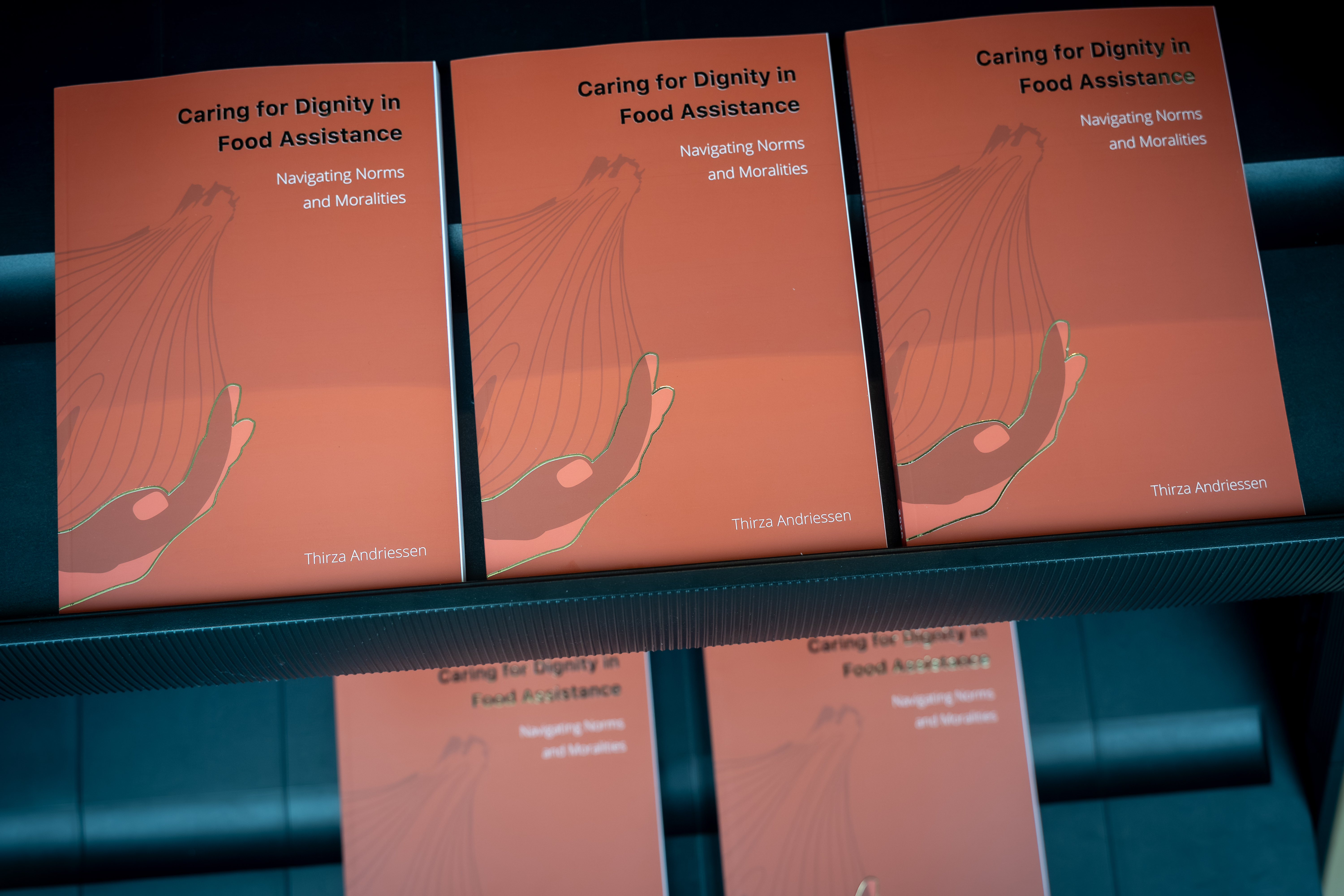
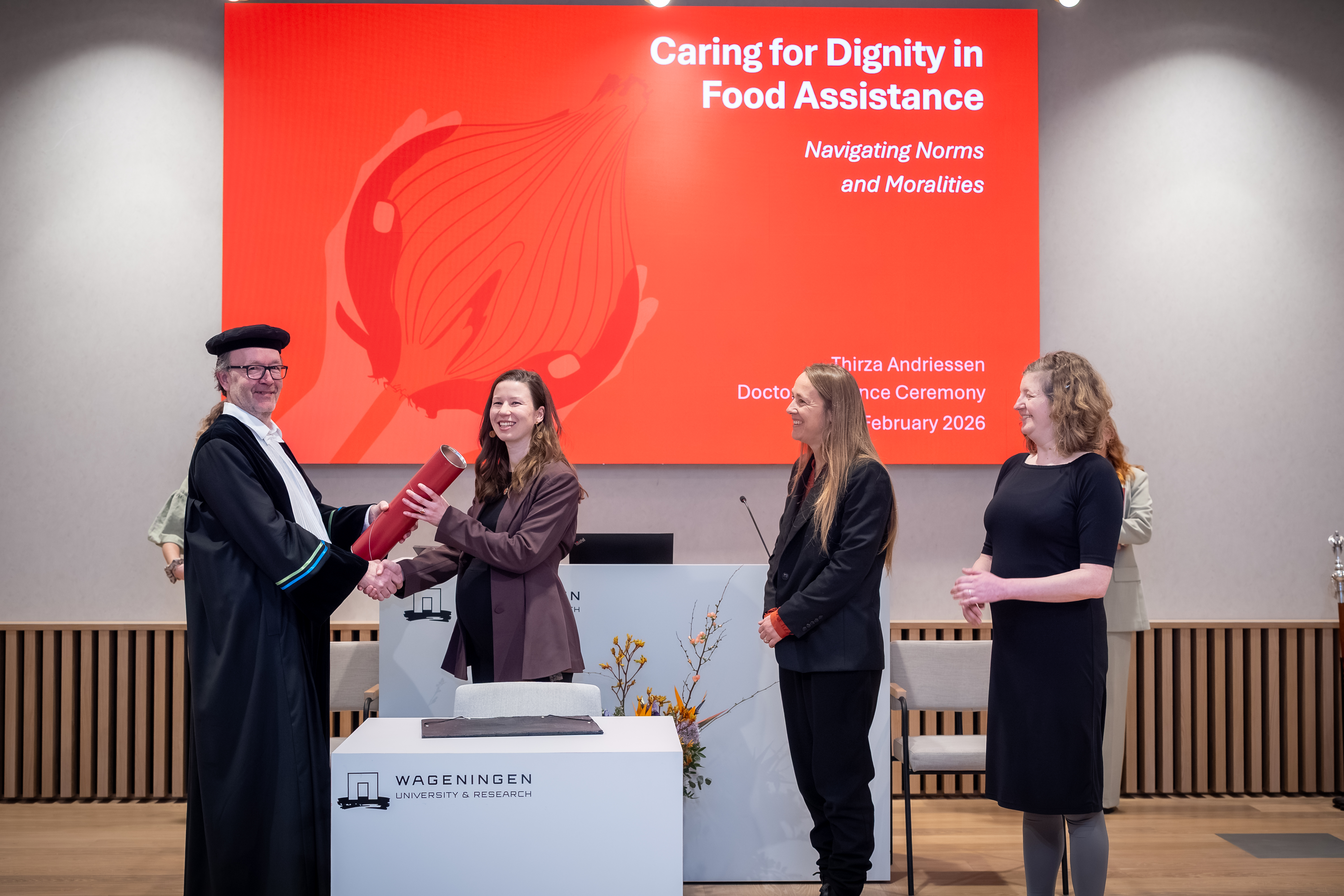
We are happy to announce that our dear colleague dr. Thirza Andriessen successfully defended her dissertation on February 20, 2026, titled: “Caring for Dignity in Food Assistance: Navigating Norms and Moralities”.

In her dissertation Thirza studies dignity in food assistance contexts in Belgium and the Netherlands. She explores how practices within such contexts shape (and reshape) the dignity of those receiving support. Conceptualizing dignity in a relational way implies a recognition of its dynamic  character: “How it [dignity] is continuously negotiated through social relationships, interactions and broader social contexts” (Andriessen, 2026, p. 21). Furthermore, the dissertation highlights that food assistance is more than a material problem in which nutritional deficiencies of recipients are mitigated. Indeed, Thirza stresses the importance of care in food assistance.

The friendly game of academic tennis raised interesting food for thought that kept us chewing on the topics long after the formalities came to a close. For example, Thirza stressed the need for a careful, but important balancing act of meeting acute needs without reproducing the very structures that underlie food insecurity in the first place.

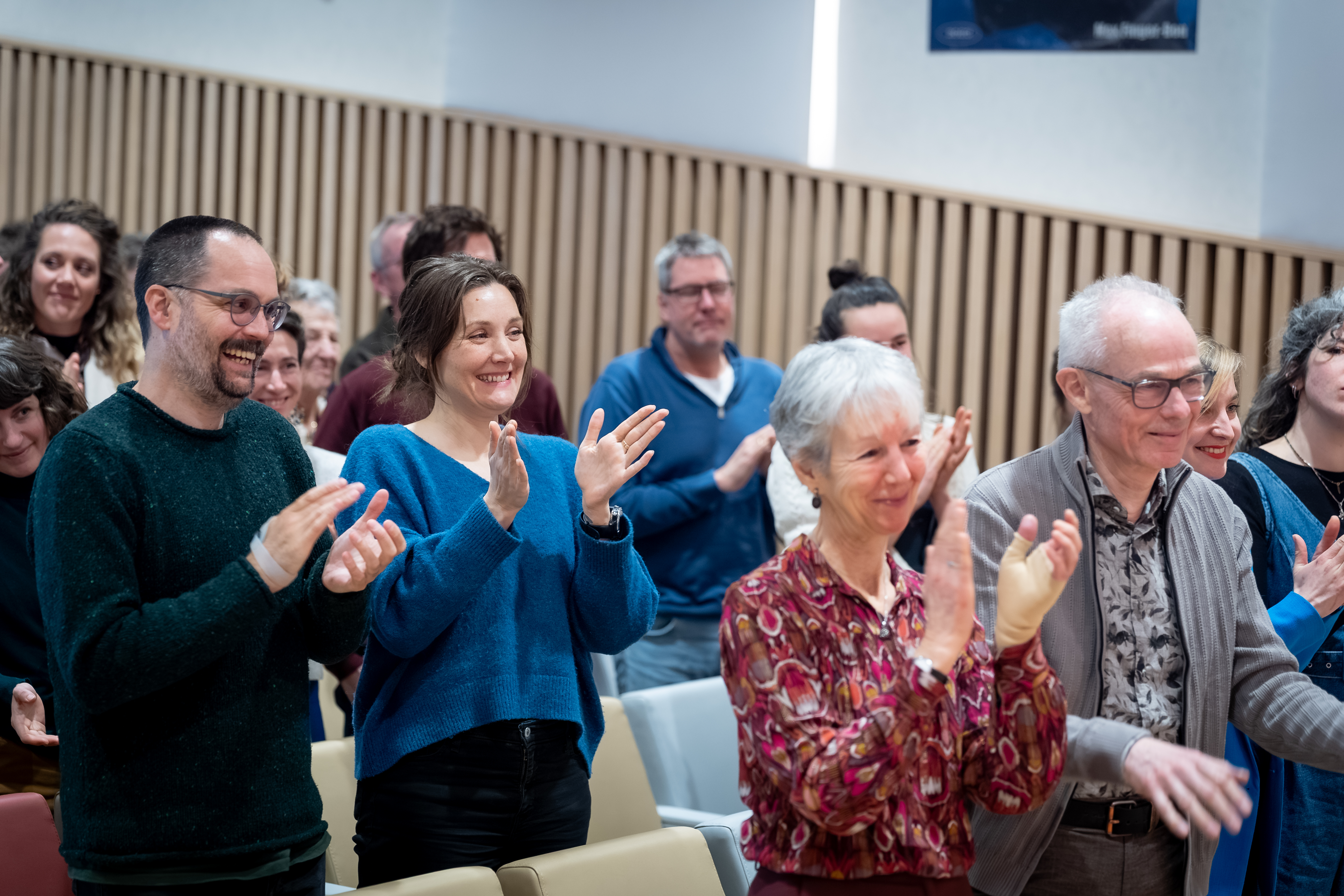
At the end of the defense, Thirza’s was praised with two key words that resonated with how we know her best: Someone who is bold and deeply cares about those who surround her. Congratulations Thirza on your monumental achievement! We are happy you will continue to inspire us (colleagues) and students at WUR as you continue your work with RSO.

Photos by Sven Menschel – Promotie Fotograaf | Menschel Photo | Wageningen