
Pinar Dinc*
According to Greek mythology, there was a contest between two Olympian gods, Athena and Poseidon, to determine who would become the patron deity of the city that was ruled by Cecrops. The Olive tree was Athena’s gift to the city that made her win the competition and become the patron of Athens. The olive branch has also been an important symbol of peace as people associated the planting of olive trees with the dispelling of evil spirits and believed that it would endure peace. Some 2500 years later, it is hard to continue believing so.
Following the Six-Day War in 1967, Israel captured vast amounts of Palestinian property between 1968 and 1979 and legitimized its actions with the argument that this was a temporary, military requisition for security purposes (Braverman 2009). Reports suggest that since 1967, over a million olive trees have been vandalized in Palestine via cutting, uprooting, stealing, burning, etc. Braverman (2009, pg. 130) explains Israel’s rationale for destructing olive trees in three ways: (1) Making way for the Separation Barrier, (2) abolishing hiding grounds for ‘terrorists’, and (3) for further security measures such as constructing watchtowers, checkpoints, fences, and roads around Jewish settlements.
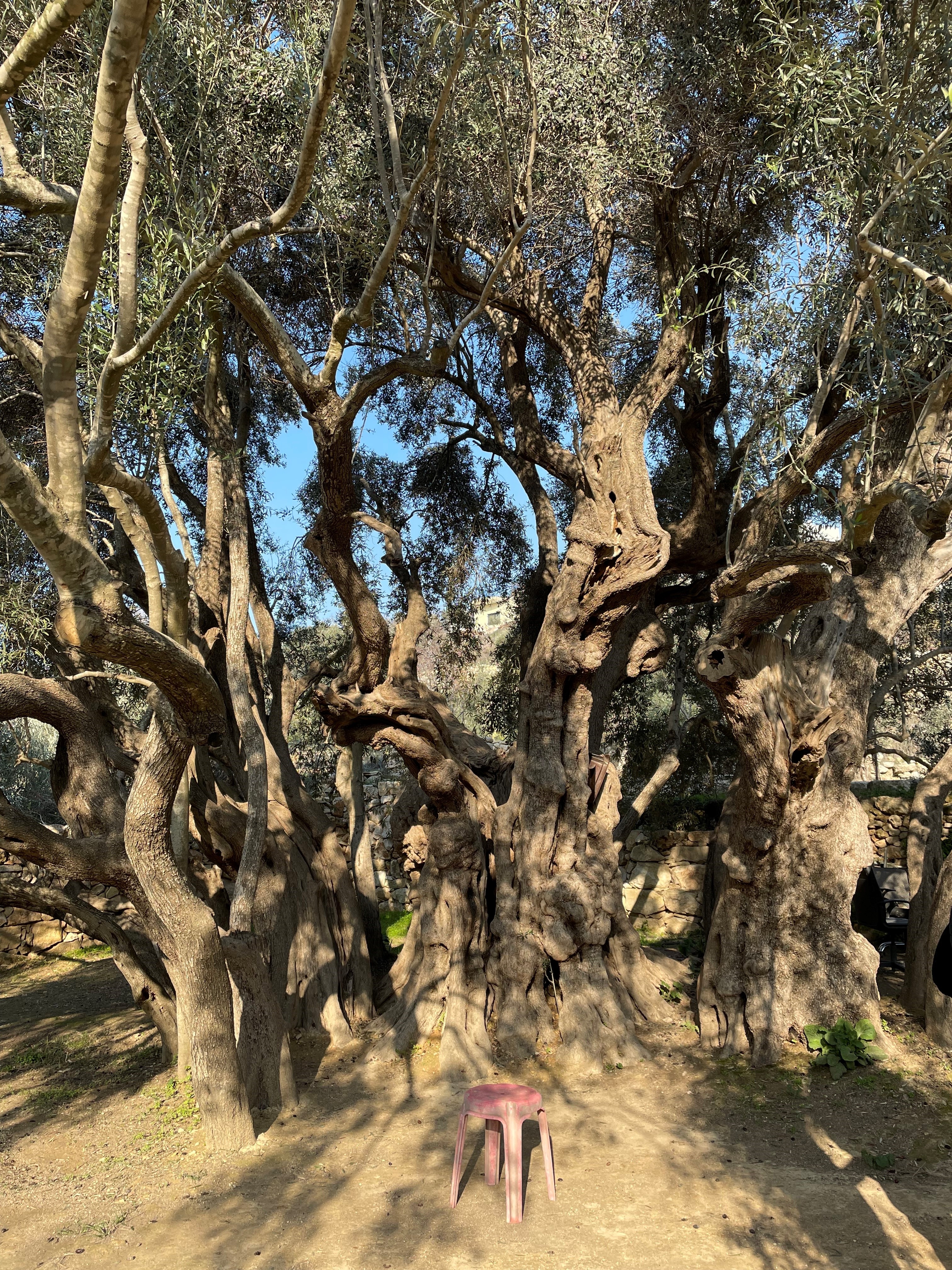
In 2018, Turkey launched its military offensive in Afrin in the north of Syria, which was then ruled by the Autonomous Administration of North and East Syria (AANES, also known as Rojava). The rationale for Turkey’s operation was also framed around security and stability in its southern borders, as Turkey views the AANES administration (including the political party PYD and defense units YPG and YPJ) as extensions of the Kurdistan Workers’ Party (PKK). The military operation was called “Operation Olive Branch”, which resulted in the destruction of around 200,000 trees in the two years following the offensive. Other reports reveal that (olive) tree destruction continues in full force in the lands occupied by Turkish military forces and Turkey-backed militias. Some news articles further report the forceful transfer of olive groves from its owners to Turkey-appointed local councils, arguably to block “the PKK to make money”.
Such acts seem to be violating crimes put forward by the international community, such as Additional Protocol 1 that was added to the Geneva Convention in 1977:
It is prohibited to attack, destroy, remove, or render useless objects indispensable to the survival of the civilian population, such as foodstuffs, agricultural areas for the production of foodstuffs, crops, livestock, drinking water installations and supplies, and irrigation works, for the specific purpose of denying them for their sustenance value to the civilian population or to the adverse Party, whatever the motive, whether in order to starve out civilians, to cause them to move away, or for any other motive (emphasis mine).
Although the “intentional use of starvation of civilians by depriving them of objects indispensable to their survival” is deemed a war crime by the International Criminal Court, it is hard to say that such protocols/codes/statutes are making a real impact. There is currently “no law to prosecute those who are destroying our environment and ecosystems” (Short, 2016, pg. 62).
The co-founder of the Stop Ecocide campaign Polly Higgins defines the concept of ecocide as “the extensive damage to, destruction of or loss of ecosystem(s) of a given territory, whether by human agency or other causes, to such an extent that peaceful enjoyment by the inhabitants of that territory has been severely diminished”. The cases of olive tree destruction in Palestine and Rojava reveal similar patterns of environmental destruction as a war and occupation strategy –if not ecocide– on the lands of Palestinians and Kurds. National security claims of Turkey and Israel seem to be hiding the level of environmental destruction, as well as the disproportionate exposure of marginalized communities to environmental destruction. Striving the Palestinians and Kurds of their lands, natural resources, and livelihoods should nonetheless be examined within the framework of environmental racism (also called ecological racism or eco-racism), which inevitably taps into issues such as asymmetric power relations, imperialism, and (settler) colonialism. I aim to integrate these concepts and engage in a comprehensive discussion on the destruction of olive trees in Palestine and Rojava at the Workshop Contentious Politics in Kurdish Studies: Land, Nature, and Infrastructure.
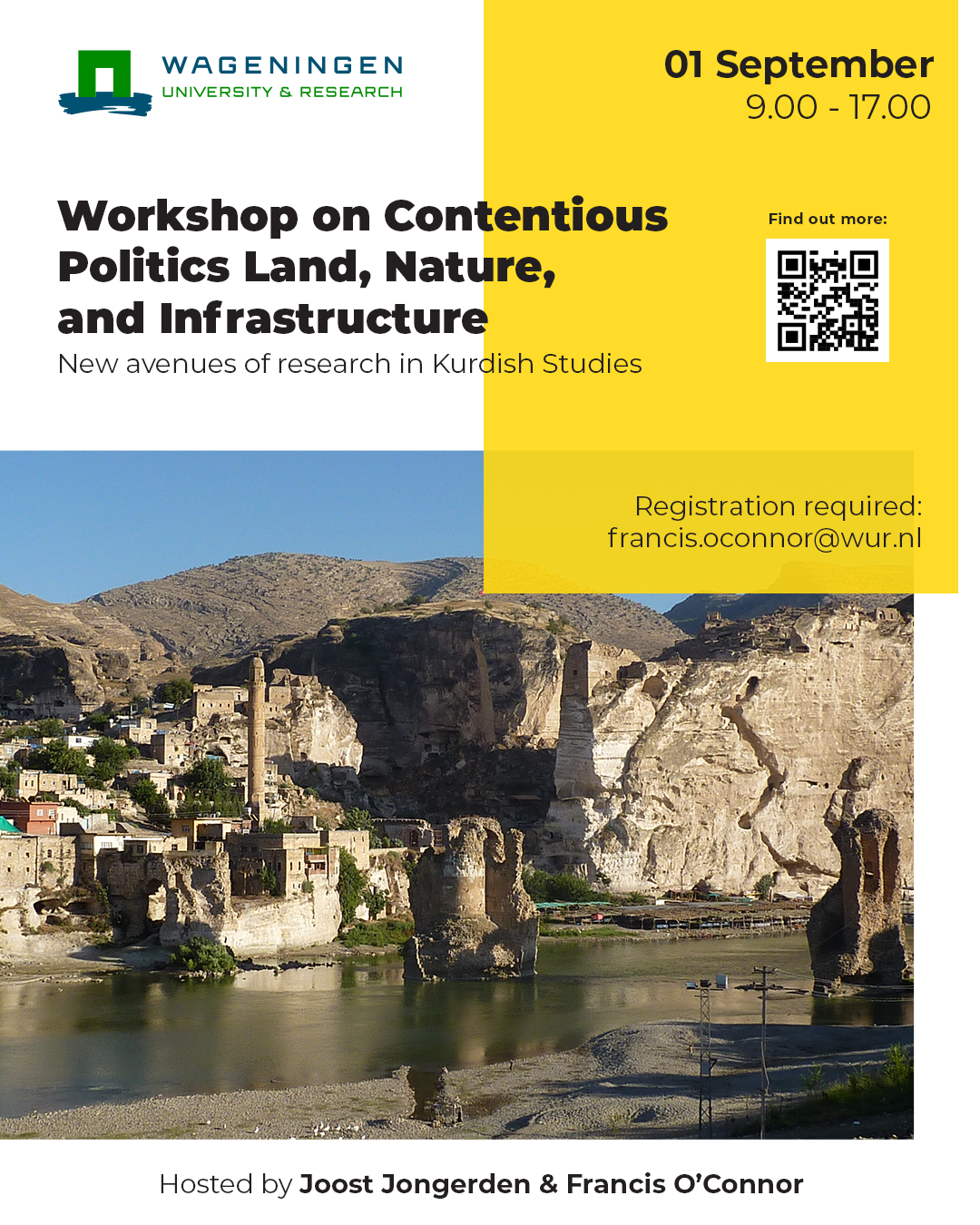
*Pinar Dinc is a researcher at the Centre for Advanced Middle Eastern Studies at Lund University. She is scheduled to speak at the workshop titled “Contentious Politics in Kurdish Studies: Land, Nature, and Infrastructure”, September 1 2023. For more information and the program, see: https://ruralsociologywageningen.nl/category/events/
References
Braverman, Irus. Planted Flags: Trees, Land, and Law in Israel/Palestine. Cambridge Studies in Law and Society. New York: Cambridge University Press, 2014.
Short, Damien. Redefining Genocide: Settler Colonialism, Social Death and Ecocide. London: Zed Books, 2016.
 Rural Sociology Wageningen University