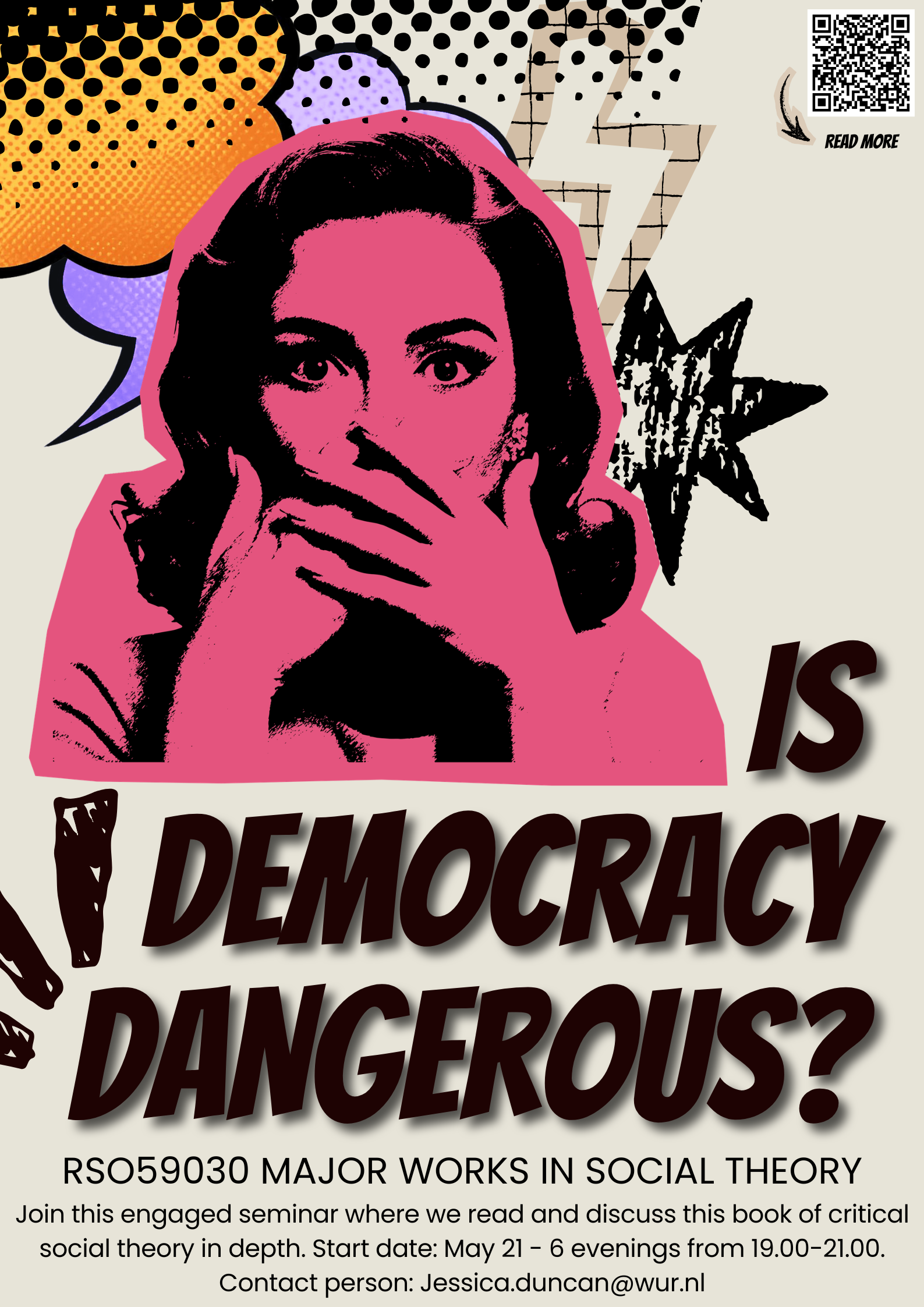
Is democracy dangerous? Is democracy in crisis? What even is democracy?
These are the central questions explored in RSO59030 Major Works in Social Theory, an engaging and intellectually challenging course designed for Master’s students who want to actively engage with social theory and critically examine contemporary political debates.
This course focuses on the work of Jacques Rancière, particularly his influential book Hatred of Democracy. Across six weekly evening sessions, students will collectively unpack and critically evaluate Rancière’s arguments and consider their relevance in contemporary society.
Course Format > 6 weekly meetings (2 hours each) > Thursdays, starting May 21 > 19:00–21:00 > Location: Clockhouse
The course is organized as a structured conversation around the book. This format requires careful preparation and active participation from all students. After an introductory session, the course proceeds through discussions of the book’s four chapters, encouraging close reading, debate, and theoretical reflection.
As part of the course, students will also participate in the recording of a podcast, translating theoretical insights into a public-facing format.
About the Book In Hatred of Democracy, Rancière challenges the widespread claim that democracy is in crisis because of popular irresponsibility. Instead, he argues that political and intellectual elites often harbor a deep distrust of democracy itself — understood as the radical principle of equality and the rule of all. What is frequently presented today as “democracy,” he suggests, functions to limit popular power and legitimize governance by a select few.
The book invites readers to radically rethink democracy — not as a stable system, but as an ongoing political struggle over equality.
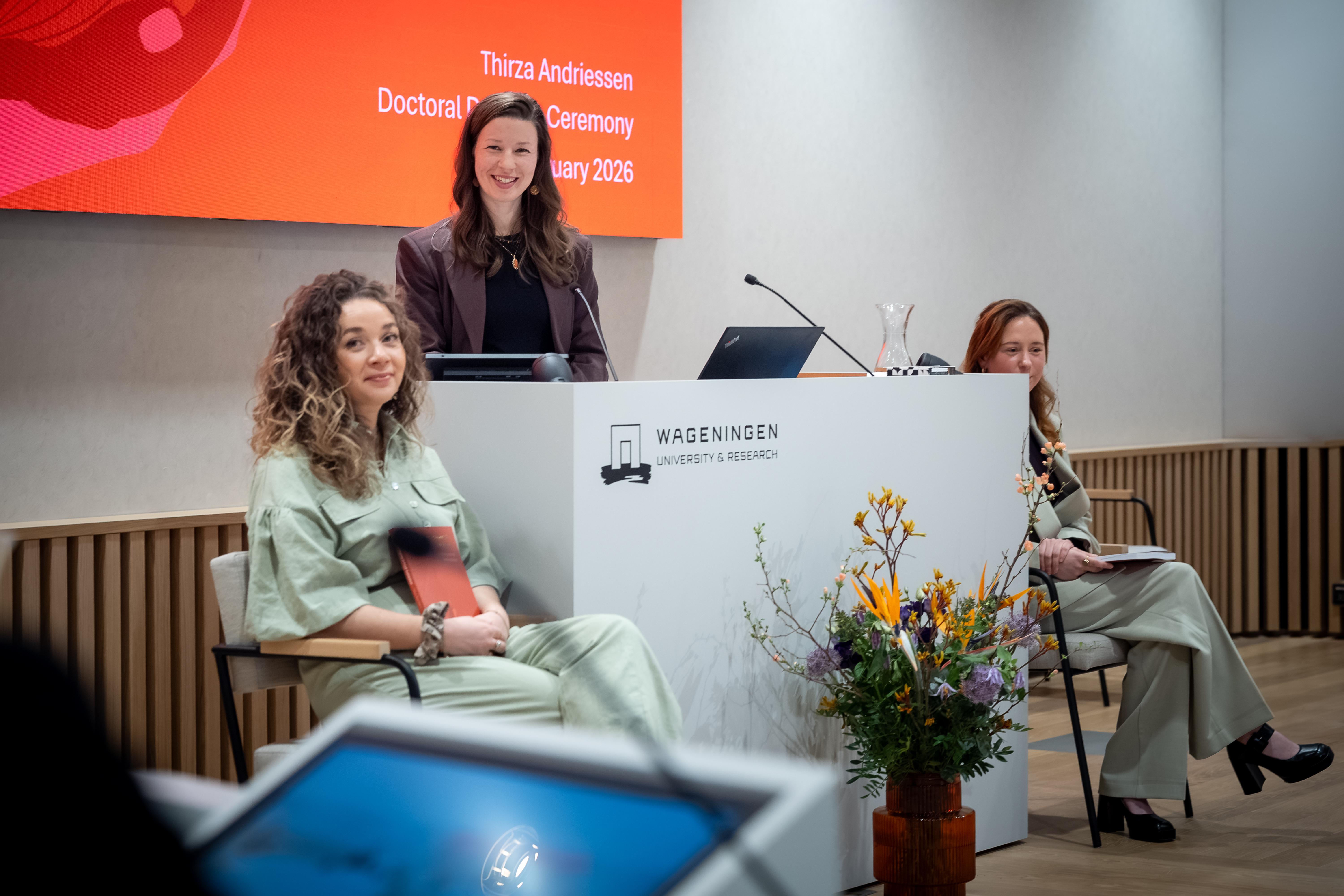
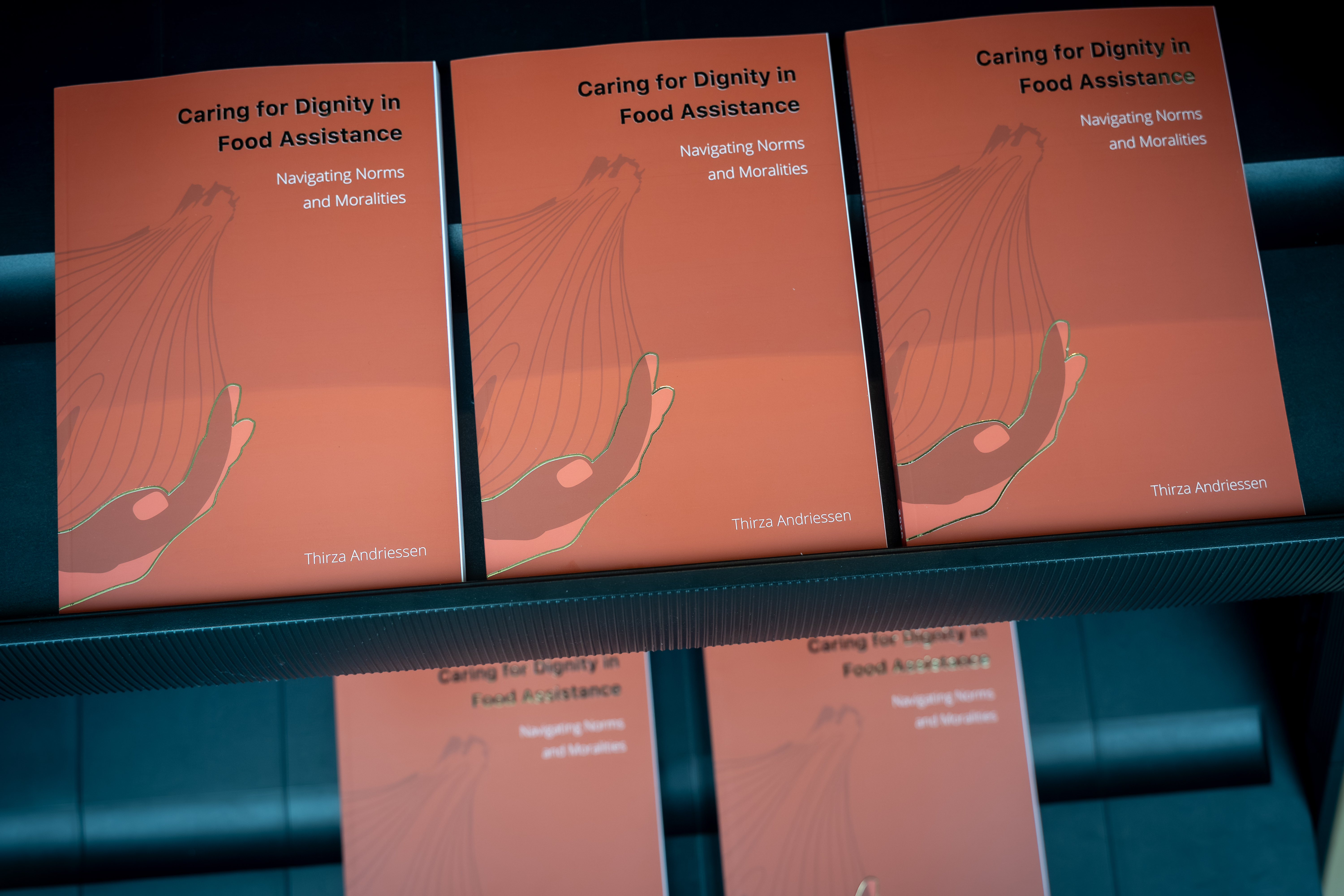
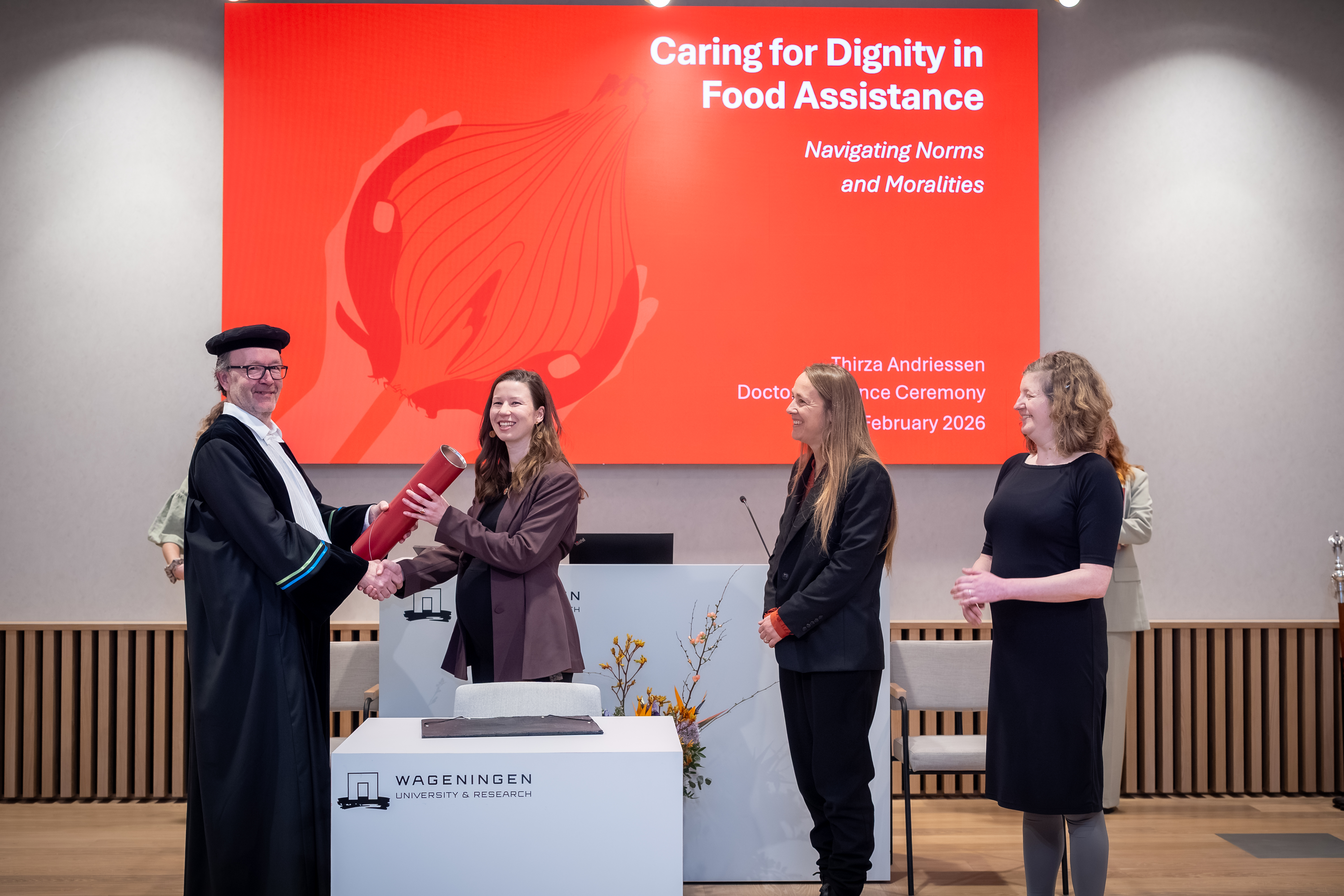
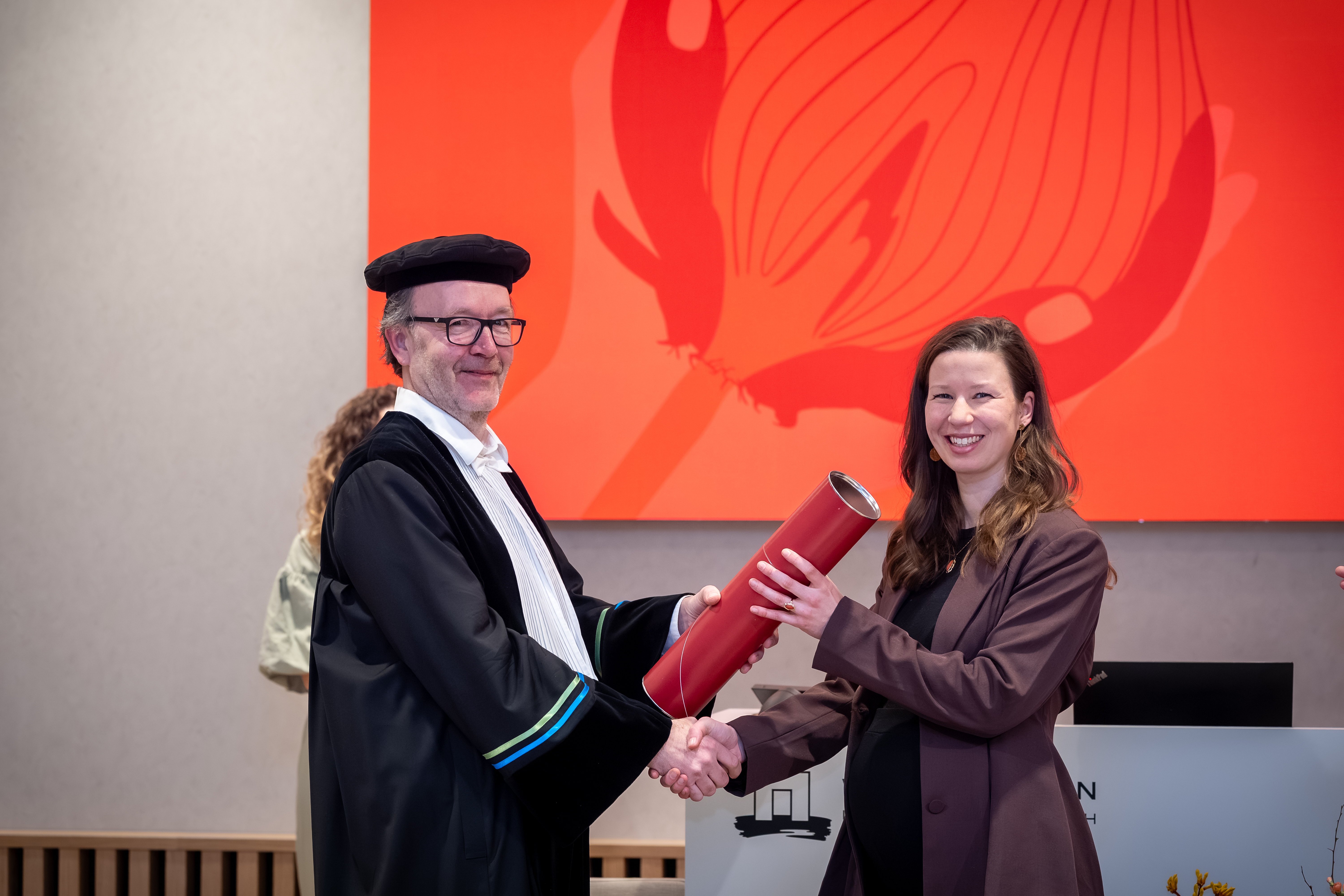
We are happy to announce that our dear colleague dr. Thirza Andriessen successfully defended her dissertation on February 20, 2026, titled: “Caring for Dignity in Food Assistance: Navigating Norms and Moralities”.
In her dissertation Thirza studies dignity in food assistance contexts in Belgium and the Netherlands. She explores how practices within such contexts shape (and reshape) the dignity of those receiving support. Conceptualizing dignity in a relational way implies a recognition of its dynamic character: “How it [dignity] is continuously negotiated through social relationships, interactions and broader social contexts” (Andriessen, 2026, p. 21). Furthermore, the dissertation highlights that food assistance is more than a material problem in which nutritional deficiencies of recipients are mitigated. Indeed, Thirza stresses the importance of care in food assistance.
The friendly game of academic tennis raised interesting food for thought that kept us chewing on the topics long after the formalities came to a close. For example, Thirza stressed the need for a careful, but important balancing act of meeting acute needs without reproducing the very structures that underlie food insecurity in the first place.
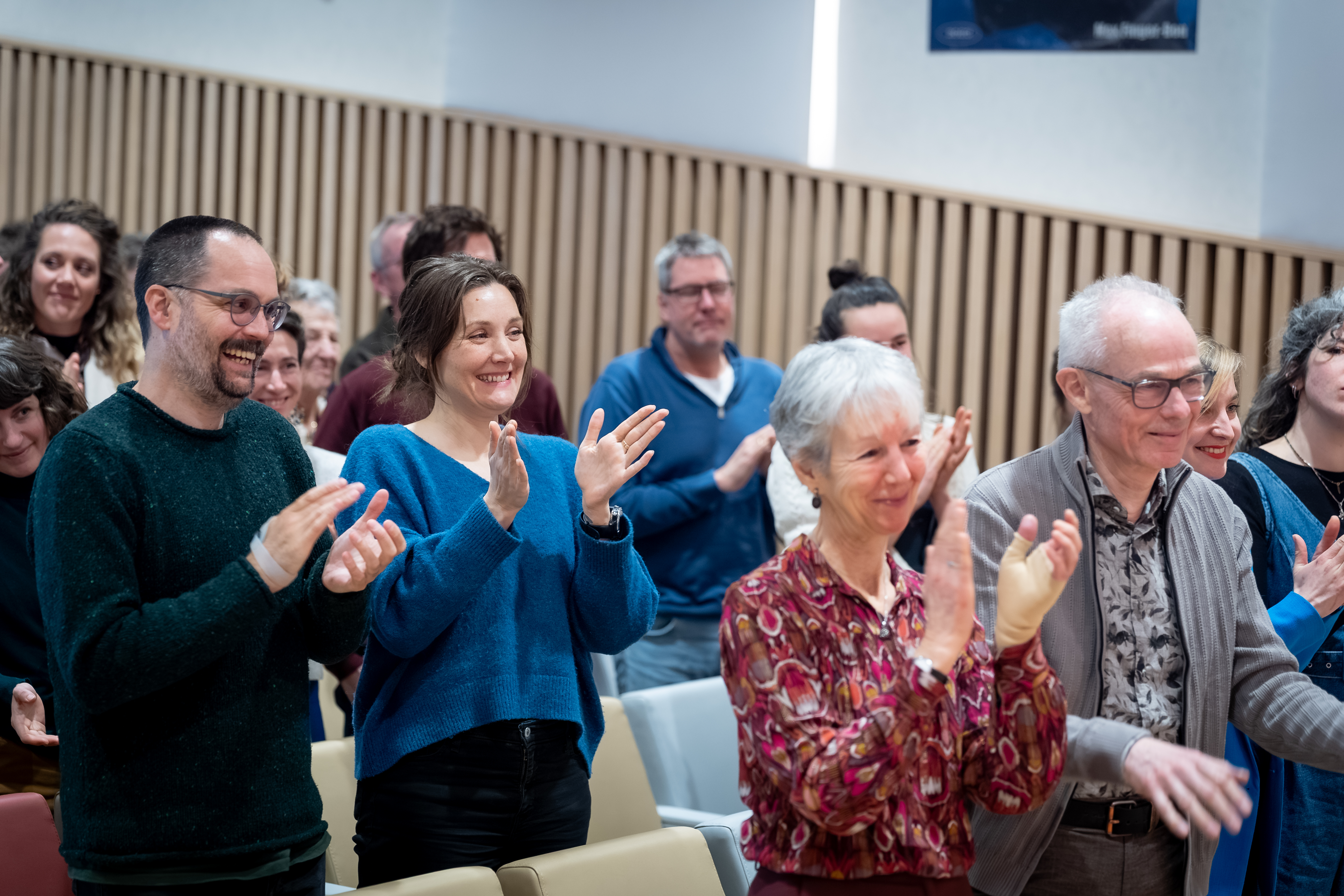
At the end of the defense, Thirza’s was praised with two key words that resonated with how we know her best: Someone who is bold and deeply cares about those who surround her. Congratulations Thirza on your monumental achievement! We are happy you will continue to inspire us (colleagues) and students at WUR as you continue your work with RSO.
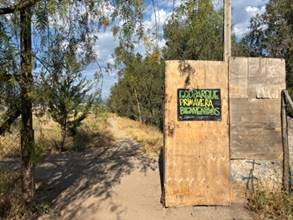
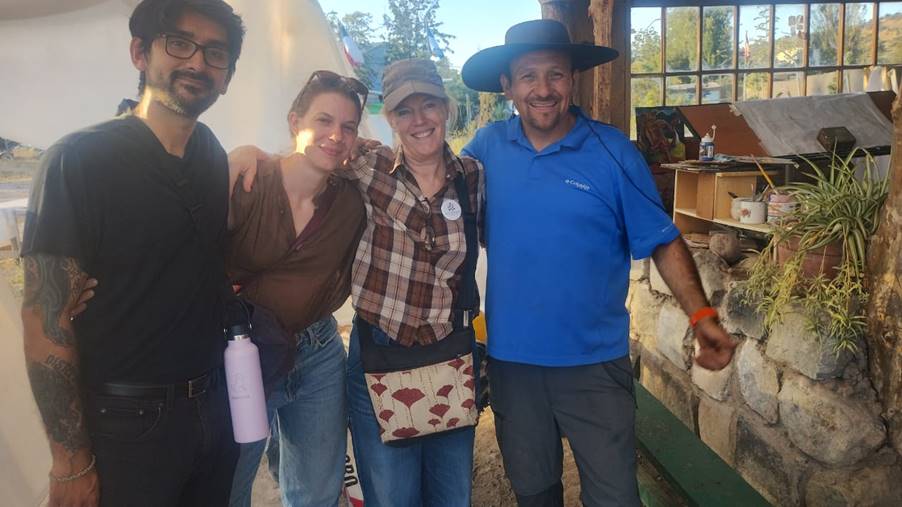
Artist and co-initiator Jorge Guerrero walks toward us enthusiastically. Eleonora has already conducted research here, in the way she prefers most: working with her hands as much as with her head. While helping out, she listens to stories and plans. Alongside her job, she has been immersed in her PhD research on urban place-making, and she feels slightly self-conscious about suddenly reappearing after a period of absence – together with her partner and supervisor from the Netherlands. That feeling quickly fades in the face of the warm welcome. We, in turn, are struck by how much has visibly been realised in this ecoparque. The park has just celebrated its five-year anniversary.
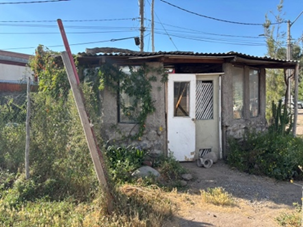
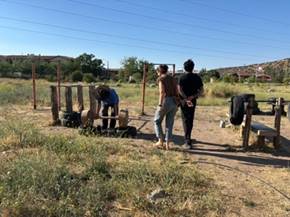
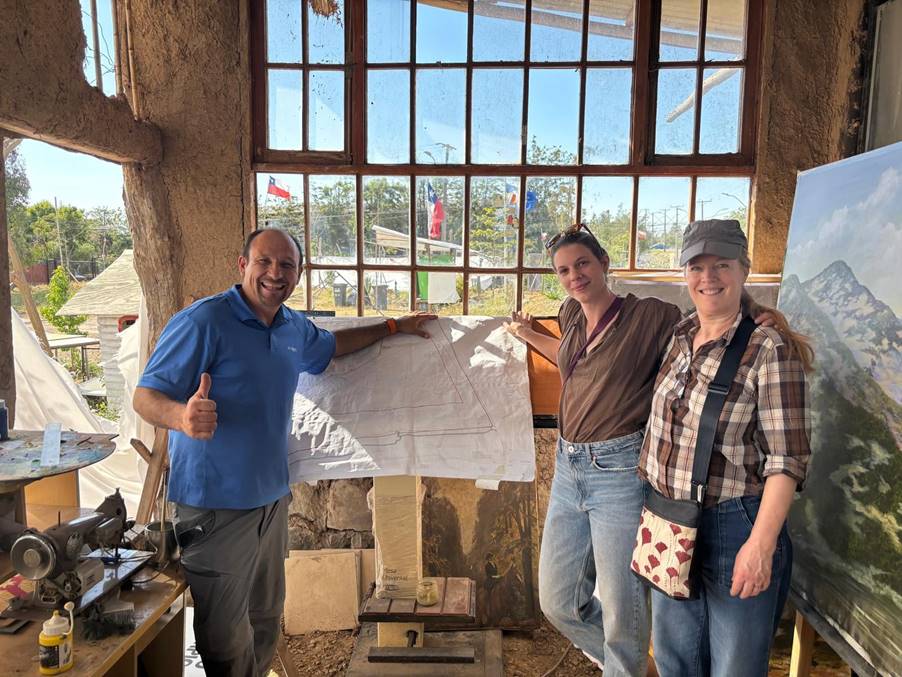
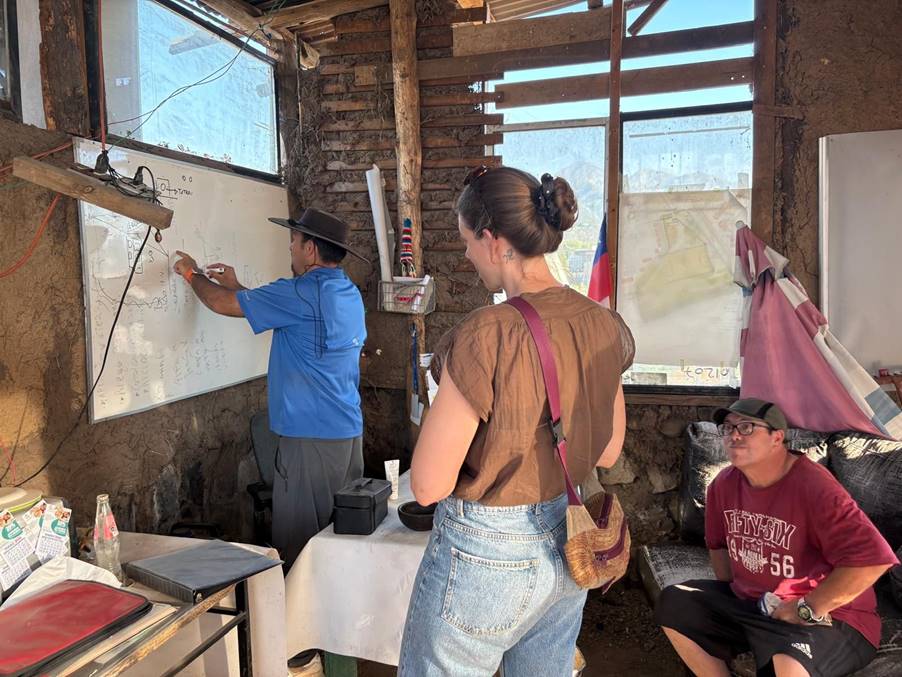
Pictures taken during our visit to the Ecoparque, December 8th, 2025.
As is typical of urban fringes, this corner of the neighborhood was once filled with trash. Residents recall it as a place that attracted unwanted activities. Apart from a decent football field used by the local club, there was little else – except a clear need for a park. The idea emerged to transform the more than three hectares into a space accessible to everyone: a place to walk, celebrate birthday parties, and do things for which there is no room elsewhere in the neighborhood. Residents plant trees, their species carefully marked on a large, dust-covered map in the small structure at the entrance. There are playgrounds, a recycling point, and a fitness area with serious equipment made from local materials.
All the structures – a workshop, a semi-circular building “like an eye,” as Jorge describes it, overlooking the entire site at the entrance, and a tipi with kitchen facilities – are built from what could be found nearby: glass doors from soft-drink refrigerators, tree trunks, clay, and car tires. Many car tires. In the future, space will be needed for infrastructure, meaning the municipality cannot guarantee permanent usage rights, however, neighbors perceive the potential end of the Ecoparque Primavera as a a scenario that will not happen anytime soon. Funding remains a challenge, yet through countless volunteer hours and the reuse of materials, the project has already come a long way. By the end of 2025, they succeeded in obtaining legal recognition, formally establishing the “Eco Parque Primavera Environmental Committee”. This committee coaches a group of volunteers, recruited via Instagram. They managed to bring together neighbors of all ages, including people from different crafts and professional backgrounds. Many of the trees have been growing here for about a year and a half and appear to be surviving the harsh weather conditions. Large water tanks, filled by the municipality, are used to irrigate the plants. And there are still many ambitions: to host more activities, to create guided tours with stories. Jorge sketches one out for us on the spot.
Places like this inspire admiration, but also raise questions. Will residents be able to sustain the care this park requires over time? This is not a wealthy neighborhood – shouldn’t the state be responsible for providing such amenities here? Is twenty years enough? This initiative emerged from the bottom up: people are quite literally claiming their right to the city. It is a right of use rather than ownership – a commons, or meent in Dutch, where shared use takes precedence. How communal is this space in practice? Formal structures failed here in the past – how far does governmental support extend today? And inevitably: what will this place look like in twenty years, when the trees are larger and use may be more intensive? And in the shorter term, now that the ultra-right-wing Antonio Kast – who emphasizes private property and advocates for a smaller state – was elected president in December 2025, will community initiatives like this one prove to be especially vulnerable?
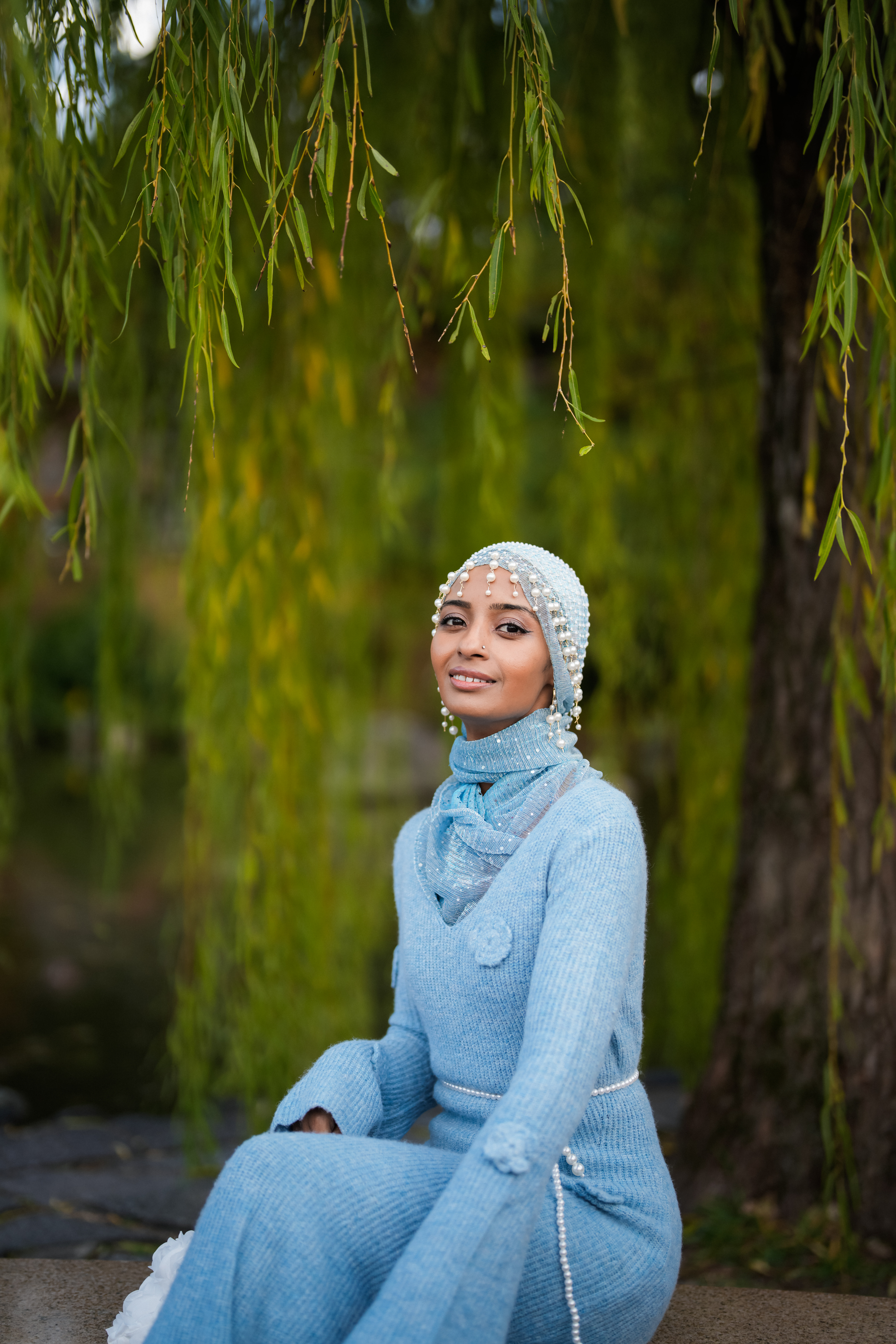
We’re pleased to welcome Khadija Kaffa to the Rural Sociology Group as a visiting scholar from Kyoto University, Graduate School of Agriculture. Khadija is a PhD candidate whose research adopts a feminist lens to examine how rural women farmers in arid regions of Morocco navigate and assert agency at the intersection of resource access, collective action, and power relations, particularly under pressures of climate stress. During her time at RSO, she is expanding her work to explore how patterns of out-migration reshape household dynamics and contribute to transformations in local food systems in migrants’ home communities.
Research focus
Khadija’s research focuses on the experiences and strategies of rural women farmers in Morocco, highlighting the ways they negotiate resource constraints, power relations, and collective action in the context of climate and socio-economic pressures. A recent extension of her work investigates how migration patterns influence household dynamics and drive changes in local food systems, emphasizing women’s agency in shaping outcomes for both livelihoods and community sustainability.
Her work brings a feminist perspective to debates in rural sociology, agrarian change, and food systems studies, connecting local empirical insights to broader theoretical and comparative discussions.
Current work at RSO
During her visiting stay at the Rural Sociology Group, Khadija is developing the new dimension of her research that examines the intersections of food, gender, and migration. She aims to deepen both the theoretical and empirical grounding of this work, particularly in understanding how these dynamics shape transformations in rural food systems under conditions of out-migration. This visit also provides an opportunity to engage with scholars working on critical agrarian, feminist, and food system studies.
Why RSO and Wageningen?
RSO is an international reference for critical and interdisciplinary research on agrarian change, rural development, and sustainability. Khadija was drawn to Wageningen for its rich space for interdisciplinary dialogue, particularly around questions of gender, mobility, and food system transformation. This visit offers valuable opportunities for exchanging ideas with scholars exploring related issues in diverse geographic and social contexts.
Beyond research
Outside academia, Khadija enjoys food and cooking as a way of connecting with others. She also practices stained glass art, which allows her to express emotions and creatively interpret elements from her fieldwork and research in a visual and artistic form.
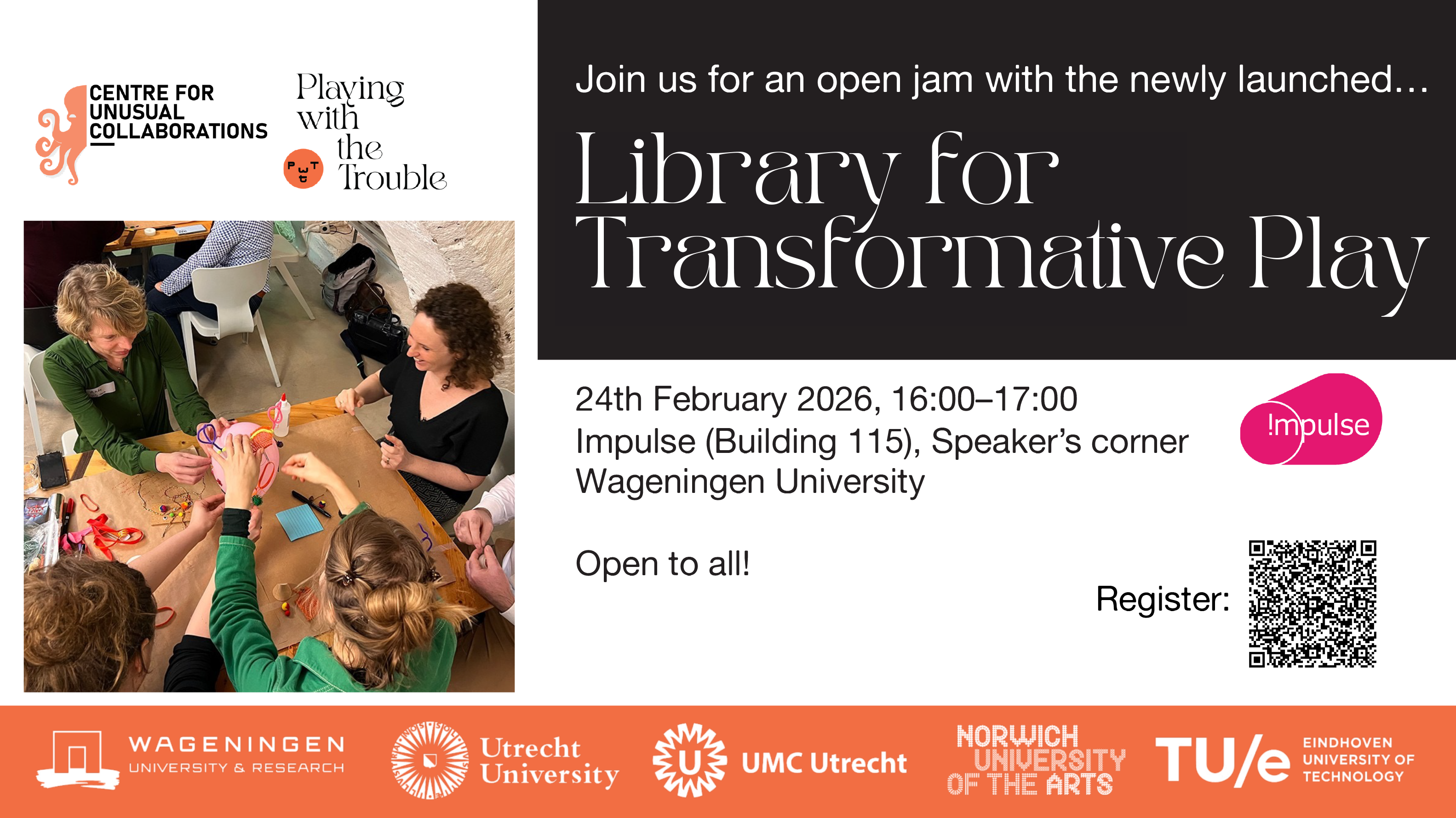
We’re happy to share the upcoming launch of the Library for Transformative Play. On 24 February (16:00–17:00), the library will be launched at Impulse, Wageningen Campus, inviting participants to explore how playful and creative activities can support collaboration across disciplinary boundaries.
The Library brings together games and materials designed to: – surface worldviews – facilitate collective imagination – stay with the trouble – unmake systems – embrace ambiguity
Playing with the Trouble is a 4-year project funded by the Centre for Unusual Collaborations (CUCo). For questions, please reach out to Jessica Duncan.

 Rural Sociology Wageningen University