
Commons, or commonly managed land, seem to be a relic of the past. The enclosure of the commons and concomitant rise of modern agriculture and capitalism have received much attention in academic literature. However, in Galicia, an autonomous region in the Northwest of Spain, a quarter of land is still managed as commons, typically referred to as ‘montes vecinales en mano común’. This way of land management means that land cannot be divided, owned individually, traded, or sold but is rather decided over by the people living in the parroquia or parish. The intricate link of household economies to the common lands, materializing through for example the grazing of animals in the commons or the harvesting of toxo (a nitrogen-rich shrub) to turn into fertilizer, was violently put to an end by the dictatorial state that usurped common lands between 1937 and 1989 to afforest them according to principles of industrial forestry. The rupture of household, rural economies is linked to substantial changes in these spaces, most notably, a significant drop in the rural population from 71.8% in 1950 to 14.3% in 2000 (Seijo 2005). The State’s forestry program was incredibly ambitious, planting five and a half million hectares of forest in the period between 1940 and 2006 (Vadella, 2016) with Galicia being a particular area of interest for the State’s reforestation program (Picos, 2017). After the Franco dictatorship ended, lands were returned to communities yet the processes and reasons for the devolution are contested and context-specific. Some communities never received their lands back, some received fractured parcels, some lands were filled with monocultures of eucalyptus and pine, while others house public facilities like schools and hospitals. About 3,000 montes vecinales en mano común exist throughout Galicia and each is shaped by a particular historical and situated process, allowing us to explore the cracks, resistances, and adaptations that have shaped the Galician commons becoming what they are today and what they could be tomorrow.
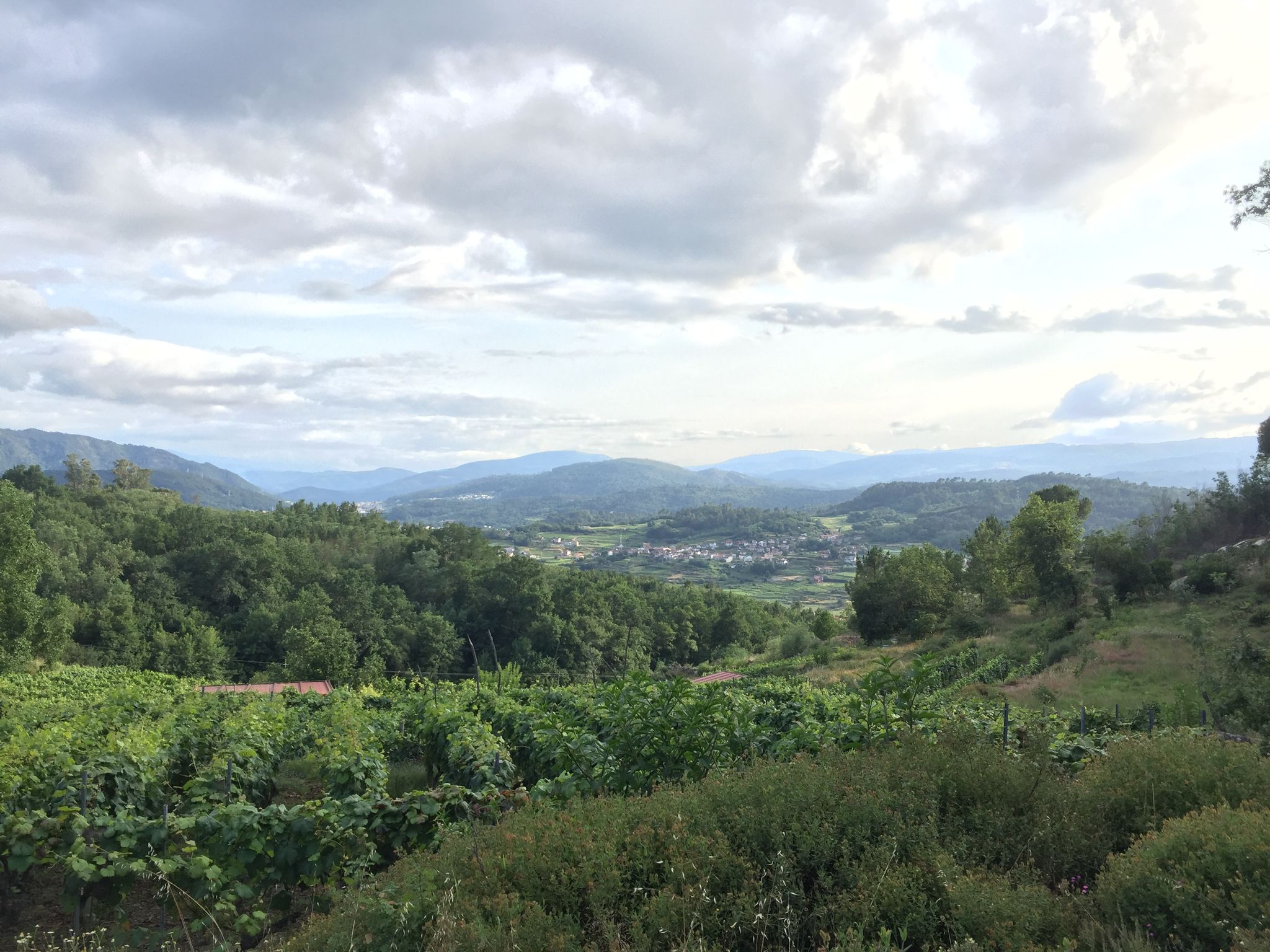
Thesis projects can be formulated around the following:
- Chronicling diverse economic practices over time in a historical perspective. People’s physical presence in the commons has changed over time, in line with modernization and economic ‘development’. Using qualitative methods such as interviews, these changes can be studied to learn about how commoning changed over time, what this meant for rural livelihoods, and commoners’ subjectivities.
- Exploring current configurations of diverse economic practices in the monte and how these came to be. Here students can examine how the commoning community has come to be, how initiatives have arisen in the commons, and how diverse economic practices have taken shape and relate to human flourishing.
- Futuring and imaginaries. Here we consider the futures commoners imagine or aspire to. Through qualitative research methods, this part of the project considers the meanings people ascribe to the commons and what commoning could look like in the future. We ask what role the commons have in human well-being as imagined by commoners but also by other actors like policymakers, scientists, and research centers.
The research takes place in connection to a PhD study by Noortje Keurhorst (University of Vigo). She will also be the local supervisor for this research. For fieldwork a good command of Spanish and/or Galician is useful.
MID, MOA or MDR students interested can send an e-mail to joost.jongerden@wur.nl
 Rural Sociology Wageningen University