
Joost Jongerden
Introduction
Diyarbakir’s historic Hevsel Gardens, a UNESCO World Heritage Site that has fed the city for centuries, face growing threats from pollution, monoculture farming, illegal construction, weakened municipal authority, and changes to the Tigris River.
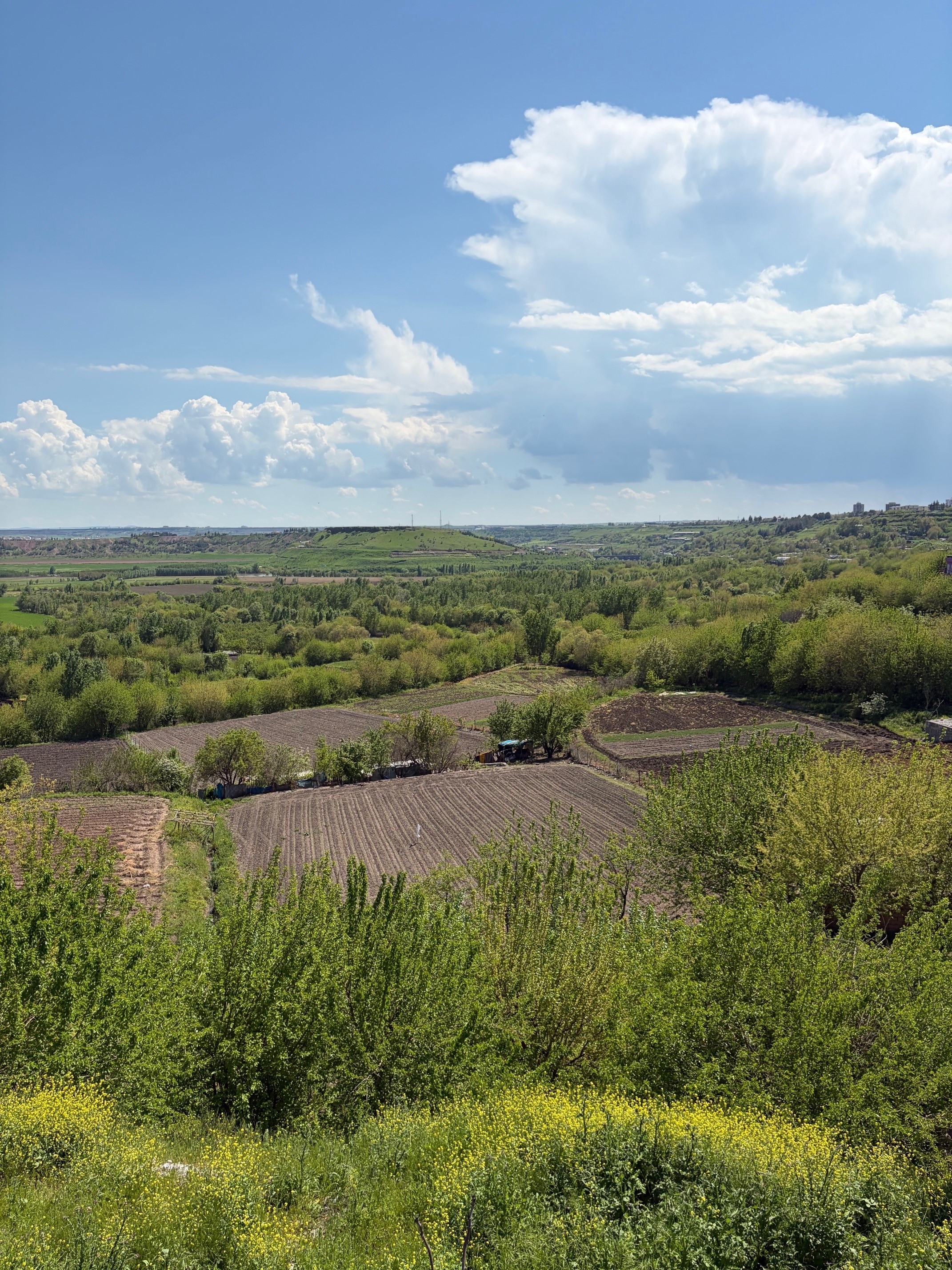
Hevsel Gardens in Diyarbakir (Amed), Kurdistan in Turkey, have long been characterized by a “thrown togetherness” of agriculture, ecology, and everyday urban life. For generations, farmers cultivated a diverse range of vegetables and fruits in relatively small plots, supplying the city with fresh produce. Now, this historically layered landscape, shaped over many centuries, is undergoing profound transformation.
Water management, shifts in agricultural practices, illegal construction, and the weakening of municipal authority to protect the area are all placing the gardens at risk. What was once a mosaic of diverse cultivation practices and shared use, sustaining ecological quality, is increasingly marked by monoculture, declining biodiversity, and pollution.
A changing landscape
Sadık pauses during our walk through the Hevsel Gardens and points toward a pile of garbage. “People are good here – except for two things: traffic and waste,” he says. Along the paved road, plastic bags, bottles, and cans lie scattered. Pollution threatens the gardens that for centuries provided the city not only with vegetables and fruit, but also access to fresh water, given their location between the Tigris and the city wall.
We entered the gardens from the southern Mardin Gate in the old city wall, nearly 6,000 meters long, that encircles much of the historic center of Diyarbakir. The early foundation of the walls was laid around 2,500 years ago, but the main construction took place during the Roman Empire in the middle of the 4th century.
Sadık insists that it is the largest city wall in the world. He dismisses comparisons to the Great Wall of China, arguing that a true wall surrounds a city, whereas the Chinese structure is better understood as an immense barrier in the landscape. It is quiet in the 700-hectare area of fertile land that lies between the wall and the Tigris River.
In the distance, closer to the river, a group of women harvest lettuce. Beyond the large lettuce plots, smaller fields hold wheat and patches of red basil used to make a popular soft drink. Tomatoes, sweet peppers, and other vegetables are cultivated. Herbs are gathered and processed for use in cheese-making. Poplar trees grow in dense clusters throughout the gardens, fast-growing and long used in construction, particularly for scaffolding, though increasingly replaced by metal.
In recent years, corn has expanded in the area, symbolizing the growing dominance of an industrial, chemical input–intensive monoculture system in the Hevsel Gardens. The expansion of corn has come at the expense of fruit trees and has destroyed the habitat of many bird species that used to live and nest in the area. News reports also suggest that cannabis is grown in the gardens.
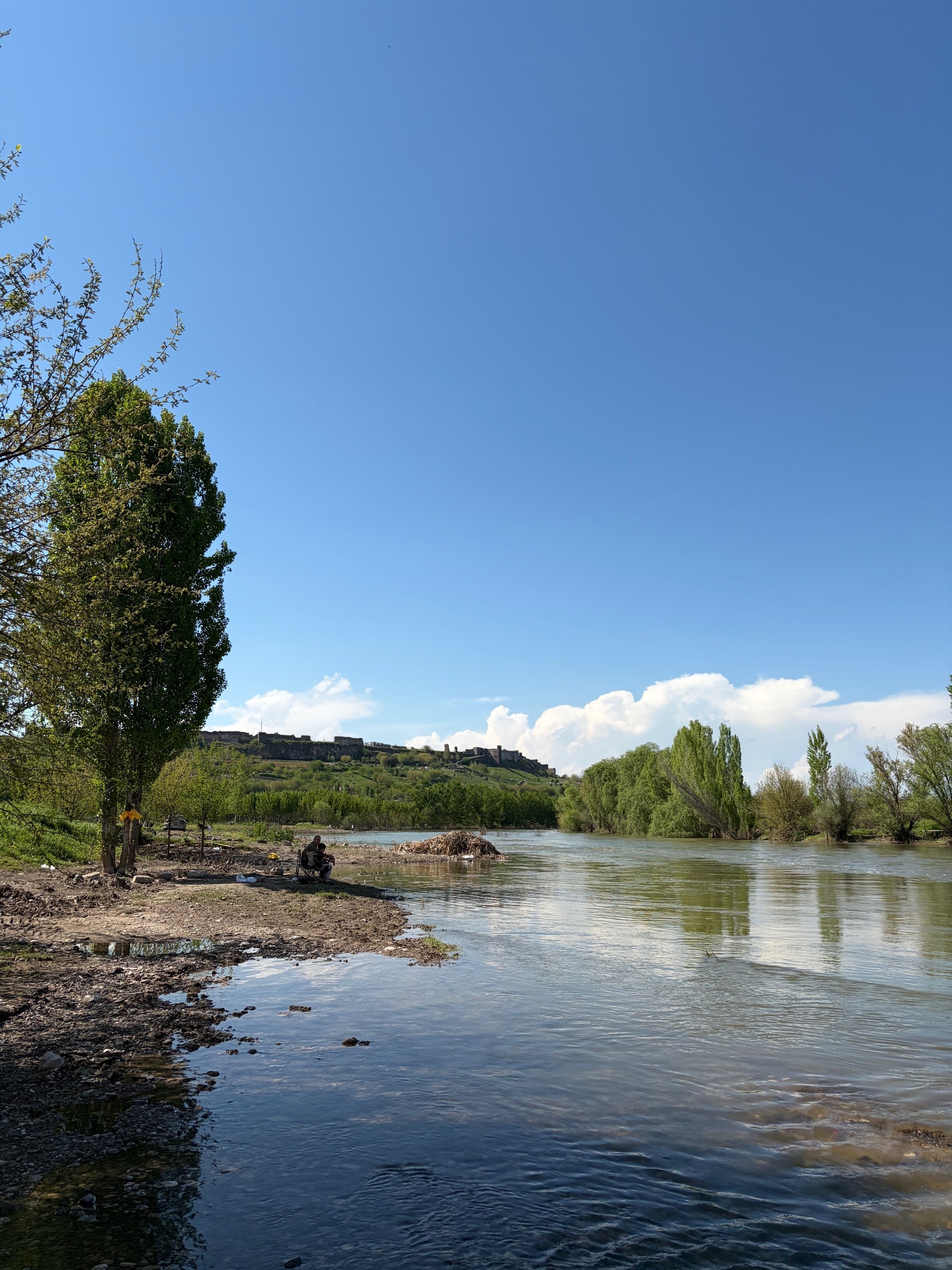
Along the riverbank, a few people are fishing. We are told that these banks once produced the watermelons that made Diyarbakir famous, nourished by fertile soil, summer heat, and pigeon manure. They grew to remarkable sizes. Competitions to produce the largest melons were once well known, with old photographs still showing watermelons large enough to hold a toddler.
Today, watermelons are no longer grown along the riverbanks. Dam construction has altered the river’s flow and water levels, but that is only part of the story. Cultivating these large melons required careful seed preservation, selective pruning, and intensive manual labor to turn the fruit and prevent cracking. The shift toward commercial farming, favoring faster-growing, standardized varieties, has also contributed to their disappearance.
Fishing, however, continues. We are shown part of the day’s catch. The fishermen, casting simple lines and pulling them back by hand, complain about a newcomer, Israeli carp (Cyprinus carpio), a species that feeds on other fish and their eggs. “This fish destroys everything,” one of the fishermen says.
Politics
Politics is never far away. We speak with a group of men, former inmates who spent years in prison for participating in the armed struggle of the Kurdistan Workers’ Party (PKK), who now come to the gardens and river to escape the city’s noise and crowds. For them, the gardens offer a recreational escape. Asked about “the process”, the term used for efforts to reach a political solution to the Kurdish issue in Turkey, one remarks: “The state’s denial of our existence is chronic, and hard to crack.
Hevsel is also under threat. Though the old city and the gardens have a symbiotic relationship that goes back centuries, the gardens are under severe environmental pressure. Despite their status as a UNESCO World Heritage site, biodiversity has declined with the expansion of monocultures and the increased use of chemical fertilizers and pesticides.
The gardens are further threatened by upstream dams and deteriorating water quality in the Tigris. Reducing stretches of the river from Diyarbakir to Bismil to a non-river status over tens of kilometers has opened the way for polluting activities along its banks, such as sand quarries and cafés. Moreover, when the area was designated a “special project zone” in 2016 and a state-appointed trustee replaced the elected mayor, debris from the destruction of parts of the old city during the so-called “barricade war” was dumped in the gardens.
Illegal construction is also a threat, but the municipality’s ability to stop construction or demolish illegal constructions is limited. Authority over the site became increasingly centralized after the 2015–2016 urban war in Sur. Elected municipal leadership was replaced by state-appointed trustees, who were widely seen by urban planners and NGOs as less responsive to local heritage concerns. At the same time, key planning powers shifted to central state institutions, reducing municipal control over planning and enforcement in and around Hevsel.
Legal action can take years, allowing illegal or questionable construction to persist. The issue was explicitly documented at a February 2026 meeting of the Diyarbakir City Assembly, where violations and enforcement gaps were mapped and publicly highlighted. An environmental activist I spoke with argued that authorities may be deliberately avoiding action to provoke tensions, stating: “It’s as if the state wants the local municipality to clash with these occupiers.”
Future of the gardens
As we leave the Hevsel Gardens, it becomes clear that their future is under threat. Dam construction, declining water quality, land clearance for corn production, increased reliance on chemical fertilizers and pesticides under an industrial agricultural model that displaces traditional practices, and ongoing illegal construction, all put the gardens at risk. My companion emphasizes that, had the state taken the ecological value of the gardens more seriously, they would not be in their current condition.
This blog was also produced in The Amargi

