
Yoshida Shrine and reflections on field work in Kyoto
It is a hot day in Kyoto city. The heat and incessant sound of Cicadas (蝉, Semi) indicate the end of the rainy season and start of the summer heat in Japan. Notorious for its high temperatures and high humidity, we were warned prior to our arrival that we should brace ourselves for this warm period. Usually running from half July to half September, because Kyoto is surrounded by high hills, the summer period in the city is often described as more intense compared to other cities in Japan. The heat becomes trapped in the urban maze and lingers around with little room to escape.
After a day in the air-conditioned office, before going home I figured to visit the Yoshida shrine close to the Kyoto University campus. Before exiting the air-conditioned office, I took a moment to brace myself for the one-two punch of heat and humidity that is forced upon you. Walking out of the Law and Economics faculty building, I have quickly found an optimal route through buildings and under trees to reach the campus gate. From here on out, the sun hits the tarmac with no shade in sight, so I am forced to face the heat head on. Taking a sharp left, I am greeted by a large vermilion Torii(鳥居) gate, which indicates a boundary between the mundane physical realm and the spiritual realm. Inconveniently, this Torii gate first leads to a parking lot from where you can see the stairs going up a hill to the first actual shrine area. Dragging myself over the parking lot, the spiritual realm does not offer any relief in temperature so far.
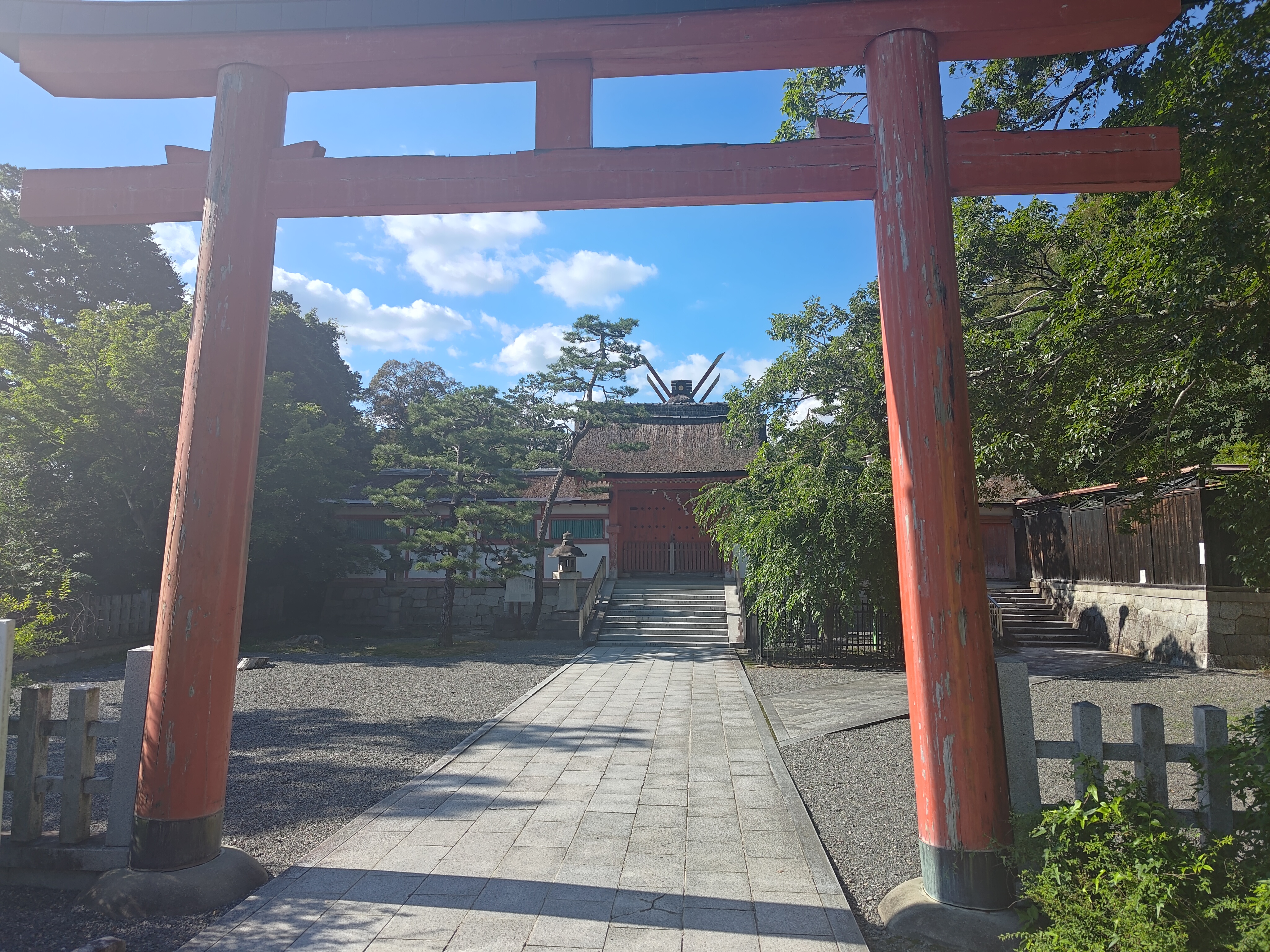
However, passing under a second Torii gate and up the hill to the first shrine plaza, the many trees instantaneously offer respite from the oppressing temperature. Though I did expect a difference, how quick and more pleasant it was to be outside in the forested shade hit much faster than I could anticipate. The river of sweat was slowing down, and my brain felt like it was no longer on hold. This alone was reason enough to stay a while and felt as if the shrine was inviting me in.
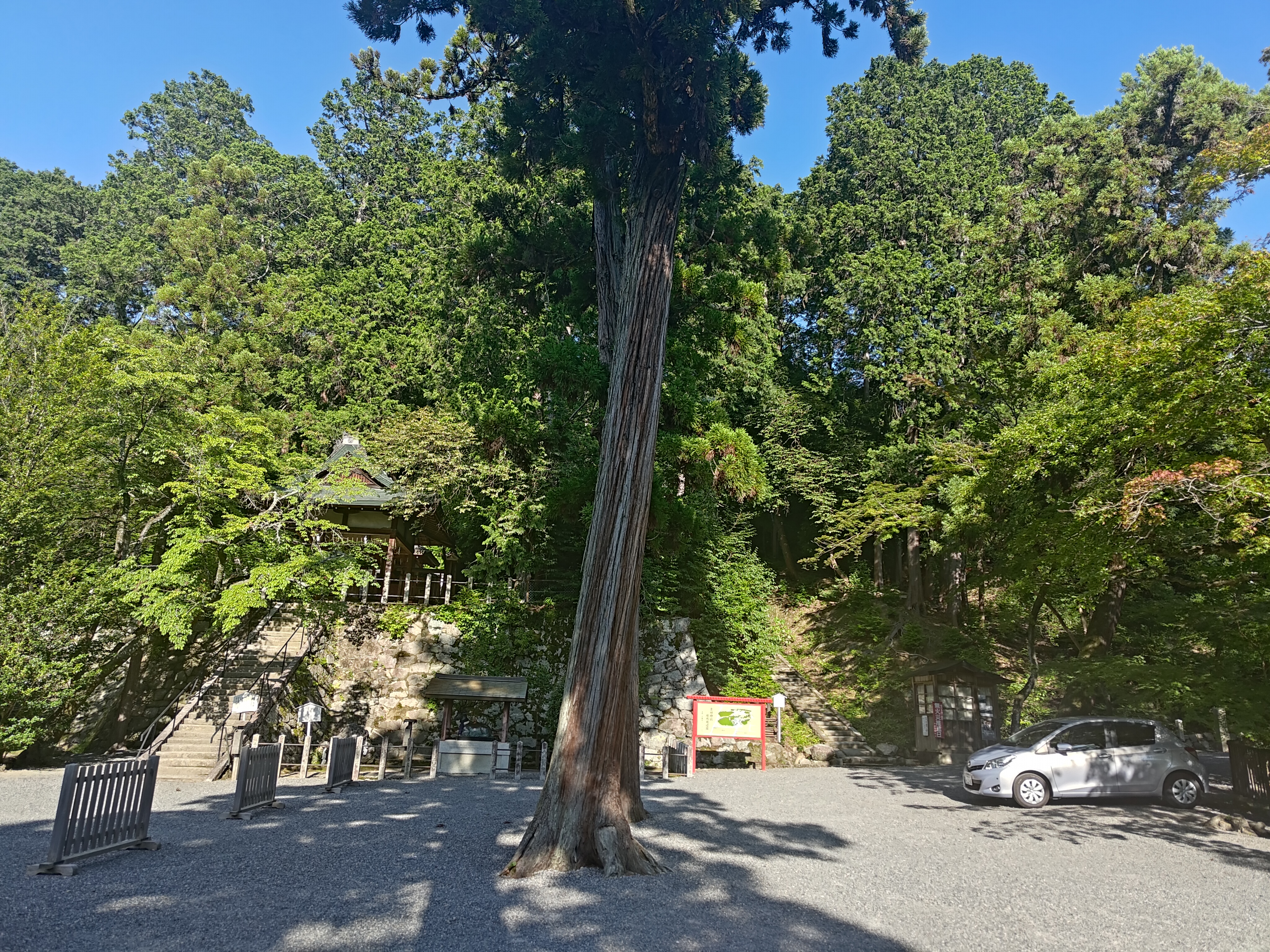
Once at the first plaza, multiple staircases and routes are offered to go deeper into the shrine area. As Yoshida shrine is located on multiple hills (though the area is called Mount Yoshida), there are a lot of differences in elevation, various paths, staircases and ways to explore. The deeper you enter the shrine space, the more the overgrown hills drown out the busy urban noisescapes. Outside of the occasional ambulance or airplane, the shrine wards of sounds of cars, traffic lights (which play a tune when green), and other audible reminders that you are in an urban environment. It replaces it with rustling leaves, cawing crows, and sizzling cicada sounds. It surprised me how this seems to exacerbate the distance from the densely populated city. Because of the differences in temperature, sounds, smells, the area felt separated from the urban reality in which it was situated. Though I knew I was a brief 15-minute walk removed from a cafe, university campus and various restaurants, lingering in the forested shrine area, it felt much more like I was in the middle of a forest instead of in the cultural capital of Japan. Though occasional pedestrian signs, sirens and the vending machine in a park area on top of one of the hills, do remind you of the urban reality.
Kyoto houses over 400 Shinto shrines, of course not all of them as forested or green as Yoshida shrine. They are located all over the city, with some of them even located in the busiest commercial areas of the city. Take for example Nishiki Tenmangu (錦天満宮), a Shinto shrine located at the intersection of the popular Nishiki food market and Teramachi shopping streets. This intersection sees many tourists passing through each day, making it a desirable place to house anything commercially oriented. Yet in Kyoto, in many of these areas shrines among other cultural buildings persist.
While simultaneously working and thinking about a current paper I am writing, working with Lefebvre’s production of space, the experience of Yoshida shrine and the many shrines and temples present in Kyoto offer an interesting reflection point. As in Lefebvre’s perspective, under capitalist structures, urban space becomes more and more subject to homogenization. He foresees that conceived space becomes dominant, where every urban nook and cranny is thought out and made legible. In Lefebvre’s vision, space is always dialectical and socially produced; space dictates what social practices are condoned, and which are suppressed while social practices simultaneously produce space via their actions. Conceived space becoming dominant would mean that lived and perceived spaces are suppressed, causing space to become homogenous and bereft of some of its social elements. However, Lefebvre also highlighted that because space is produced in a dialectic relationship, full homogenization can never truly happen. The other elements will always find a way to challenge the process of homogenization, producing what Lefebvre called differential space.
Strolling through Yoshida shrine, feeling like I am in a forest, seeing Shinto shrines survive in highly commercialized areas, I wonder how these places have been able to stave off the processes of urban homogenization. Of course, there are parallels between other urban spaces. Take for example European cities, where several churches or other religious sites take up space in the center of cities and towns. However, the plethora and scale of such spaces in Kyoto are unique to its local. And although some of the shrines are very much entwined with the commercial and homogenized fabric of urban Kyoto, many shrines (like e.g. Yoshida shrine) seem to elude such processes and in some cases due to their very existence, might even challenge it. While many shrines struggle financially, pieces of the land they occupy sometimes are sold to accommodate new infrastructure projects. Showing that these spaces, while culturally appreciated, are not invulnerable for urban processes.
During my time in Kyoto, I hope to gather more insights into what the forested shrine areas add to the perception of Kyoto’s denizens on nature in their urban environment. I am curious what impact the ongoing struggles of these spaces have, and what meaning various green spaces in Kyoto are given by its inhabitants.
 Rural Sociology Wageningen University