Meet our visiting scholar: Giacomo Giulietti, University of Perugia

We’re pleased to welcome Giacomo Giulietti to the Rural Sociology Group as a visiting scholar from the University of Perugia, Italy. Giacomo is a PhD candidate whose research explores the role of local food systems in fostering sustainable development and territorial regeneration in rural, peripheral and internal areas. His research is grounded in the South-West Orvietano Internal Area in Umbria, Italy, with a particular focus on the Valle del Chiani. During his time at RSO, he is further developing his work on local food systems and Alternative Food Networks, while engaging with broader debates on food system transformation, rural development and food governance.


Research focus

Giacomo’s research focuses on how the reorganisation of local food systems and Alternative Food Networks can strengthen territorial resilience, support local agricultural production, and reconnect food, communities and territories. His work also examines how farmers, consumers, public institutions and civil society can contribute to developing more sustainable and locally embedded food systems.

His research brings a perspective on local food systems and territorial change to broader debates in rural sociology, food system transformation, rural development and food governance, connecting insights from his case study in Umbria to wider theoretical and comparative discussions.


Current work at RSO

During his visiting stay at the Rural Sociology Group, Giacomo is further developing the theoretical framework of his PhD research on local food systems and Alternative Food Networks in rural and internal areas. He aims to deepen his understanding of current debates on food system transformation, rural development and food governance, while exploring different perspectives on community engagement and participatory approaches.

This visit also provides an opportunity to exchange ideas with researchers working on related topics and to place his case study within a broader international research context.


Why RSO and Wageningen?

Giacomo was drawn to Wageningen for its strong expertise in food systems, rural development and the social dimensions of agricultural and territorial change. The themes addressed within RSO, particularly food provisioning and rural development, closely connect with his PhD research on local food systems and Alternative Food Networks in internal areas.

This visit offers valuable opportunities to engage with different theoretical perspectives, exchange ideas with an international research community and further develop his research within a stimulating interdisciplinary environment.


Beyond research

Outside his academic and professional work, Giacomo enjoys spending time outdoors, especially walking and exploring rural and natural areas. He has a particular interest in maps, rural landscapes and the history of traditional rural buildings. He also enjoys researching the stories behind old farmhouses, agricultural structures and traces of past land use.

XXI IASC Biennial Conference 2027 | Call for Panels, Roundtables, Workshops & Tutorials

We’re delighted to share that the call for panels, roundtables, workshops, and tutorials is now open for the XXI IASC Biennial Conference, taking place 21–25 June 2027 in Makassar, Indonesia, with opportunities for online participation.

We’re especially proud that our colleague Oona Morrow is serving on the programme committee, reviewing submissions for the Food as a Commons theme.

This theme challenges the dominant view of food as a commodity and instead explores food as a shared resource that is governed collectively, valued beyond markets, and essential for social and ecological justice. It welcomes contributions on topics including:
>> Governance and institutions for food commons
>> Shifting narratives and values around food
>> Decolonial, Global South, and more-than-human perspectives on food systems

Regional examples from Indonesia and neighbouring countries are particularly encouraged, alongside cross-thematic collaborations.

The theme aims to bring together evidence from food commons initiatives worldwide while co-developing policy proposals for Universal Food Access and strengthening North–South and South–South collaborations.

🗓️ Submission deadline: 12 August 2026

Please note that this is not the call for individual papers, but for those wishing to organise panels, roundtables, workshops, or tutorials.

We encourage our network of researchers, practitioners, policymakers, and community partners to consider contributing to this important conversation on resilience, collective action, and the future of food systems.

Find out more and submit your proposal here.

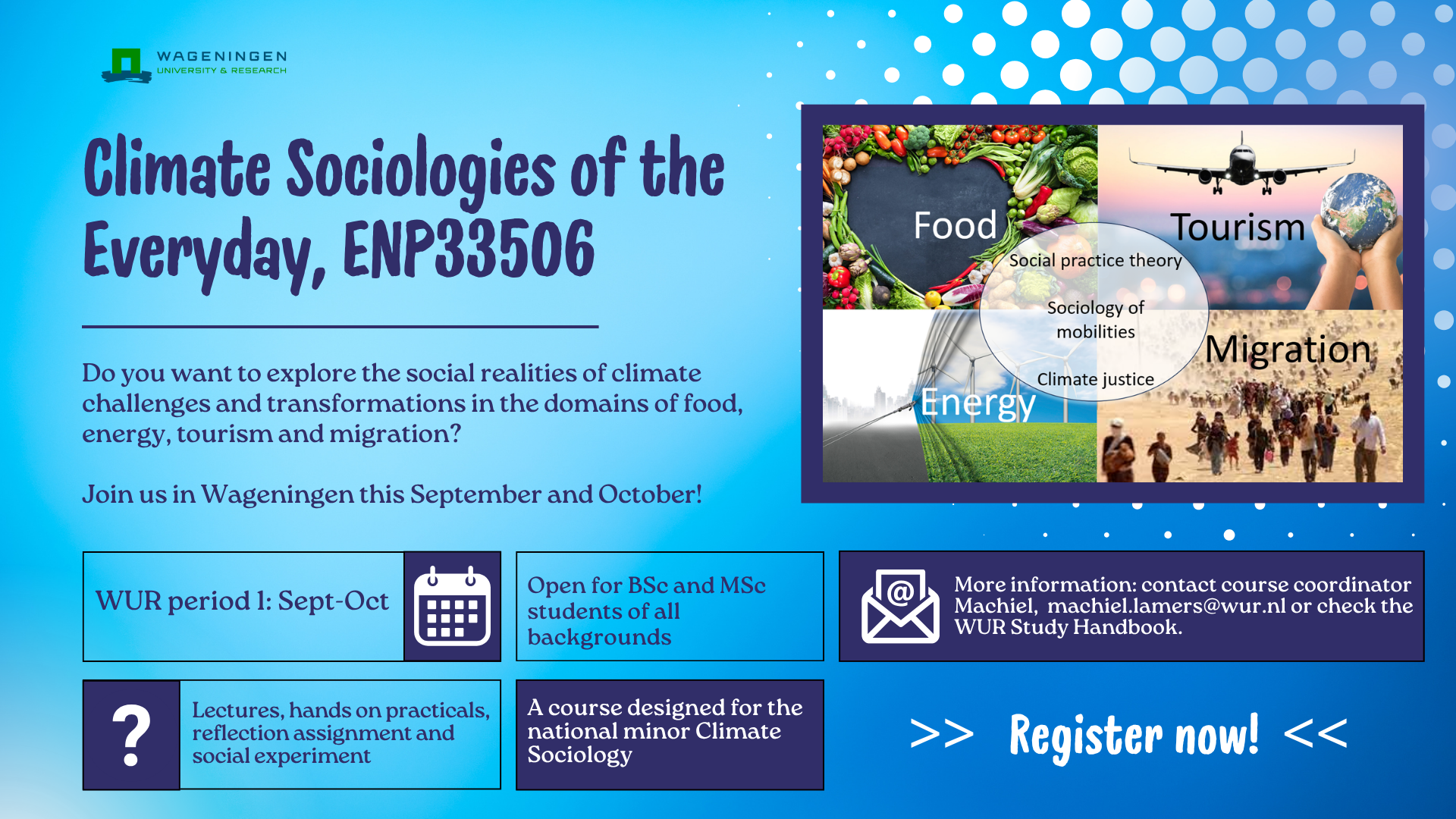
Great course | Climate Sociologies of the Everyday

How do climate change and societal transformation actually unfold in everyday life? Think about what we eat, how we travel, how we heat our homes, where we go on holiday, and how people move across borders.

This September–October, we invite BSc and MSc students from all backgrounds to explore these questions in Climate Sociologies of the Everyday (ENP33506) in Wageningen.

In this course, we look at climate change not only as a global environmental challenge, but as something deeply embedded in everyday practices across four key domains:

>> Food – from diets and consumption to plant-based transitions and food systems
>> Energy – from households to communities in the energy transition
>> Tourism – from high-carbon travel to climate-vulnerable destinations
>> Migration – from mobility and immobility to climate-driven displacement and adaptation

The course connects sociological theory (including social practice and mobilities perspectives) with real-world climate transformations, offering critical and applied insights into sustainability transitions.

📅 Period 1 (Sept–Oct)
📍 Wageningen University & Research
🎓 Open to BSc & MSc students
📘 Part of the national minor Climate Sociology

More information: contact course coordinator Machiel Lamers (machiel.lamers@wur.nl) or check the WUR Study Handbook.

Join us in rethinking climate change through the lens of everyday life.

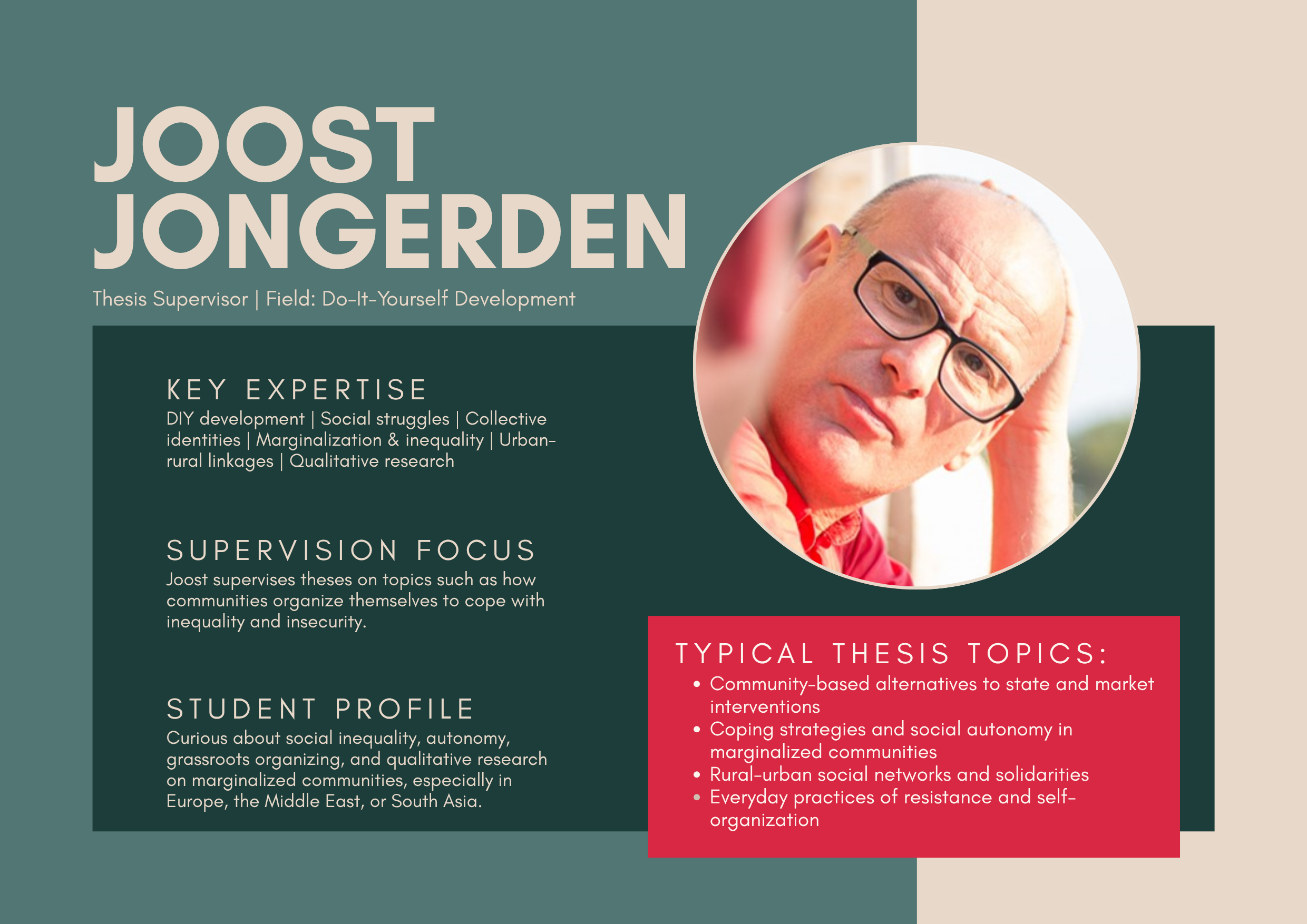
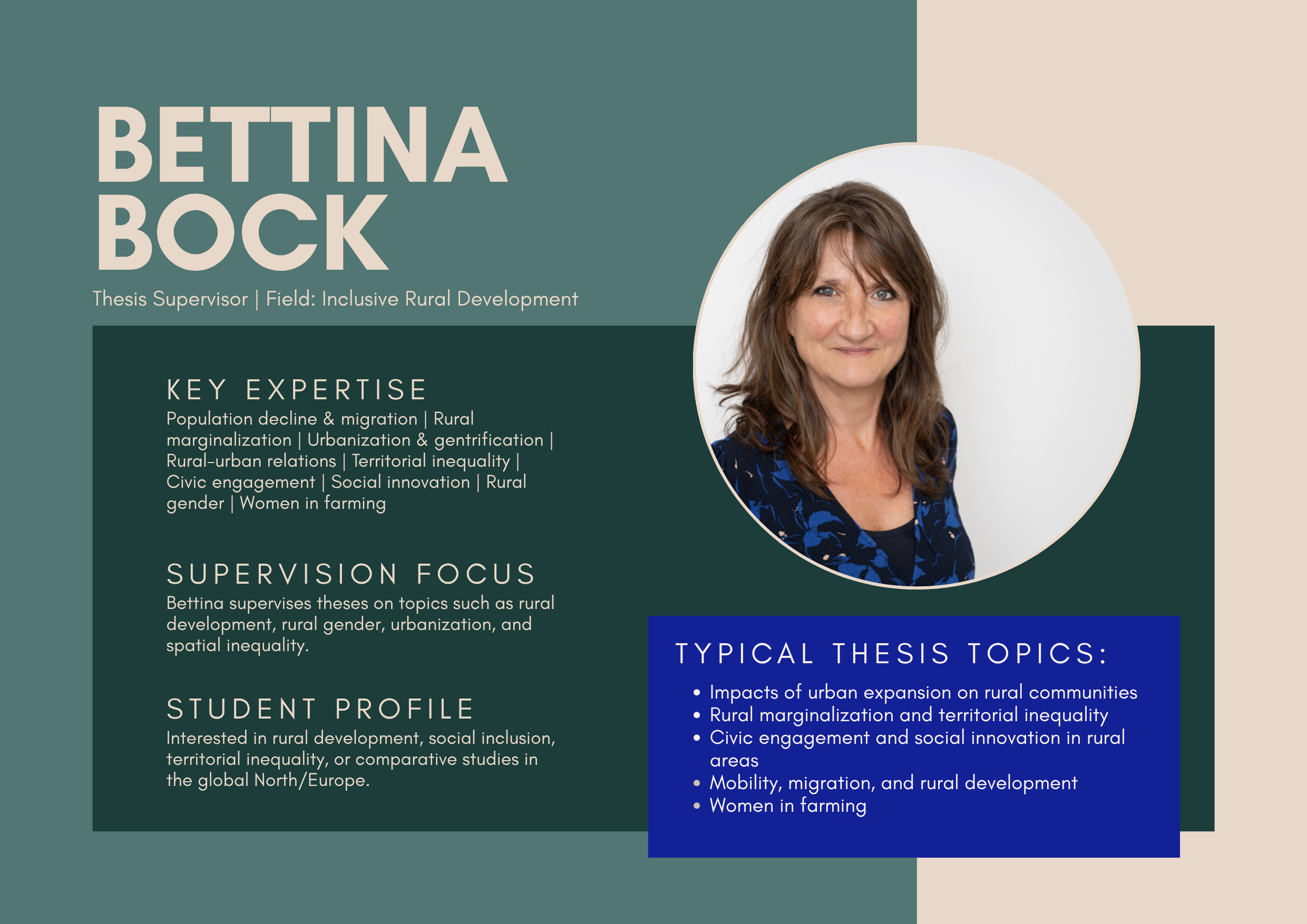
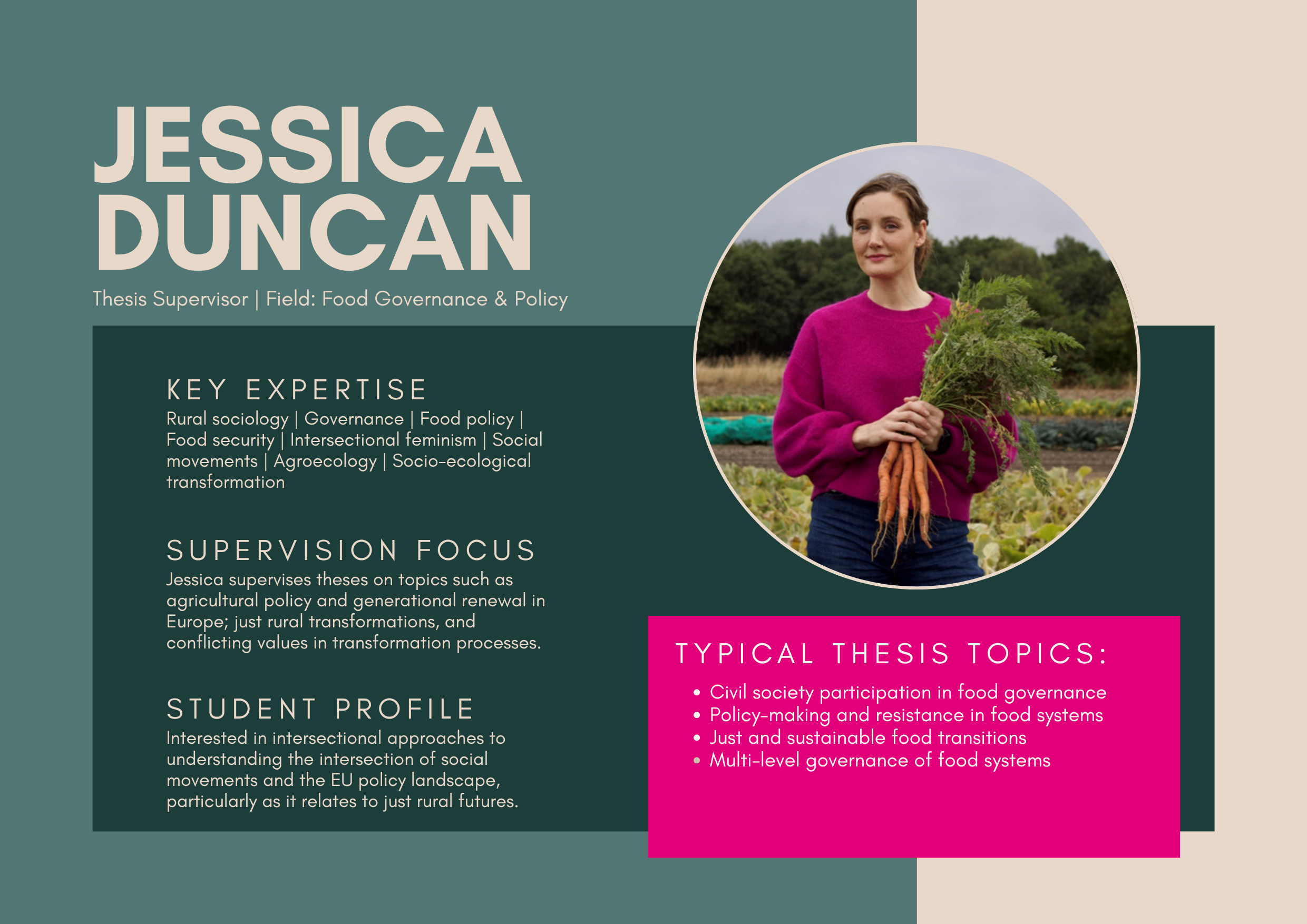
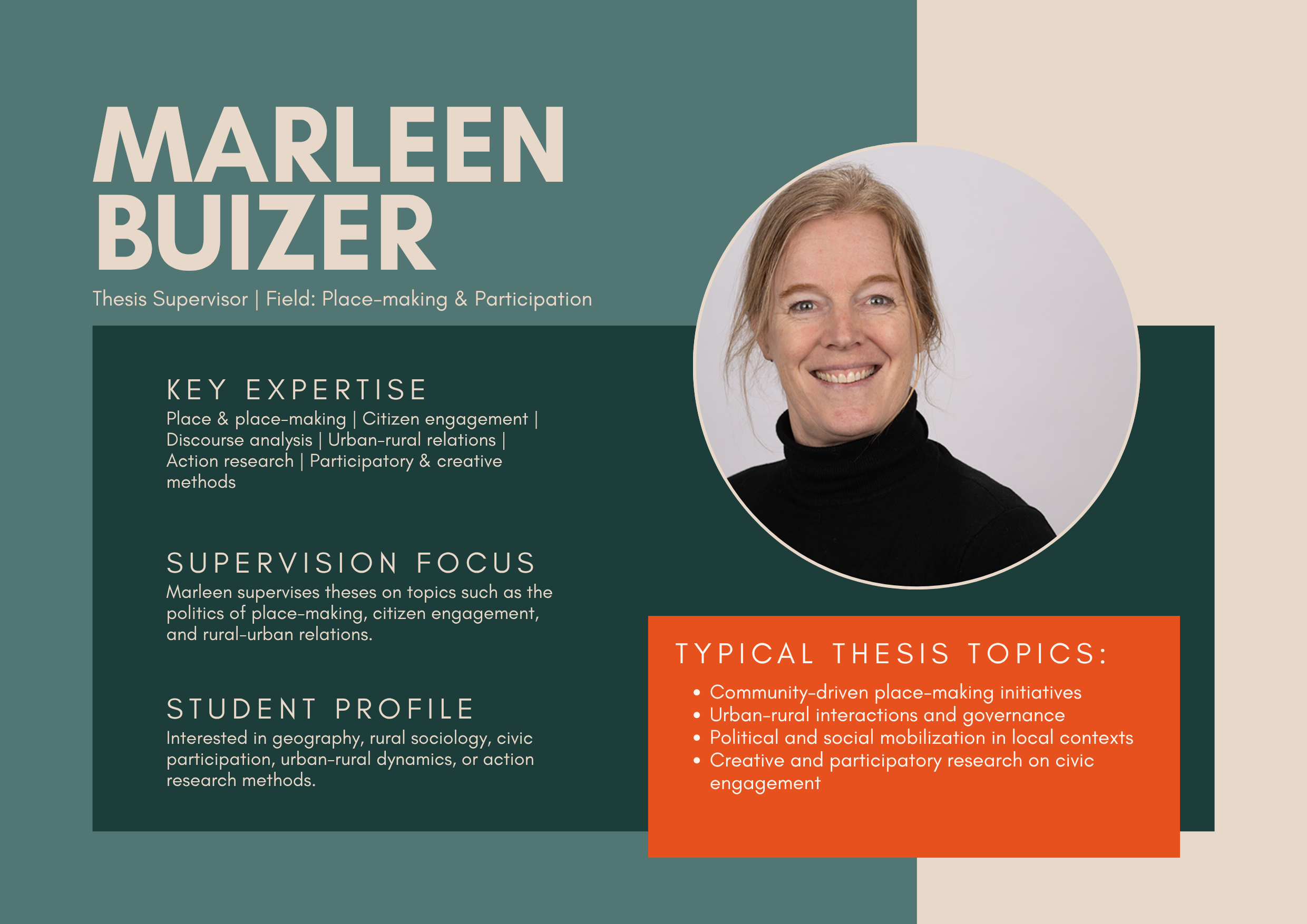
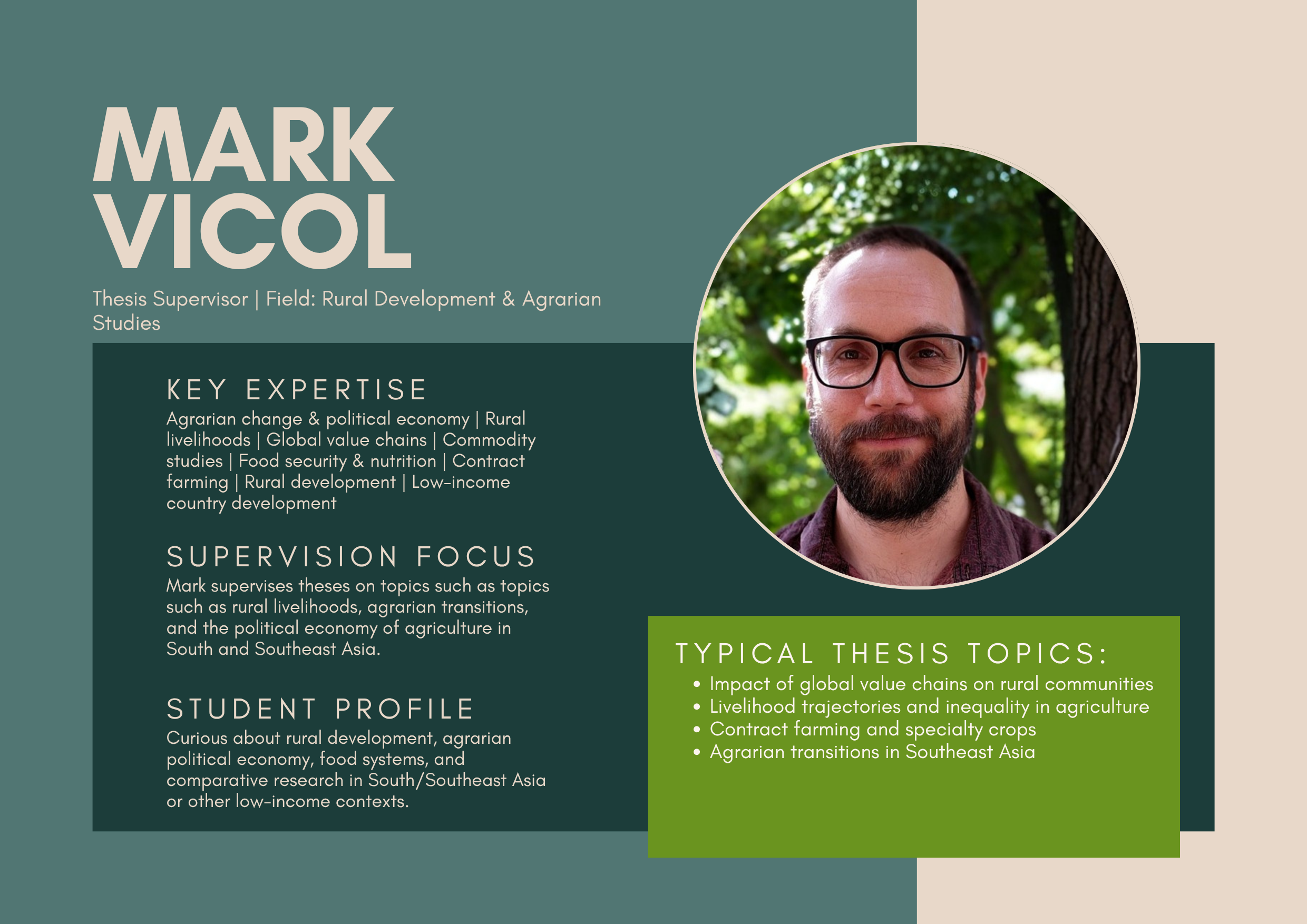
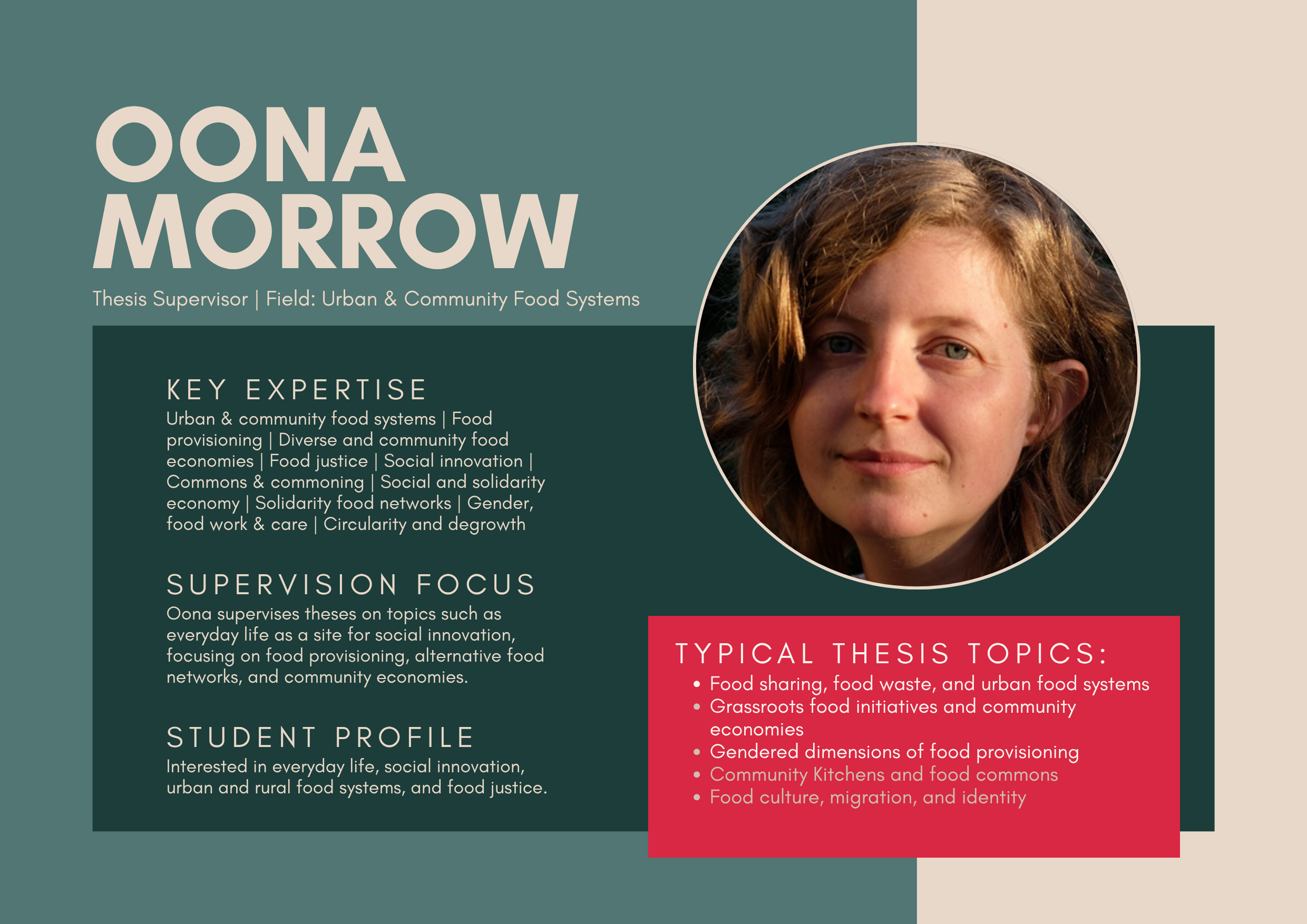
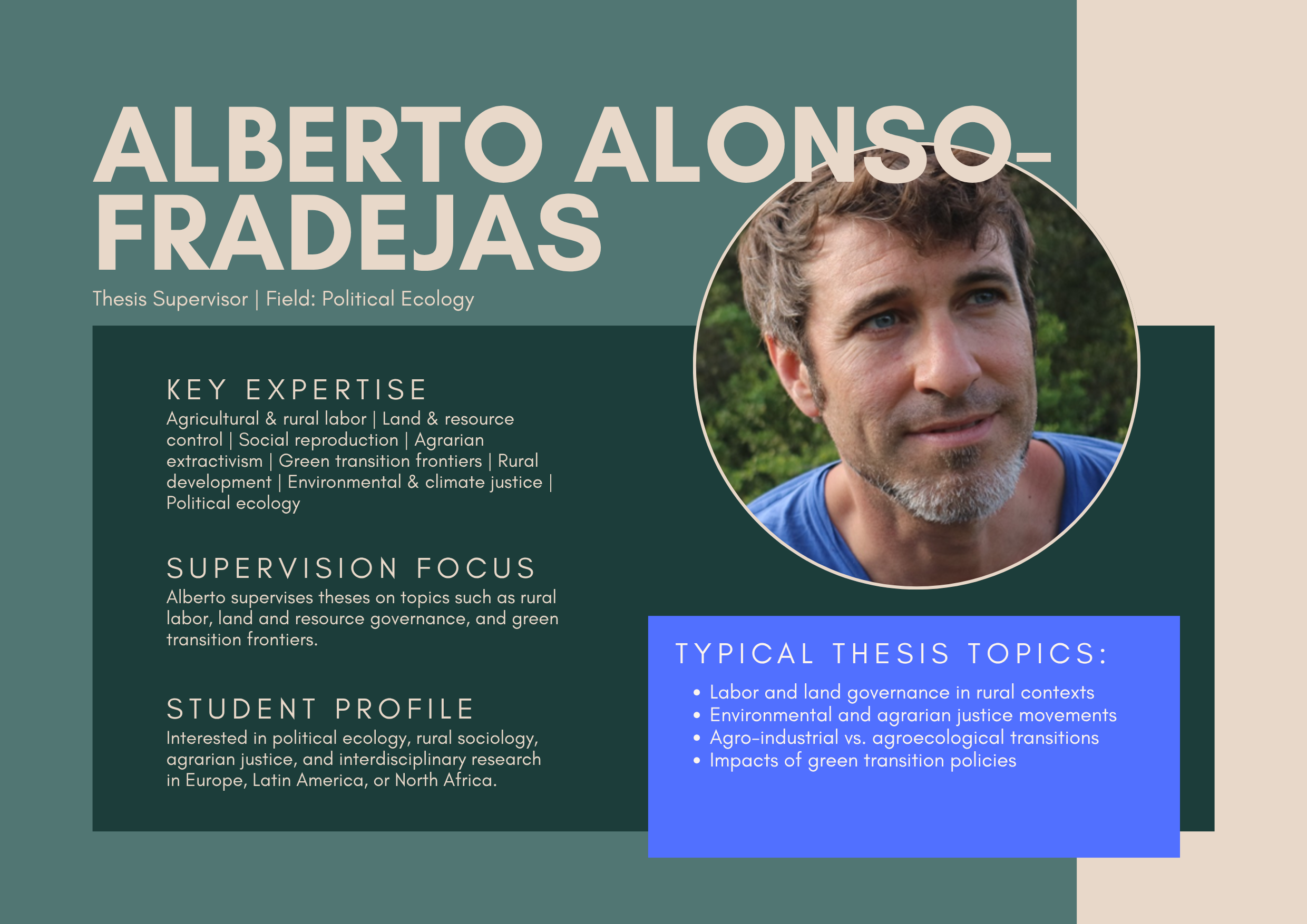
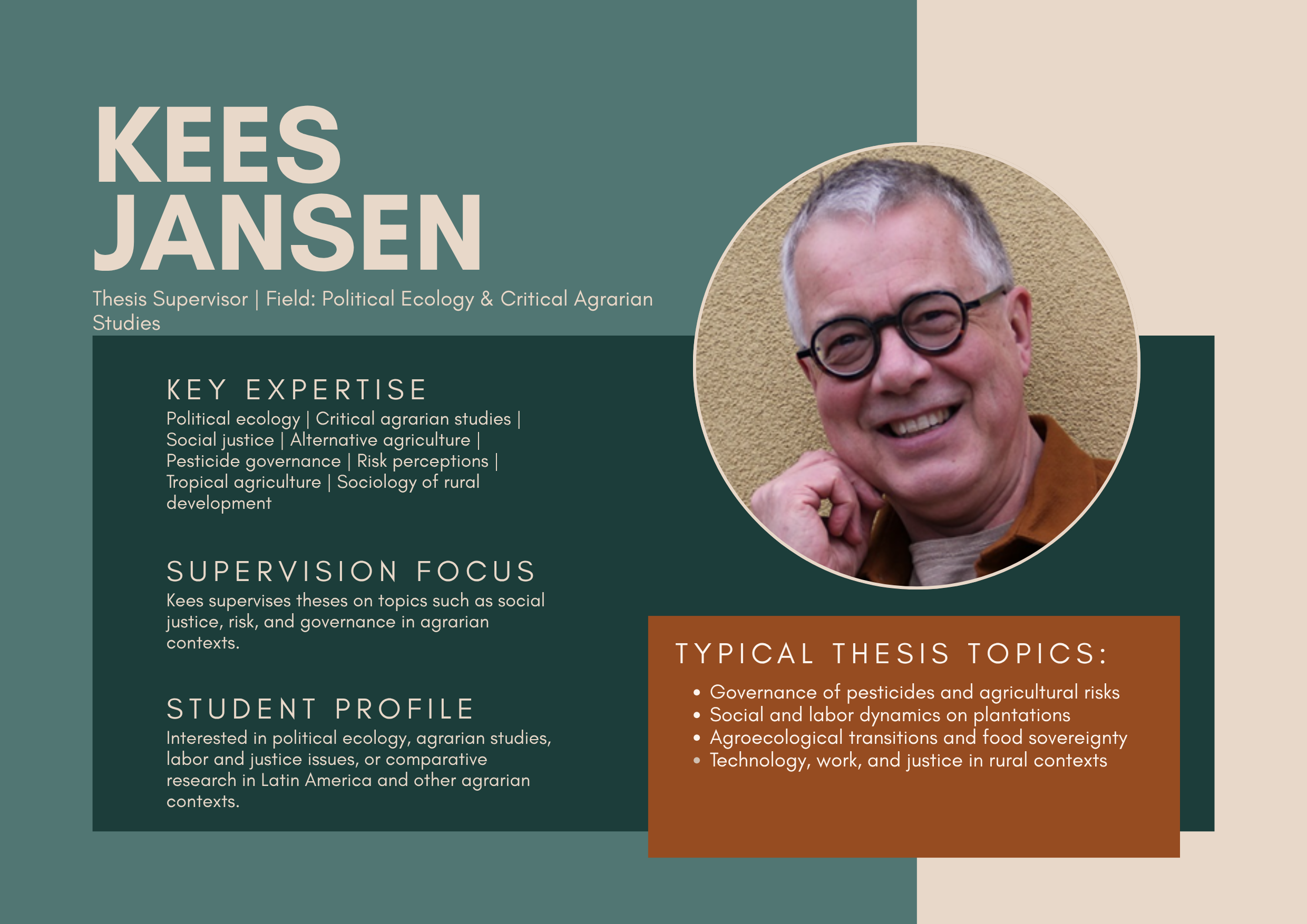
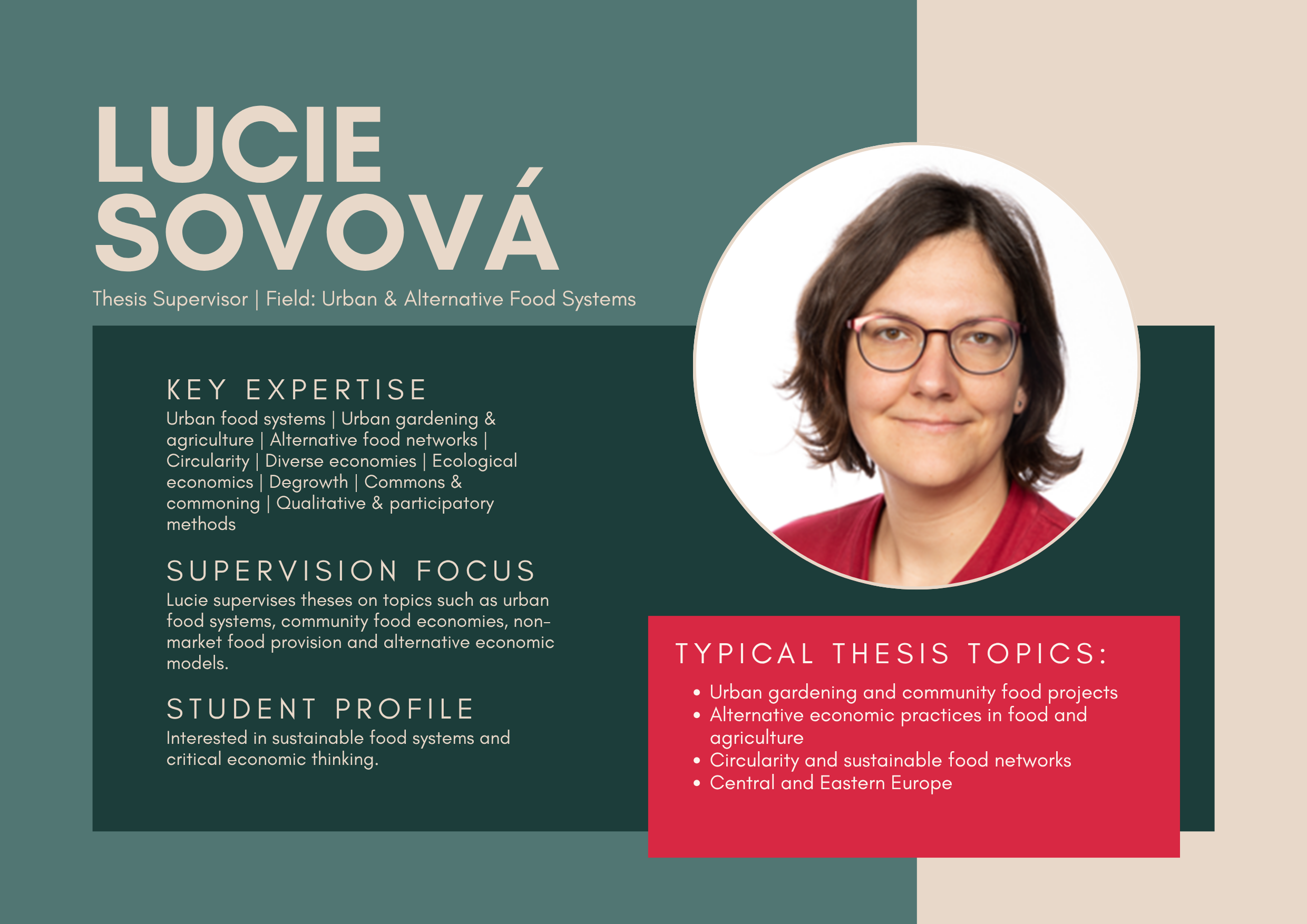
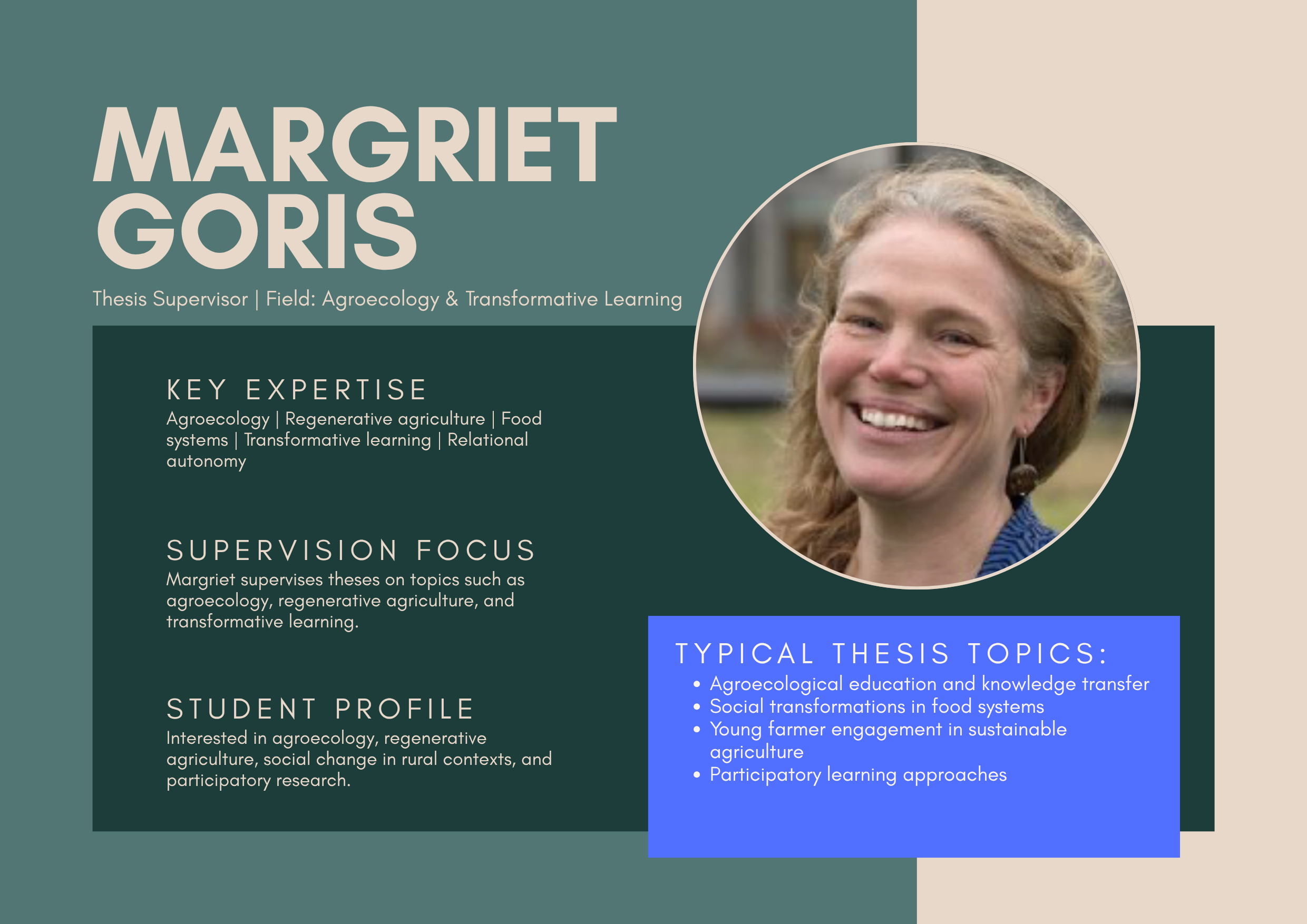
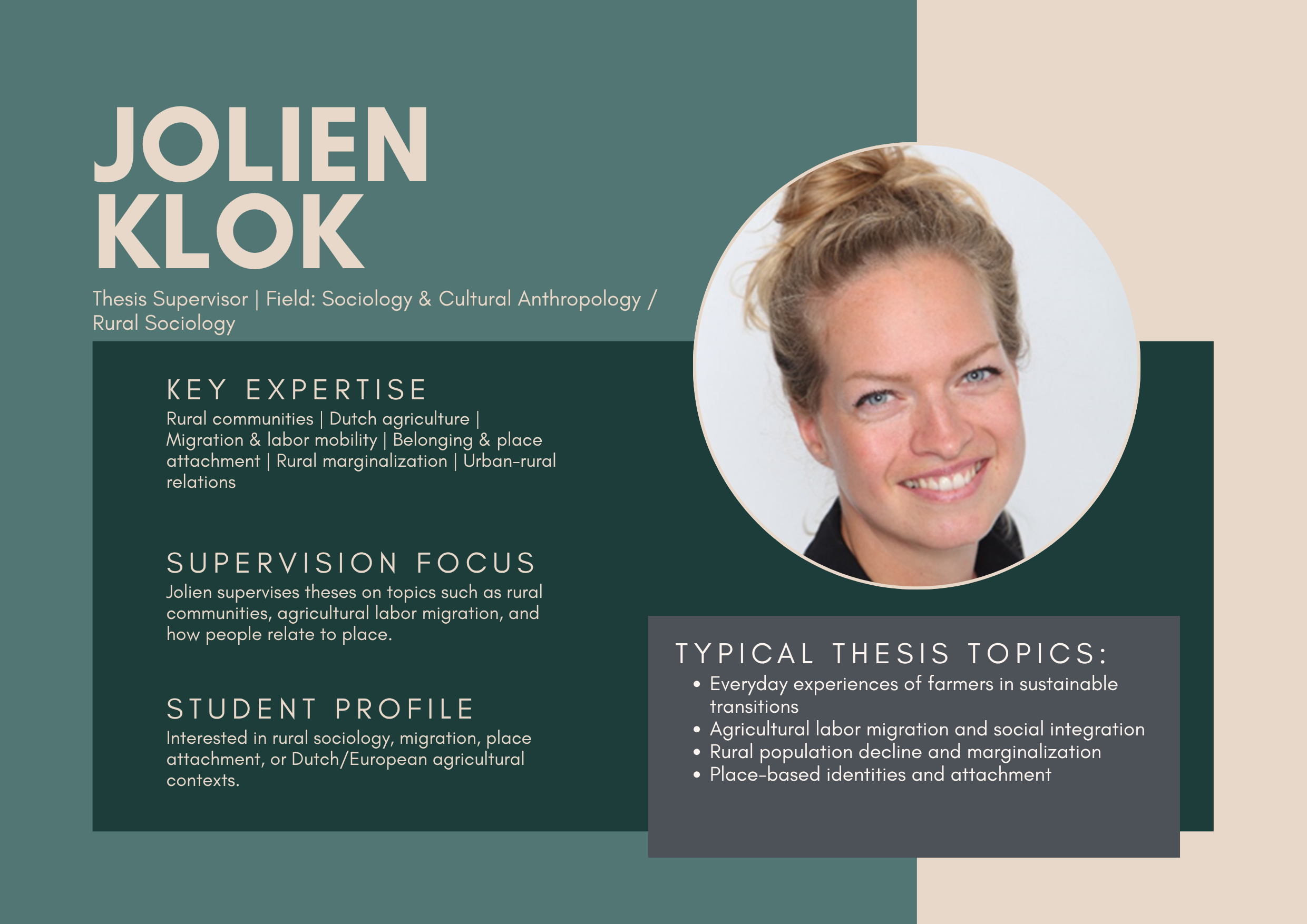
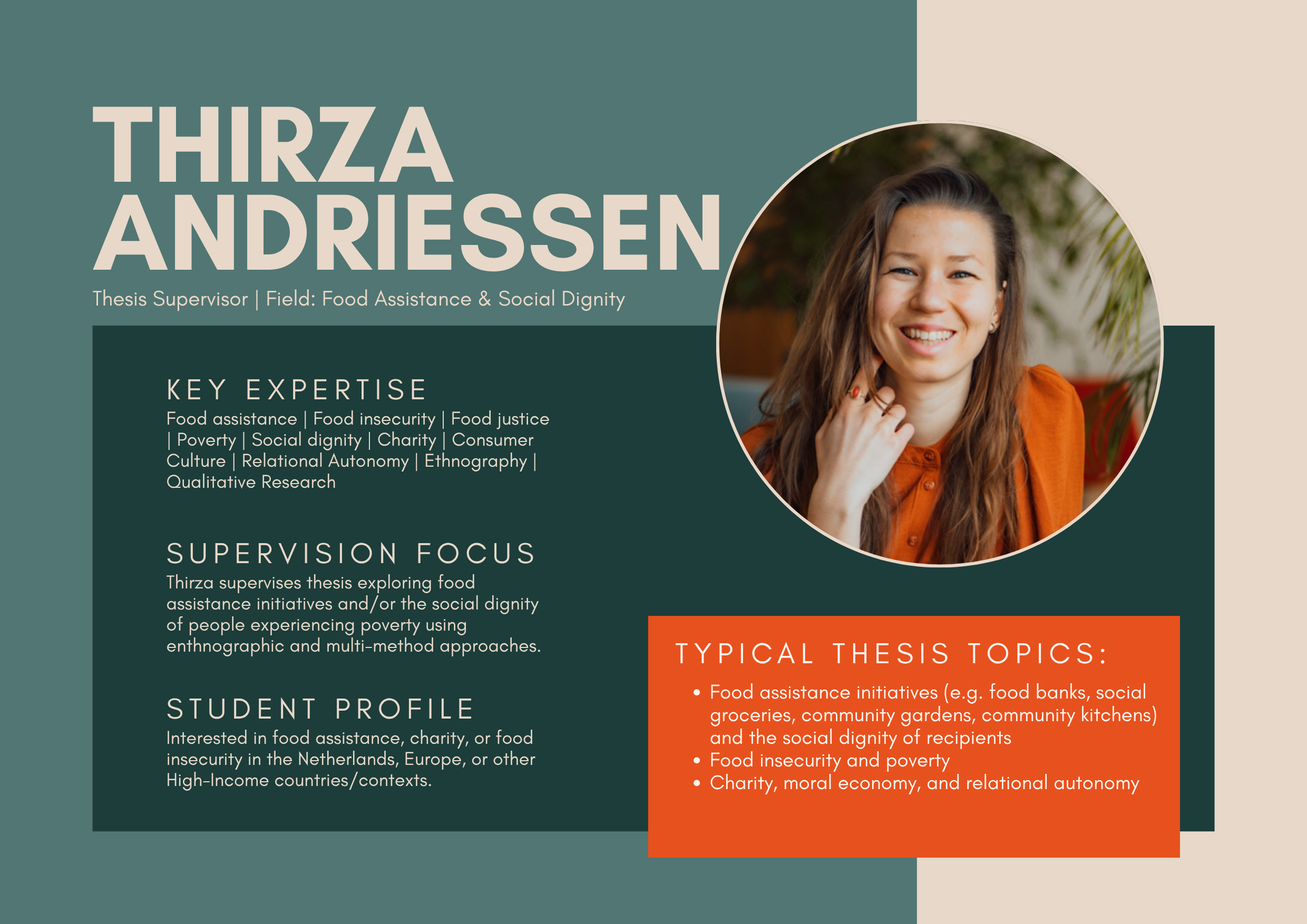
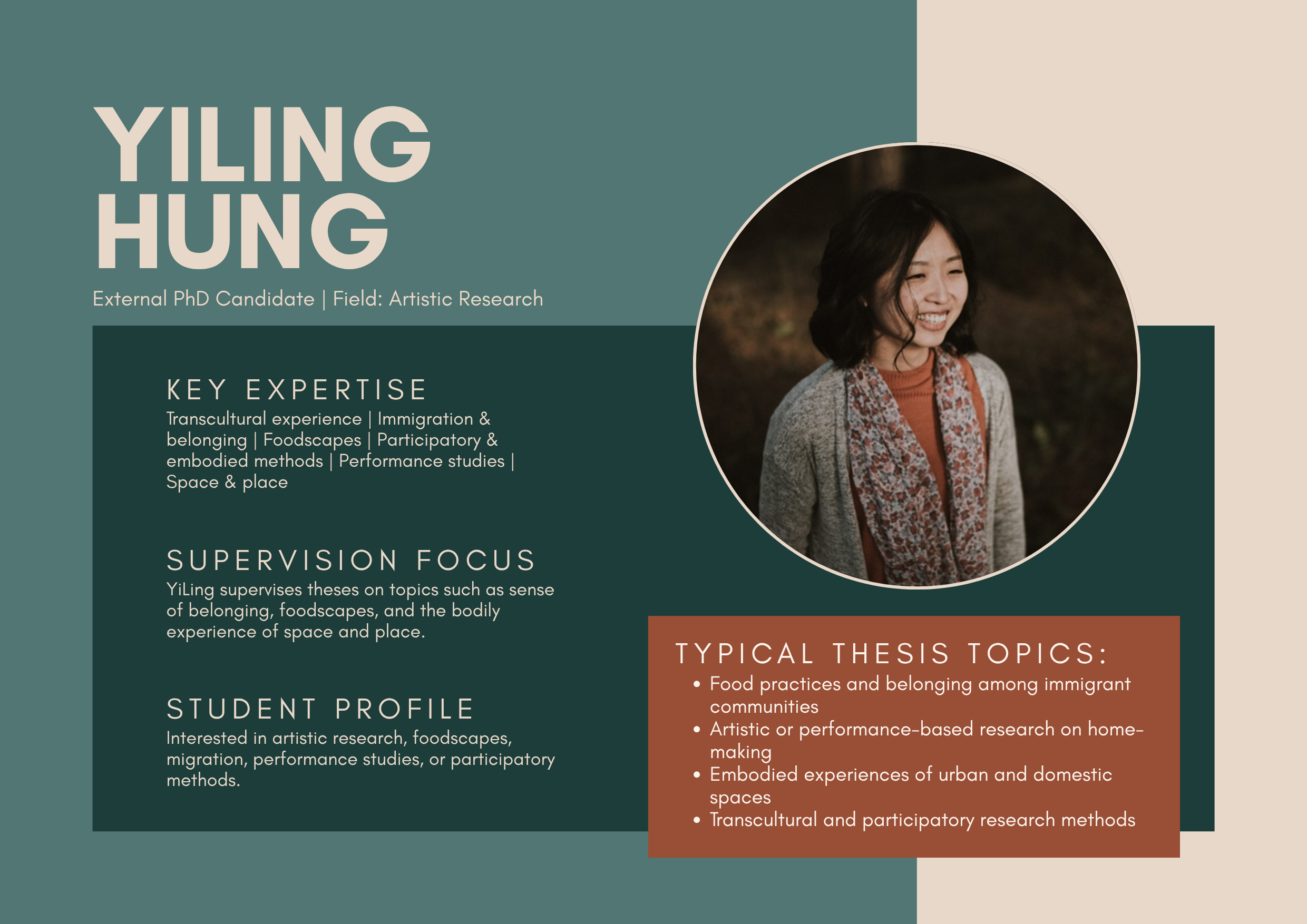
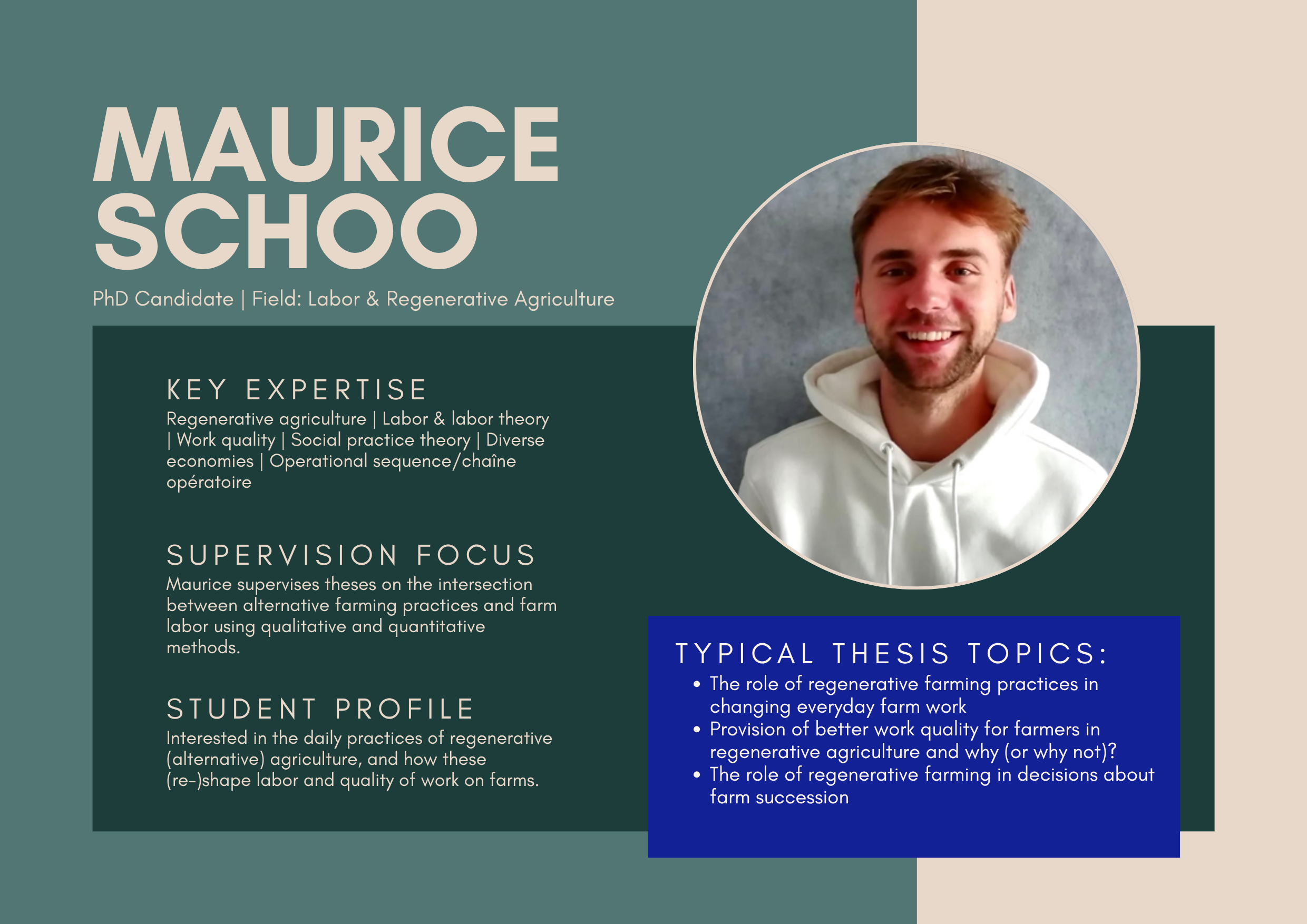
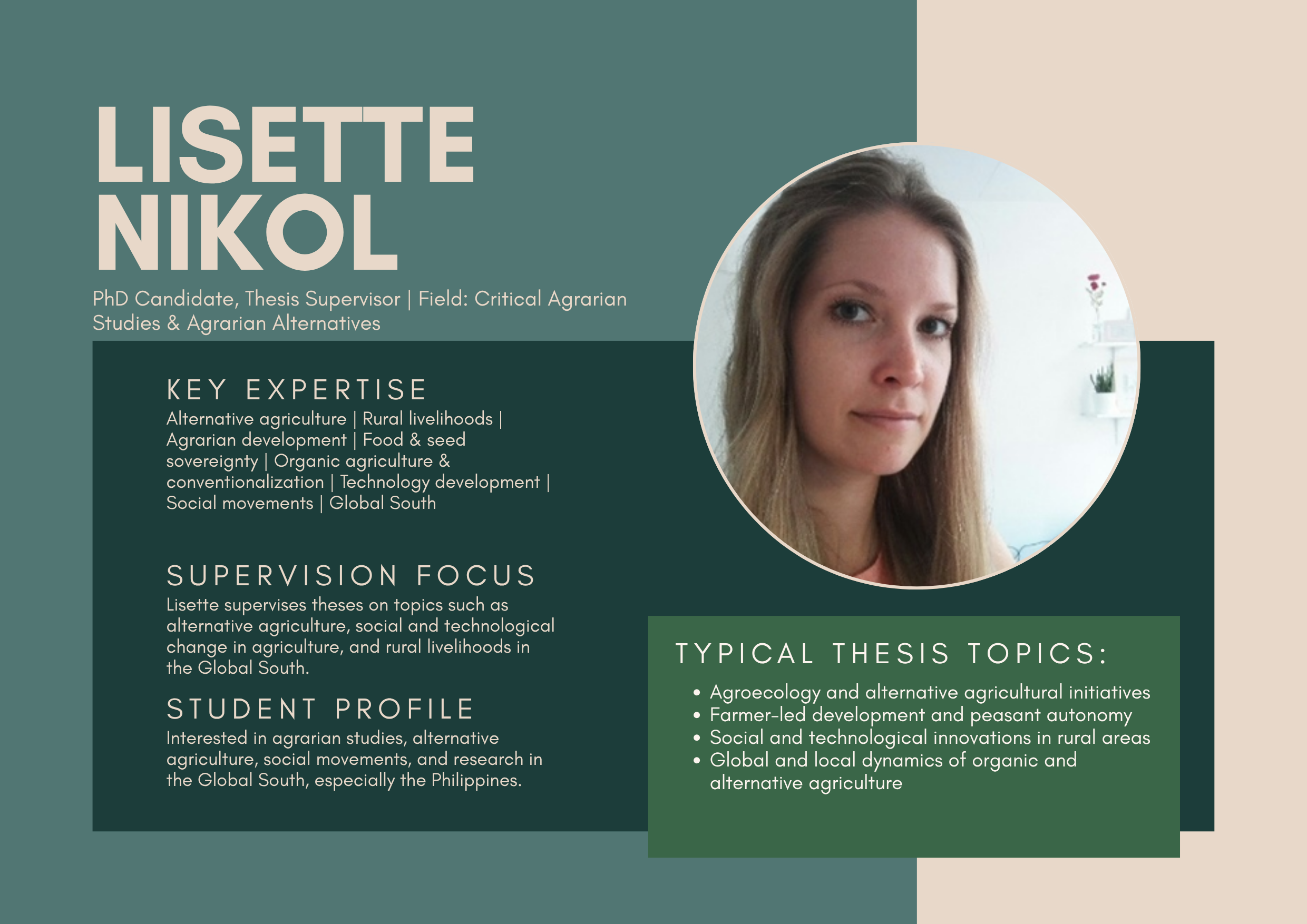
Exploring thesis opportunities within RSO: Meet our supervisors

Are you a WUR student looking for a thesis topic that engages with urgent social, political, and environmental questions in food systems, rural transformations, and global change?

The Rural Sociology Group offers a wide range of research opportunities across three key themes: Agrarian Change, Food Provisioning, and Rural Development. Each theme brings together a diverse group of supervisors working on critical issues shaping contemporary rural and food system transformations.

Across these themes, students are invited to engage with research that does not only describe change, but also critically examines power relations, inequalities, and possibilities for more just and sustainable futures.

In Agrarian Change, researchers explore the interconnected social and environmental crises shaping agrarian life, agricultural practices, and rural livelihoods. This includes questions around land, labour, ecological transformation, and alternative pathways for agrarian communities. Students interested in political ecology, rural inequality, and agricultural transitions will find a strong intellectual home here.

The Food Provisioning theme focuses on how food is produced, distributed, and governed in both rural and urban contexts. It brings attention to alternative food economies, food justice, and the politics of food systems transformation. This is a space for students interested in food governance, sustainability transitions, and the everyday practices that shape how food systems function.

The Rural Development theme examines ongoing transformations in rural areas and emerging rural–urban relations. It pays particular attention to power dynamics, governance processes, and the lived realities of rural change. Students working on questions of inequality, policy, and rural futures will find rich opportunities for engagement here.

Within these themes, students can connect with supervisors whose work spans critical social science perspectives on food and rural systems. Supervisors bring expertise in areas such as agrarian political economy, food governance, rural transformation, and environmental change, and are open to supporting students in developing tailored thesis projects.

We encourage students to explore individual supervisor profiles and ongoing research projects to identify topics that align with their interests.

If you are considering a thesis within RSO, we welcome you to reach out and discuss possibilities. Engaging with our research community is an opportunity to shape your own academic path while contributing to urgent debates on food systems, rural change, and social justice.

For more information, students can consult the supervisor profiles below or via Brightspace (WUR-only access) or contact the education coordinator at thesis.rso@wur.nl

Artikel Volkskrant ‘Mag je een oude geneeswijze claimen als merknaam’

Vandaag in de Volkskrant: aandacht voor een belangrijk maatschappelijk debat over intellectueel eigendom, culturele toe-eigening en de commercialisering van traditionele kennis. In het artikel wordt onze collega Mark Vicol geciteerd over de gevolgen van het vermarkten van ayurveda door grote bedrijven.

De inzichten van Mark bouwen voort op gezamenlijk onderzoek met masterstudent Marine Viale. Samen onderzochten zij hoe intellectueel eigendomsrecht en commerciële belangen traditionele kennis en gemeenschappen in het mondiale zuiden kunnen raken.

Mooi om te zien hoe academisch onderzoek zo direct bijdraagt aan actuele maatschappelijke discussies — en hoe onze studenten daarin vanaf het begin een volwaardige rol spelen.

Lees het artikel in de Volkskrant (paywall): https://www.volkskrant.nl/economie/mag-je-een-oude-geneeswijze-claimen-als-handige-merknaam-miljardenbedrijf-rituals-botst-met-ayurveda-therapeuten~b6769cd4/