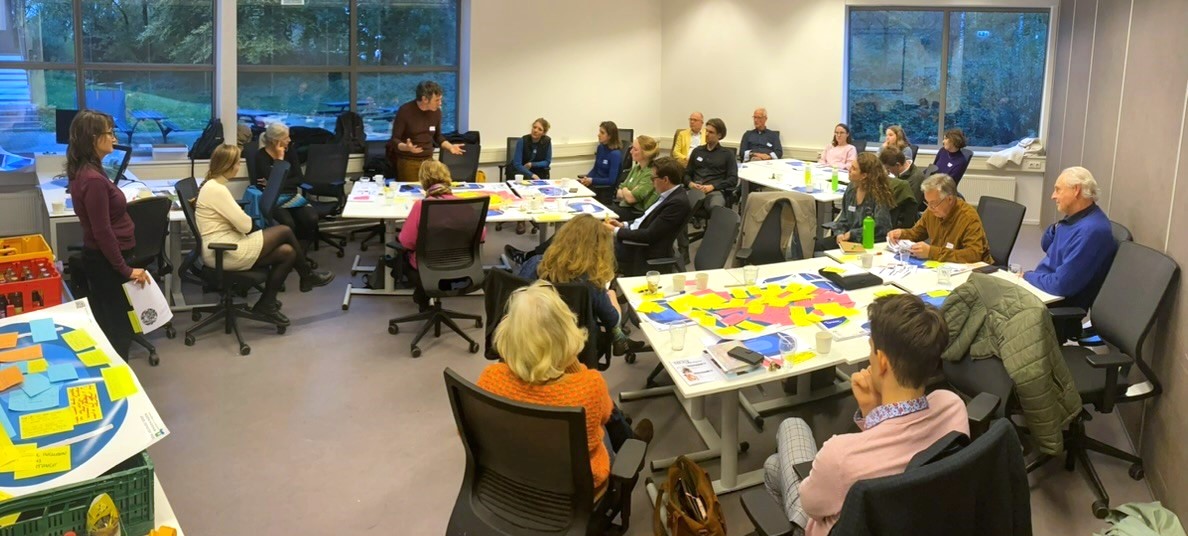
Margriet Goris bij 𝗘𝗲𝗻𝗩𝗮𝗻𝗱𝗮𝗮𝗴 𝗼𝘃𝗲𝗿 𝘂𝗶𝘁𝗱𝗮𝗴𝗶𝗻𝗴𝗲𝗻 𝘃𝗼𝗼𝗿 𝗯𝗶𝗼𝗹𝗼𝗴𝗶𝘀𝗰𝗵𝗲 𝗯𝗼𝗲𝗿𝗲𝗻

Biologische boeren kampen met grote onzekerheid door korte pachtcontracten en stijgende grondprijzen. Ruraal socioloog Margriet Goris, werkzaam bij de Rural Sociology Group, belichtte in EenVandaag de moeilijke situatie waarin biologische boeren zich bevinden.

“Biologische landbouw vraagt om een lange termijnvisie, waarbij bodemherstel en biodiversiteit centraal staan,” legt Margriet uit. Echter, door kortlopende contracten, soms zelfs van slechts één of twee jaar, wordt duurzame bedrijfsvoering haast onmogelijk. Deze onzekerheid bedreigt het voortbestaan van vele biologische bedrijven die jarenlang hebben gewerkt aan gezonde bodems en ecologische productie.

Volgens Margriet zou de overheid hier verandering in kunnen brengen door de pachtregelgeving aan te passen en langlopende contracten te stimuleren. Dit biedt niet alleen stabiliteit aan boeren, maar ondersteunt ook de ambitie van het ministerie van Landbouw om tegen 2030 minstens 15 procent van de landbouw biologisch te maken.

Lees meer over deze ontwikkelingen en de uitdagingen voor biologische landbouw, of kijk de uitzending van EenVandaag hier terug: Biologische boeren zijn bang voor toekomst door korte pachtcontracten.

Video series | Marit Meijer: Exploring alternative food networks with a passion for innovation and community.

Marit Meijer, PhD candidate at the Rural Sociology Group, shares her excitement about the group’s community spirit and how it fuels her research into alternative food networks in crisis-stricken urban areas of sub-Saharan Africa.

“After joining the Rural Sociology Group, I was quickly inspired by the infectious enthusiasm and strong sense of community. My research into alternative food networks in sub-Saharan Africa is driven by this collective passion, which encourages creativity and innovation at every turn.”

Read more about Marit’s research here.

Podcast | Wat voelt het platteland?

Luister naar de nieuwste aflevering van de podcast De Sociologie Show met Bettina Bock. De voorlaatste verkiezingen leken met de winst van de BBB gedomineerd door gevoelens van miskenning in de regio’s en dorpen. Is dat gevoel sinds een jaar – en de blijvende verschrompeling van de BBB – soms verdwenen?

Bettina Bock, in Wageningen hoogleraar inclusieve plattelandsontwikkeling en in Groningen bijzonder hoogleraar bevolkingsdaling en leefbaarheid in noord Nederland, heeft daar zicht op. Hoe zit het met de gevoelens van miskenning buiten de stad? En zijn de zorgzame gemeenschappen die nu op veel plekken wortel schieten een bron van trots?

Presentatie door Tara Lewis (journalist) en Marcel Ham (hoofdredacteur van Tijdschrift voor Sociale Vraagstukken).

Luister de podcast hier.

Video series | Jessica Duncan: Uncovering the politics of food systems and fostering real-world change.

Jessica Duncan, Associate Professor at the Rural Sociology Group, discusses her passion for exploring the politics of food system transformation and how collaborative projects like SWIFT are driving gender-inclusive changes in agriculture.

“For the past decade, I’ve been privileged to work with an incredibly diverse and committed group at the Rural Sociology Group. Together, we challenge assumptions and address structural barriers to change. Projects like SWIFT, which focuses on gender-inclusive policies in agriculture, demonstrate the real-world impact of our work.”

Read more about the SWIFT project here.

Publication | Exploring the global connections of our food system

The complexity of food production and consumption in the Netherlands is deeply intertwined with international dynamics, requiring new approaches to sustainability. In this new publication, ten essays explore how global interconnections influence the ability of governments to shape policies and drive societal change within the Dutch food system.

Our colleagues Bettina Bock and Han Wiskerke contributed an essay, “Food from Near and Far: Shifting Relationships in the Food Chain.” They explore how agriculture has evolved since WWII, marked by modernization, globalization, and the rise of local food initiatives. These shifts not only affect nature and landscapes but also challenge how we balance efficiency, sustainability, and social cohesion.

You can download and read the publication here (available in Dutch only).