New publication in the Journal of Rural Studies: How can rural proofing better support the future of rural areas?
In the paper, “Rural Proofing Challenges, Claims and Controversy: The Case of the Netherlands”, our colleagues Bettina Bock, Henk Oostindie, and Han Wiskerke explore the potential of rural proofing through a case study of the Dutch National Housing Policy Initiative.
The paper examines how policies can better address rural housing needs and argues for an approach that goes beyond checking policy impacts in advance. Instead, rural proofing should be a collaborative, two-way process that connects national and local policymakers and brings rural needs into place-based policymaking.
The publication contributes to ongoing debates about rural development and multi-level rural governance.
This publication is also a reminder of Henk’s valuable contribution to research on rural development.
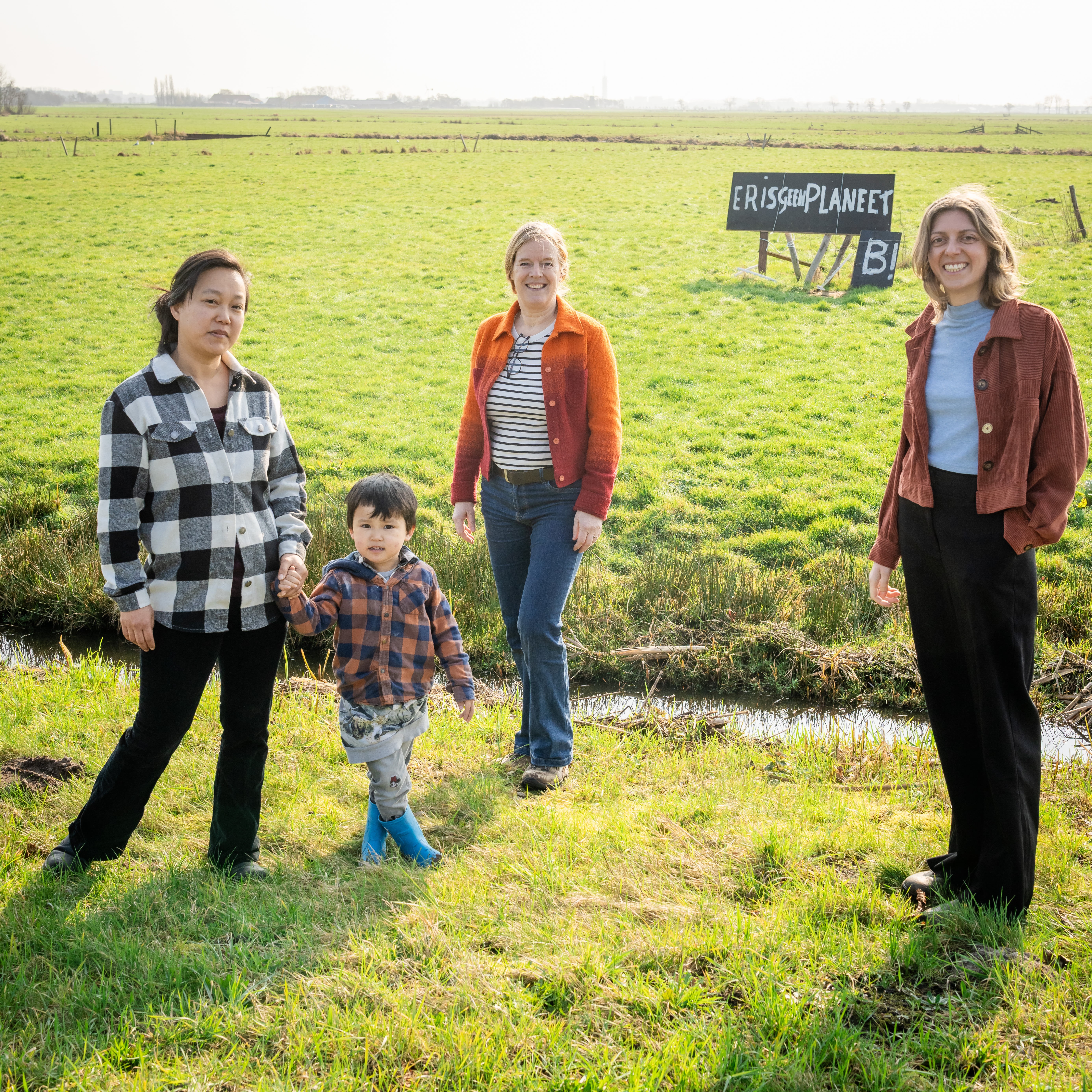
Discussies over het landelijk gebied gaan vaak over cijfers, modellen en beleid. Maar achter deze discussies staan mensen: bewoners en professionals die zich dagelijks inzetten voor verbeteringen in hun gebied. Vanuit dit idee nam onze collega Marleen het initiatief voor een nieuwe verhalenbundel die juist de menselijke kant van gebiedsgericht werken laat zien.
Over de bundel
De bundel verzamelt de ervaringen van mensen die werken én wonen in verschillende gebieden in Zuid-Holland. Vanuit hun eigen rol dragen zij actief bij aan de ontwikkeling van hun omgeving.
In plaats van abstracte analyses laat de bundel zien wat er speelt in de praktijk: van samenwerking en idealen tot dilemma’s en spanningen. Tegelijk biedt de bundel waardevolle inzichten voor iedereen die werkt aan gebiedsgerichte opgaven. De bundel nodigt uit om met een open en nieuwsgierige blik te kijken naar de perspectieven van anderen — niet alleen als professional, maar juist ook als mens.
“Gebiedsgericht werken is geen wondermiddel. Het legt een zware druk op de schouders van de betrokkenen: boeren, ambtenaren en natuurorganisaties. Tegelijkertijd wemelt het landelijke gebied van initiatieven. Zoals een boer vertelt: ‘We moeten ons pad blijven volgen – laten zien dat wij ook natuurbeheer kunnen doen.’”
In gesprek met Marleen
Waarom heb je dit initiatief genomen? Ik werkte al een tijdje met narratieve interviews, ook met studenten, en zag hoe krachtig deze vorm van verhalen vertellen is in een wereld waarin cijfers en technische oplossingen vaak domineren. Vanuit dat idee wilde ik verhalen verzamelen, die de zachte, menselijke kant van gebiedsgericht werken laat zien. Het idee was om persoonlijke verhalen van bewoners, boeren, ambtenaren en andere betrokkenen samen te brengen, zodat praktijkervaringen zichtbaar en bespreekbaar worden.
Wat maakt deze verhalen belangrijk in het huidige debat? Het debat over het landelijk gebied is vaak polariserend. Daardoor raken constructieve worstelingen en positieve initiatieven van mensen onderbelicht. Deze bundel laat zien dat er bereidheid is om nieuwe, duurzamere manieren van samenwerken te zoeken. Het biedt een realistisch én hoopvol beeld van wat er daadwerkelijk gebeurt en hoe het anders kan.
Wat hoop je dat lezers meenemen? Ik hoop dat lezers een genuanceerd beeld krijgen van alle pogingen die via gebiedsgericht werken worden ondernomen om verandering te realiseren. Hopelijk inspireren de verhalen het landelijke beleid om de condities te scheppen die deze initiatieven ondersteunen, zodat natuur en landbouw beter kunnen samenwerken in stad en land.
Van cijfers naar verhalen
Volgens Marleen biedt de bundel een belangrijk tegenwicht in een tijd waarin discussies over het landelijk gebied vaak polariserend zijn. Door persoonlijke verhalen centraal te stellen, ontstaat meer begrip voor de mensen achter de opgaven én voor de complexiteit van gebiedsgericht werken.
De bundel is ontwikkeld binnen het actieleertraject Gebiedsgericht Werken van ACCEZ, dat gestart is bij het Zuid-Hollands Programma Landelijk Gebied. Hier staan samen leren en reflecteren centraal—essentieel voor effectieve samenwerking in gebiedsprocessen en voor de ontwikkeling van een vitaal landelijk gebied.
Verhalen spelen daarin een sleutelrol. Ze helpen ervaringen te delen, perspectieven zichtbaar te maken en verbinding te creëren tussen betrokkenen.
De bundel is mogelijk gemaakt vanuit ACCEZ, waarin onder andere Wageningen University & Research als partner betrokken is. Zo wordt wetenschappelijke kennis verbonden met praktijkervaringen in het landelijk gebied—zodat professionals leren van analyses én van elkaar.
Praktische informatie
De bundel wordt vandaag gelanceerd tijdens de Gebiedendag van de Provincie Zuid-Holland.
What does it mean to bear witness to colonial violence without reproducing the very extractive logics one seeks to critique? In Earthmoving: Extractivism, War, and Visuality in Northern Kurdistan, Eray Çaylı examines how landscapes, artistic practices, and academic work intersect with/intervene in histories of colonial violence, environmental destruction, and resistance. This review explores how the book challenges conventional approaches to testimony, memory, and scholarship, asking how we might relate differently to land, people, and the work of remembering.
Earthmoving: extractivism, war, and visuality in Nothern Kurdistan by Eray Çaylı, Austin, University of Texas Press, 2025, 199 pp., 65$ (hardback), ISBN 978-1-4773-3277-1
Since 2025 I have been working with the Rural Sociology department on a project about the labour and the wellbeing of workers in regenerative agriculture. My interest and passion around the topic of labour and rural development grew during my master’s in Cultural Anthropology at Leiden University in 2022. My topic was how Yazidis experience, practice, and construct motherhood and family while being displaced in the Kurdistan Region of Iraq (KRI) and the Netherlands. I spent time with Yazidi families in asylum centres and homes in the Netherlands, as well as time with mothers in refugee camps in KRI. I looked at the division of labour in the household, changes in the perception around the role of mothers in Yazidi families, and how displacement has impacted family life.
In a new article, Dawn Cheong and Bettina Bock argue that farmers’ capabilities, a core component of social sustainability, have been largely neglected in sustainable agriculture discourse. Using a relational approach to capabilities and autonomy, this study explores how women farmers translate the opportunity of agricultural innovation into their valued outcomes, and which factors shape their capabilities, in the context of Terai, Nepal, based on micro-focus group discussions (FGDs) and a survey. Whilst women have experienced a rapid expansion of their capacities and status as producers, their fixed status as providers of social reproduction hinders this expansion from being fully translated into valued outcomes. Gendered and intersectional personal, social and environmental conversion factors independently and co-constitutively shape these capability spaces. In this process, women navigate the demands of sustaining productive roles whilst maintaining the quality of social reproduction, often compromising their bodily, mental and intellectual replenishment and enduring cumulative reproductive health risks across their life courses. This implies that even when provided with the same opportunities, not all women farmers are able to translate them into desired outcomes. The lack of social and institutional interventions to redistribute and reorganise reproductive labour not only functions as a structural barrier preventing women from fully leveraging their productive capabilities but also risks compounding the depletion of women’s labour sustainability, overall well-being, and ultimately, the sustainability of agrarian society.