Foreign cuisines and authentic Dutch experiences

Toledo Wageningen

Going to a regular foreign cuisine restaurant in the Netherlands can be called an authentic Dutch experience since these restaurants often represent a Dutch interpretation of a foreign cuisine. That at least, is my conclusion from the fieldwork the students did among the many foreign cuisine restaurants in Wageningen.

Authenticity can be created in various ways, by the language on the menu or as welcomed by the host, by the music, the interior and of course by the dishes themselves. However, it is mainly here where most adaptation takes place to the Dutch palate. We learned that authenticity is a social construction in which the initiator meets the expectations of a customer base. If they both agree a certain idea of authenticity can be maintained. In the judgement about authenticity knowledge is needed, different ‘capitals’ according to Bourdieu. ‘Capitals’ to be able to distinguish oneself or to judge a good distinction. Of course, the Dutch often lack a deep knowledge and experience with the culture of the foreign cuisine; they miss the cultural capital to judge between ‘authentic’ and ‘authentic’. It is the tourist gaze, which works similar to foreigners visiting the ‘Zaanse Schans’ or the like.

A good illustration of this mechanism is that some restaurants make special dishes which are not part of the menu but can be asked for – only if you know. Hence the Chinese restaurants serve Babi Pangang or Foe Young Hai to their Dutch customers, which are not Chinese but Indonesian dishes and cook on demand for the Chinese guests.

Even the car-booth sales on the campus of the university makes a distinction between Chinese and other students. A Chinese student in class found out, when she accidentally ordered in the English language, that she got something different from normal.

Indeed, for an analysis of foreign cuisine restaurants in the Netherlands it may be more important to look at the history of how the particular restaurant-type came into existence in the Dutch context than to make a comparison with the national cuisines they are supposed to stem from. This is brilliantly explained by Jennifer Lee in this Ted Talk.

Insect food acceptance; a Wageningen bias?

Last week, students of the Food Culture Course conducted fieldwork on how people relate to the eating of insects or insect protein. To our surprise, many more respondents were open to the idea of eating insects or food with insect protein than expected. As I wrote earlier, insects are generally not seen as part of the category ‘food’ in Western societies. Hence, putting forward the option of eating insects to people who never considered this as a food item can instigate a disgust reaction which in turn can be seen to illustrate an unconscious taboo.

Disgust, as we learned from Rozin and Fallon has its roots in our mind, in wider ideas connected to the item which lead to the assumption that therefore the item will taste bad/is dangerous/should be avoided. Disgust can be observed by the facial expression of people as well as by choking or vomiting reactions. It is often impossible for a disgusted person to tell the precise reason for the disgust reaction, other than that the ‘idea’ is not right.

Students did find disgusted reactions in people’s facial expressions and in the difficulty people had to reason about what made it disgusting. However, 60% of the 111 (mainly student-)respondents were found to be open to the eating of insects, or insect protein in processed food. In their reports, students concluded that this high willingness to try may be related to that we are in Wageningen (not a ‘normal’ place), in 2006 briefly ‘City of Insects’ with also currently lots of research on insect protein and a student population who is exposed to the ‘life science’ issues in current debates.

Awareness of environmental degradation related to meat production and future scarcity of animal protein were among the often mentioned reasons why many student-respondents were open to the idea of eating insects. Those who expressed disgust had some typical reactions close to what was described in the literature for this week. For example, the problem of categorisation which Mary Douglas writes about. Is an insect indeed an animal and hence meat? Or where does it belong in the food categories we routinely employ? Confusion over categorisation – insects as anomaly not fitting a particular category – was mentioned alongside disgusted reactions of those respondents.

Also the ‘law of sympathetic magic’ may have played a role in people’s disgust reactions, which means that an item is contaminated by negative associations. For example (some) insects sit on manure, therefore insects are dirty and cannot be eaten. No real conclusions can be drawn on such a small and specific interview-population, however, given the surprising openness, we may once belong to the 3000 ethnic groups in 113 countries all over the world who regard insects as delicacies.

Eat your landscape Part III; neighborhood forest garden

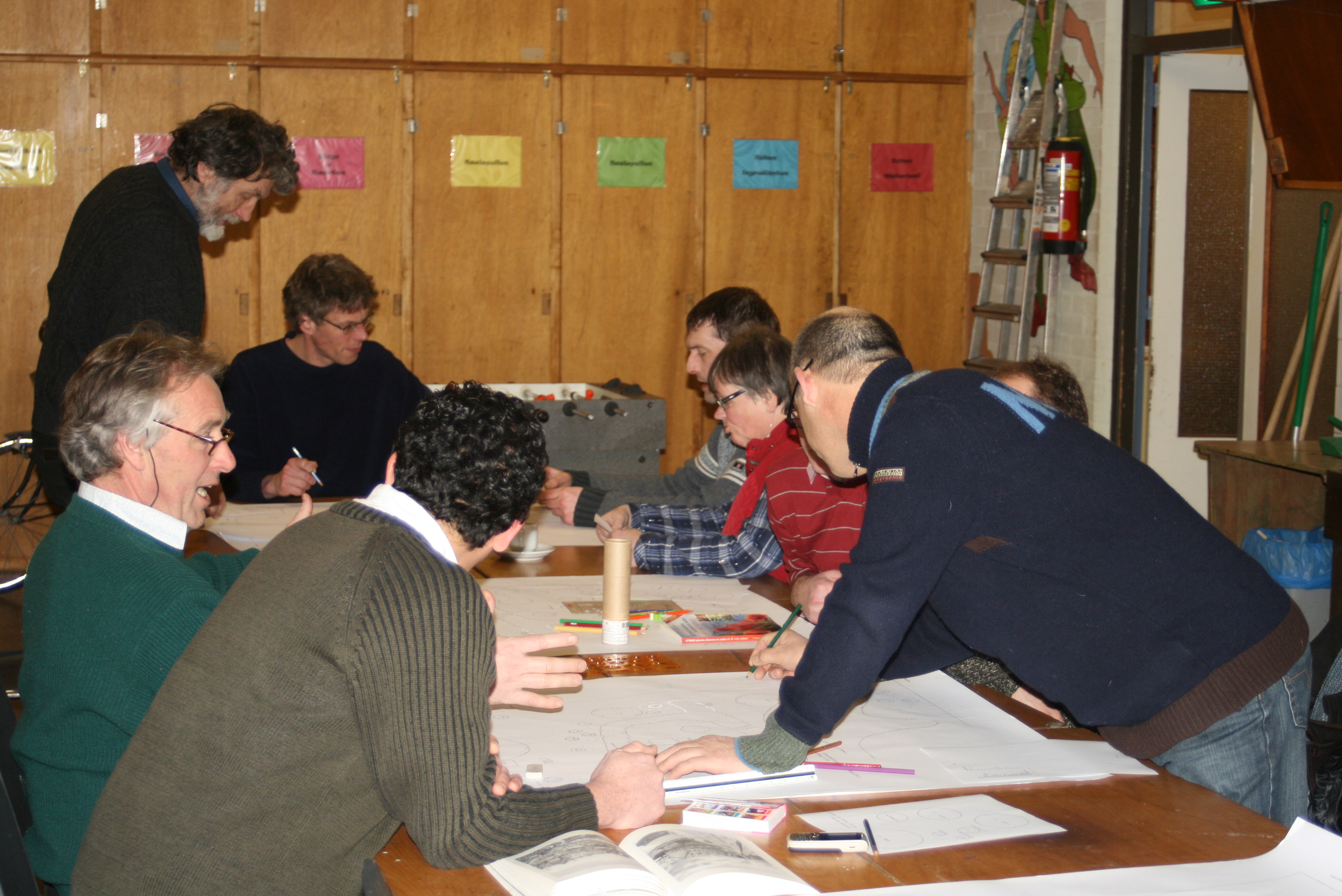
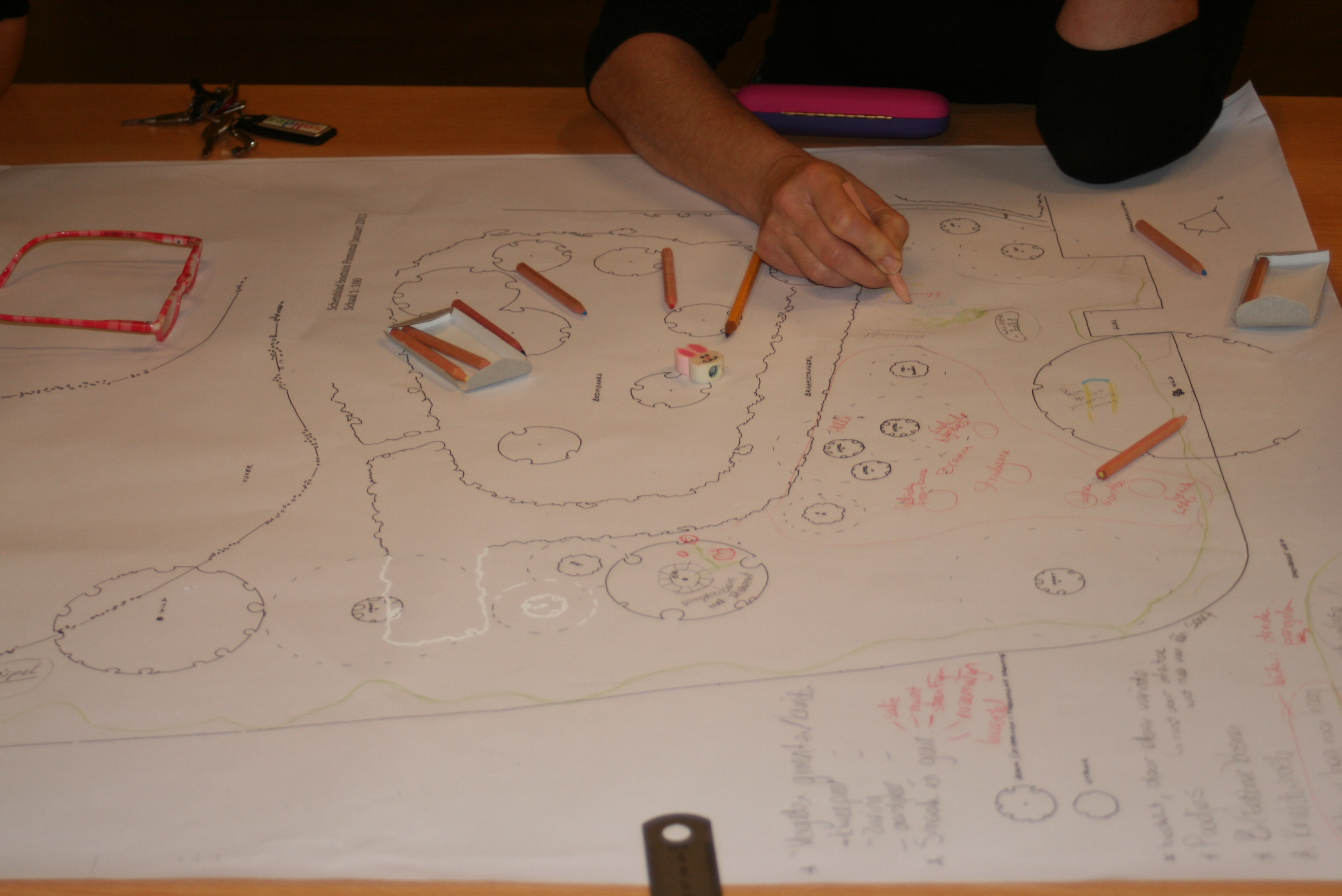
Food connects us to our landscape (see earlier examples I and II). More than a year ago, a group of people from the Pomona neighborhood, born from the Transition Town Vallei animation evenings, started making plans to improve part of the 1 hectare old orchard which became a wild and inaccessible bush overgrown by brambles. A year of planning, project development, fund-raising and building networks followed. Funding was secured from the KNHM, Oranjefonds and two neighborhood platforms of the municipality. A week ago, finally, we had our design evening with some 20 people from the neighborhood. It was the second of three evenings to inform, design and decide with all inhabitants who are interested to a proposal for planting a wide variety of edible trees, bushes and plants. Planting will take place in March, and a neighborhood party to ‘open’ it officially will follow in the summer, when everything is growing and green. We hope to engage more and more inhabitants because the neighborhood needs to take care of the maintenance once it is planted. This will be quite a challenge as old orchard has been neglected so far.

On the other hand, there is a history of successful community activism and organisation here. Although the old orchard now has the status ‘green’ in the municipal spatial plan, this was not always the case and its current appearance is part of a history of neighborhood protest against an additional apartment building in this already densely built area. When the next door ‘Boomgaard’ neighborhood with semi-detached and detached houses was built at the former university orchard about 10 years ago, this 1 hectare finally got the ‘green’ status to function as a buffer and recreation space. The housing developer agreed to a landscape design with a lower swamp area, a restored piece of old orchard and some new fruit trees. Little to no maintenance after planting left few new trees alive and currently the brambles are growing into the old fruit trees.

The ‘edible forest’ will give fruits to harvest and herbs to cut. It will be great for the active neighborhood centre Pomhorst where lots of activities involve nature and food, such as weekly cooking classes with children. Also nature education can benefit from a better accessible and more varied green area. There are quite some hurdles to take, but it was great to see 7 groups busy penciling in new plants and paths.

Eating insects; a taboo?

In first week of the Food Culture course, we look deeper into what a food taboo is. There are many theories on the reasons for taboos and how taboos come into existence. But a sampling of 78 studies from cultures all over the world found that the big majority of food taboos is related to meat and thus to animals (Fessler and Navarette 2003). These authors conclude that in our evolutionary pan-human psychology there is an inherent ambivalence towards meat. It is the most prized food for its superior taste and nutrition but not after killing an animal, a spirited creature as many cultures believe.

Meat consumption from current acceptable livestock is under increased moral constraint for its unsustainable effects on the global environment. One of the alternatives could be insect farming as Science reported on April 30th 2010. At Wageningen University lots of research is done by food technology and entomology groups to further the possibilities to use insects as a source of protein.

However, in Western cultures insects are not regarded edible.  They are unconsciously tabooed just like almost all other animals are unconsciously tabooed. We eat a very small range of animals compared to the immense possibilities. This is different from an explicit food taboo where rules and rituals have to guard, that what could be eaten, should not be eaten. Which is the case for example around the pork avoidances by Jews and Muslims.

At the moment students of the course are doing fieldwork out in the streets of Wageningen with a self-prepared questionnaire on the eating of insects. They will collect data about people’s reaction towards the eating of insects or the use of insect protein as substitute in for example sausages. Tomorrow we will analyse the results together. Are there signs of disgust by the idea of eating insects? Then this may be an indication of a taboo as we read in the literature. It may also be a less fundamental matter of neophobia; the fear of new food.

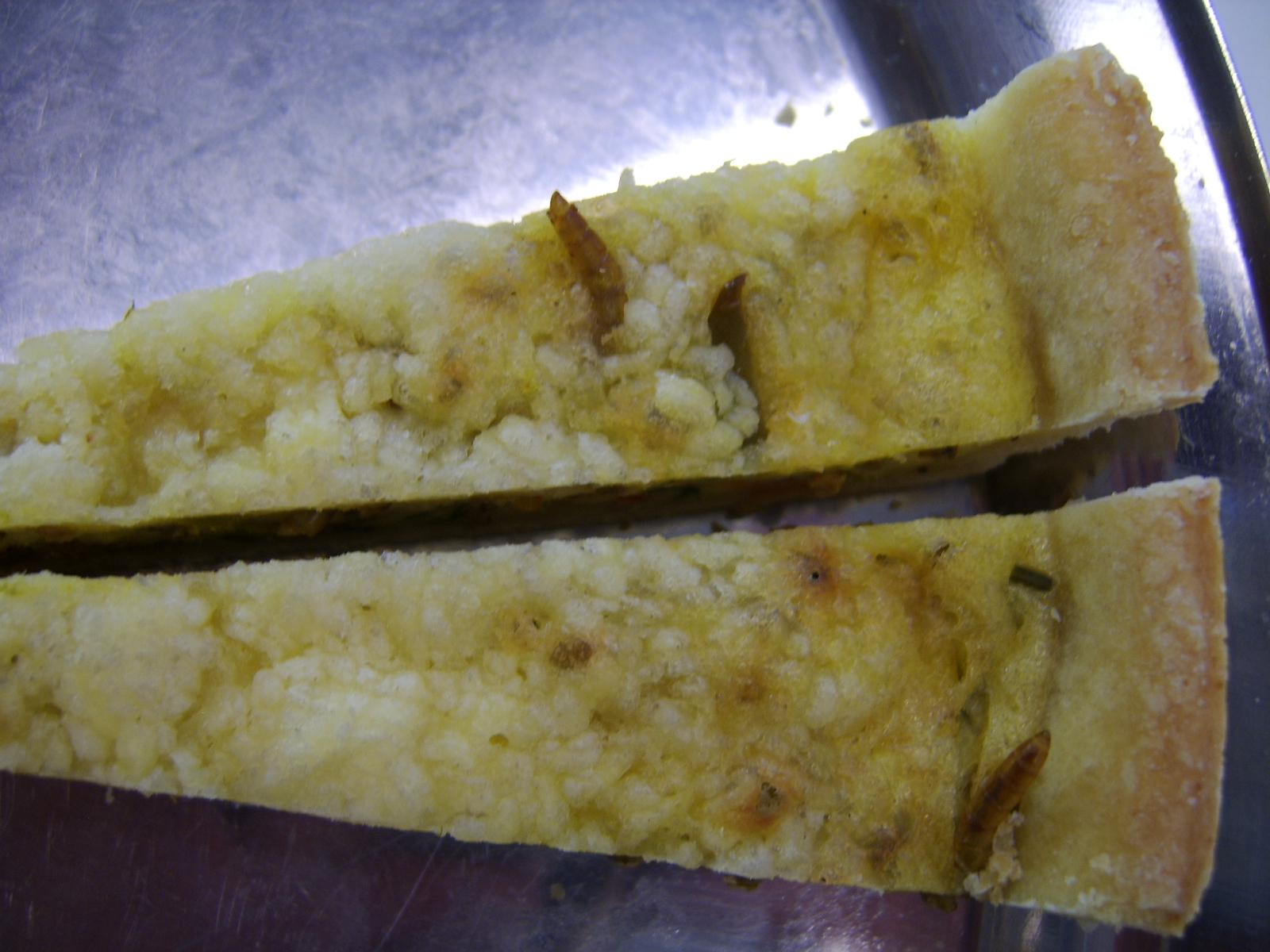
The students themselves showed openness towards eating insects. In the break of the guest lecture of Sarah van Broekhoven from the Entomology group almost all students tried the snacks prepared by Henk van Gurp from Vakschool Wageningen. The worms were visible in the Quiche and baklava but that did not withhold students from trying. And indeed, as I discovered myself, the snacks were really tasty.

Eat In for more sustainable catering; tonight meeting at Boerengroep

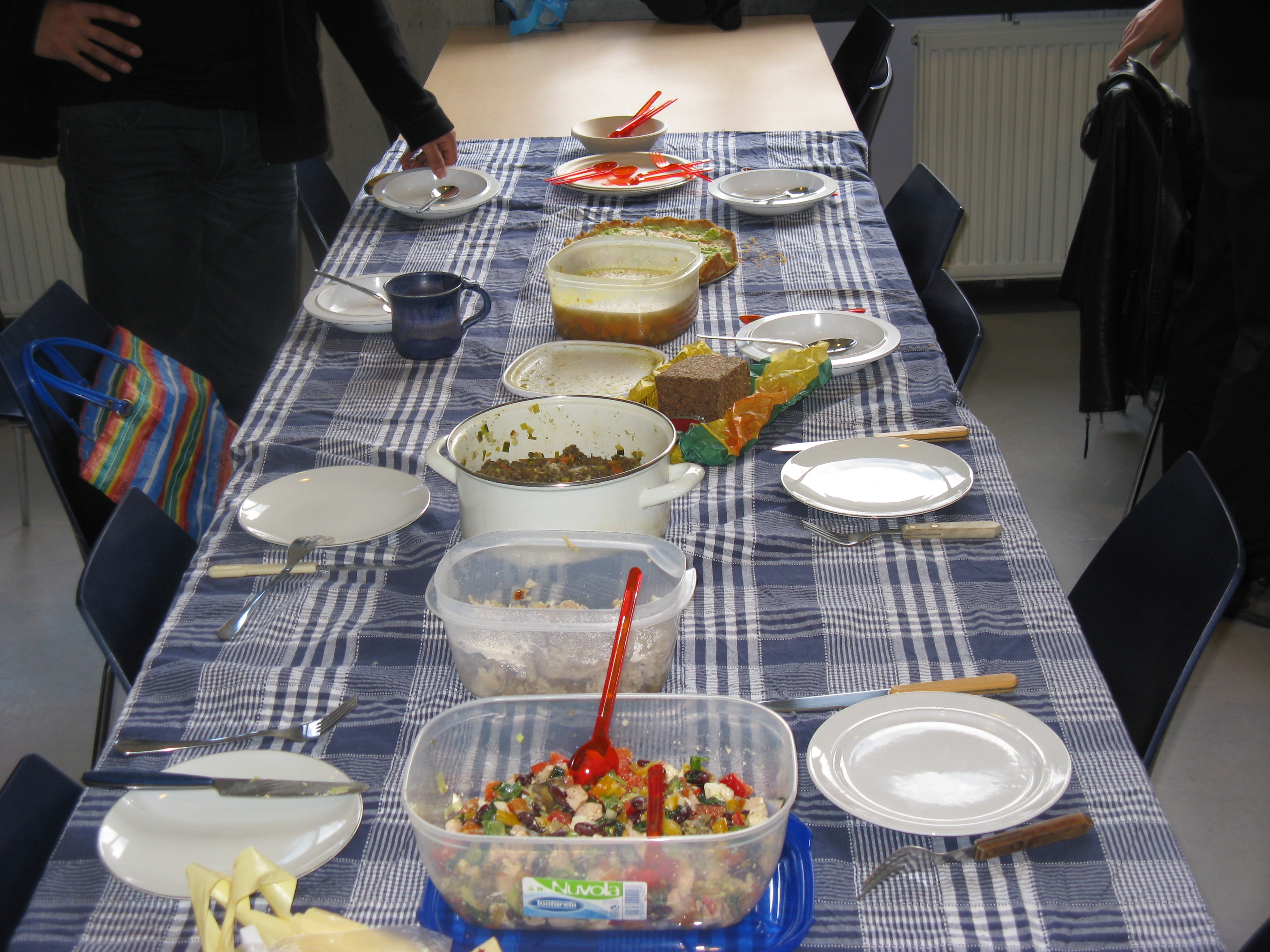
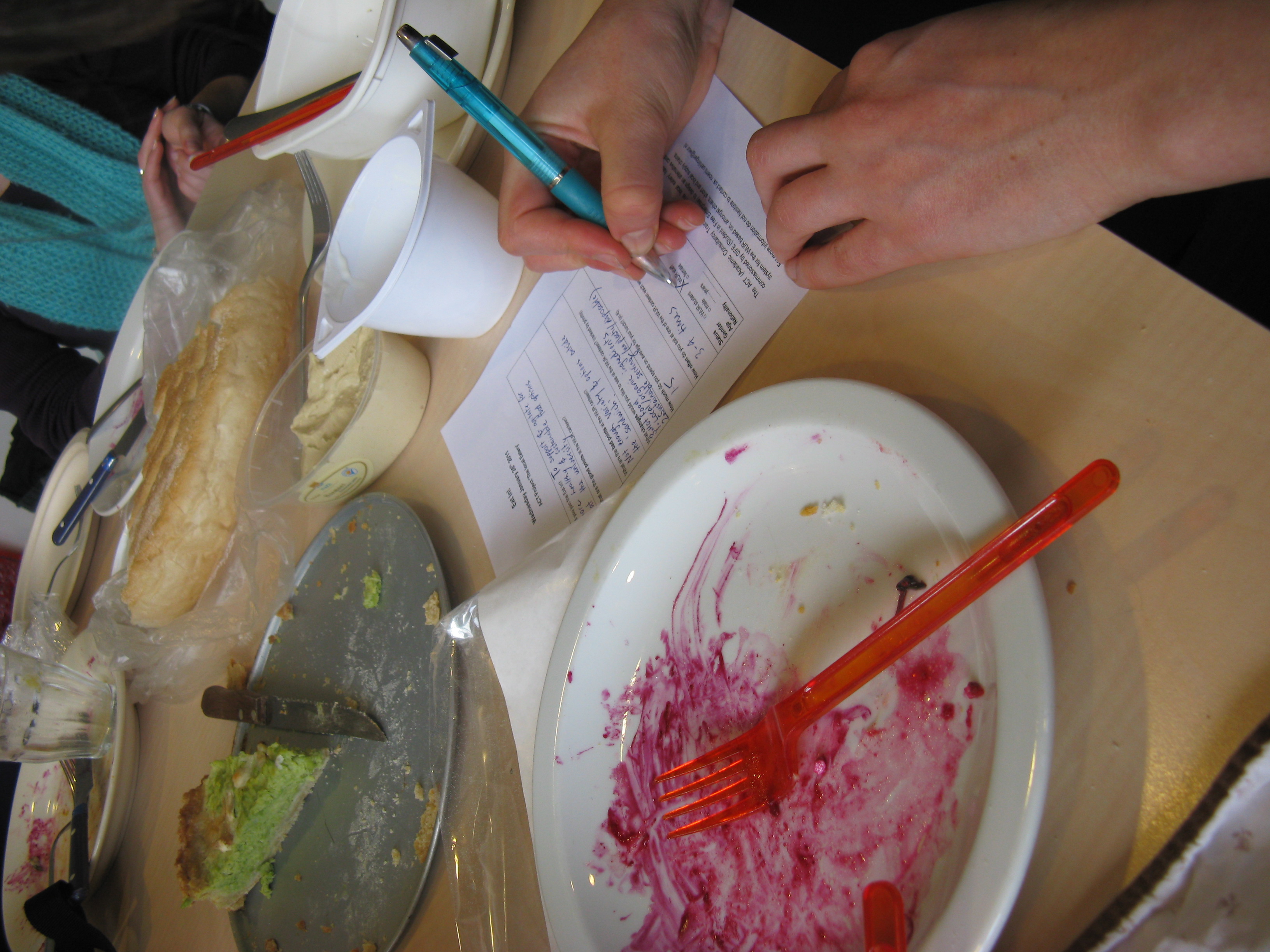
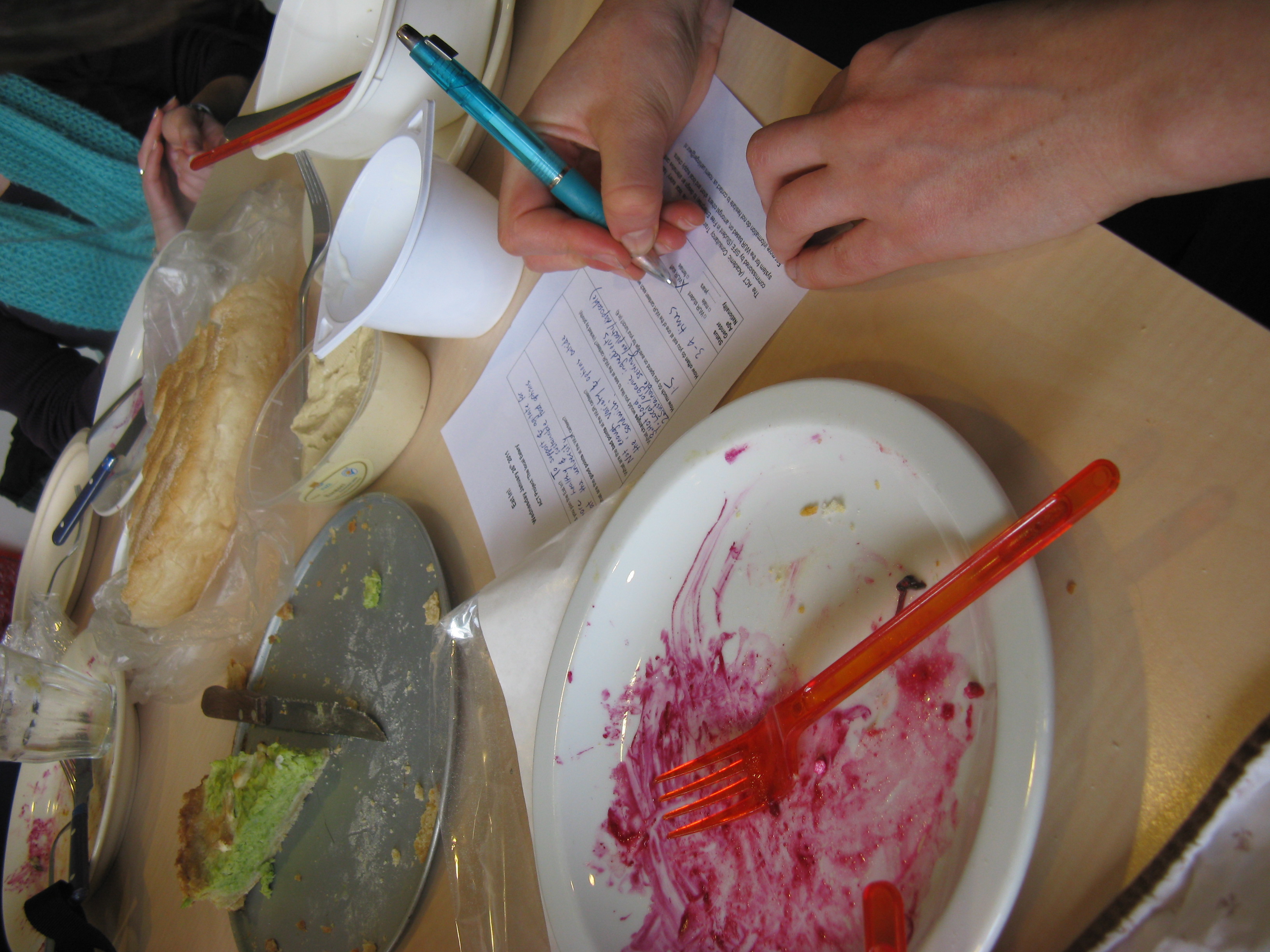
Last week we organised our 4th Eat In at the Leeuwenborch social science building to raise awareness for more sustainable catering. Again, some 30 students and staff members shared their home cooked lunch with each other. Apart from anything else, it is fun to meet others and to eat a great variety of foods. For the first time, there was simultaneously an Eat In at the Forum building organised by ISOW. An ACT student group is currently researching alternative catering strategies in their project the Local Eatery. They used to Eat In to gather information via a small questionnaire. You can follow the Eat In’s by Elizabeth’s blog

The current catering contract will end next year. The university started preparations for a new tender for all its canteen facilities in the Netherlands. A new catering ‘vision’ is currently prepared before the tender will be published; a window of opportunity to start a dialogue on how it can be improved in terms of cultural diversity, healthiness, regional sourcing and waste reduction. We therefore invited the head of facility management and the head of social sciences. They couldn’t come but it led to two meetings in the coming two weeks to discuss our ideas.

Tonight a wide  range of student organisations, engaged staff members and local producers will meet at Lawickse Allee 13 to brainstorm about our vision for sustainable catering. The meeting is organised by the Boerengroep. If you want to join tonight or if you want to be kept informed, please send an email to st.boerengroep@wur.nl