Introduction A person’s food environment has a huge impact on what food is accessible to them. This influences not only the kind of food choices residents make but also how they navigate the city. In 2021, the municipality of Wageningen published its Food Agenda. The report noted that residents with a migration background had limited involvement in food-related initiatives. It also mentioned the general lack of knowledge about how residents navigate themselves in the urban food environment. My master thesis responds to this knowledge gap. My thesis was conducted using Food Asset Mapping and Photovoice methods to explore the food routines of Wageningen residents with a migration background and their perception of the local food environment. In this blog post, I will show a glimpse of the findings, answering the main research question: How do households with various migration backgrounds navigate themselves in the multi-ethnic food environment of Wageningen?
Universal Plastic® is a dynamic, young startup based in the city of Gijón in the north of Spain. They are a small but passionate team of seven, dedicated to ocean regeneration through innovative plastic waste collections with a web3-based application. Their team is a mix of tech wizards and creative geniuses, spread over Spain.
Universal Plastic is looking for an enthusiastic intern who is eager to dive into the world of the protection of the ocean from plastic waste. You will be primarily collaborating with their social department, a group of three creative individuals who are constantly pushing the boundaries of innovation and social impact. They appreciate pro-active and creative minds.
At Universal Plastic you can contribute to make new ideas happen and save the ocean from plastic!
Want to know more? Contact Britt Trago, britt.trago@universalplastic.io or Joost Jongerden, joost.jongerden@wur.nl
To mark International Women’s Day, an engaging workshop took place in Impulse, fostering dynamic and thought-provoking conversations about the future of feminism. Hosted by Jessica Duncan, the workshop began with an insightful introduction, celebrating women’s achievements while acknowledging the ongoing journey towards gender equality.
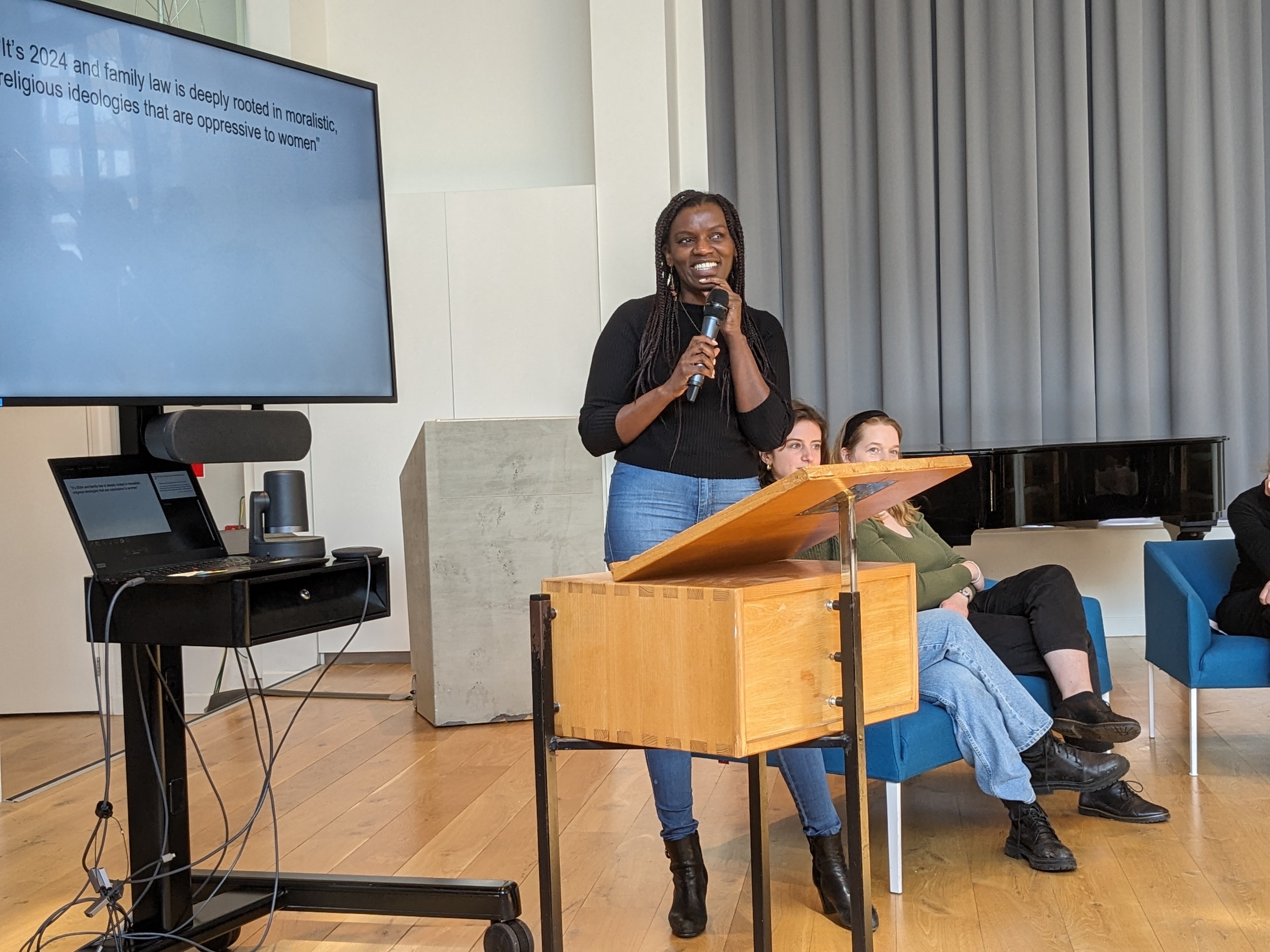
Following the introduction, a panel of researchers, all specializing in gender, equality, and power, presented propositions concerning women’s issues. Georgia Diamanti and Marije van Santen discussed the impact of the Common Agricultural Policy on women, followed by Tabitha Muriuki’s exploration of oppressive ideologies within family law. Margriet Goris concluded with a proposition addressing the gender pay gap and options available to men.
After the propositions, attendees formed smaller groups to deliberate and identify key feminist principles. Engaging discussions ensued, culminating in the sharing of various principles raised by the audience:
1. Principles for Wageningen University & Research (WUR) and other universities: > Promote genuine participation of diverse individuals within the university. > Ensure active inclusion of women in research endeavors. > Provide students with access to female scientists. > Implement mandatory courses on positionality in science, gender studies, ethics, and philosophy across bachelor’s and master’s programs. > Increase representation of women as chair group holders.
2. Principles for the workplace: > Close the gender pay gap through collective efforts, including active involvement of men. > Foster transparency in company salaries to address gender disparities.
3. Principles for society: > Create safe public spaces for individuals of all genders. > Enforce zero tolerance for sexual harassment and sexism. > Consider women’s perspectives in the development of products and services.
This workshop is connected to the SWIFT project and serves as the starting point for ongoing discussions about feminism at WUR. Let’s reconvene next year on International Women’s Day to further advance the dialogue!
In the Master thesis “Working for the occupier: Palestinian youths navigating the colonial settlement”, Davide Fabris investigates how young Palestinians make it through the daily challenges and precarity of working in a Israeli settlement. The main research question of his research is: ”How are young Palestinians experiencing and dealing with labour incorporation within the Israeli settlements’ economy?”.
Discover the heartbeat of our workplace in the video series “Rural Sociology: Passionate@Work”. Join us as team members share the driving forces that make working at the Rural Sociology Group a fulfilling experience. From shared values to exciting projects, get an inside look at what fuels our enthusiasm and commitment.
In our fifth episode, we showcase Thirza Andriessen, who shares her enthusiasm for the Rural Sociology Group, highlighting the inspiring colleagues and the diverse approaches the group employs in addressing issues.