
 The mobile ‘farm’ is built as self contained solar artist-in-residence (see earlier blog) with an upstairs sea container as a living unit and a downstairs working shed, now in use as pig barn. Looking at Coevorden’s industry on the horizon, I spent a stormy night literally located on the border between the Netherlands and Germany. Border markers run through the middle of the field. The pigs freely walk to Germany and back, with no worries about different rules and regulations.
Their snouts are not ringed – something which still is allowed in Germany. This means they can do what they most like; digging up the soil. Their border walkway looks like a freshly ploughed field with an occasional mud pool where they dug a particularly deep hole. They spend most of the day re-doing their previous digging, if not sleeping, taking a mud bath, eating grass and being fed.
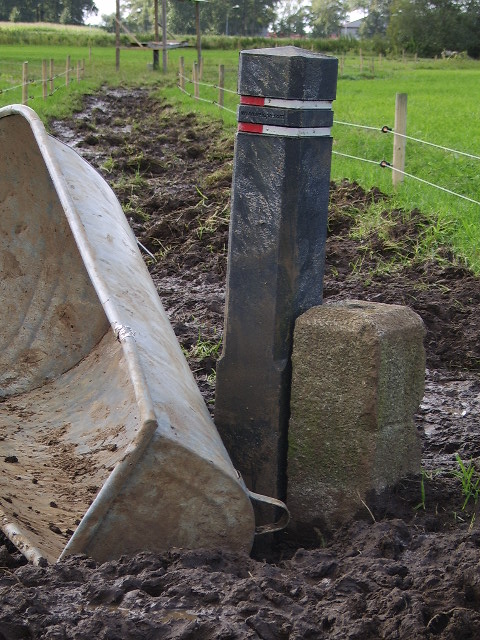
border marker
Pigs have bad vision but have extremely good ears. Bom keeps an ear on me when they all go for an afternoon nap. Piled on top of each other they lightly sleep. If one moves it takes a while with small talk oink’s before they sleep again. I try to be silent but a click of the camera is enough for Bom’s ear to raise. It stays alertly horizontal and a subsequent oink wakes up all for a new digging round.


 Rural Sociology Wageningen University