
– By Rima Ayulestari, MSc Student
When I started my thesis on the dignity of recipients of governmental food aid in Indonesia, one question stayed with me: Is dignity always lost when one receives charitable aid?
Many studies have shown how recipients of food assistance often feel ashamed, as if relying on charity makes them less of a citizen. For instance, a study conducted in the Netherlands found that the food and social interaction at food banks evoke emotions, such as shame, gratitude, and anger, that reflect recipients’ experiences of social inequality (Van Der Horst et al., 2014). In the UK, stigma portraying food bank recipients as lazy, violent, and undisciplined has led to feelings of shame and embarrassment, often discouraging people from using aid unless they are in a deep crisis (Garthwaite, 2016). These findings made me wonder whether the same feelings of shame would appear in other cultural contexts and to what extent cultural values shape how people experience receiving aid.

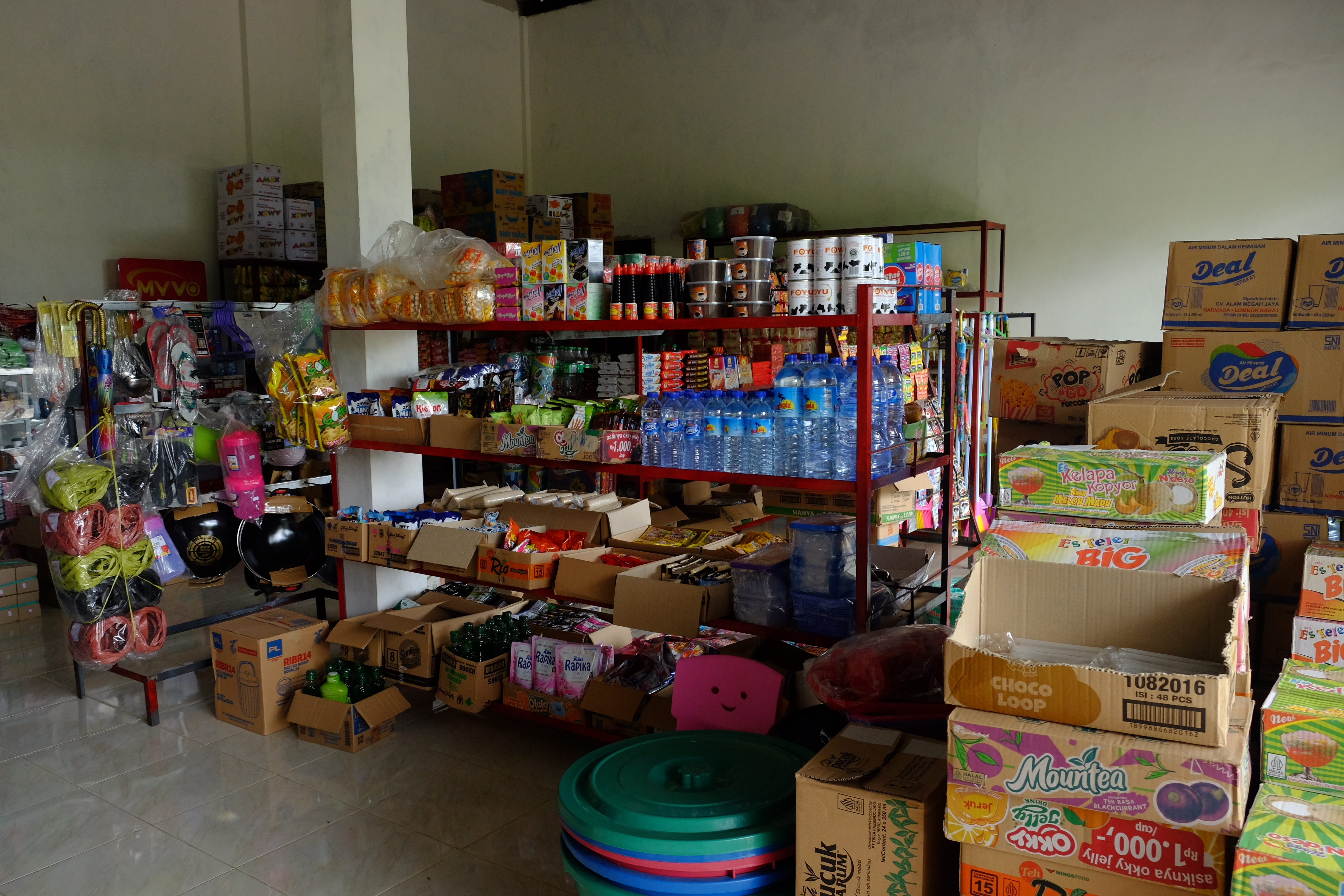
BPNT Distribution Point
This led me to conduct fieldwork in Indonesia to study how cultural values might shape food aid recipients’ sense of dignity, focusing on BPNT, the government’s Non-Cash Food Aid Program that helps low-income households access food. I conducted my fieldwork in the village where I grew up, hoping to understand how people live with, and perhaps redefine, the idea of receiving charitable aid.
During my time in the field, there was a situation that I will always remember. In one afternoon, children were playing hide and seek in a small field while some villagers returned from the rice paddies. A few gathered to chat as the sun began to set. That was when Aminah, one of my research participants, said to me:
“Wait a minute here, I want to return Mrs. Suri’s bowl first,” holding a bowl filled with a vegetable dish. I nodded, watching her walk away.
That simple scene has stayed with me. In the village, people still nurture this kind of practice of food sharing, and the BPNT program has helped recipients to participate even more actively. It quietly challenged everything I had read about shame and dependency. Many studies describe dependency as a condition marked by discomfort, where recipients feel inferior and try to stay unseen. In contrast, within the BPNT program, recipients appeared to be comfortable acknowledging their status, participating in food sharing, and offering others the aid they received. This openness challenged the idea that receiving charitable aid always involves shame and dependency. It shows that even while receiving aid, people were giving, sharing, and returning. Their relationships were defined not by what they lacked, but by what they could still offer.
Throughout my fieldwork, I often heard stories such as rice shared with a neighbour, oil passed to a cousin, or eggs given to a relative. My participants did not describe embarrassment about being food aid recipients. Instead, many expressed happiness and pride. In these moments, I began to see that dignity was not lost through receiving aid. In the Indonesian context, aid can actually enable dignity, because it allows people to reciprocate, to give something back, to participate in social life. The ability to share, however small, is what makes people feel involved in the community.
If you are interested in reading my thesis, you can find it here: https://edepot.wur.nl/691659


A glimpse of the village
Reference:
Garthwaite, K. (2016b). Stigma, shame and ‘people like us’: an ethnographic study of foodbank use in the UK. Journal of Poverty and Social Justice, 24(3), 277–289. https://doi.org/10.1332/175982716×14721954314922
Van Der Horst, H., Pascucci, S., & Bol, W. (2014). The “dark side” of food banks? Exploring emotional responses of food bank receivers in the Netherlands. British Food Journal, 116(9), 1506–1520. https://doi.org/10.1108/bfj-02-2014-0081
 Rural Sociology Wageningen University