
It is with a heavy heart that we announce the passing of our beloved and greatly appreciated colleague, Henk Oostindie. Henk passed away on Thursday 21 May, just six weeks after his retirement from the Rural Sociology Group.
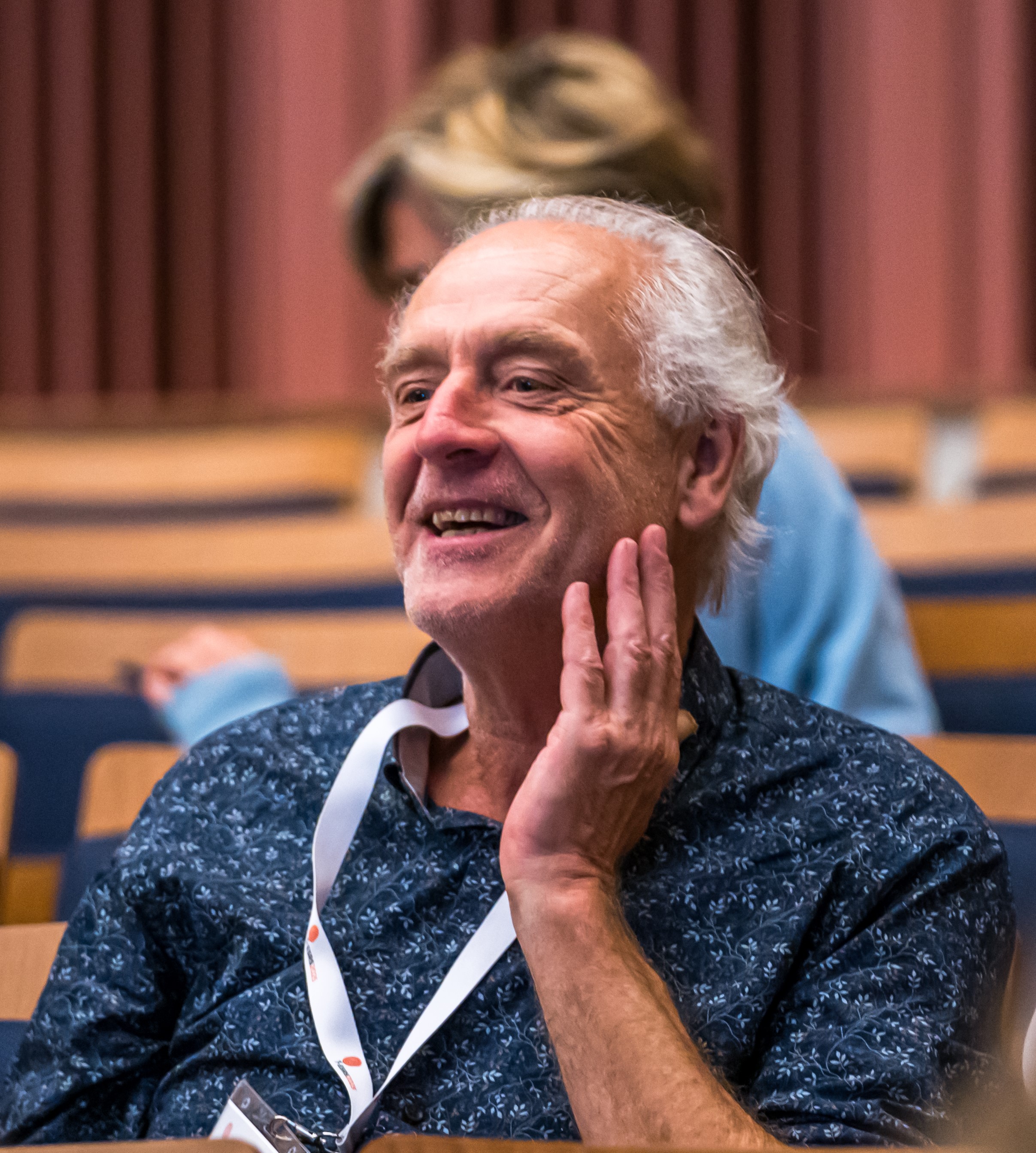
Henk was a rural sociologist from Wageningen through and through. Having graduated as an agrarian sociologist from Wageningen in 1990, he has, in fact, been affiliated with the Rural Sociology Group ever since. He began in the 1990s as a researcher on various farming styles projects and on the European CAMAR project, for which he also spent two years working and living in Portugal. From the turn of the century, he worked as a researcher (and later, de facto, as assistant professor) on mainly European research projects in the fields of rural development, multifunctional agriculture, short food supply chains and urban-rural relations. From time to time, these international projects were combined or alternated with teaching and with national projects, such as the ‘Dynamics and Robustness of Multifunctional Agriculture’ project, funded by the Ministry of Agriculture, Nature and Food Quality.
We often referred to Henk as ‘our project powerhouse’, because he seemed to work tirelessly, tackling one project after another, delivering one report after another, and always ensuring that we met our project commitments. Henk worked on a total of 12 EU-funded projects – with the illustrious acronyms CAMAR, IMPACT, SUS-CHAIN, COFAMI, RUDI, ETUDE, GLAMUR, SUPURBFOOD, TRANSMANGO, BOND, ROBUST, and GRANULAR. These projects have resulted in a large number of publications (co-)authored by Henk – reports, articles and book chapters – and an extensive European network of researchers and institutions. As a group we gratefully build on Henk’s outputs and networks for new publications and projects.
Henk was not your typical academic with a pre-planned academic career. When asked why he had ended up in the Rural Sociology research group, he replied in an interview with him in 2012 (recorded to mark the group’s 65th anniversary) that the group’s subject matter appealed to him, he enjoyed doing research, there were projects that gave him the opportunity to pursue that passion and interest, and that he had ‘actually just stuck around’. The fact that he was no run-of-the-mill academic was also evident in his initial reluctance to pursue a PhD. As he wrote in the acknowledgements of his PhD thesis: “For a long time, I thought there would be a place for people like me in the academic world, but I turned out to be wrong: also I had to subordinate to the academic rules if I wanted to continue working in a setting where I could follow my principle professional interest: research on agricultural and rural dynamics”. But that initial reluctance gradually gave way to enthusiasm, as writing his thesis enabled him to reflect on 20 years of research data and experiences and to outline both his own research agenda and that of the group. This resulted in a manuscript in the tradition of Wageningen Rural Sociology, focusing on diversity and changes across time and space, and analysing how these dynamics are shaped by resistance, redesign and resilience. He linked this to emerging (theoretical) developments in the social sciences, such as relational thinking, socio-spatial analysis and the performativity of the social sciences.
Despite his extensive experience with EU projects, Henk had absolutely no desire to lead a project. Firstly, because his interest lay in the substantive side of the work: he was happiest when he could head out into the countryside to interview people. Secondly, project management would involve administrative obligations, procedures and systems, and if there was one thing Henk thoroughly detested, it was administrative systems. Thirdly, he indicated that he did not like being in the limelight, something that is, after all, part and parcel of project leadership. That is not to say that Henk remained unnoticed in the background. He was visible and audible in numerous discussions and collaborative ventures, and he was an active member of the group; Henk was always present at chair group meetings and almost always in the office. Moreover, with his imposing stature, it was impossible to miss him; and if not for that, it was his infectious laugh and loud voice, which would sometimes go into overdrive when he wanted to emphasise a comical anecdote or an exasperating experience.
It will be quiet at Rural Sociology without Henk, but that is even more true for his loved ones. We send Cathe, Jureno and Lydia our love and strength during this difficult time. We count ourselves fortunate that he was our colleague for so long.
On behalf of the Rural Sociology Group,
Han Wiskerke

