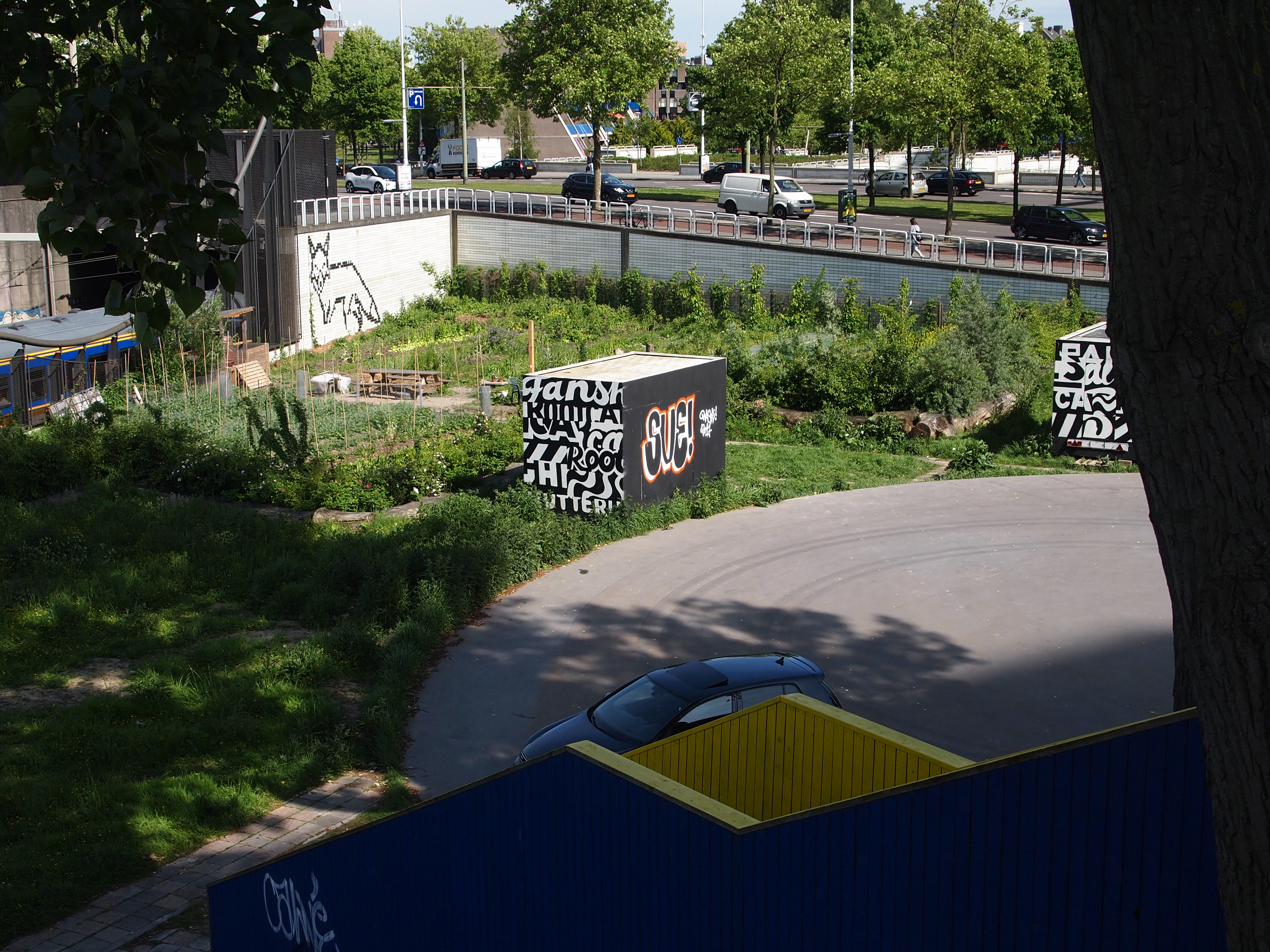
Examining urban agriculture projects in Rotterdam between 2008 and 2018, my research looks at the practice of urban food planning, its strategies, the actors involved and their roles and relations. Central to the research is the observation that in Western European society today, the increased participation of civic initiatives confronts planning with challenges related to governance, decision-making and representation. Sustainable urban food planning can be seen as a laboratory for planning concepts that deal with these challenges.
The purpose of my research is to investigate which conceptualisations of planning are relevant when 1) planning in and for a pluralistic, participative society and 2) planning for sustainable goals related to an unknown future. As there is no consensus in the planning field on what planning is or what it should do, conceptualisations of planning can range widely, from systems planning to advocacy planning and from collaborative to complexity planning. I work with a primary hypothesis that these concepts of planning are complementary rather than mutually exclusive and that in a complex, pluralistic society, different concepts of planning can be relevant in different circumstances.
The main research questions are as follows: What concepts of planning are effective in spatial planning for a common sustainable future when including multiple actors and stakeholders with a variety of frames and perspectives on sustainable food systems? How are different actors, their respective roles and action perspectives included in the decision-making process? What is the role of the planning practitioner in this, and what is the role of governmental planning at different levels?
The research is informed by my own position as a practitioner. Undertaking a professional PhD as an external researcher at RSO allows me to reflect upon and put in perspective my personal experiences in the field of spatial planning and design. Fifteen years of experience with promoting, researching, designing, planning and practicing urban food production in Rotterdam left me (and colleagues from the field) with many ideas and hypotheses on what municipal planners and urban food initiatives should and should not do when planning urban food production. Can municipal planning include the initiatives of societal actors (like myself and fellow urban farmers and activists) in their planning agenda? Would it be possible to do this in a way that respects the diverse world views of these actors? And can societal actors themselves operate in a way that aligns them with governmental planning agendas without losing sight of their own goals?
OLYMPUS DIGITAL CAMERA
Civic urban food initiatives represent a diversity of approaches to what a sustainable food system should be and how planning can contribute, but planners at different government levels struggle to facilitate and include these initiatives and their diverse approaches in their planning efforts. This has become apparent in Rotterdam but is also exemplary of a more general gap between bottom-up societal initiatives and top-down governmental planning in the Netherlands. Through a study of the Rotterdam urban agriculture movement – and taking the role of participant-observer – I examine this gap and address the questions above.
The case study of Rotterdam considers projects in which urban food production has been realised and focuses on the people involved in the planning process and their agendas and strategies, with a special emphasis on spatial planning. To avoid any bias due to my personal involvement in the object of study, I use a range of sources, including grey literature and interviews with different planners and societal actors. In terms of method, I combine this sociological approach with plan analyses (of the projects) derived from the discipline of urban planning. In combining different sources and methods from different disciplines, I try to incorporate the views of different actors and gain a more complete picture of what has happened during these past years and what lessons can be learnt for planners and urban food initiatives..
While the PhD is designed as a retrospective, transdisciplinary case study, it inevitably involves and interacts with my own practice as a designer/planner and, more recently, urban food forester. Interviewing planners about their ideas and influences and writing down their accounts of events has already provided insights that are informing my current work in urban agriculture and food forestry (including advocacy, design and realisation). Although this can sometimes be problematic, the meeting of practical experience with academic and applied research is developing a relevant knowledge base. A professional PhD makes knowledge from practice available to academic research and offers a place of reflection to practitioners.
Lisette Nikol, PhD candidate at the Rural Sociology Group
How do small farmers in the Global South secure their livelihoods? How do capitalist dynamics and agrarian movements striving for alternatives shape these livelihoods? How can agrarian transition pathways address possible tensions between the needs of rural development, sustainable agrarian futures and a growing world population? What role do and should farmers play in imagining and realising these transition pathways and agrarian futures? How do we analyse and explain agrarian transitions in general and the farming systems realised by agrarian movements in particular?
These abstract questions summarise my research interests. My interests are motivated by a concern for an agrarian future that is socially just and environmentally sustainable, in which our farming populations and natural environment can thrive rather than be exploited.
In my PhD research, I investigate diverse facets of an ongoing agrarian struggle in the wake of agricultural modernisation and the development of agrarian capitalism, paying particular attention to the concept of peasant autonomy. Peasant autonomy locates core critiques of modern agriculture with the commodity nature of production relations (Jansen et al. 2021). While the critiques alone are relevant, I find that research into agrarian movements is more interesting and useful if it examines how different agricultural systems promote distinct production relations and transition pathways that entail different dependencies on wider production relations, agro-ecosystems, social relations and agrarian movements. As a sociologist concerned with theory, I find it relevant to inquire into how various conceptual ideas of peasant autonomy, varying dependencies on diverse production relations and socio-material relations of farming systems can help us both explain ongoing transitions and imagine and realise future transitions .
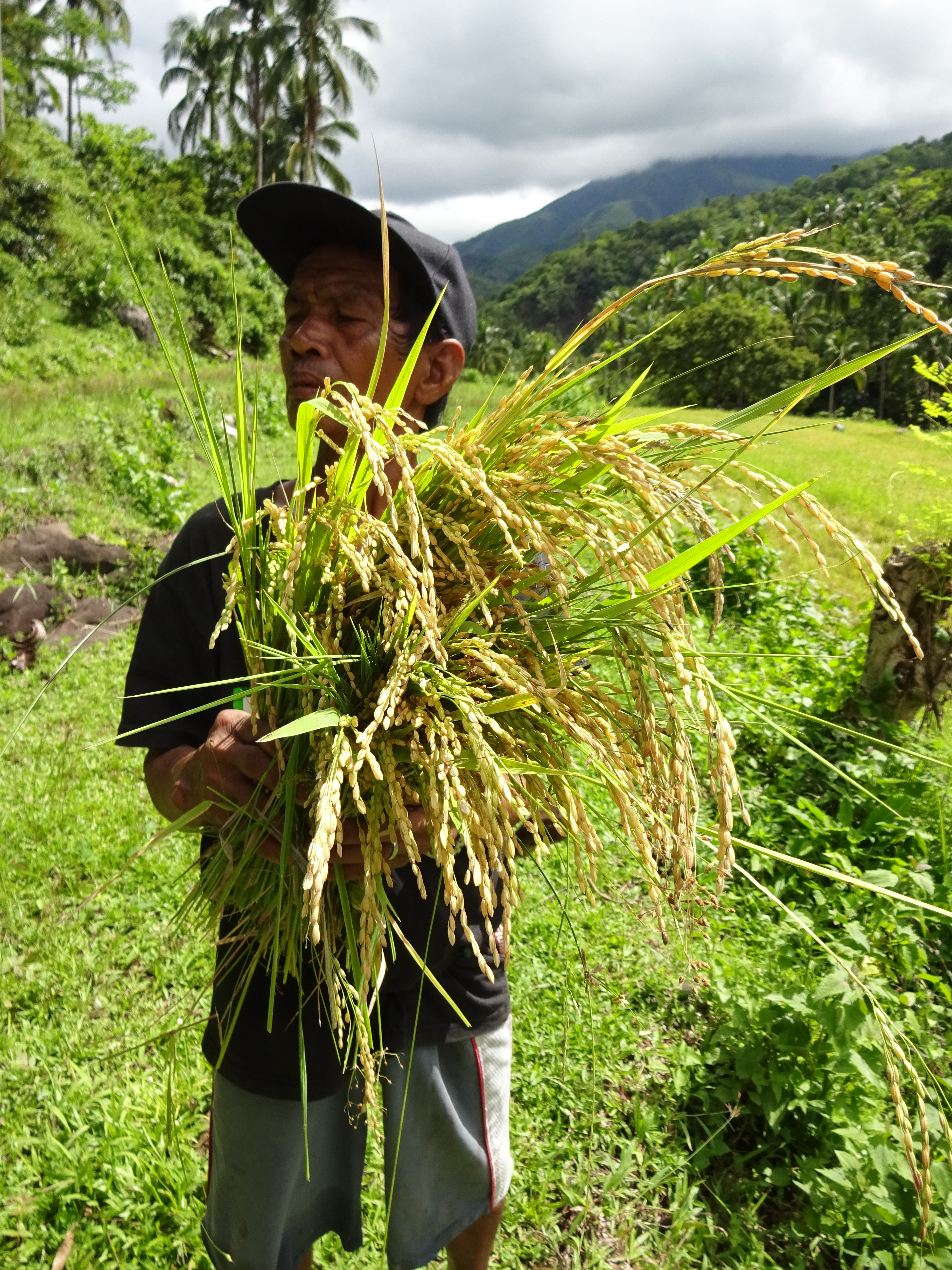
Specifically, I am investigating an organic agriculture movement in the Philippines that is responding to the challenges posed by decades of Green Revolution-oriented agricultural policies. Providing alternatives to the agricultural modernisation programmes of the state, this farmer network facilitates a farmer-led rice breeding programme, trainings on organic cultivation and complementary livelihood-related aspects, and a Participatory Guarantee System to market organic produce locally.
I locate my work within a contemporary body of agrarian political economy that critically reflects on the broader effects of the capitalist dynamics in agriculture and the countryside (see e.g. Guthman 2004, Kloppenburg 2004, Bernstein 2010, Jansen 2015). Another body of theoretical work that informs my research agenda is an anthropology of technology development that looks at technological change in the context of agrarian development and transformation as contingent, society-technology relations (e.g. Bray 1986, Almekinders 2011, Jansen & Vellema 2011). Combining these two approaches allows for an interesting set of questions capable of addressing both social and material aspects that are vital to an overall understanding of agrarian movements and transitions.
An important part of my research looks at peasant autonomy and food sovereignty questions as concerning farmers’ relations to their means of production. Agrarian movements seemingly aim to reverse the separation of farmers from their means of production, such as seeds and the wider agro-ecosystem, as achieved by agricultural modernisation and development following a capitalist, industrial model. But how do efforts to mend this situation play out in particular empirical settings? In this question, I centralise the material dimension of farming and agro-ecosystems in interaction with social relations and farmers’ practices. I address two important sets of production relations.
First, I analyse the sorts of relations around seed that emerge in situations where seed activist initiatives are realised. It is important to understand how these relations are caught between agrarian capitalism and seed activism. Second, I focus on soil fertility management – a core of organic approaches often presented as key to realising an autonomous agro-ecosystem – as a site of tension and performance. How does a view on farming as ‘performance’ (cf. Richards 1993) or simply ‘making do’ to survive relate to views on farming as performing political farming narratives?
Another aspect of agrarian movements I find intriguing is their functioning as organisations, themselves firmly embedded in relations with and among farmers. When the work of agrarian movements gains importance for the livelihoods of rural and agrarian peoples, how should we understand the relation between movements and members, or the movement’s practical work in the context of agrarian livelihood strategies? Additionally, movements take on emancipatory roles, organising farmers politically and advocating on their behalf at various levels of government (Nikol and Jansen 2020). How do their narratives of agrarian futures and rural development relate to the narratives of its differentiated constituency, as well as those of the government?
A last avenue of my inquiry looks into the dynamics shaping and participation of farmers in national organic sectors. Participatory Guarantee Systems (PGS) are promoted on a global scale as a cost-efficient and trustworthy alternative to third-party certification. Interestingly, the development of organic agriculture is caught in a tug-of-war between capitalist dynamics prompting its ‘conventionalisation’ and committed pioneers promoting values that critique the industrialised agricultural model (Nikol and Jansen 2021). I further investigate dynamics in the development of organic agriculture, specifically how PGSs seem a tool modelled after and complying with demands from conventional agriculture, as well as a tool to organise farmer participation, reclaim the narrative of organic agriculture and reorganise the relations that compose this sector.
How to explain ongoing agrarian transitions, and how to imagine and realise agrarian transitions in the future? In researching seed systems and plant-breeding, soil fertility management and integrated farming systems, the organisational and advocacy work of social movements and tensions between capitalist dynamics and ‘pioneer’ approaches in organic agriculture development, I aim to contribute relevant insights grounded in lessons from an agrarian movement in the Global South. These questions and the experiences of the Philippine organic movement, will no doubt continue to engage me in the future and inspire future contributions to the literature.
Almekinders, C. (2011). The Joint Development of JM-12.7: A technographic description of the making of a bean variety, NJAS-Wageningen Journal of Life Sciences, 57(3): 207-216.
Bernstein, H. (2010). Class Dynamics of Agrarian Change. Halifax: Fernwood Publishing.
Bray, F. (1986) (1986). The Rice Economies: Technology and Development in Asian Societies. Oxford [etc.]: Blackwell.
Guthman, J. (2004). Agrarian Dreams: The Paradox of Organic Farming in California. Oakland: University of California Press.
Jansen, K. (2015). The Debate on Food Sovereignty Theory: Agrarian capitalism, dispossession and agroecology, Journal of Peasant Studies, 42(1): 213-232.
Jansen, K. and S. Vellema (2011). What is Technography? NJAS-Wageningen Journal of Life Sciences, 57(3): 169-177.
Jansen, K., M. Vicol and L.J. Nikol (2021). Autonomy and Repeasantization: Conceptual, analytical, and methodological problems, Journal of Agrarian Change (special issue on Autonomy in Agrarian Studies, Politics and Movements).
Kloppenburg, J.R. (2004). First the Seed: The Political Economy of Plant Biotechnology. Madison: University of Wisconsin Press.
Nikol, L.J. and K. Jansen (2020). The Politics of Counter-Expertise on Aerial Spraying: Social movements denouncing pesticide risk governance in the Philippines, Journal of Contemporary Asia, 50(1): 99-124.
Nikol, L.J. and K. Jansen (2021). Rethinking Conventionalisation: A view from organic agriculture in the Global South, Journal of Rural Studies, 86: 420-429.
Richards, P. (1993). Cultivation: Knowledge or performance? In M. Hobart (Ed.), An Anthropological Critique of Development: The Growth of Ignorance,pp. 61-78. London:Routledge.
Claudia Oviedo, PhD candidate at the Rural Sociology Group
Mexican coffee policies of recent decades have been highly criticised. Farmers, coffee organizations, academics, and development organizations have claimed that programmes implemented to promote coffee production in Mexico have been limited to assuring mere survival of farmers rather than promoting the necessary transformation of their livelihoods. One of the main criticisms of such programmes is that while the state provided plants, fertilizer, and sprayers through farmers’ organizations, due to clientelism many farmers did not receive the inputs they had been promised. Other criticisms include that such programmes have failed to involve effective commercialization strategies and have not provided adequate technical assistance, particularly with respect to disease management.
Collecting coffee beans – Photo by Erik García.
In December of 2018, “leftist” President Andrés Manuel López Obrador (AMLO) took office. Criticising previous neoliberal administrations’ lack of attention to rural areas, he promised his administration would benefit small farmers and that he would end corruption. To achieve this, his administration implemented the rural programme Sowing Life (Sembrando Vida) through the Ministry of Well-Being, providing approximately €250 monthly to farmers to plant deforested areas with fruit trees and annual crops using agroecological practices. The Ministry of Agriculture also launched the programme Production for Well-Being (Producción para el Bienestar), which also promotes sustainable coffee production, although with a much lower amount.
This PhD research analyses coffee policies implemented in 2019—he first year of AMLO´s administration, addressing the state’s conceptualization of farmers—essentially based on the size of their landholding—as well as its strategy for incorporating them principally into the organic market. Based on a Value Chain approach as well as Political Economy concepts, I found that those that farmers the state considers to be “small-scale” vary with respect to their level of control over the means of production. Furthermore, I conclude that selling to the organic market does not necessarily benefit all farmers and suggest the need to re-conceptualise the approach of public policy to “incorporating” coffee farmers into the market.
This study also addressed the political configuration of coffee programmes by unpacking the relationship among farmers, the state, and the coffee processing industry—namely Nestlé, as well as the interests of each of these actors and their strategies for obtaining their objectives. Two coffee trajectories were identified: one involving production of high-quality organic coffee and a high level of participation by the state and farmers´ organizations in policy development. The other trajectory is that of instant coffee, involving sale of lower-quality coffee to Nestlé. While several farmers’ organizations reject the latter trajectory, many farmers perceive benefits from cultivating coffee for this industry. Therefore, I urge policymakers and development agencies to allow for a variety of productive options rather than pre-determining a single production system.
Finally, this study addressed AMLO´s policy to reduce involvement of intermediaries by providing subsidies directly to farmers rather than through farmers´ organizations. Given that during previous administrations many representatives of these organizations retained a large part of the subsidies, many farmers welcomed this policy. However, its implementation has been characterised by operative problems and tensions between organizations and state personnel. Some farmers´ organizations assured that not all such organizations are clientelistic; rather, they hold that they provide an essential mechanism for farmers to access more profitable marketing options. Meanwhile, the reactions of personnel from Sowing Life and Production for Well-Being contrasted significantly: as Sowing Life is extensively promoted by AMLO, and it does not stem from previous programmes, most personnel supported the reduction of intermediary policy. However, some staff of Production for Well-Being defended the work they had developed with farmers’ organisations and highly objected to the changes.
I was born in the 1980s, in the bucolic countryside of west Limerick where I enjoyed an idyllic and happy childhood, completely distant from the conflict which wracked the north of Ireland during the so called “Troubles”. Nevertheless, as an admittedly very precocious child, through overheard snippets of adult conversations, impertinent questions, partially understood news headlines, the occasional drama of IRA arms dumps found in the local area and the half-earnest choruses of “Up the Ra”[1] that permeated the Irish social life of my childhood, I recognised the presence of an unspoken something. A something which did not interfere in any way with my childhood priorities of playing hurling and avoiding the hard jobs on our family farm, but as I grew up and read more about Irish politics and what had been happening on the island, it remained a something that engendered a curiosity in me. How was it possible that an armed Republican group, the Irish National Liberation Army carried out Ireland’s biggest ever robbery (21 million euro in today’s terms) in 1978, at the other side of my small parish? Within my childhood cycling radius, where in my experience literally nothing ever happened. Even now the Mullaghareirk Mountains of my home, are a disorientating maze of narrow roads, high hedgerows, bog, woods and scrubland, in 1978 they would have been completely unknowable to an armed unit of Socialist Republicans from the North. Without local knowledge and assistance, would such an ambitious robbery have ever succeeded? Were the people of my childhood, someway complicit in supporting the violence, incessantly critiqued by the political mainstream in Ireland? Why would people like me and mine, safely ensconced in the rhythms our rural lives get unnecessarily involved in a violent campaign that resulted in hundreds and thousands of deaths? Was it ideology, a sense of obligation or guilt, hatred, fear, ignorance or mere happenstance? This unresolved, half-forgotten line of questioning lay dormant through my formative years.
Half-forgotten that is, until I began university in 2003, at the hysteric heights of the “War on Terror”, where terrorism and support for terrorism saturated all political debate and infiltrated our university discussions and seminars. This reawakened my latent interest on what support for political violence comprises. It led me to take every available course and seminar on civil wars and political violence, to do a Masters on Middle East politics and eventually brought me to Italy to a PhD on the relationship between the PKK and its supporters at the European University Institute in Florence. Under the guidance of Professor Donatella della Porta, one of the world’s leading social movement scholars, I found myself immersed in a vibrant conceptual and theoretical universe. One shaped by the ongoing debate centred on the ground-breaking Dynamics of Contention (2003) by Doug McAdam, Sydney Tarrow and Charles Tilly which argued for a broad approach to the study of a spectrum of contentious politics according to its constituent mechanisms. A spectrum which ranged from episodes such as riots to full blown insurgencies.
This debate had stimulated a parallel blossoming of social movement research on violence, expanding beyond its foundational pillars of political opportunity structures, resource mobilization and framing to incorporate a relational focus emphasising the dynamic and contingent elements of violent social change. One which argued it was less the inherent characteristics of movements that determined their success or failures, but rather how movements interacted with political institutions, political adversaries and allies that provided a better explanation of political outcomes. This new wave of research also addressed the criticism that social movement studies had been the empirical preserve of western liberal societies by also incorporating research on global violent and non-violent movements. And since then, I have found myself drawing from this rich theoretical spring of contentious politics and social movements to better understand why civilians support armed movements. An intellectual reservoir which has emboldened me to take a critical stance on much of the rationalist and structuralist approaches which have dominated the study of conflict. After a few twists and post-doctoral turns through Italy, Denmark and Germany, and extremely satisfying diversions to work and publish on lone actor radicalisation, anti-austerity protest, referendums and pro-independence movements, I arrived at the RSO with a new project, that addresses the spatial dynamics of armed groups’ interactions with their supportive constituencies.
The Spatial Dimension of Insurgent-Civilian Relations: Routinised Insurgent Space
In mid-2021, my book Understanding Insurgency: Popular Support for the PKK in Turkey (Cambridge University Press) based on the findings of my PhD research was published. During the many years it took to finally publish the book, and in light of the increasingly hostile research environment in Turkey, I decided to attempt developing a comparative research agenda, to see if the PKK’s determination to maintain the active support and approval of its constituency was an outlier and if other groups were similarly minded. Through a series of chance encounters, I came into contact with the M-19, an armed group which was active in Colombia from the 1970s until 1990. I set about learning Spanish and in 2018 conducted fieldwork with former supporters and veteran members of the M-19 in Bogota.
Reflecting upon the interviews I conducted with both the PKK and the M-19, it became clear that the relationship between the insurgents and supporters was not simply a relational dynamic, but one which took place in specific spaces. Encounters between insurgents and civilians were rarely random, they occurred in specific places at specific times. Armed M-19 operatives boarded buses packed with workers to engage in revolutionary propaganda before disembarking and disappearing into early morning rush hour. In the 1990s the PKK organised revolutionary picnics on the outskirts of Istanbul to recruit youngsters. The PKK transformed funerals from instances of private grief and loss, to occasions of revolutionary defiance. The M-19 actually built neighbourhoods for the rural displaced on the margins of Colombia’s rapidly expanding cities. Interviewed insurgents were explicit in how they strategically tailored their encounters to create favourable interactions which reflected positively on the movement. In certain neighbourhoods (or spaces in a conceptual sense) they promoted Kurdish or Colombian nationalism, in others they emphasised traditional socialist objectives. What do revolutionary courts in Kurdistan, the distribution of wellington boots and milk, the ritualised burying of the dead and the organisation of daily life in prison have in common? I argue that they are all forms of Routinised Insurgent Space (RIS).
RIS can be understood as the way insurgent movements deliberately engineer or appropriate existing social spaces to facilitate interactions with supportive constituencies. RIS contains functional and symbolic logics: it embeds armed groups in their immediate spatial environments allowing them access to local resources, but it is also a means of consolidating political legitimacy. From the perspective of the constituency, RIS renders interactions with armed actors safer and more predictable and can potentially lead to a form of joint habitus regarding political identity and behavioural norms. Although the types of RIS implemented are expressions of insurgent movements’ strategy, they are reciprocally constituted and shaped by local civilian agency which can resist or alter them. My project focuses initially on four distinct forms of RIS: Insurgent Policing & Courts, Insurgent Service Provision, Insurgent Prison Mobilisation and Insurgent Funerals. A rigorous literature analysis and suggested that these four forms are not ideologically specific and recur across almost all types of insurgent mobilisation to greater or lesser extents.
As a comparative project, it of course strives to identify similarities and differences between the cases, but it also focuses on within-case variation. How do forms of RIS vary from urban to rural areas and even across wealthier and poorer neighbourhoods? In contrast to the flourishing rebel governance approach, it also attempts to track how these forms of incipient governance evolve over time rather than focusing on insurgent institutions once they are already established. It tracks efforts to create forms of RIS from their earliest incarnations, analysing why their success varies. In terms of data, the project will make use of interview data with former insurgents and their constituency. A key milestone in the project will be the hosting of a workshop at the RSO in September 2022 titled: The Margins of Insurgent Control: Spaces of Governance. It is specifically designed to merge the relevant literatures from contentious politics and social movements, social geography anthropology and rebel governance with an explicit focus on the nature of the data used to study armed movements.
O’Connor, Francis. 2021. Understanding Insurgency: Popular Support for the PKK in Turkey. Cambridge: Cambridge University Press.
[1] “Up the Ra” is short for Up the IRA. In Irish, one would express support for somebody or something by shouting for example Gailimh Abú meaning “come on Galway”. In Hiberno-English, abú has been directly translated as up, leading to the use of ”up something or other” as a common phrase. Up the Ra is a phrase which has to a certain extent escaped its original political connotations and has found its way into sports chants, drunken tomfoolery between non politicised groups of friends and into popular songs. However, its connotations are contextually dependent and can take on a greater or lesser air of menace according to who is in earshot.