Thesis opportunity: Urban guerrillas in the countryside? The case of the M-19 in Colombia.

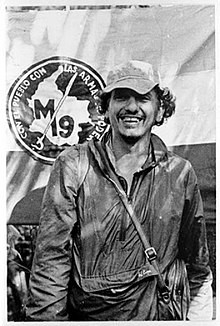
The M-19 was an insurgent group active in Colombia from 1974-1990. It has recently enjoyed a brief moment of fame for careful viewers of the popular Netflix series Narcos, where it was rather simplisticallydepicted as being in cahoots with narco-traffickers. The movement is popularly understood as an urban movement and the M-19 did in fact emerge from middle class university environments in big cities like Calí and Bogota. It also carried out audacious symbolic attacks and innovative forms of communication with the Colombian population (for e.g. broadcasting its announcements on TV at half time during televised matches of the Colombian football team) in cities. What is less well known about the movement is that it also had an extensive and dynamic rural armed campaign in the south of the country. Although, smaller in number than better known groups like FARC, it achieved notable military successes by seizing regional cities and operating forms of rebel governance by providing schools, operating courts to punish criminals and re-distributing locally needed goods like wellingtons and tools.
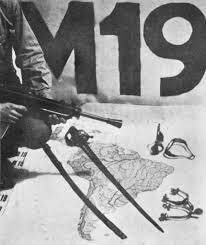
The literature in conflict studies has emphasised how difficult it is for idealistic urban middle classes to win the support of often poorly educated and politically passive peasants. Indeed, the physical unsuitability of ‘soft’ city kids in adjusting to the hardship of rural life is often cited as a further obstacle to revolutionary movements’ success. For students interested in conflict studies, social movements and rebel governance, this is the chance to look at one of Latin America’s lesser known and often misunderstood movements. More broadly it will give students a chance to conduct research on mobilisation across the urban-rural divide.
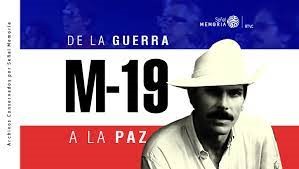
Extensive data on the M-19’s mobilisation in Caquetá in southern Colombia is available in the National Center for Historical Memory digital archives. Students will learn about archival research, the analysis of primary sources and the coding of qualitative data. Using this data and secondary literature, students would analyse the way in which the M-19 overcame the disadvantages of its urban back ground to launch a rural guerrilla campaign. All the documents are in Spanish, so unfortunately the project is only suitable for Spanish speakers.

If you are interested in working on armed movements and can speak Spanish, please contact francis.oconnor@wur.nl
Thesis / Research Internship Opportunity: Understanding the role of geographical indications for rural development in Ireland

Duration: 6 months

Languages: English

Start Date: As soon as possible

Are you looking for a fascinating thesis or research internship topic that cuts across multiple challenges at the heart of food system transformation, with the possibility to do funded fieldwork in Ireland?!?


The Rural Sociology (RSO), Environmental Policy (ENP) and Strategic Communications (COM) chair groups have vacancies for one to two students to join a project investigating the social, environmental and political dynamics of geographical indication (GI) food products in Ireland. GIs certify the connection between a unique food product and its place of origin. This phenomenon cuts across multiple food system issues, including sustainability, governance, rural development, consumption and food cultures.


GIs are now a key pillar of the European Commission’s (EC) rural development strategy, Farm to Fork. Evidence from European countries where GI products are numerous suggests they can enhance territorial development outcomes (e.g. through tourism). Yet, uptake of GI registrations has been particularly slow in Ireland, with only 13 registered food products (compared to, for example, over 300 in Italy). Given this difference, this project aims to understand the perceptions of GIs from the perspective of different food system actors in Ireland, including the role GI foods can play in farmer livelihood strategies, the potential linkages between GI foods and sustainable consumption, and the role of new technologies in fostering and communicating the links between food products and their place of origin.

The student(s) will have the opportunity to shape their research project around their particular food system interests and those of the supervisors. There will also be the possibility to undertake (partially) funded fieldwork in Ireland.


Requirements:

  • Interest in the sociology of food system transformation (for example, rural development, food systems governance, sustainability, science & technology studies and/or sustainable consumption)
  • Interest in geographical indications and delicious food!
  • Basic knowledge of sociological concepts, and basic knowledge of and interest in qualitative methodologies
  • You meet the program requirements for a thesis / internship in either RSO, COM or ENP

Supervision team:
Dr Mark Vicol (RSO), Dr Katharine Legun (COM), Dr Mary Greene (ENP)
More information? Contact Mark Vicol (mark.vicol@wur.nl)

Stage mogelijkheid voor studenten met agrarische affiniteit

Dirksen Management Support

Bij agrarisch adviesbureau Dirksen Management Support brengen we melkveehouders uit heel Nederland bij elkaar in agrarische studiegroepen. Het doel? Leren van elkaars ervaringen, vergelijken van bedrijfsresultaten en discussiëren over bedrijfsstijlen en keuzes. Om de meest leerzame en interessante gesprekken te creëren, maken wij onze groepsindelingen op basis van regio’s. Met als resultaat dat onze boeren kunnen sparren over problemen die voor hun van toepassing zijn. Daarnaast geeft deze indeling op een juiste manier weer hoe boeren presteren in relatie tot vergelijkbare andere bedrijven. Dit houdt je als melkveehouder scherp en geeft relevante inzichten. Zowel in onderdelen waar het bedrijf goed presteert of waar nog kansen liggen die benut kunnen worden. Ons motto luidt dan ook: “Alleen ben je sneller, samen kom je verder!”

Dirksen Management Support werkt al vanaf 1996 met gegevens vanaf het melkveebedrijf. Dit heeft geleid tot een enorme dosis ervaring en kennis op het gebied van verwerking van deze data. Naast studiegroep begeleiding werkt DMS voornamelijk veel samen in projecten voor de kringloopwijzer. De kringloopwijzer loopt als een rode draad door het melkveebedrijf heen. Op basis van kringloopwijzercijfers komt er veel informatie naar voren over oogst-, rantsoen-, en efficiëntie resultaten. Meer recentelijk zijn er ook samenwerkingen omtrent CO2, biodiversiteit, mestbeleid (BEP-pilot). Enkele hoofdonderwerpen die besproken worden zijn: Kringloopwijzer, Bodembeheer, Voermanagement en nog veel meer… Voor kringloopwijzers heeft DMS een geavanceerd systeem ontwikkeld waarmee de cijfers gecontroleerd en verwerkt worden tot analyses in compacte overzichten. Niet alleen het analyseren van data, maar ook het begeleiden van project groepen en het managen van projecten in het algemeen is een onderdeel binnen Dirksen Management Support.

Wanneer je stage loopt bij Dirksen Management Support krijg je de kans om een kijkje te nemen bij de brede taken van het bedrijf. Bij het deelnemen aan studiegroepen leer je veel van de sociale kanten en het overbrengen van kennis richting de boer. Onderzoek kan worden gedaan naar het innovatietraject richting kringlooplandbouw, het gebruik van nieuwe technologieën in de landbouw, acceptatie richting kringlooplandbouw voor zowel boer als consument, bewustwording van “the need to develop” voor de boer, communicatie strategieën voor boeren en consument, etc. Mocht je liever met het data bestand en cijfers werken voor een wat meer Bèta onderzoek kan dat natuurlijk ook! Ideeën voor onderwerpen zijn welkom!

Profiel kandidaat

We zijn op zoek naar een student met affiniteit voor de agrarische sector. Een student die gemakkelijk contact legt met zowel de boer als andere actoren in de sector. Om die rede zoeken we dan ook een student die goed Nederlands spreekt.

Nog steeds geïnteresseerd? Mail ons, inclusief je CV en interesse voor een stageonderwerp. Wat zijn jou skills die je graag zou willen toepassen bij DMS, of willen verbeteren? Wanneer zou je willen beginnen en hoe lang wil je stage lopen? We zijn benieuwd!

Contact

  • Kim Hahn, kimhahn@dmsadvies.nl
  • Hans Dirksen hansdirksen@dmsadvies.nl

Voor de aanvang van deze stage neem je contact op met Thesis.RSO@wur.nl ter goedkeuring van de stage

Stage / Thesis vacature: De vegetarische voedselomgeving in Almere

Onderzoek door en onder Wageningse studenten laat zien dat een vegetarisch dieet in Wageningen grotendeels geaccepteerd is: vleesetende huisgenoten passen relatief makkelijk de avondmaaltijd aan om een vegetarisch dieet van huisgenoten te accommoderen, en juichen dit soms zelfs toe.

In het licht van de eiwittransitie is dit een hoopvolle bevinding, maar we weten ook dat Wageningse studenten een vrij specifieke doelgroep vormen. Daarom willen we dit onderzoek herhalen in Almere. Almere is een ‘gemiddelde’ stad als we het hebben over inkomen en opleidingsniveau, en kent een groot aantal nationaliteiten (en daarbij horende diëten).

Het lectoraat Stedelijke Voedselvraagstukken van Aeres Hogeschool Almere is op zoek naar een student die deze vraag wil oppakken in de vorm van een afstudeeronderzoek of stage.

Meer informatie: Esther Veen (e.veen@aeres.nl) of Anke de Vrieze (anke.devrieze@wur.nl)

CONVIVIALITY: a virtual, open-access conference

Join us for CONVIVIALITY

October 4-9, 2021

Have you heard there is an exciting all-virtual, all-free, all-asynchronous experimental conference taking place October 4-9, 2021, organized by Wageningen University and Massey University Political Ecology Research Centre?

CONVIVIALITY brings us together to ask, “How can we live – not at the expense of others?”  Together, we will explore predicaments of agriculture, biodiversity, and conservation with a focus on the ways humans, animals, plants, and broader ecologies attempt to live and thrive together.

Panels, such as:

Cultivation Beyond Productivism | Indigeneity and Decolonization | Extraction, Labour, Ecologies

Botanical Relations | Multispecies Relations |Ideologies, Tools, and Advocacy |Convivial Placemaking

Highlights

(see the full program):

A traditional Maori welcome: the conference opens with a livemihi whakatau, including a kōrero/word performance on Monday 4th October at 9:00 AM NZST (or Sunday October 3rd at 22:00 PM UCT+2 / CEST). The video will be available to watch on the site afterward. https://massey.zoom.us/j/3573384756 

6 keynote provocations from scholars, indigenous practitioners, and farmers from around the world share what is urgent about building convivial worlds! For example, indigenous cultivator Pounamu Skelton tells us how Maori wisdom infuses her approach to agroecology,  https://www.youtube.com/watch?v=w9HUIp0FC64, while Maywa Montenegro de Wit relates the latest scholarship and mobilization critical of the upcoming UN Food Systems Summit, Annu Jalais considers convivial politics of water, and Bram Buscher reflects on the promises and limits of entanglement.

Accessible content to watch at your convenience! Each day will focus on a theme and 1-2 panels of research presentations, with commentary from scholar discussants. Each panel has a unique comments section for participants to engage in with written, video, and audio submissions, which will continue through the conference and following weekend.

Making an international distanced conference ‘convivial’? In a time of pandemic and unprecedented demands on our time and attention, the asynchronous, virtual format means that your engagement can be as flexible or immersive as you can accommodate at this time. We view the experimental format as a proof of concept toward reimagining academic mobility, emissions, accessibility, and connection. The model rests on dynamic engagement: attendees are asked to watch presentations and engage creatively, with written comments, while audio and video interventions are possibilities, as well.

We hope you join us!

Serena Stein and Sita Venkateswar, Co-convenors

Serena S. Stein

Postdoctoral Researcher

Wageningen University & Research

The Netherlands