

** Special online discussion on rural-urban relations**
Bettina Bock and Jessica Duncan
How are the interactions and dependencies between rural, peri-urban and urban areas changing at this moment?
Let us know! Comment below or #ROBUST #RuralUrban

The COVID-19 pandemic has shaken the foundation of our societies, painfully demonstrating the enormous difference residency makes for your risk of infection, as well as your chance of medical treatment. Shockingly clear are also the social differences in threats resulting from the societal lockdown – in terms of income security, access to education, as well as housing, shelter, and food. Though known before with earlier pandemics, COVID-19 has swiftly exposed and exacerbated social inequalities and injustice within and across countries.
It also triggers changes in rural-urban relations, while underlining their importance. For example, rural areas have been widely perceived as offering a safe haven from the virus, given their lower population density. This has motivated some urbanites to seek shelter in the countryside. However, in reality, rural areas are extremely vulnerable to public health crises of any kind, as their populations are ageing and their primary health care infrastructures are extremely fragile, and often cannot sufficiently serve even the local population. Most urban residents are likely not aware of the risks they carry with them in their own search for security, leisure, or space (i.e. physical distancing). And this is not surprising.
Research has shown that with urbanisation, rural and urban regions grew apart, leading to a lack of mutual awareness, understanding and affinity, as well as a difference in affluence, status, and recognition of interests. This may explain why some rural residents have accused urban security seekers of selfishness for travelling to rural areas (e.g. the rise of #dontvisit; Wales, UK where people have been warned not to travel to; The Hampton, US where some wealthy Americans are bunkering down; or Scotland, where the chief medical officer resigned over ignoring her own warnings by travelling to her second home). But also students, returning to their rural family home, may have unintentionally brought the virus with them, for instance in the South of Italy.
Current times call for solidarity, for contributing to the security of others even at individual costs. And there is plenty evidence of that solidarity – also across rural-urban boundaries. This is reflected in the many initiatives taken to support local farmers, whether by directly buying the products they cannot deliver to restaurants and schools, or by offering to help with the local harvest, as seasonal labour migrants are also unable to travel and work abroad.
Nevertheless, rural areas, which have long experienced out-migration as people leave for educational and employment opportunities, are now experiencing a critical shortage of people who are capable of working in agriculture and harvesting food. This will also be felt in the urban areas eventually.
COVID-19 is having paradoxical effects. It reveals our vulnerability and our readiness to adapt our daily life if security demands it. It reveals our selfishness, at the individual and national level. It reveals our struggles understanding that we can be part of the problem, even when travelling on our own. It also discloses our compassion for others and the capacity of selflessness that many possess.
It underlines the importance of creativity and solidarity. Knowledge and a sense of affinity are crucial for promoting solidarity. Social distancing can promote discrimination and social division if we prioritise our safety and comfort. For good rural-urban relationships, knowledge, understanding and respect are crucial, as is awareness of interdependence. We need each other now and in the future.
Recognizing that rural-urban relations are not the urgent priority of governments, it cannot be denied that the pandemic is reshaping and will likely continue to reshape these relations in multiple and complex ways. The outcomes of this crisis on rural-urban relations will depend heavily on the decisions taken now by political leaders.
Governments need to play an important role in communicating this knowledge and promoting better cooperation and solidarity between rural and urban areas. In the case of COVID-19, they should set an example of unselfishness and solidarity, both locally and globally.
We are calling on governments to not impose measures that would negatively impact rural residents, or over the long term. Pandemic–related trends (e.g. migration for employment from urban to rural areas) should be carefully monitored to avoid unintentional long-term threats to rural communities.
We encourage governments to consider rural-urban relations explicitly when developing and implementing new policies, including an integrated strategy that clearly communicates that the rural is not a refuge – but a partner.
Finally, we encourage governments to strengthen local food production systems and consumption at a structural level and in line with a city-regional approach. Eventually, when it is safe to do so, we also encourage governments to promote sustainable local recreation and tourism, which is vital for many rural areas.
ROBUST is a European research project involving 24 partners from 11 countries. One of our main goals is to advance our understanding of the interactions and dependencies between rural, peri-urban and urban areas.
We are very interested in hearing from you. How are the interactions and dependencies between rural, peri-urban and urban areas changing at this moment?
Let us know in the comment section or online @bock_bettina and @foodgovernance
#ROBUST #RuralUrban



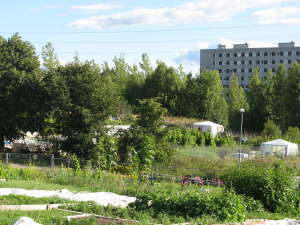 In the fall of 2017 the 8th AESOP Sustainable Food Planning Conference took place in Coventry, hosted by the Center for Agroecology, Water and Resilience (CAWR). Since its inception in 2009 the Sustainable Food Planning department is one of the most active within AESOP (the Association of European Schools of Planning), indicating that food is back on the urban agenda, at least in academia. As a budding urban agriculture planner and researcher I attended the first two AESOP SFP conferences (Almere, 2009 and Brighton, 2010). Both were exciting meetings where pioneers from Europe and America – not only planners but also initiators, activists and scientists from other disciplines and people like Carolyn Steele (architect and writer of the seminal book
  Call for papers open for the 1st International Conference on Biodynamic Research
 Rural Sociology Wageningen University