75th Anniversary: 23) On RSO education: 75 years teaching rural sociology

Diving into the archives of Wageningen University Library, I stumbled upon overviews and information on education. I was particularly interested in the teaching of rural sociology at the university. This is the first of a few blogs on RSO Education: the historical overview of sociology and specifically rural sociology at the Wageningen University timeline.

The pre-sociology era (1918-1956)

First students at the Landbouwhogeschool in 1879 (source: wur.nl)

In 1918, the Wageningen University was still called the Landbouwhogeschool (Agricultural College). Students could choose 5 study programmes: Dutch Agriculture, Dutch Horticulture, Dutch Forestry, Colonial Agriculture and Colonial Forestry. These remained the study programmes of the university for 24 years. It was not until 1945 that the university evolved into wider oriented institute. In 1946, sociology gained grounds through a new study programme on home economics. In his book chapter, Kooy (1971) calls this an “entrance in disguise” sociology was always marked with the adjective “agrarian”.  This marked the beginning of sociology in the educational programmes of the university. In 1956, The university added 11 new study programmes to the Wageningen university. Two of these additions were the study programmes Agrarian Sociology and Agrarian Sociology of Non-Western Areas. Continue reading

Thesis/Stage Transitie naar circulaire bedrijfsvoering Valleivarken

De Wetenschapswinkel is op zoek naar een student(e) die door middel van action research wil bijdragen aan de transitie naar een circulaire bedrijfsvoering van Valleivarken (organisatie van drie varkenshouders): samen met twee geïnteresseerde akkerbouwers en evt andere stakeholders wordt gewerkt aan de transitie naar een circulaire bedrijfsvoering.

Gevraagde expertise: vermogen om het gesprek tussen Valleivarken en de geinteresseerde akkerbouwers te faciliteren (action research). We zijn op zoek naar een student (thesis, internship of projectgroep) die zich uitgedaagd voelt om kennis van verschillende disciplines te overbruggen. Achtergrondkennis op één of meer van de volgende gebieden is gewenst:  akkerbouw, varkenshouderij, circulaire landbouw, bedrijfseconomie, of action research.

Lokatie: Gelderland.

Mogelijke activiteiten: interviews, action research met akkerbouwer(s) en varkenshouder, literatuur onderzoek, evt analyse bedrijfsgegevens, ontwerp bouwplan

Gevraagd: Nederlandstalige masterstudent (thesis of internship), maar ook studenten die extra verdieping willen aanbrengen of een groepsopdracht willen doen, komen in aanmerking.

Achtergrond: ValleiVarken is een samenwerkingsverband tussen drie varkenshouders (1 vermeerderaar en 2 mesters), een slachterij (Gosschalk, Epe) en retail (BONI supermarkten en cateraar/traiteur de Kroes). Momenteel wil Valleivarken een stap maken richting circulaire varkenshouderij door samenwerking te zoeken met o.a. akkerbouwers (voor de productie van varkensvoer in ruil voor varkensmest) en een veevoerfabrikant (Agrifirm). In een eerste ACT studenten project zijn twee geinteresseerde akkerbouwers geidentificeerd. Het unieke van Valleivarken is, dat de varkenshouders met hun afnemers een vaste afzet hebben afgesproken tegen een vaste kwaliteit en prijs. De ketens zijn kort, er zit geen handel tussen en de partijen werken op basis van vertrouwen en goede relaties. Aan de student wordt gevraagd de samenwerking tussen akkerbouwer en varkenshouder gestalte te geven door gesprekken te faciliteren en door het identificeren van geschikte gewassen in het bouwplan van de akkerbouwer.

Voor meer informatie:

Francien de Jonge,

tel 0317 484577;

@ Francien.deJonge@wur.nl;

https://www.wur.nl/nl/project/Valleivarken-in-transitie-naar-circulaire-varkenshouderij.htm

Master thesis opportunity – Regenerative food systems and the changing interfaces of food production and consumption in Taranaki, New Zealand

An exciting, funded thesis opportunity for students interested in regenerative food systems in New Zealand

Introduction

Regenerative agriculture has gained momentum as increasing groups of farmers become preoccupied by ‘soil health’ and attentive to the practices required to augment and sustain soil biodiversity. Regenerative agriculture builds on the principles of circular farming, enhances biodiversity as ‘nature-inclusive’ farming, mitigates climate change, adopts ‘a true costs’ approach towards the impact of (diverse modes) of food provisioning, and includes more sustainable, inclusive business models. It has been identified as a major solution for carbon sequestration and a response to destructive environmental consequences of conventional or industrial agriculture on the planet and climate.

Farm Next Door, is an entrepreneurial initiative from the Taranaki region that applies precision tools to small-scale ‘hyper-localised, backyard’ urban, community supported farming/horticulture. Farm Next Door intend to nurture and facilitate the support structure for a new urban farming community. This network of local producers will farm regeneratively, earn income from their own land, and supply local, values-based produce for local consumption.

Exploring innovative and sustainable food systems, Like Farm Next Door requires attention to both production (regenerative agriculture) and consumption (the conscious and responsible consumer). What is required is a more holistic approach to how business is conducted – one that is inclusive of social good (Vishwanathan, Seth, Gau and Chaturvedi, 2009). A focus that is inclusive of consumption allows us to understand how more sustainable patterns of consumption might be co-created through an in-depth understanding of what, how and where we choose to onsume. Engaging with the forces required to alter consumption enables a greater transformative societal shift (Fuchs and Boll, 2018).

Research project and thesis opportunity

Within this context, Massey University and Wageningen University have set up a research project that allows for 2-3 Master thesis students to conduct their research on regenerative farming. Four broad research questions provide a framework for the overall project, with smaller subsets of emergent questions guiding the focus of each individual student thesis:

  1. How can regenerative, circular, zero-waste systems be embedded within the Farm Next Door initiative and multiplied across all urban farming practitioners that will be part of this operation? What are the challenges, constraints and opportunities presented by such a holistic approach?
  2. What innovative 21 st century economic and business models provide the basis for sustainable livelihoods and thriving communities? What lessons can be drawn from initiatives across various global contexts?
  3. How are changing food production-consumption interfaces and the increasing demand for traceable, environmentally sustainable, nutritious foods promoting co-creation of common or public goods or positive externalities of innovative food systems? How are these forms of value demonstrated?
  4. How can issues of equity, ethics and responsibility be integrated within agrifood transformations and changing land use practices to secure sustainable livelihoods and promote flourishing communities in Taranaki?

Research will entail immersion in the Taranaki region at different junctures by all the researchers, to enable the development of context-based understanding in addressing the broad research questions outlined above. It will also enable the practical action research derived from the series of targeted inquiries identified by Farm Next Door listed below:

  • To identify the emerging decentralised small scale organic farm movement in Taranaki – what? when? where? how?
  • To explore how precision horticultural practices and the latest AgTech solutions can be adapted and applied to the emerging decentralised small scale organic farm movement in Taranaki
  • Understand producer and consumer dynamics – motivations to engage and co-create a new way of producing and consuming food and how behavioural change in ethical purchasing behaviour is encouraged to a wider demographic than the current “local ethical consumer”

In consultation with their identified thesis supervisor(s), students will select one of the 4 broad questions listed above for their thesis topic and develop subsets of smaller, more focused research questions to guide their field work in Taranaki. Alongside this more academically-oriented focus, they will apply appropriate methodological approaches to integrate key action research components based on the targeted areas of inquiry developed by Farm Next Door. This dual aspect to the research undertaken in this project will provide academic rigour whilst retaining direct and practical relevance to the Farm Next Door initiative and its wider purview in Taranaki.

Planning

Expected start of the thesis: between January/February 2020.

Expected fieldwork period: April – July 2020 (4 months)

Requirements and procedure

Interested students can apply for this possibility by sending and email to Dirk Roep/Jessica de Koning/Mark Vicol to express their interest in this exciting opportunity. In order to be considered, students must meet the following criteria.

  • Students are enrolled at the Wageningen University
  • Students are preferably part of one of the following programmes:
    • MID programme, specialisation Sociology of Development
    • MOA programme, specialisation Sustainable Food Systems
  • Students preferably have completed RSO-31806 Sociology of Food and Place and/or RSO-30806 The Sociology of Farming and Rural Life
  • Students must be willing to work in a team led by Massey University
  • Students must be willing to stay in New Zealand for a period of 4 months
  • Students meet the criteria of entering New Zealand set by New Zealand immigration.

Final selection of candidates will be made by Dirk Roep, Jessica de Koning and/or Mark Vicol.

In return we offer

  • Relevant work experience in a research collaboration between Massey University and Wageningen University
  • Reimbursement of costs of travel, housing and transport (incl. return flight Netherlands-New Zealand).

Contact

Dirk Roep (dirk.roep@wur.nl), Jessica de Koning (jessica.dekoning@wur.nl) Mark Vicol (mark.vicol@wur.nl).

Thesis skills – an online RSO support system for thesis students

Ever wonder how to write the perfect research question?

Problems in building raport with your respondents in the field?

Never really quite sure what operationalisation of concepts means?

Is a thesis stressing you out?

RSO has just designed an online learning environment on Brightspace called Thesis Skills. Thesis Skills is an innovative platform that is 100% online and 100% based on your needs.

The aim of this digital thesis environment is to give you tools to assist you in the thesis writing process. We have divided this process into topics such as planning, proposal writing, literature review, in the field and after the field, writing, etc. For each of these we have created a module containing information, exercises and self-tests. You do not have to take all modules, but can select the ones most appropriate for you. Mini-tests help you select these.  The digital thesis environment also contains peer support discussion fora to discuss difficulties with other students, and exchange tips and tricks.

All master thesis students (already busy with their thesis or planning to start) of RSO are invited to register for this online education platform. You can do this by sending an email to Jessica de Koning (jessica.dekoning@wur.nl)

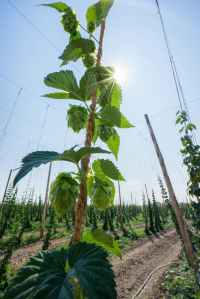
Thesis opportunity: Brewing Social, Economic and Ecological Change in the Global Hops Industry

With the rapid expansion of the craft beer sector globally, the organization of hop production is changing in producing countries. We seek one or two MSc students to conduct a primarily qualitative study on how interrelated social, economic and ecological dynamics shape sustainability outcomes (broadly conceived) in a rapidly expanding and changing industry. Potential topics of focus include the role of plant breeding and new varieties, trade-offs between cooperative vs competitive relationships, and how changing beer markets are influencing how people produce, sell and use hops. Potential frameworks include STS, Assemblage Theory, Global Value Chain Analysis and Political Economy. Students may choose to complete fieldwork and data collection in one of the target countries of New Zealand, UK, Belgium, US, and Germany.

low angle photo of green leaves

Photo by ELEVATE on Pexels.com

Pre-requisites:

  • You have some training in qualitative methods and critical social theory
  • You have a keen interest in the sociology of agriculture, food systems, sustainability, food politics and/or foodscapes
  • You are willing to develop fieldwork-based methodologies
  • You have completed at least two social sciences courses, preferably with RSO
  • You are eligible to do your thesis with RSO

Questions? More information? Email mark.vicol@wur.nl