According to Greek mythology, there was a contest between two Olympian gods, Athena and Poseidon, to determine who would become the patron deity of the city that was ruled by Cecrops. The Olive tree was Athena’s gift to the city that made her win the competition and become the patron of Athens. The olive branch has also been an important symbol of peace as people associated the planting of olive trees with the dispelling of evil spirits and believed that it would endure peace. Some 2500 years later, it is hard to continue believing so.
Following the Six-Day War in 1967, Israel captured vast amounts of Palestinian property between 1968 and 1979 and legitimized its actions with the argument that this was a temporary, military requisition for security purposes (Braverman 2009). Reports suggest that since 1967, over a million olive trees have been vandalized in Palestine via cutting, uprooting, stealing, burning, etc. Braverman (2009, pg. 130) explains Israel’s rationale for destructing olive trees in three ways: (1) Making way for the Separation Barrier, (2) abolishing hiding grounds for ‘terrorists’, and (3) for further security measures such as constructing watchtowers, checkpoints, fences, and roads around Jewish settlements.
Amidst the extreme summer heat in the drylands of Urfa province in Southeastern Türkiye, the harvest season is starting at full speed, and thousands of seasonal agricultural workers – entire families – are ready to immigrate to work long hours in the fields. When temperatures regularly reach 40 ℃, agricultural work is extremely exhausting. Even though the exact number of people is unknown, most estimates suggest that at least one million people are engaged in seasonal and temporary informal agricultural labor in Türkiye. Most of them are landless Kurds from the Urfa city of Southeastern Türkiye and the majority neither own nor have access to land to earn their livelihoods. Every harvest season, thousands of landless Kurdish seasonal and temporary agricultural worker families migrate informally from the gecekondu districts, which are houses or shelters constructed quickly without proper legal permissions in Urfa city, to work in both Urfa’s rural areas and other regions in Türkiye. Most landless Kurdish seasonal agricultural workers do not have employment contracts and they are paid below the national minimum wage.
I began my MSc research thesis in June 2021, at the end of the second pandemic wave, which forced the world (back) inside, into our homes. I was frustrated and upset that I would probably not be able to conduct research beyond Europe’s borders – or outside my own room, even. At the start of my master’s, I was looking forward to the thesis, quite naively romanticising, in fact, picturing myself as a young researcher in the middle of rural fields, maybe in Latin America, living near native communities that struggle for social and human rights. After the pandemic hit, I had to surrender this idea and recalibrate my research expectations. I refocused my research aims and decided to start a study on social movements in Florence, my hometown.
I had never really thought of researching in a city: during my studies, I had unconsciously neglected its potential to enact a real change in society. The urban context, to me, was a negative environment from which good changes could not emerge. As various authors argue, the city is the centre of capitalistic life, it is the producer of huge economic surpluses, always looking for new outlets to absorb this endless profit that it constantly generates, and this, eventually, brings a lot of socio-economic problems to residents. Let me explain this with an example that ultimately becomes the background of my research.
Insurgent movements have commonly re-located to isolated rural areas with weak state presence where their security was guaranteed by a hostile environment to launch insurgencies. The more recent field of rebel governance also draws on predominantly rural cases. Yet, some groups have chosen to predominantly base their armed mobilisations in cities with much higher security risks where they are obliged to mobilise clandestinely. Clandestinity is often seen as an impediment to insurgent consolidation. This article explores the forms of rebel governance adopted by the M-19 in Colombia to construct networks of social ties needed to embed itself in urban environments. It highlights a case of urban rebel governance without territorial control, thus extending the scope of the rebel governance literature. It addresses the spatial variation of the M-19’s insurgency by analysing its diverging experiences of its clandestine mobilisation in Bogota and Cali, as well as a brief window where it conducted more public urban mobilisation. Based on qualitative interviews conducted with former militants and an extensive qualitative, coding of M-19 primary archival sources, the findings show that M-19 could maintain its urban campaigns because of its parallel rural infrastructures. When the conditions for urban mobilisation deteriorated, its militants could flee to the relative safety of the rural fronts. The article’s findings hint at potential avenues for further research, notably more detailed assessment of the ties between urban and rural units and support networks, and a more explicit comparison between patterns of social tie creation in urban and rural environments.
“Clandestinity and insurgent consolidation: The M-19’s rebel governance in urban Colombia” is a new publication by Francis O’Connor, a Marie Curie Skłodowska Post-Doctoral Fellow in Rural Sociology at Wageningen University in the Netherlands. Read the full article here: https://doi.org/10.1016/j.polgeo.2023.102930
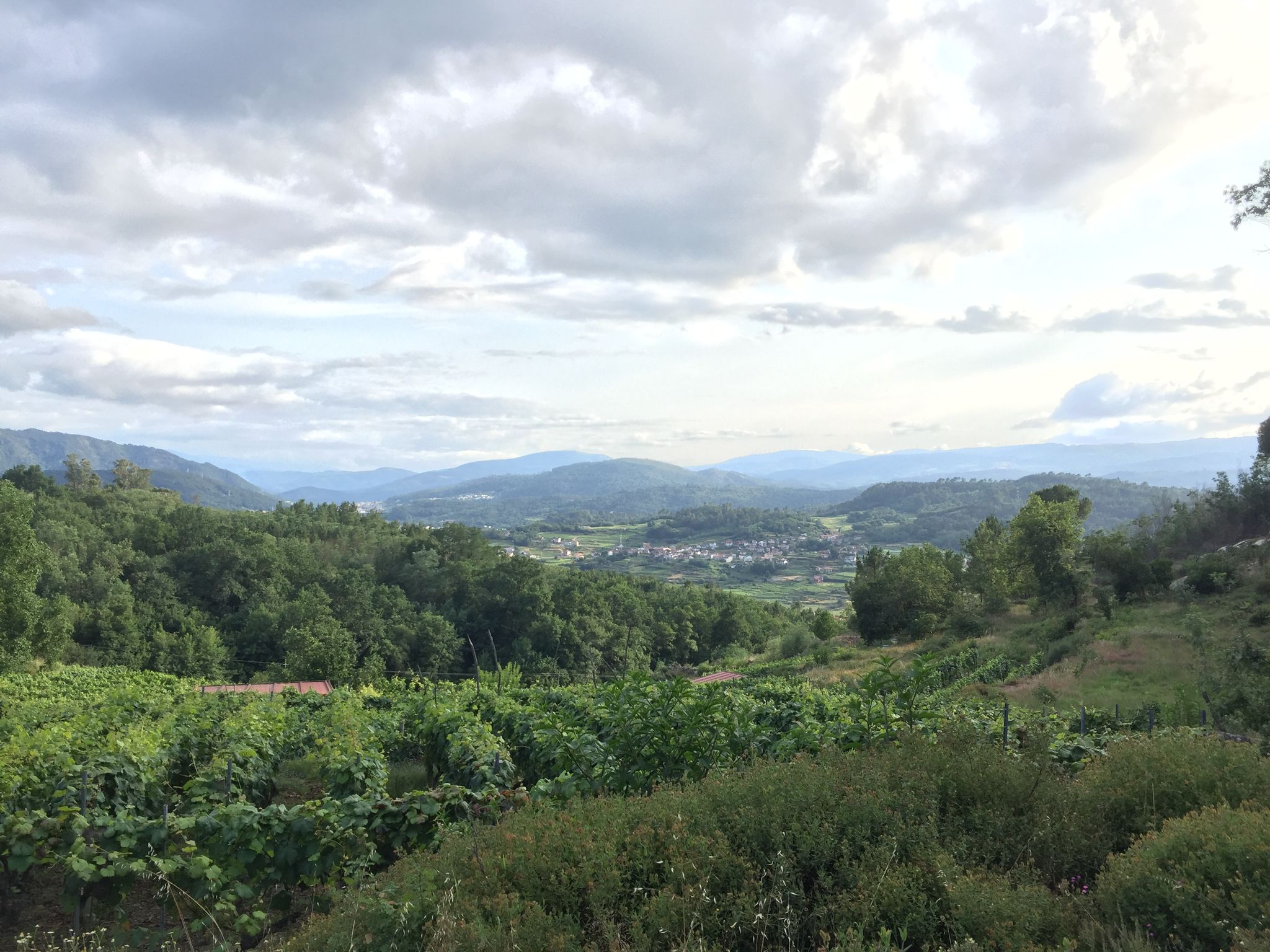
Commons, or commonly managed land, seem to be a relic of the past. The enclosure of the commons and concomitant rise of modern agriculture and capitalism have received much attention in academic literature. However, in Galicia, an autonomous region in the Northwest of Spain, a quarter of land is still managed as commons, typically referred to as ‘montes vecinales en mano común’. This way of land management means that land cannot be divided, owned individually, traded, or sold but is rather decided over by the people living in the parroquia or parish. The intricate link of household economies to the common lands, materializing through for example the grazing of animals in the commons or the harvesting of toxo (a nitrogen-rich shrub) to turn into fertilizer, was violently put to an end by the dictatorial state that usurped common lands between 1937 and 1989 to afforest them according to principles of industrial forestry. The rupture of household, rural economies is linked to substantial changes in these spaces, most notably, a significant drop in the rural population from 71.8% in 1950 to 14.3% in 2000 (Seijo 2005). The State’s forestry program was incredibly ambitious, planting five and a half million hectares of forest in the period between 1940 and 2006 (Vadella, 2016) with Galicia being a particular area of interest for the State’s reforestation program (Picos, 2017). After the Franco dictatorship ended, lands were returned to communities yet the processes and reasons for the devolution are contested and context-specific. Some communities never received their lands back, some received fractured parcels, some lands were filled with monocultures of eucalyptus and pine, while others house public facilities like schools and hospitals. About 3,000 montes vecinales en mano común exist throughout Galicia and each is shaped by a particular historical and situated process, allowing us to explore the cracks, resistances, and adaptations that have shaped the Galician commons becoming what they are today and what they could be tomorrow.
Thesis projects can be formulated around the following:
Chronicling diverse economic practices over time in a historical perspective. People’s physical presence in the commons has changed over time, in line with modernization and economic ‘development’. Using qualitative methods such as interviews, these changes can be studied to learn about how commoning changed over time, what this meant for rural livelihoods, and commoners’ subjectivities.
Exploring current configurations of diverse economic practices in the monte and how these came to be. Here students can examine how the commoning community has come to be, how initiatives have arisen in the commons, and how diverse economic practices have taken shape and relate to human flourishing.
Futuring and imaginaries. Here we consider the futures commoners imagine or aspire to. Through qualitative research methods, this part of the project considers the meanings people ascribe to the commons and what commoning could look like in the future. We ask what role the commons have in human well-being as imagined by commoners but also by other actors like policymakers, scientists, and research centers.
The research takes place in connection to a PhD study by Noortje Keurhorst (University of Vigo). She will also be the local supervisor for this research. For fieldwork a good command of Spanish and/or Galician is useful.
MID, MOA or MDR students interested can send an e-mail to joost.jongerden@wur.nl

 Rural Sociology Wageningen University