75th Anniversary: 5) Sociology as Sociography

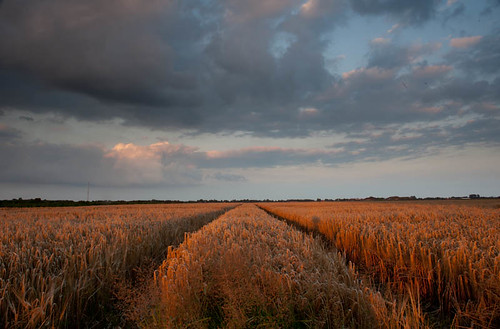
“Korenveld” by Lianne Koster – licensed under CC BY-NC-SA 2.0

When Evert Willem (E.W.) Hofstee, founding father of rural sociology in the Netherlands, started his academic career as a lecturer at Groningen University in 1938, he defined his work as ‘sociography’ (Hofstee 1938). In this, he was clearly following in the footsteps of his teacher and tutor, Sebald Rudolf Steinmetz (1862- 1940), who had created the new discipline from a fusion of sociology and geography (Karel 2002: 2-3). Only later would Hofstee add the word “sociology” to the domain of his work. Thus, the department (“vakgroep”) he established and headed at the Agricultural University in Wageningen from 1954 onwards was named “sociography and sociology” before being renamed as “sociology”, and then, more precisely, “rural sociology”. Nevertheless, until the end of his life, he remained committed to the agenda of “sociography”: a grounded theoretical approach with low levels of abstraction and high probability of practical application (Hofstee 1938, Hofstee 1982; Karel 2002). Continue reading

75th Anniversary: 3) In the beginning there was E.W. Hofstee or the birth of Rural Sociology in Wageningen

Photo: E.W. Hofstee on the shoulders of the sociologists Ad Nooij and Rien Munters at the occasion of the 25th anniversary

The history of rural sociology in Wageningen goes back to the appointment of Evert Willem (E.W.) Hofstee as professor in economic geography. His appointment by Royal Decree took place on May 9, 1946. He started to work at the university on September 15, 1946, though his formal employment did not start until October 1, 1946. Hofstee gave his inaugural lecture “On the causes of diversity in agricultural regions in the Netherlands” on October 30, 1946.

The appointment of E.W. Hofstee not only marked the beginning of  rural sociology in Wageningen, his work also laid the foundations for the social sciences department at this university. Moreover, Hofstee played an important role in the development of rural sociology in Europe. He was the co-founder and first president of the ‘European Society for Rural Sociology’ (1957) and co-founder of the journal ‘Sociologia Ruralis’ (1960). Continue reading

75th Anniversary: 2) In den beginne was er E.W. Hofstee – het ontstaan van Rurale Sociologie in Wageningen

De geschiedenis van rurale sociologie in Wageningen gaat terug tot de benoeming tot hoogleraar van Evert Willem (E.W.) Hofstee per Koninklijk Besluit van 9 mei 1946. Volgens eigen zeggen begon hij zijn werkzaamheden op 15 september 1946, maar zijn formele indiensttreding was op 1 oktober 1946 en het einde van die maand, op 30 oktober 1946, hield Hofstee zijn inaugurele rede met de titel “Over de oorzaken van de verscheidenheid in de Nederlandsche landbouwgebieden”. Hofstee kan met recht beschouwd worden als de grondlegger van de rurale sociologie in Wageningen, maar misschien ook wel van het departement maatschappijwetenschappen aan deze universiteit. Ook speelde Hofstee een sleutelrol in rurale sociologie in Europa. Hofstee was medeoprichter en eerste president van de European Society for Rural Sociology (1957) en medeoprichter van het tijdschrift Sociologia Ruralis (1960).

Continue reading

Unpacking legitimacy in regional development

In 2018, Yasmine Willy came as a visiting fellow to the Center of Space, Place and Society at WUR. Two years later, the fruits of this visit have been published in the journal Territory, Politics and Governance. The article focuses on an issue widely discussed in academic literature: the lack of legitimacy of regional development agencies.  Following Hannah Arendt’s distinction between legitimization and justification, the article argues that the main problem regional development agencies struggle with is not procedural rightfulness (legitimization) but means–end coordination (justification). The abstract of the article writes: “In recent years, policy-makers and researchers have identified regional development agencies as the most suitable actors to carry out public tasks. One of these tasks has been the coordination of regional development processes. Both practitioners and researchers argue that legitimacy is a prerequisite for these regional actors to function properly. Although legitimacy is a key issue, little is known about the challenges that arise while producing it. Selecting six regional development agencies in Switzerland and applying an interview-based research method, this explorative study analyses how regional development agencies deal with legitimacy issues. The findings indicate that the main problem with which regional development agencies struggle is not procedural rightfulness but means–end coordination. By proposing a clear distinction between legitimacy and justification, we aim to stimulate the debate on how to operationalize legitimacy and further the discussion of the functioning of regional development agencies. Consequently, we introduce the concept of ‘asymmetric justification’ to the debate on regional development processes in order to shed a light on the functioning of regional development agencies.”

If you are curious, you can access the article under this link
https://rsa.tandfonline.com/eprint/FVR9SKRQMMXG8GMVRZ5S/full?target=10.1080/21622671.2020.1805352


Rural Uproar: Corona Proof Thesis Opportunity

So you want to do your thesis, but as corona-proof as possible. Than read the this call for a student interested in making a sociological analysis of rural uproar.

Unrest has brought tractor blockades to The Hague, Berlin, Paris and many other cities as a cocktail of grievances boil over. Yet rural uproar is not new. In his Peasant Wars of the Twentieth Century, Eric Wolf examined the histories of peasant involvement in rebellions and revolutions in the twentieth century. Eric Hobsbawm and George Rude examined the rebellion and arson attacks by a rural population at a time capitalism swept from the cities to the countryside in England.

In this thesis opportunity you will be asked to study rural uproar, identify characteristics and grievances of protests and revolts, and its economic and political causes. For this thesis, you will do a systematic literature review in combination with archival work. When more recent uproar is taken into consideration, interviews are possible.

More info: joost.jongerden@wur.nl


Picture: Captain Swing, mythical figure whose name appeared on series of threatening letters during the rural Swing-Riots in the UK now 190 years ago.