Reflection | Workshop Sharing Field Notes

A reflection on the workshop Sharing Field Notes

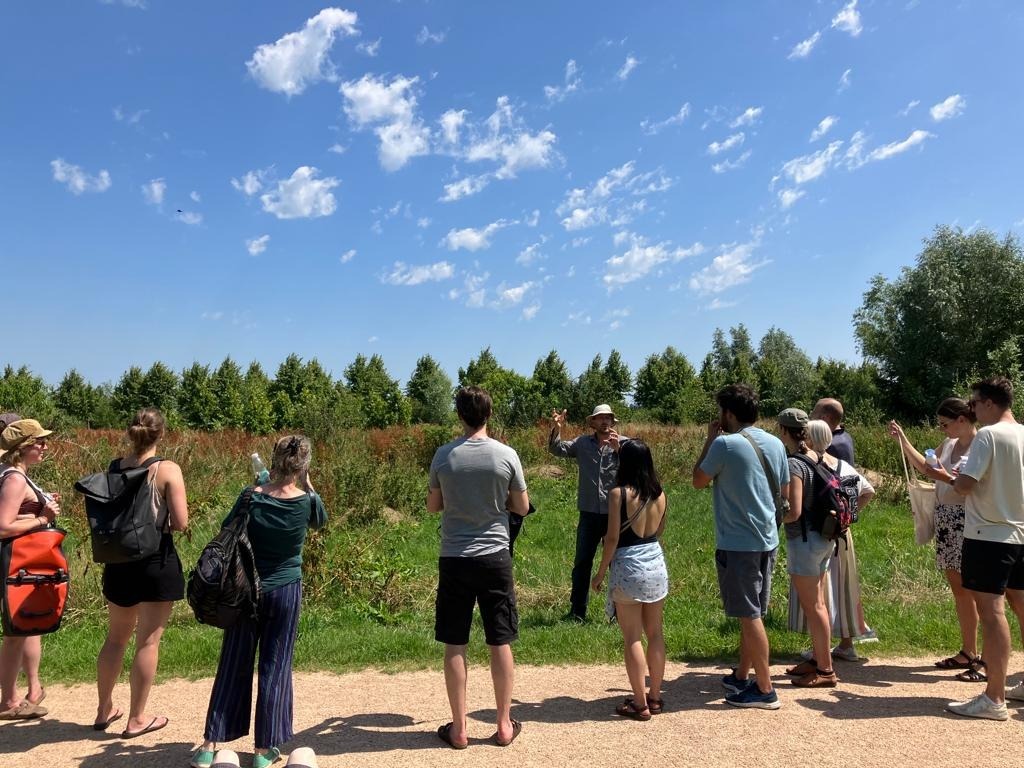
On Monday May 26th, our colleague Anna Roodhof (PhD Candidate at Rural Sociology) attended a workshop on sharing field notes, which was organized by Leiden University, DANS-KNAW (Data Archiving and Networked Services), ISS (the Institute of Social Studies at Erasmus University), and PNN (the Netherlands’ PhD Candidates Network). This workshop was organized to discuss qualitative data – field notes in particular – in the context of open science, specifically the FAIR and CARE principles.

Field notes are a type of data collection that is very common at the Rural Sociology Group and elsewhere: they are prevalent in many disciplines, including anthropology, linguistics, sociology, archeology, ethnobotany, and ecology. These notes are often textual, but can include visual components such as sketches or photos. They can be written for a variety of reasons: to provide context, to serve as primary data, or to explicate the researcher’s positionality in the field. While it is uncommon for this type of data to be published in full, it can be done.

Continue reading
(Alternative) food consumption practices in Central and Eastern Europe: an integrative critical literature review

New publication by Lani Trenouth & Lucie Sovová 

Trenouth, L., Sovová, L. (Alternative) food consumption practices in Central and Eastern Europe: an integrative critical literature review. Agriculture and Human Values (2025). https://doi.org/10.1007/s10460-025-10717-0

Abstract

Research on food consumption practices in Central and Eastern Europe (CEE) has grown significantly over the last two decades, documenting the region’s diverse food practices. By focusing on the region’s distinct history and socio-cultural dynamics, this body of work enriches global food studies scholarship and increasingly challenges dominant narratives surrounding alternative food networks (AFNs), which are primarily based on empirical and theoretical work from Western Europe and North America. In this study, we conducted an integrative critical literature review and thematic analysis to explore “alternative” food consumption practices in CEE. Our exploratory, content-driven approach involved reviewing a wide range of empirical and theoretical studies, synthesizing existing knowledge, and extending it through an interpretive thematic analysis. We identified key themes depicted in the English-language academic literature on alternative food consumption practices in CEE, including autonomy, resistance, tradition, identity, informal networks, (dis)trust, choice, and values. We also noted tensions in the literature related to concepts of tradition, culture, Europeanization, overt and covert sustainability, “normal” consumption, and ethical consumption. A recurrent concept in this literature is hybridity, suggesting that many food consumption practices in CEE occupy an ambivalent space, raising questions about notions of “alternative” and “conventional” consumption. Overall, our synthesis underscores the importance of cultural nuances and historical trajectories in shaping regional food systems. With this review, we aim to advance food studies scholarship through an analysis of the evidence emerging from this under-represented region.

Publication | With whom do you want to be interdependent in producing food?

JAFSCD article by Margriet Goris (Wageningen University & Research) Daphne Schoop (Wageningen Research), Dirk Roep (Wageningen University) en Jan Hassink (Wageningen Research)

Intentionally shifting interdependencies through territorial food networks

Values-based territorial food networks (VTFNs) hold immense potential for reshaping our food supply, but little is known about how they bring about change. In a new JAFSCD article, “Relational autonomy highlights how interdependencies shift in the transformation of food provisioning,” Goris, Schoop, Roep and Hassink present findings from narrative interviews and observations during fieldwork in three different VFTNs in The Netherlands.

They aimed to understand how shifts in interdependencies in VFTNs come about and what this means for autonomy in food provisioning. The scholars show how mutual autonomy is promoted in relations among farmers, livestock, soil life, plants, citizens by creating opportunities, rights, respect, trust, and capacities amongst others. They state that autonomy is not an individual matter but is created in relationships of interdependency.

This helps us explain how people and nature depend on each other. For example, when we stop using agrochemicals, we depend more on natural processes and other market relations. To make this work, farmers and rural workers need to be able to mimic those natural processes, and to be able to create a fairer food market where everyone shares the risks, acknowledging mutual vulnerabilities and interdependencies.

Visit members VOKO Utrecht to food forest by VOKO Utrecht