With daily seminars by Engin Isin and contributions by Cristina Grasseni, Robin Smith, Joost Jongerden, and Han Wiskerke
Fair and just agriculture and food systems have been central issues in policy and practice for much of the 20th and 21st centuries. Peasants, consumers, and social movements have been fighting for rights such as land ownership, access to healthy food, and the right to determine our agricultural and food futures for many decades, if not centuries. Few have conceptualized this in terms of citizenship. Yet by questioning what is fair, just, and right, challenging the working of our agrarian and food systems, and practising alternatives people establish themselves as citizens, and more specifically as agrarian and food citizens.
Mark your calendars for a wonderful event set to take place from 30th June to 4th July 2024 in Trapani, Sicily, Italy – the 15th International Farming Systems Association (IFSA) conference. This conference promises to be a gathering of minds dedicated to exploring systemic change for sustainable futures, with a focus on crucial topics such as postgrowth farming systems.
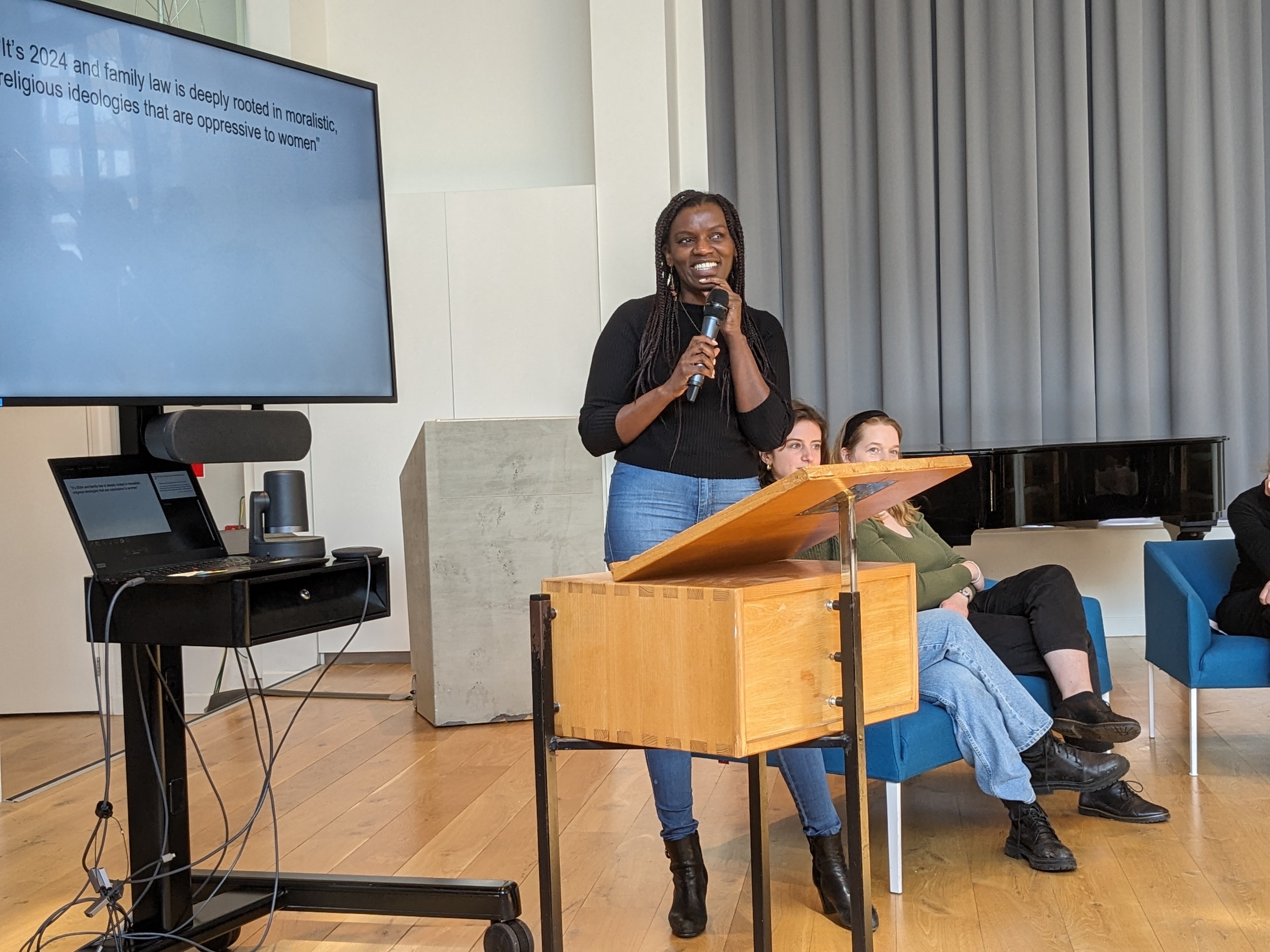
To mark International Women’s Day, an engaging workshop took place in Impulse, fostering dynamic and thought-provoking conversations about the future of feminism. Hosted by Jessica Duncan, the workshop began with an insightful introduction, celebrating women’s achievements while acknowledging the ongoing journey towards gender equality.
Following the introduction, a panel of researchers, all specializing in gender, equality, and power, presented propositions concerning women’s issues. Georgia Diamanti and Marije van Santen discussed the impact of the Common Agricultural Policy on women, followed by Tabitha Muriuki’s exploration of oppressive ideologies within family law. Margriet Goris concluded with a proposition addressing the gender pay gap and options available to men.
After the propositions, attendees formed smaller groups to deliberate and identify key feminist principles. Engaging discussions ensued, culminating in the sharing of various principles raised by the audience:
1. Principles for Wageningen University & Research (WUR) and other universities: > Promote genuine participation of diverse individuals within the university. > Ensure active inclusion of women in research endeavors. > Provide students with access to female scientists. > Implement mandatory courses on positionality in science, gender studies, ethics, and philosophy across bachelor’s and master’s programs. > Increase representation of women as chair group holders.
2. Principles for the workplace: > Close the gender pay gap through collective efforts, including active involvement of men. > Foster transparency in company salaries to address gender disparities.
3. Principles for society: > Create safe public spaces for individuals of all genders. > Enforce zero tolerance for sexual harassment and sexism. > Consider women’s perspectives in the development of products and services.
This workshop is connected to the SWIFT project and serves as the starting point for ongoing discussions about feminism at WUR. Let’s reconvene next year on International Women’s Day to further advance the dialogue!
Join us for the Agrarian Change Seminar on Mar 12, 4 – 5.30pm. We’re diving deep into the topic of Agrarian Extractivism with Alberto Alonso-Fradejas from the Rural Sociology Group. Whether online or in-person at Wageningen University (Room 68, Leeuwenborch building), you won’t want to miss this insightful discussion, jointly hosted with UCL Institute of the Americas.
About the seminar: What is agrarian extractivism and why does it matter? The historical and growing global interest on natural resources for business, poverty alleviation, food security and increasingly for climate change mitigation purposes is putting a huge burden on human and non-human nature. Particularly, more, and more intensive forms of agro-commodity production are fueling crises of social and ecological reproduction worldwide that are very hard to counter or ‘mitigate’, let alone roll back. These ‘extractivist’ features of some forms of agrarian capitalism today, and of others before, resonate with the rationales and the workings of the mining oil and gas sectors. Thus, the notion of ‘agrarian extractivism’ or ‘agro-extractivism’ is arguably gaining currency as an analytical category with the potential to enhance our understanding of agrarian and environmental change historically and across the Global South-North and East-West world divides. Now, how is agrarian extractivism any different from agro-industry? Is there only one form or model of agro-extractivism? And is agrarian extractivism just about the deepening of the metabolic rift between agriculture and Nature? In short, what do we talk about when we talk about agrarian extractivism and why does it matter? Find out the answers and much more at this thought-provoking seminar!
Save the date and don’t miss this opportunity to delve into a crucial topic shaping our global agricultural landscape.
Join Zoom Meeting using this link Meeting ID: 867 3193 1853 Passcode: 553018
Are cows better represented in the CAP than women? Does addressing the gender pay gap increase consumerism?
Join us for a dynamic and thought-provoking discussion on propositions related to the future of feminism. Our goal? To craft a concise manifesto for Women’s Day 2024!
Date: Friday, March 8th, 2024 Time: 12:30 – 13:30 Venue: Impulse, Building 115, Wageningen Campus
Hosted by Jessica Duncan, Georgia Diamanti, Margriet Goris & Marije van Santen of the Rural Sociology Group.




 Rural Sociology Wageningen University