Agrarian Change Seminar

Join us for the Agrarian Change Seminar on Mar 12, 4 – 5.30pm. We’re diving deep into the topic of Agrarian Extractivism with Alberto Alonso-Fradejas from the Rural Sociology Group. Whether online or in-person at Wageningen University (Room 68, Leeuwenborch building), you won’t want to miss this insightful discussion, jointly hosted with UCL Institute of the Americas.

About the seminar: What is agrarian extractivism and why does it matter? The historical and growing global interest on natural resources for business, poverty alleviation, food security and increasingly for climate change mitigation purposes is putting a huge burden on human and non-human nature. Particularly, more, and more intensive forms of agro-commodity production are fueling crises of social and ecological reproduction worldwide that are very hard to counter or ‘mitigate’, let alone roll back. These ‘extractivist’ features of some forms of agrarian capitalism today, and of others before, resonate with the rationales and the workings of the mining oil and gas sectors. Thus, the notion of ‘agrarian extractivism’ or ‘agro-extractivism’ is arguably gaining currency as an analytical category with the potential to enhance our understanding of agrarian and environmental change historically and across the Global South-North and East-West world divides. Now, how is agrarian extractivism any different from agro-industry? Is there only one form or model of agro-extractivism? And is agrarian extractivism just about the deepening of the metabolic rift between agriculture and Nature? In short, what do we talk about when we talk about agrarian extractivism and why does it matter? Find out the answers and much more at this thought-provoking seminar!

Save the date and don’t miss this opportunity to delve into a crucial topic shaping our global agricultural landscape.

Join Zoom Meeting using this link
Meeting ID: 867 3193 1853
Passcode: 553018

Read more about this seminar series here.

Event | Exploring solidarity, feminisms, and futures – an interactive workshop for International Women’s Day!

xr:d:DAF-jZ7qAGc:49,j:324679821035063471,t:24030419

Are cows better represented in the CAP than women? Does addressing the gender pay gap increase consumerism?

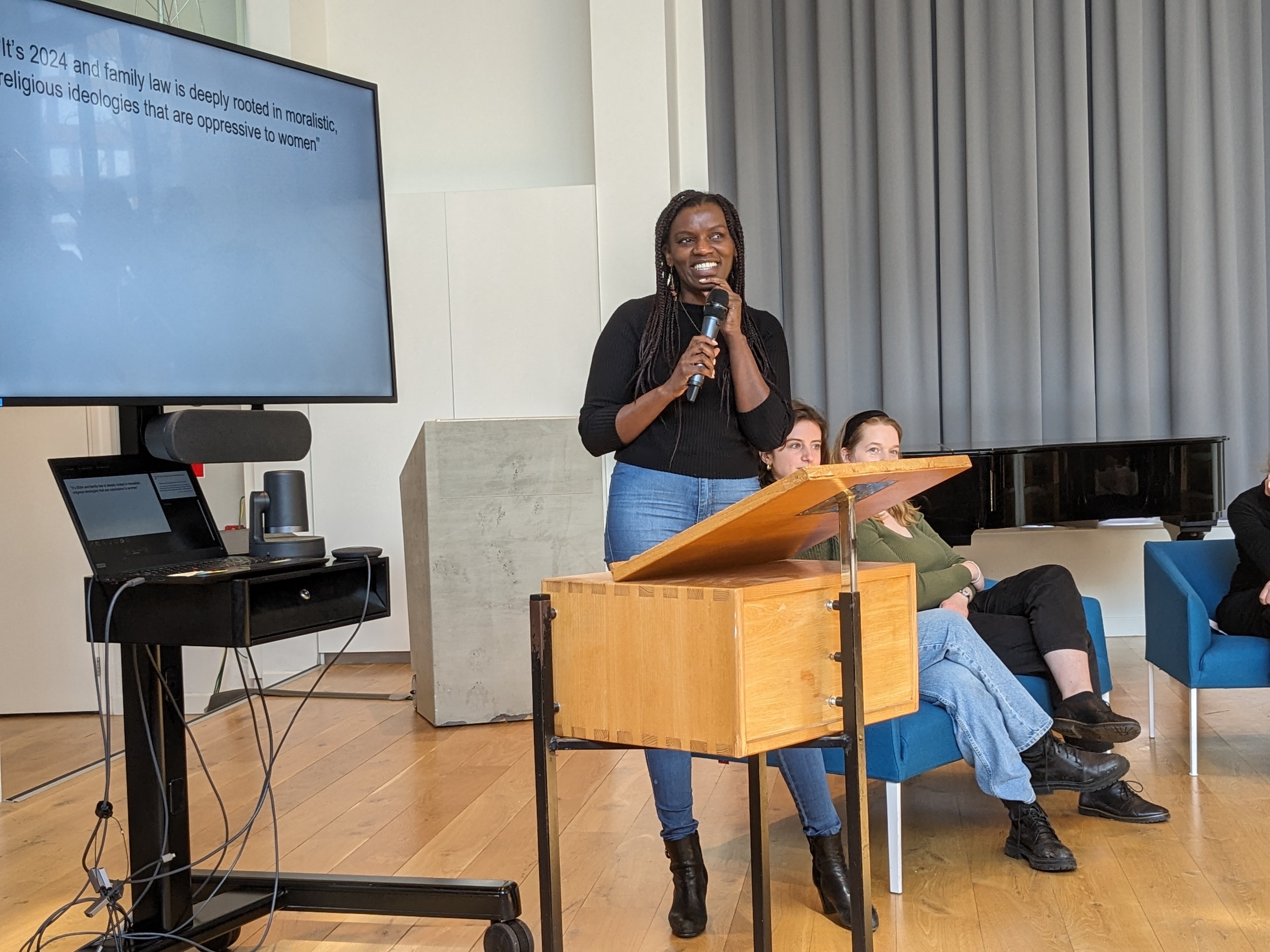
Join us for a dynamic and thought-provoking discussion on propositions related to the future of feminism. Our goal? To craft a concise manifesto for Women’s Day 2024!

Date: Friday, March 8th, 2024
Time: 12:30 – 13:30
Venue: Impulse, Building 115, Wageningen Campus

Hosted by Jessica Duncan, Georgia Diamanti, Margriet Goris & Marije van Santen of the Rural Sociology Group.

Wageningen and the Nitrogen Crisis

Join us in a collective reflection on the role of Wageningen University and Research in the formation and solution of the current nitrogen crisis, and the larger agricultural crisis in general. Jan Douwe van der Ploeg (emeritus professor agricultural sociology) shares his vision on the past, and present of the nitrogen crisis. He is accompanied by Esther Turnhout (chair of Science, Technology & Society aan de University of Twente) and Henk Oostindie (researcher at Rural Sociology of Wageningen University), who will enrich his story. With questions and discussion with the audience, we will reflect on the situation and think of lessions and steps for the future.

24 January 2024, 19:00-21:00
Venue: Wageningen Campus, Impulse, Speakers Corner (Building115)

‘Let it flow: Navigating hydropower conflicts in southern Chile’ – PhD thesis defense by Maite Hernando Arrese

On Monday 4 December 2023 at 16.00 CET Maite Hernando Arrese will publicly defend her PhD thesis entitled ‘Let it flow: Navigating hydropower conflicts in southern Chile’. The defense will take place in the Omnia Auditorium and will also be broadcasted live (a link will appear in the events box, in the upper left corner of the screen). The full thesis can be read online or downloaded (usually from the first day after the PhD defense onwards) from the repository of Wageningen University PhD theses or by clicking on the DOI link.

Continue reading →

Oil, Resource Frontiers, and Unruly Spaces in Northern Kurdistan

Zeynep Oguz*

Turkish and Kurdish studies have been moving in important directions in the past decade. Studies of the importance of space and placemaking in Kurdish issue (Gambetti and Jongerden 2015) have been complemented by sustained engagements with material culture, nature, and environments in Kurdistan, as well as how they are central to colonial practices, state violence, and resistance. Today, from the study of ruins and ruination in burial sites and ghosts and, therefore, the interaction between the material and the symbolic, one can learn from anthropological and historical studies of how forests and forest fires, water and rivers, mountains, and animals have been entangled with power and resistance in Kurdistan (See Adalet 2022, Bozcali 2020, Biner 2019, Çaylı 2021, Oguz 2021, Suni 2023).

Continue reading →