Eat your landscape Part III; neighborhood forest garden

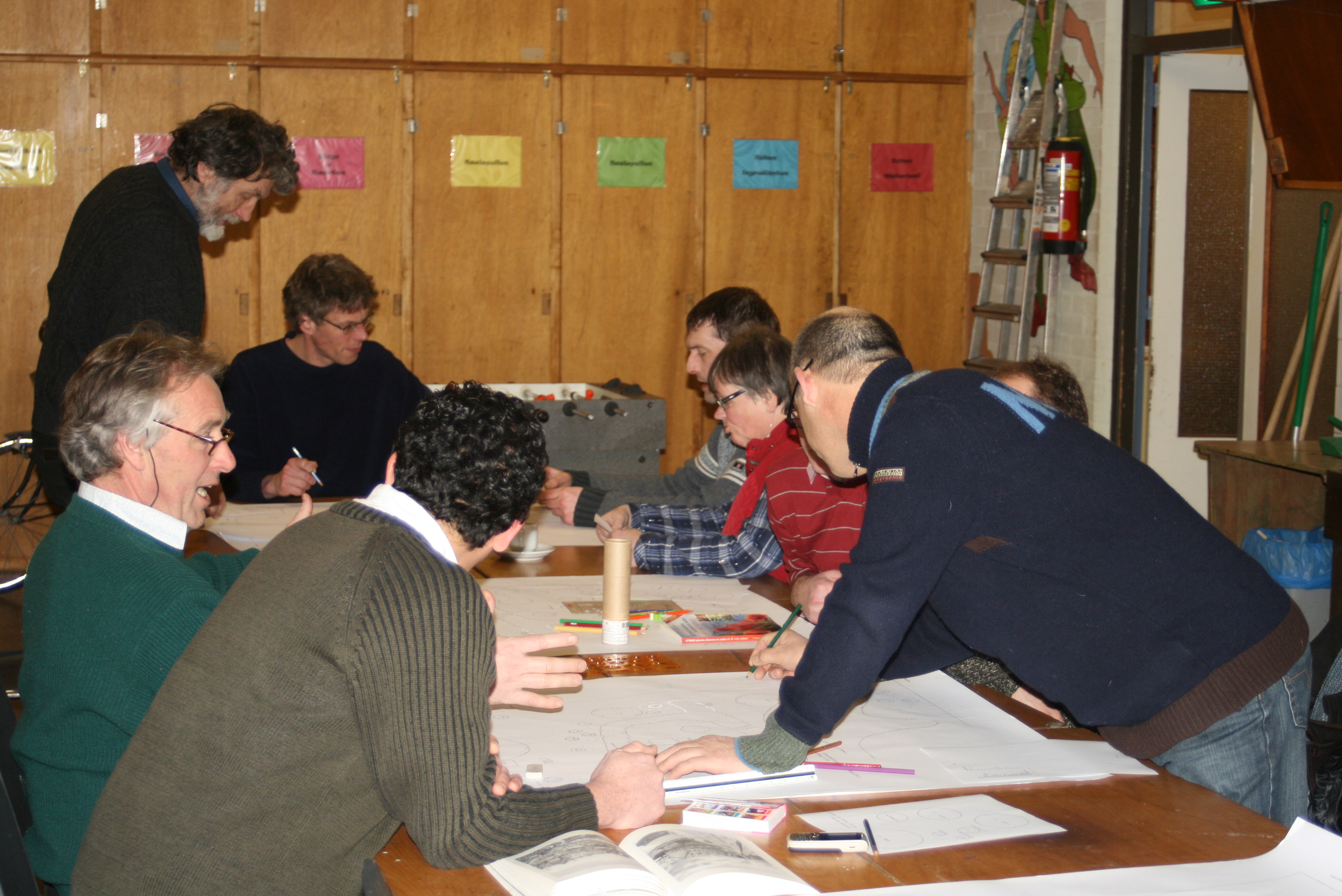
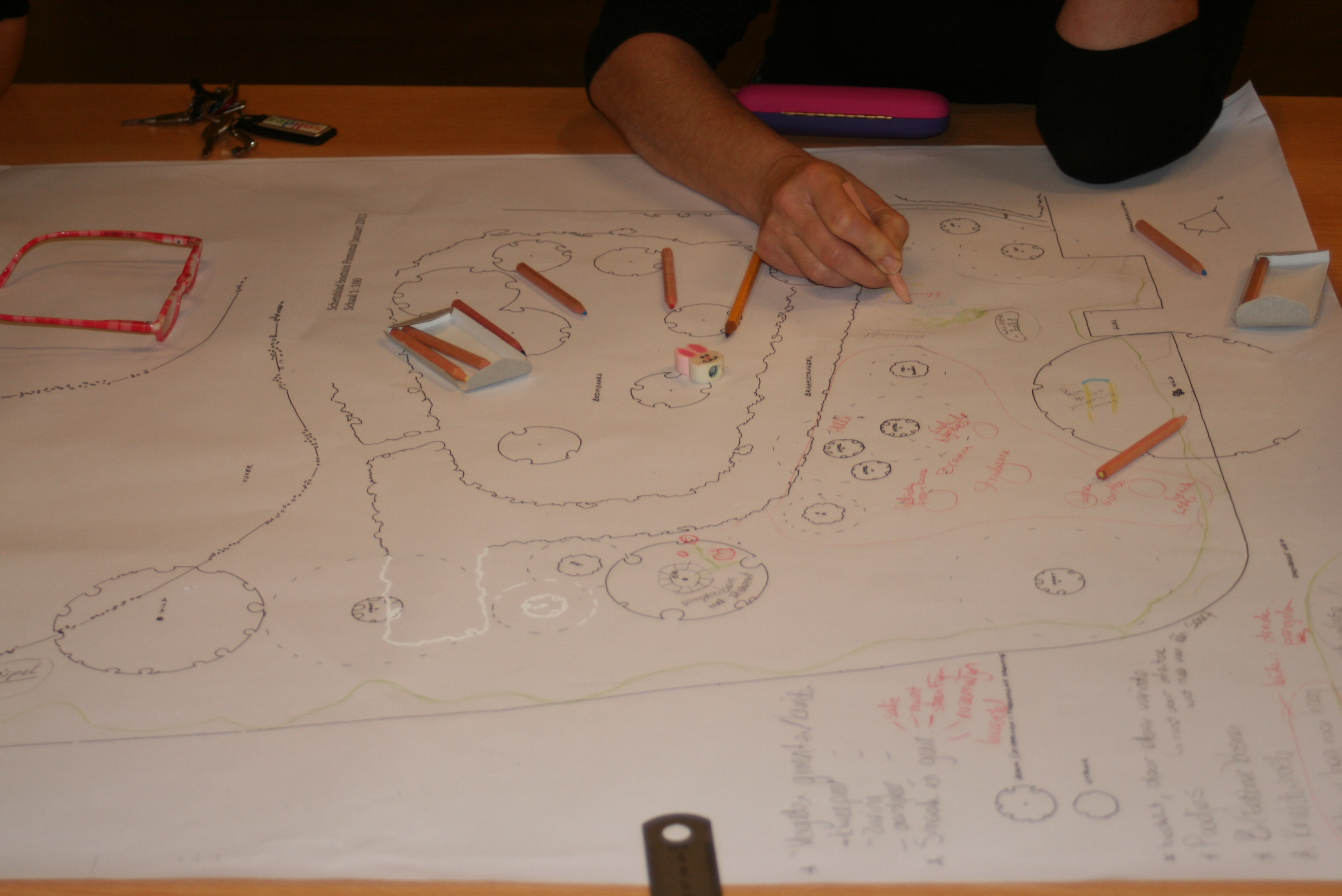
Food connects us to our landscape (see earlier examples I and II). More than a year ago, a group of people from the Pomona neighborhood, born from the Transition Town Vallei animation evenings, started making plans to improve part of the 1 hectare old orchard which became a wild and inaccessible bush overgrown by brambles. A year of planning, project development, fund-raising and building networks followed. Funding was secured from the KNHM, Oranjefonds and two neighborhood platforms of the municipality. A week ago, finally, we had our design evening with some 20 people from the neighborhood. It was the second of three evenings to inform, design and decide with all inhabitants who are interested to a proposal for planting a wide variety of edible trees, bushes and plants. Planting will take place in March, and a neighborhood party to ‘open’ it officially will follow in the summer, when everything is growing and green. We hope to engage more and more inhabitants because the neighborhood needs to take care of the maintenance once it is planted. This will be quite a challenge as old orchard has been neglected so far.

On the other hand, there is a history of successful community activism and organisation here. Although the old orchard now has the status ‘green’ in the municipal spatial plan, this was not always the case and its current appearance is part of a history of neighborhood protest against an additional apartment building in this already densely built area. When the next door ‘Boomgaard’ neighborhood with semi-detached and detached houses was built at the former university orchard about 10 years ago, this 1 hectare finally got the ‘green’ status to function as a buffer and recreation space. The housing developer agreed to a landscape design with a lower swamp area, a restored piece of old orchard and some new fruit trees. Little to no maintenance after planting left few new trees alive and currently the brambles are growing into the old fruit trees.

The ‘edible forest’ will give fruits to harvest and herbs to cut. It will be great for the active neighborhood centre Pomhorst where lots of activities involve nature and food, such as weekly cooking classes with children. Also nature education can benefit from a better accessible and more varied green area. There are quite some hurdles to take, but it was great to see 7 groups busy penciling in new plants and paths.

Eating insects; a taboo?

In first week of the Food Culture course, we look deeper into what a food taboo is. There are many theories on the reasons for taboos and how taboos come into existence. But a sampling of 78 studies from cultures all over the world found that the big majority of food taboos is related to meat and thus to animals (Fessler and Navarette 2003). These authors conclude that in our evolutionary pan-human psychology there is an inherent ambivalence towards meat. It is the most prized food for its superior taste and nutrition but not after killing an animal, a spirited creature as many cultures believe.

Meat consumption from current acceptable livestock is under increased moral constraint for its unsustainable effects on the global environment. One of the alternatives could be insect farming as Science reported on April 30th 2010. At Wageningen University lots of research is done by food technology and entomology groups to further the possibilities to use insects as a source of protein.

However, in Western cultures insects are not regarded edible.  They are unconsciously tabooed just like almost all other animals are unconsciously tabooed. We eat a very small range of animals compared to the immense possibilities. This is different from an explicit food taboo where rules and rituals have to guard, that what could be eaten, should not be eaten. Which is the case for example around the pork avoidances by Jews and Muslims.

At the moment students of the course are doing fieldwork out in the streets of Wageningen with a self-prepared questionnaire on the eating of insects. They will collect data about people’s reaction towards the eating of insects or the use of insect protein as substitute in for example sausages. Tomorrow we will analyse the results together. Are there signs of disgust by the idea of eating insects? Then this may be an indication of a taboo as we read in the literature. It may also be a less fundamental matter of neophobia; the fear of new food.

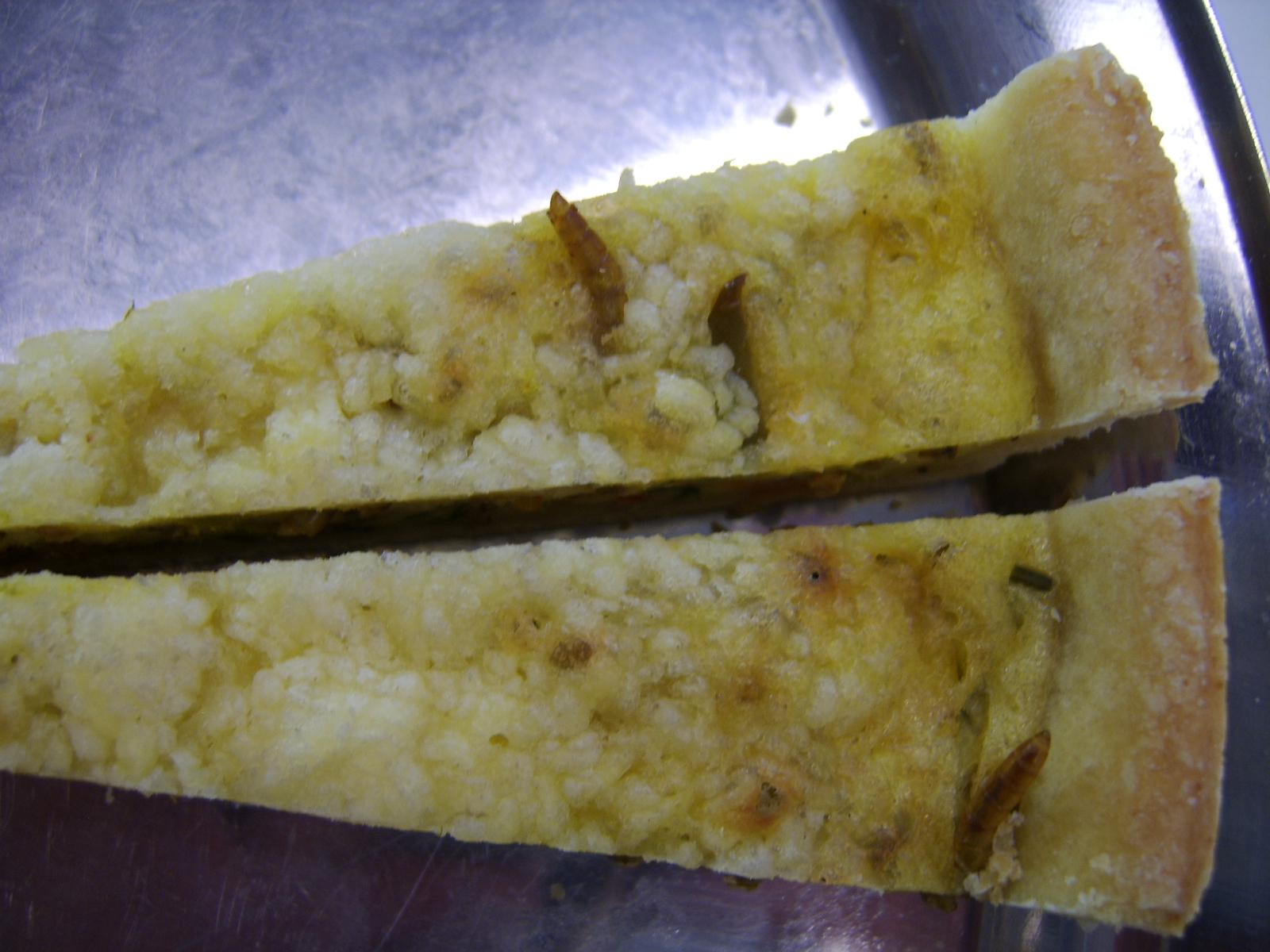
The students themselves showed openness towards eating insects. In the break of the guest lecture of Sarah van Broekhoven from the Entomology group almost all students tried the snacks prepared by Henk van Gurp from Vakschool Wageningen. The worms were visible in the Quiche and baklava but that did not withhold students from trying. And indeed, as I discovered myself, the snacks were really tasty.

Eat In for more sustainable catering; tonight meeting at Boerengroep

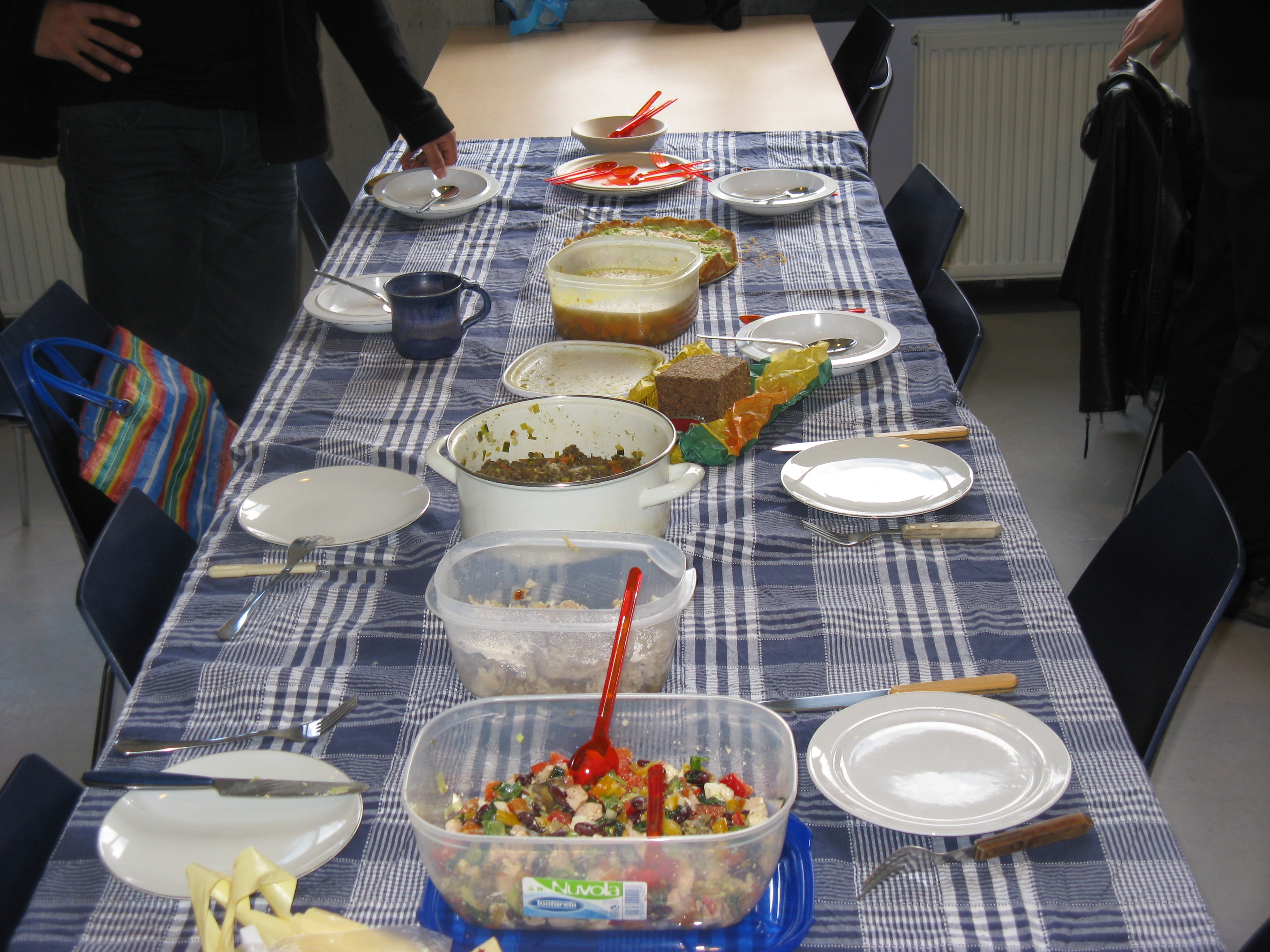
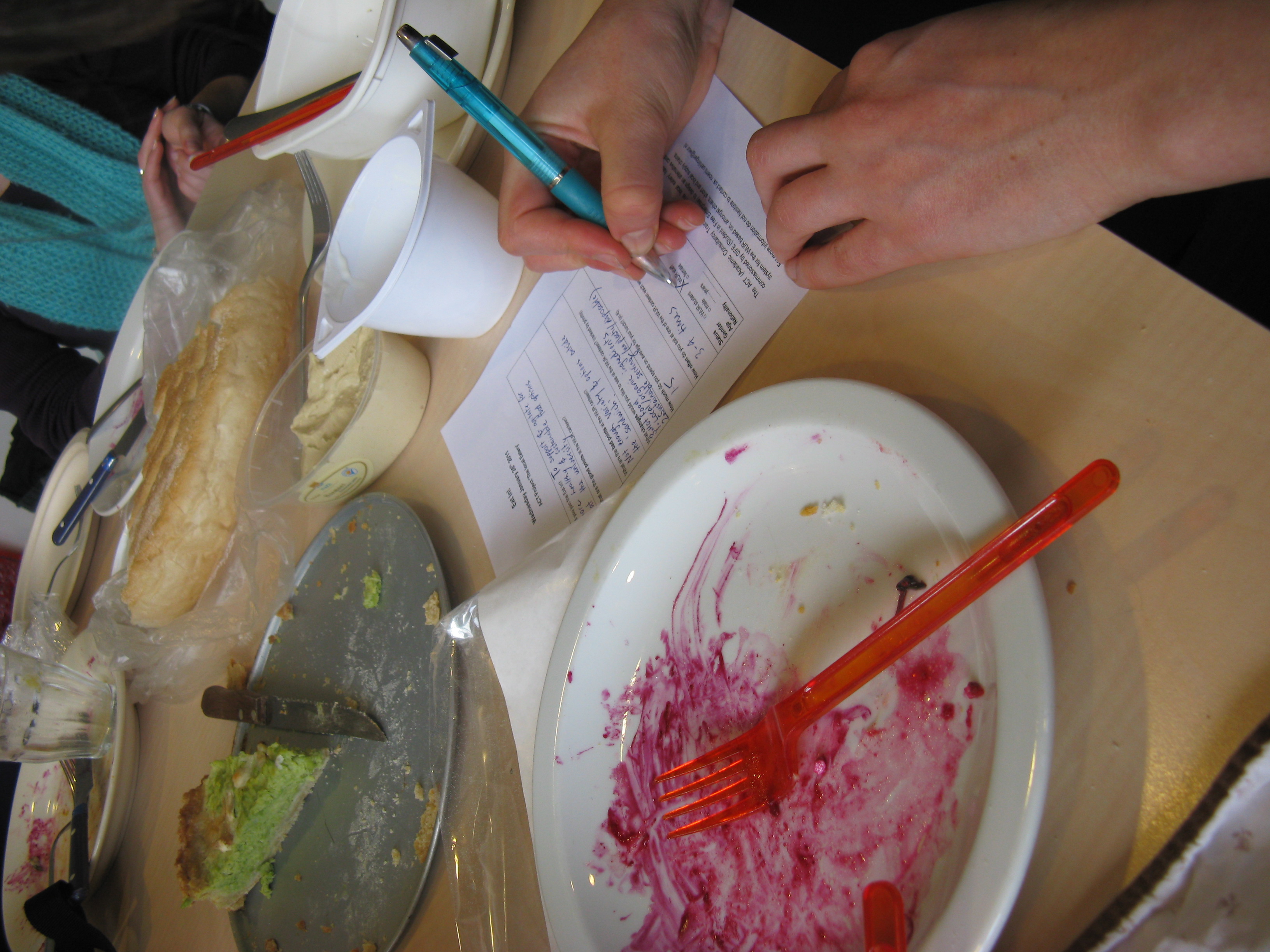
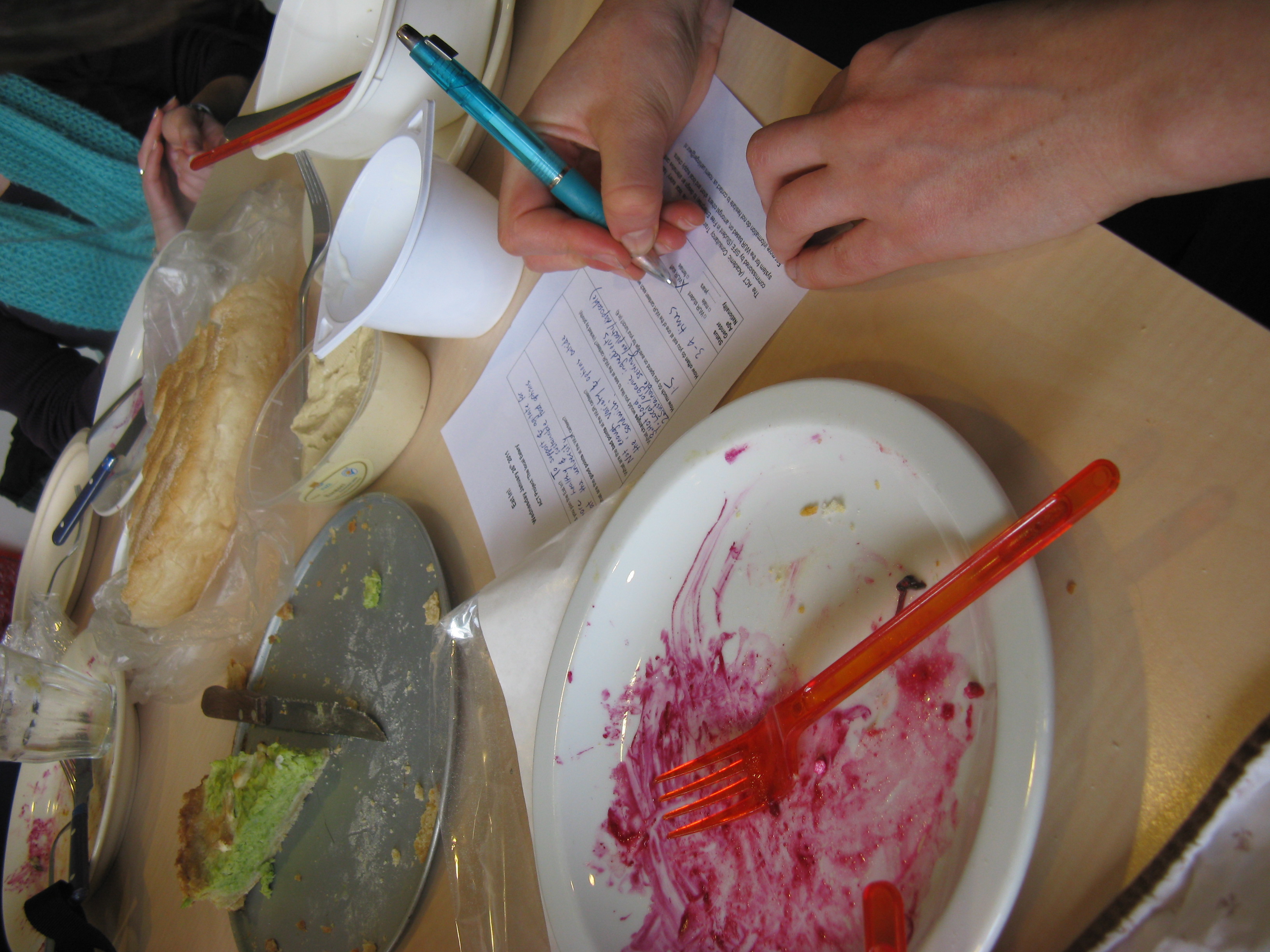
Last week we organised our 4th Eat In at the Leeuwenborch social science building to raise awareness for more sustainable catering. Again, some 30 students and staff members shared their home cooked lunch with each other. Apart from anything else, it is fun to meet others and to eat a great variety of foods. For the first time, there was simultaneously an Eat In at the Forum building organised by ISOW. An ACT student group is currently researching alternative catering strategies in their project the Local Eatery. They used to Eat In to gather information via a small questionnaire. You can follow the Eat In’s by Elizabeth’s blog

The current catering contract will end next year. The university started preparations for a new tender for all its canteen facilities in the Netherlands. A new catering ‘vision’ is currently prepared before the tender will be published; a window of opportunity to start a dialogue on how it can be improved in terms of cultural diversity, healthiness, regional sourcing and waste reduction. We therefore invited the head of facility management and the head of social sciences. They couldn’t come but it led to two meetings in the coming two weeks to discuss our ideas.

Tonight a wide  range of student organisations, engaged staff members and local producers will meet at Lawickse Allee 13 to brainstorm about our vision for sustainable catering. The meeting is organised by the Boerengroep. If you want to join tonight or if you want to be kept informed, please send an email to st.boerengroep@wur.nl

Edible balconies; excursion in course Food Policy

Within the new Food Policy course we organised an excursion to an edible balcony project in The Hague organised by the grassroots organisation Gezonde Gronden (healthy soil) in collaboration with Mother Centre ‘De koffiepot‘. In the deprived neighborhood Laak Noord, with significant lower general life expectancy and life quality indicators, women from more than 50 different ethnic backgrounds find support, education and empowerment in the Mother Centre.

The centre is run by Noortje van der Kaaden who explained the students the (worldwide) concept of the Mother Centre and the history of this centre in Laak Noord, before she had to defend her centre against a major budget cut that would effectively cut the centre in half. It is only one example of the current destruction of grassroots organisations in the environmental, cultural and social sectors induced by our right-wing cabinet. Grassroots organisations such as the Mother Centre or the ‘Haags Milieu centrum’ which provide services for over 25 years are on the brink of being abolished.

Bessie Schadee of Gezonde Gronden developed the balcony project to improve knowledge and access to healthy food. She explained how the philosphy of the project rooted in the important relation between healthy soils and healthy people. The students were made aware of the far-reaching consequences of the worldwide destruction of healthy soils. During the balcony course, women learn how to grow vegetables and fruits in a low cost manner using second-hand material while healthy soil and boxes are provided by Gezonde Gronden.

Explanation of design of edible garden in Mother Centre

Several women who participated in the course were prepared to talk to the students about their motivation and the effect this project at on their lives. In six groups students each interviewed one of the participants. They found several positive effects which illustrated the way access to home-grown  food – apart from the value in and of itself – had additional social and cultural benefits. 

These included empowerment through the contribution these women were making to household economics, social integration through seed exchange and cooking classes and improved knowledge on fruit and vegetables enlarging the variety of vegetables in their diets.

The traditional fresh markets; don’t forget them!

By Cleo van Rijk

For my MSc thesis I researched the food chains of the traditional markets in the province of Noord-Brabant in the south of the Netherlands. Hardly any research has been done on the food chains of traditional markets in the Netherlands. Therefore I have researched the fresh markets of the four biggest cities in Noord-Brabant: ’s-Hertogenbosch, Breda, Tilburg en Eindhoven. This has led to very interesting results.

Market in city of BredaDespite the alternative movement, the distinction between conventional and alternative is not so clear (Kirwan et al, publication forthcoming; Sonnino & Marsden, 2006). Therefore it is important to research aspects of both alternative as conventional food supply chains (FSCs). The main part of the food system is conventional, which means it is important to also look at the potential for sustainable possibilities within conventional FSC. AFNs like farmers’ markets have been researched often, however there is hardly any research done on the role of local food and short food supply chains (SFSCs) within supermarkets and traditional markets as part of the conventional FSC. Especially the traditional markets are forgotten. In addition, the traditional markets, as an important source of fresh food in the Netherlands, are under pressure. Many Dutch organizations are looking for solutions for the future of the markets, as they have much difficulty by keeping up with the changes in society. A focus on sustainable food could mean a solution. Supermarkets are powerful organizations which already are trying to win the consumer preferences by selling organic and labeled typical products. While there has been done nothing to look at the potential of the fresh markets as a tool for sustainable development, because the food supply chain of the traditional markets is hardly known. This is why it is important to get insight into the situation of traditional markets.

The goal of this research is to make clear how the food supply chain of four traditional Dutch markets look like and to research the potential of the fresh markets as a part of a local and regional food network. The main research question is: How does the food chain of the traditional fresh markets of the four biggest cities of Brabant look like and in how far is there potential for a larger regional embeddedness?

The share of regional food in the FSC of the fresh markets is larger than expected, namely 13 of the 27 interviewees in fruits and vegetables has a part of their products from their own garden or directly from a farmer. When one also counts the part of the clock auction, then this is 18 of the 27 interviewees. But still the biggest share comes from the wholesalers (59% of the total), so products that come from everywhere. The share of regional food in fruits and vegetables is very differently per city. Cheese is not specifically regional bought. However there is a growing share of organic cheese at the markets. The poulterers sell Dutch chicken, that come from intensive animal husbandry, and is directly bought from the slaughterhouses to be processed by themselves. They also have a growing share of organic meat, but it is still very small. In the hunting-season they also sell game, which comes from local hunters. The fish is mainly bought at wholesalers. Most of the market traders in fish do not pay attention to the MSC-label, but some of them do pay attention to the mating season of the fish, to maintain sustainable development.

The FSCs of the fresh markets of Brabant are not completely conventional and not completely alternative. This research also shows that the distinction is not so clear. The fresh markets have alternative aspects like local products, regional products, important social relations and little waste of food. These aspects however, are not visible to consumers and other parties, because market traders are not aware of it. The alternative aspects are mainly enhanced due to consumers preferences, quality preferences and the underlying traditions of the way of working of the market traders. Also trust plays an important role.

The fresh markets are embedded, especially in socially and cultural aspects, but also in territorial and ecological embeddedness. The fresh markets offer much potential for the enhancement of the embeddedness, but this is not visible in the present discussion on the regionalization of food supply chains. Click here for the thesis in Dutch