
By Amrutha Jose Pampackal – Forests have garnered a lot of attention in international policy discussions in recent years because of their role in addressing the rising challenges of biodiversity loss and climate change. Less discussed is the importance of forests for the sustainability of many local food systems. Across the globe, billions of people live in proximity to forests and are directly or indirectly dependent on them for their food security. While some view traditional forest dwellers as protectors, others view local people’s dependence on forests as a threat to forests’ health. As part of my PhD research, I study how the nutritional security of forest-proximate communities can be strengthened without increasing the socioeconomic and ecological pressures on forests.
Continue readingConvivial writing experiences – Insights from the Polička Collective
While many departments, research institutes and universities offer a fertile ground for intellectual collaboration and mutual support structures, like-minded scholars also happen to work outside these formal frames, often hundreds, if not thousands, of kilometers away. In this blog post, we reflect upon how a group of ten scholars writing joint articles based on individual research became what we currently call the emerging Polička Collective: a spatially dispersed and interdisciplinary alliance of scholars interested in diverse and community economies in Eastern and Central Europe (CEE) and the Former Soviet Union.
Continue readingSERIGO kicks off to enhance social inclusion in rural areas
Brussels, 29 April 2024. The SERIGO project kicked off to promote social innovation as a means to enhance social inclusion within rural communities. The project is coordinated by the University of Eastern Finland and brings together 17 partner organisations from 11 different EU countries.
Continue readingPublication | Understanding the emerging phenomenon of food forestry in the Netherlands: An assemblage theory approach
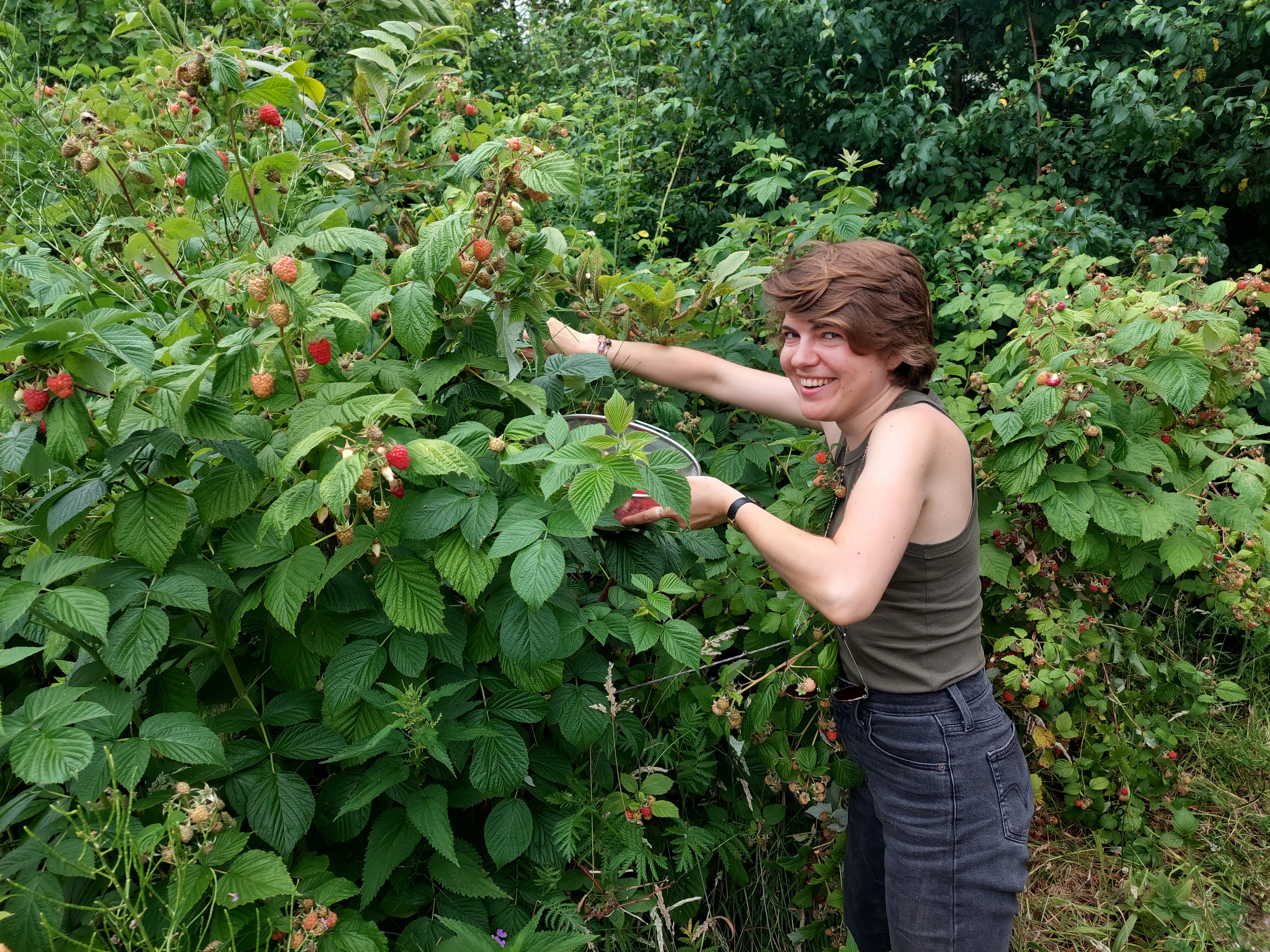
By Anna Roodhof – Food forestry is an advanced type of agroforestry where practitioners design a forest ecosystem that incorporates edible and otherwise serviceable perennial plant species. In the Netherlands, food forests have become an increasingly popular land-use form, inspired by Martin Crawford’s forest garden. The first occurrence of the term ‘food forest’ dates back to 2009, when Wouter van Eck and Pieter Jansen started a forest garden sized 3 hectares, which they aptly renamed ‘food forest’. Since then, and especially from 2017 onwards, this innovative approach to agroforestry has flourished across the country. As a PhD candidate at the Rural Sociology Group at Wageningen University and Research, I study this emerging phenomenon.
Continue readingTowards a transnational understanding of the food environment of Wageningen.
By Dasha (Daria) Gretchikhine, MSc student
Introduction
A person’s food environment has a huge impact on what food is accessible to them. This influences not only the kind of food choices residents make but also how they navigate the city. In 2021, the municipality of Wageningen published its Food Agenda. The report noted that residents with a migration background had limited involvement in food-related initiatives. It also mentioned the general lack of knowledge about how residents navigate themselves in the urban food environment. My master thesis responds to this knowledge gap. My thesis was conducted using Food Asset Mapping and Photovoice methods to explore the food routines of Wageningen residents with a migration background and their perception of the local food environment. In this blog post, I will show a glimpse of the findings, answering the main research question: How do households with various migration backgrounds navigate themselves in the multi-ethnic food environment of Wageningen?
 Rural Sociology Wageningen University