Foreign investment in African Agriculture: the role of China and Brazil – seminar

The sub-department Sociology & Anthropology of Development of the Social Sciences department of Wageningen University invited two key note speakers for a seminar on Foreign Investment in African Agriculture: Prof. Kojo Amanor (University of Ghana) and Prof. Sergio Schneider  (University Rio Grande do Sul, Brazil). The two speakers will specifically highlight the role of China and Brazil.

Prof. Kojo Amanor will present an overview of foreign investments in the agricultural sector in Africa. A specific focus will be on investments from BRIC countries, notably from China and Brazil. Prof. Amanor will debate the new roles of China and Brazil in the context of their own political economies, and wider global trends of geopolitical restructuring. Prof. Amanor has published widely on African Agriculture and co-edited a Special Issue of World Development (Vol. 18, 2016) on foreign invest-ment in African agriculture.

Prof. Sergio Schneider will present an analysis of whether and how Brazilian ideas about family farming and rural development have been adopted in African countries, mostly in Mozambique. Prof. Schneider has published widely on issues related to rural development, family farming and land reform in Brazil.

Venue: Wednesday June 1, 2016; 14.00-17.00 in room C67, in the Leeuwenborch building.

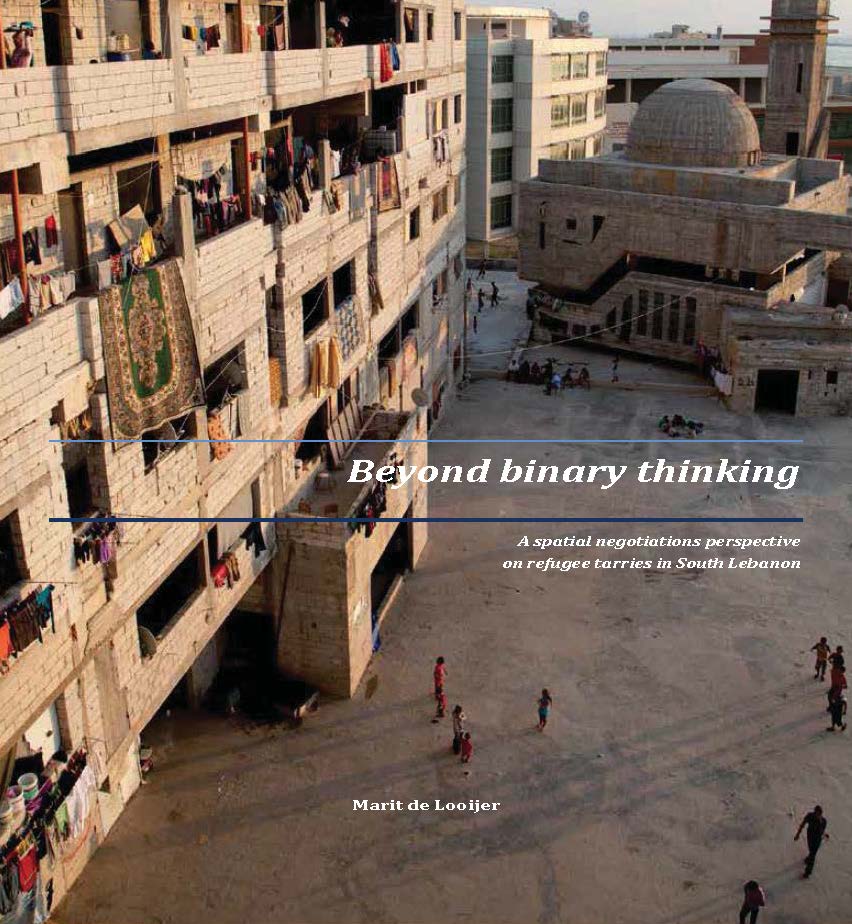
Beyond binary thinking

Marit de Looijer successfully defended her thesis “Beyond Binary Thinking, A spatial negotiations perspective on refugee tarries in South Lebanon”. In her thesis she discussed refugee settlement and settlement processes from a socio-spatial perspective. This perspective allowed her to move beyond the binary camp/non-camp characterization of refugee hosting and understand refugee settlement and settlement processes as hybrid and fuzzy. In her thesis she also discusses the policy implication of this perspective. Below the abstract/summary of her thesis.

MSc Thesis - Marit de Looijer - Final Version - May 3, 2016“Lebanon presents a game-changer for our thinking about and protection approaches to refugee hosting and settlement processes. In Lebanon, refugees from Syria do not live in large, formal camps, but reside scattered over the country in and around cities and villages, which affects relations between refugees, host communities and other actors involved in the country’s hybrid political order. This research has investigated how refugees and host communities negotiate the use and meaning of space with regard to the establishment and experience of refugee tarries, community formation, governance and livelihood strategies. It is an ethnography of social and spatial ordering based on fourteen weeks of fieldwork at a time when Lebanon’s refugee hosting situation had outgrown the state of emergency, but had not yet become protracted. The findings suggest that bureaucratic labels that reflect binary thinking, such as camp versus out-of-camp refugees or self-settled versus assisted settlement, should be perceived as extremes of a range on which refugees move strategically or subject to changing circumstances. This implicates acknowledging the hybridity, diversity and informality of the socio-spatial dialectic around refugee hosting. Consequently, academics, policy makers and aid workers should rethink the debate on displacement versus embeddedness into one about socio-spatial bordering, human (im)mobility and hybridity of places, and adjust their interventions accordingly.”

Supervisor-examiner: Bram Jansen; Second reader-co-examiner: Joost Jongerden


MSc Thesis opportunity: gardening for cancer survivors

In the Netherlands, 1 out of 3 people get cancer; about 100,000 individuals per year. More than 60% of those diagnosed with cancer survive. However, survivors often experience long-term side effects of cancer and its treatment, which greatly influences their quality of life, ability to function, success in re-integration in social processes, and long-term survival.

Evidence shows that a healthy diet and regular physical activity are beneficial in cancer prognosis. Most current intervention programs are focused on dietary advice and exercise programs in gyms. However, such programs are hardly appealing to the majority of cancer survivors. We introduce a novel approach which may better fit the needs, possibilities and interests of cancer survivors: gardening. Scientific research underlines the virtues of gardening: it prolongs life, improves mental and physical well-being, increases quality of life and acuity, and  supports social cohesion. Moreover it can help to increase consumption of (home-grown) plant foods.

The idea of offering cancer patients the possibility to work in gardens is based on a similar project in the USA. The aim of this thesis is to study this program, specifically by investigating it from the point of view of the patients – how did they perceive the program – and to compare this to the situation in the Netherlands. What is available for (former) patients in both countries, what do survivors need or want, and how would (or in the case of the USA: how did) gardening fit in people’s rehabilitation programs? We invite you to study this from the perspective of Social Practice Theory, which focuses on habits and routines in daily life.

We are looking for a motivated MSc student that is interested in writing a thesis with the Rural Sociology Group on the topic of gardening for cancer survivors. The thesis will consist of a literature-based study, but the student is also invited to travel to the USA to interview (ex) patients and study a similar project there. The report will preferably be written in English.

More information? Contact Esther Veen (Esther.Veen@wur.nl)

A politics of appearance

Hanne Wiegel successfully defended her minor thesis “A politics of appearance: a theoretical exploration of private accommodation initiatives for refugees”. Hereby a summary of the thesis, which received qualifications such as “well-structured””, “good logical reasoning”  and “theoretically sophisticated” .

“Publicly organized asylum seeker accommodation in Germany often involves a strict spatial and social segregation of asylum seekers from the wider society, which contributes to turning individuals who seek asylum into an abstract, impersonal category. For the individual asylum seeker, this creates a situation of harmful visibility vis-à-vis the state and harmful invisibility vis-à-vis the receiving society. Against this background, this paper will theoretically discuss the socio-political implications of recently developed civil society initiatives that organize the accommodation of asylum seekers in private housing arrangements in which asylum seekers live side-by-side non-refugees. Drawing on the approach of autonomous migration, Rancière’s disruptive politics and Butler’s performative theory of appearance, I argue that these civil society initiatives can be understood as providing spaces of appearance for asylum seekers to become visible as individuals amongst non-refugees. This can be considered as a performative act of disruption, changing the spatial and social ordering of asylum (accommodation) policies. Far from glorifying the effects of private accommodation for asylum seekers, however, I argue that these do not affect the legal status of the asylum seeker, but that nevertheless living side-by-side non-refugees can change asylum seekers’ invisibility vis-à-vis the civil society, and allows for personal encounters and individuation which might enhance their social emplacement.”

Key-words Germany, asylum seeker accommodation, ordering, civil society, dissensus, appearance

Thesis on Knowledge production, Agriculture and Commons

soutrik_commonsSoutrik Basu successfully defended his dissertation on Knowledge production, Agriculture and Commons. The discourse on knowledge production is in constant transformation: on the one hand, there is the emergence of instrumental knowledge production based on scientific utility and socio-economic relevance and marked by property regimes, while on the other hand, there is another form of knowledge production based on cooperation, communication and the sharing of knowledge often entitled the open-source production or commons-based peer production (CBPP) mode. Both these trends are reflected partially or in full measure within the agrarian knowledge production programme called Generation Challenge Programme (GCP).
soutrik_1Created by the Consultative Group of International Agricultural Research (CGIAR), the GCP is an international knowledge production platform that aims to use plant genetic diversity to develop technologies to support plant breeders in developing countries. In this work, it employs advanced genomic science and comparative biology in order to develop improved plant varieties for harsh, drought-prone environments. It focuses both on conducting advanced upstream researches with the help of genomics, molecular biology and bioinformatics and also on facilitating the downstream delivery of this research result to the farmers’ field. GCP’s knowledge production is organised in an international network that consists of CGIAR research centres, National Agricultural Research Systems (NARS) institutes, Advanced Research Institutes (ARIs) and other developmental organisations. The overall framework of GCP’s knowledge production is embedded in a global public goods framework, although the GCP also uses open source software to share knowledge regarding different biotechnological tools that usually comes within the purview of intellectual property rights (IPR).

Clearly, GCP’s knowledge production is mediated through a variety of patterns that may compete as fundamentally contradictory. It becomes important to study the knowledge production process of GCP, therefore, so as to understand the type of knowledge production that has emerged there and the implications of this for the wider debates on agrarian knowledge production. Three theoretical concepts are employed to frame analysis of the knowledge production of the GCP in this thesis: instrumental and non-instrumental discourse, CBPP and commons. And to this end, drought-tolerant rice research in the Indian context is used as a case study.

It is concluded that although this rice research community is situated in an overlapping institutional sphere of state, business and international institutions, it is itself neither public nor private in nature. This research community cannot be demarcated as a legal entity or identified through the state vocabulary. It exists as a confluence of plural activities through collective action towards a common goal, and it can be seen as a shared enterprise in which shared action generated the process through which the unpatented or otherwise owned Sahbhagi Dhan variety was developed and from which simultaneously actors benefited through participating in that shared process. Thus, the product that comes out from this process is neither public nor private in nature, but it is a common. It has been developed through shared action, as a process of commoning, and no single institution can claim exclusive right over it. Therefore, the non-state and non-market character of the research community becomes an essential feature.

His full thesis is accessible under this link http://edepot.wur.nl/377889