Food romance

The rediscovery of food, as good food, as delicious goal in and of itself, as a link to doing good, fuelled organic, local and gourmet niche markets. In her excellent book Hungry City, Carolyn Steel investigates the relationship of us, urbanites, with our food. Is this a sign of reconnection?

For foodies – like me – there are ‘festival marketplaces’ where their romance with food can reach exhilarating heights in the face of so much authentic and artisanal products. One can marvel over the latest authentic chocolate, over that particular healthy seaweed and over this special free range chicken from France. The success of these type of markets – based on food tourism – suggests that we have not lost appetite for food, yet ordinary street markets are having a hard time.

“This seeming paradox”, argues Carolyn, ” is explained by the fact that food is not embedded in our culture. We only lavish time and money on it when we are ‘treating ourselves’ not as part of daily routine.”

She concludes therefore, that these festival food markets are in fact “a manifestation of our overwhelming disconnection with food”. In similar fashion Dan Barber is critical about our real connection to food in this TED talk where he gives a hilarious account of the romances he had with two fish. As he shows, restoring the regenerative capacity of our ecology is the only real connection to quality food.

Chicken wings and cat feed

In our wealthy nations quality food is treated as a speciality, for those occasions where we have something to celebrate – maybe…because those chicken wings on offer this week cannot be left on the supermarket shelve….

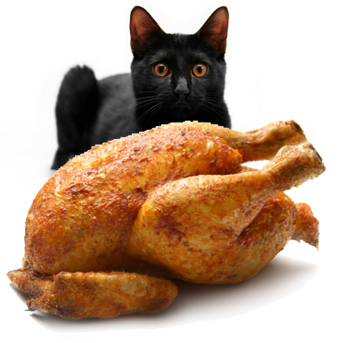
source; felinefuture.comIn the words of a radio advert of an animal welfare Ngo; “this week chicken wings, again cheaper than cat feed. Ever asked yourself how this is possible?” Cheap food comes at a price, the price we do not pay directly, we pay indirectly, by becoming resistant to antibiotics we heard last week. Its heavy use in amongst others the chicken industry poses serious human health consequences.

The Dutch supermarkets are notorious for their narrow low price/best deal strategies. In his excellent analysis “Het boodschappenbolwerk” of the insular Dutch supermarket branch Frits Kremer shows how this sector has been able defend, divert, ignore and ridicule quests for more responsiblity on their part for a sustainable food supply chain.  Contrary to many of their European colleagues, they hide behind ‘this is what the consumer wants’ instead of taking the kind of leadership which their market power obliges.

University Food Culture (4)

source: vandaag.be

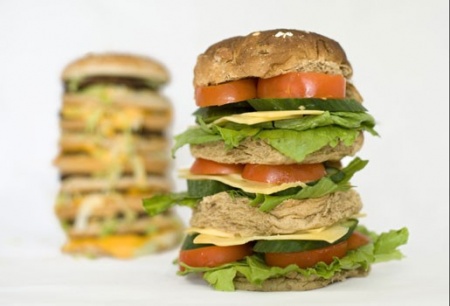
“If you see students eating sandwiches in the corridor, you can be sure they are Dutch” said a foreign colleague to me. Eating an apple or sandwich on the way to somewhere is apparently a particular habit not a general one. Eating like this, skipping a meal but grazing bits on the go reduces lunch as a mealtime to a series of sandwiches spread over the day. It brings the amount of meals – as social events –  back to two or one (or maybe none) if there is no morning meal neither.

In the middle ages, it was also custom to only have two meals a day, ‘ochtenmael’ and ‘aventmael’. Breakfast entered the scene when the morning meal was eaten later, towards noon. Breakfast then, was a small bite ‘on(t)biten’ to bridge time towards the big noon meal. Nowadays it seems that the cultural significance of lunch as meal and marker of the day is decreasing. More people eat lunch while doing something else and eat food items such as sandwiches as matter of private nourishment (see blog).

But also, the National Catering Survey, commercial research by Foodstep of catering habits shows that the turnover of enterprise and public canteens is decreasing (Misset Catering nr 1 feb 2010). More people eat a home brought lunch; the lunch box – broodtrommel – is a serious competitor for catering companies. The primary reasons given is the increasing ‘rationality’ of the consumer; more people are ‘price conscious’ and refrain from a ‘luxurious’ lunch but rather go for simple and quick. The rational consumer needs to be brought back in the canteen with the creation of ‘pleasure experience’ according to the article.

Another conclusion of course is that, apart from possible erosion of lunch culture, what the catering has to offer seems not able to compete with homemade. The question is if this only has to do with the supposed rationality of the consumer (see earlier blog). The article also noted that while almost three quarter of the respondents know the concept of corporate social responsibility and one quarter of consumers are consciously choosing sustainable products, catering companies cannot be caught busy with transforming  their catering concepts. The creation of more ‘experience’ around the food while not addressing the quality and origin of the food itself will probably not bring many people back to the canteen.

University Food Culture (3)

The much lamented Dutch lunch habit of drinking milk with sandwiches can sometimes be liberating too. Recently a student from Ecuador told me how much she enjoyed not being stared at while drinking milk with lunch. As a nutritionist she knows that milk is a perfect food as it “is the most complete source of nutrition available “(Dupuis 2002:25). However, in her home context milk is associated with baby food or with weak and sick people. Drinking milk with a meal as an adult is frowned upon as inappropriate behaviour.

source; dag.nl

Once, this was the case in our country too. Unfortunately little to nothing is known about the diet of ordinary people during the middle ages, but what we know of lords, knights and kings – the elite at that time –  is that there was a similar taboo on drinking milk here too. Culturally inappropriate, not least because of milk being highly perishable, people mainly drank beer. Urbanisation and industrialization were two important factors which helped milk to its current status of a healthy drink in the USA shows Melanie DuPuis in her great book ‘Nature’s perfect food’. Very much a token of the Dutch lunch culture, drinking a glass of milk is a habit which is only about 150 years old.

And as anthropologist Wiley shows, there is currently a similar relationship between urbanization and fresh milk consumption appearing in China. Growth in milk consumption is largely happening in urban areas and mainly consumed by Chinese upper classes. Milk is now commonly available as an alternative to alcoholic beverages in urban restaurants in China and is associated with a number of beneficial features such as trendy Western food styles, increased body length, healthy teeth and the prevention of ageing (Wiley 2007).

Local food at the Rhederoord estate – gastronomic highlight

By Renee Ciulla  – Msc-student attending the course Origin Food: a market for identity

On April 8th, the Origin Food course (see earlier post) was treated to a gastronomic excursion to the Rhederoord estate near the town of Arnhem in De Steeg. Located on 12 ha, the estate provides a magnificent view over the foothills of the IJssel valley and Veluwe forests. The Rhederoord  is mainly known for it’s restaurant which offers a fine dining experience, sourcing most of their products from the surrounding countryside or within the Netherlands. However, the estate also caters events, hosts weddings and can accommodate over 250 guests in their 22 rooms. Possibilities also exist to book business and private meetings.

Despite the snowy morning, grey clouds and traffic delays in Arnhem, our group was in high spirits when we saw what greeted us in the foyer of the Rhederoord: a cheerful group of staff awaited to take us to a tastefully decorated coat room followed by a delicious estate-made apple tart on a delicate butter crust. As we mingled with our steaming cups of coffee, the sounds of clinking forks and laughter drifted up the wood-paneled walls and out the large paned windows to the manicured gardens and rolling fields. After our mid-morning feast we sat for an entertaining and inspiring history of the Rhederoord. The goals are to support local farmers and producers in every culinary aspect of their restaurant which they believe is reflected in the flavors and visual appeal. Additionally, the estate tries to educate other chefs and visitors about how to grow their own vegetables and herbs. A garden near the entrance of the restaurant displays various herbs, strawberries and vegetables enabling chefs to see first-hand what these foods look like in their growing state. Sheep and cows are also owned by the estate for their own supply of local meat.
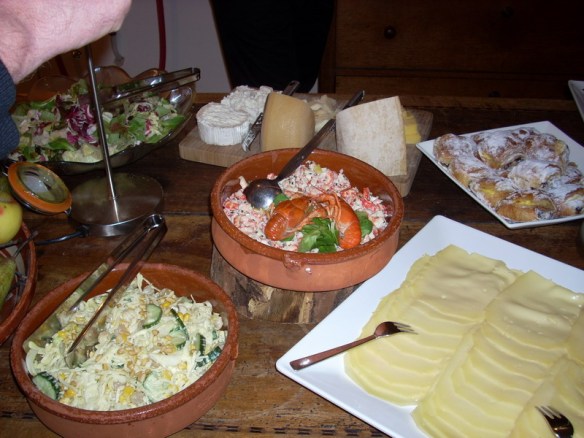
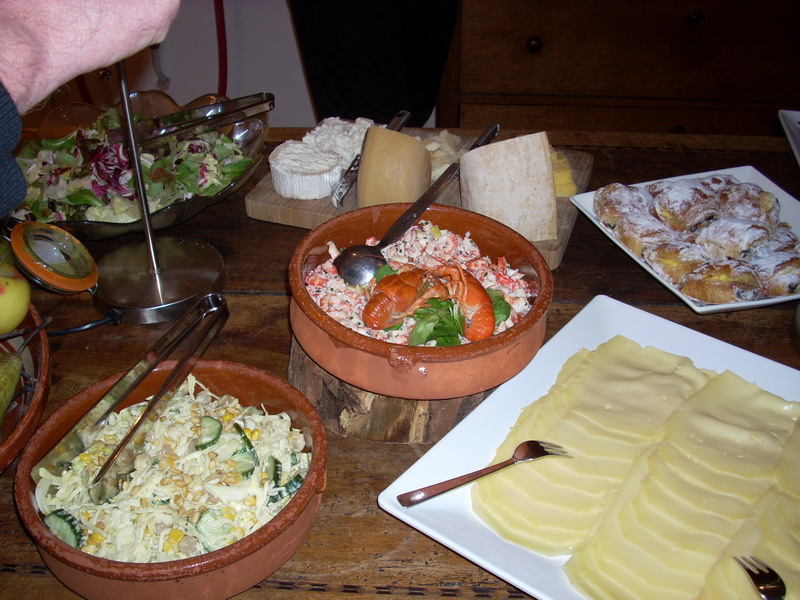
Buffet of local food at the Rhederoord estate

After our outdoor tour we couldn’t have been more surprised when we saw the buffet that welcomed us downstairs. Glowing in the atmospheric, perfectly positioned lights was an assortment of local gastronomic gems: pates, organic sheep, goat and cow cheeses, savory thinly-sliced ham, loaves of freshly baked breads with Dutch wheat, and mounds of warm rolls. Local greens and cabbage made some delicious salads. Meats included blood sausage, sea bass and river lobsters. The food was bursting with flavor and succulent textures- the entire room fell silent during our first ten minutes of eating as everyone floated in their personal eating heaven. A wine tasting of foud Dutch wines followed with ample joking about the quality of Netherlands wine. As for me, I was too distracted with the dessert still sitting on the buffet table: beautiful croissant-type cream puffs filled with fresh-egg custard and pieces of dark chocolate; every bite melted in my mouth.

The entire experience to Rhederoord was reminiscent of a family Christmas dinner. We all left feeling extremely grateful for the learning experience and culinary delights. Thanks to Dirk for organizing a spectacular and delicious trip!