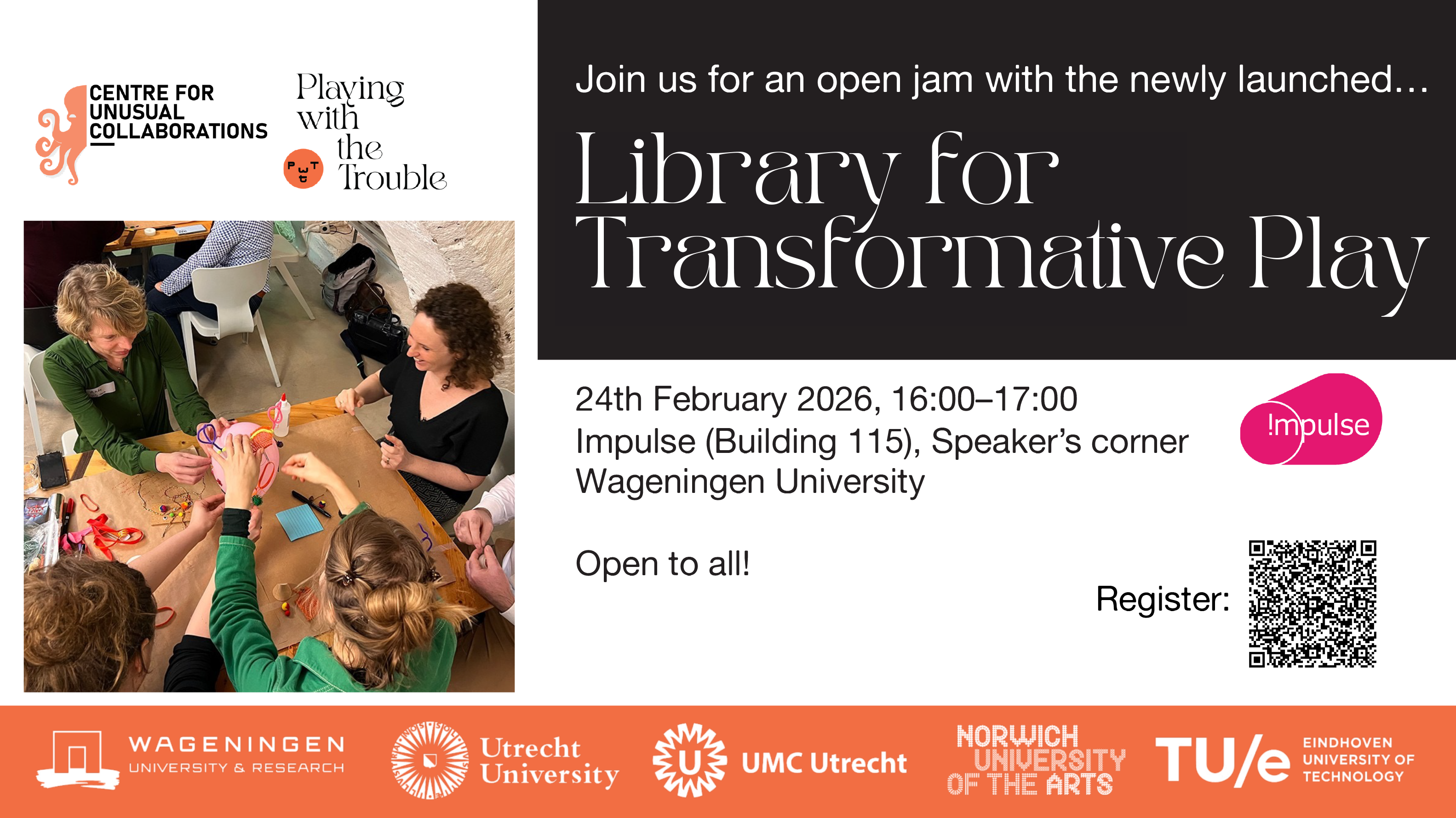
We’re happy to share the upcoming launch of the Library for Transformative Play. On 24 February (16:00–17:00), the library will be launched at Impulse, Wageningen Campus, inviting participants to explore how playful and creative activities can support collaboration across disciplinary boundaries.
The Library brings together games and materials designed to: – surface worldviews – facilitate collective imagination – stay with the trouble – unmake systems – embrace ambiguity
Playing with the Trouble is a 4-year project funded by the Centre for Unusual Collaborations (CUCo). For questions, please reach out to Jessica Duncan.
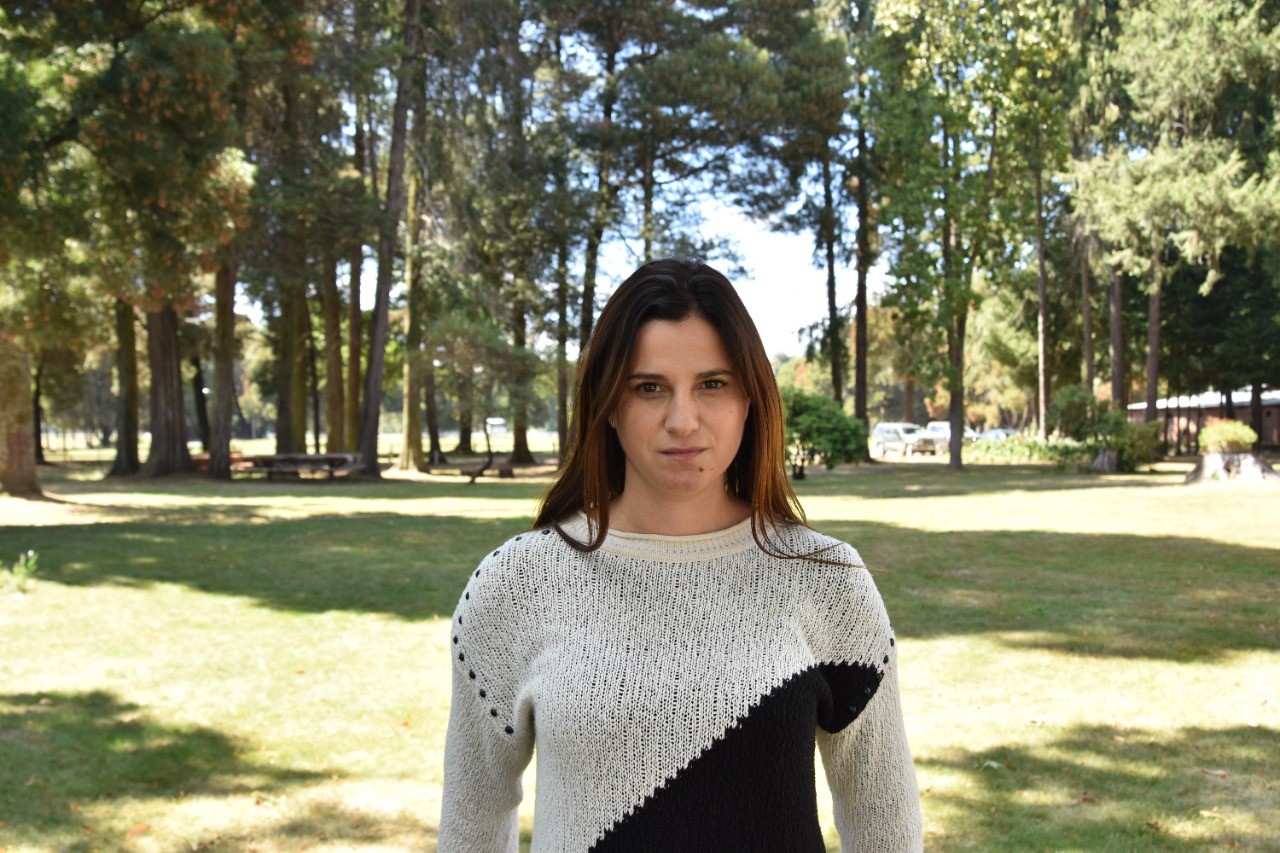
We’re pleased to welcome Dr. Daniella Gac Jiménez to the Rural Sociology Group as a visiting scholar from the University of Chile. Daniella is Assistant Professor of Sociology and works on rural and socio-environmental transformations, focusing on how small-scale farmers navigate climate, socio-economic, and territorial change. During her time at RSO, she is engaging in comparative and theoretical discussions on rural transformation and rurality across different contexts.
Research focus
Daniella’s research focuses on rural and socio-environmental transformations shaping contemporary rurality. She examines how processes unfolding in rural territories under conditions of a triple crisis—climate change, socio-economic pressure, and territorial reconfiguration—affect small-scale farmers. Her work highlights everyday practices of adaptation, resistance, and bricolage, as well as uneven trajectories of transformation, inclusion, and exclusion.
Research agenda associated with ANID funding
Daniella’s research agenda is closely linked to competitive funding from Chile’s National Agency for Research and Development (ANID), particularly through her Fondecyt project. This agenda focuses on understanding rural and socio-environmental transformations shaping contemporary rurality, examined empirically through processes unfolding in rural territories under conditions of a triple crisis.
Through her ANID-funded research, she investigates how small-scale farmers and rural communities respond to overlapping pressures such as climate change, territorial reconfiguration, and sectoral policies, including energy transition processes. Rather than treating these dynamics as purely structural or technocratic, her work emphasizes everyday practices, social reproduction, and situated forms of adaptation, resistance, and bricolage, highlighting uneven outcomes of inclusion and exclusion.
This research contributes to debates in rural sociology and socio-environmental studies in Chile and Latin America, while also engaging with international discussions.
Current work at RSO
During her visiting stay at the Rural Sociology Group, Daniella is developing work connected to her ANID-funded project (Chile), which examines how contemporary transformations—including the energy transition—are reshaping rural territories in central Chile. At RSO, she is particularly interested in advancing theoretical and comparative discussions on practices, rural transformation, and rurality across different territorial contexts.
Why RSO and Wageningen?
RSO is an international reference for critical and interdisciplinary research on agrarian change, rural development, and sustainability. Daniella was drawn to Wageningen for its strong space for theoretical dialogue on practice-based approaches, which she sees as key for rethinking the challenges of rural sociology and rurality in Chile and Latin America.
Beyond research
Outside academia, Daniella enjoys walking, eating, and exploring food markets as ways of observing everyday life and local cultures. During her stay in the Netherlands, she has been particularly interested in Dutch everyday practices such as cycling, open public spaces, and local markets, valuing slow rhythms and exploration.
Two new publications by by Alberto Alonso-Fradejas, addressing critical questions at the intersection of political ecology, agrarian change, and labour:
Both publications offer timely insights into contemporary forms of green extractivism, bioeconomy transitions, and the politics of labour and accommodation. Abstract The ThirdStandpoint Extractivism is rife with multiple, dynamic politics. Beyond supporters and challengers, many – arguably most – act to accommodate to the extractivist order as best they can. Grounded in Guatemala’s green agrarian extractivism in the oil palm complex, I theorise this third standpoint and examine who accommodates, why and how. Using a ‘multi-dynamic politics framework’, I map actors, agendas, frames and repertoires. I distinguish accommodators by legal character (lawful/criminal) and by accommodative will (amenable/reluctant) across co-constituted class, gender and racialised–ethnic positions. Agendas diverge from a shared sense of inevitability: a dog-eat-dog criminal accommodation, to a lawful pursuit of inclusive, ethical, sustainable development. Lawful accommodators deploy contention strategies that broker fixes, fixes – raising wages and improving labour conditions, expanding land leases and contract farming and adopting climate-smart practices – to soften harms to working people and the environment. Yet these gains normalise green prosocial branding, keep commodity chains certifiable, and reproduce the green agro-extractivist order and its racialised class hegemony, even as criminal accommodation further entangles agro-extractive frontiers with violent, illicit economies. Naming and specifying accommodation clarifies how harm-reducing reforms can also stabilise extractivism. The analysis speaks beyond Guatemala to resource frontiers where pragmatic, accommodative reform both tempers and entrenches extractivism.
Abstract Los pinares de Babel El artículo explora el nexo entre transición demográfica y transición verde en áreas rurales marginadas y envejecidas, analizando la sociología política de la incorporación de trabajadores migrantes a la bioeconomía resinera en Soria y Segovia. Indaga términos de inclusión, apoyos, acomodaciones y oposiciones, y sus efectos distributivos e identitarios. Metodológicamente combina 64 entrevistas, observación participante (campañas 2022, 2023 y 2025) y revisión documental. Los resultados distinguen dos modelos de incorporación de resineros migrantes: (1) uno institucional y ‘partidario’, liderado por propietarios y gestores de montes públicos —predominante en Soria—, que concibe la resinación como palanca de revitalización rural; y (2) otro modelo ‘acomodador’, liderado por actores públicos y privados orientados a maximizar rentas y beneficios —más común en Segovia—, con mayor selectividad en acceso a empleo, pinos y vivienda. Estos modelos estructuran los marcos y repertorios de contienda partidarios, acomodadores y opositores en tres ejes: trabajo-pinos-vivienda, gobernanza y reconocimiento y sociabilidades cotidianas. La incorporación exitosa de resineros migrantes requiere arreglos institucionales —sobre todo locales— e interacción entre actores partidarios, acomodadores y opositores; los términos de inclusión son desiguales dentro y entre pueblos resineros y cambiantes. En este campo de fuerzas, disputas identitarias y distributivas se entrelazan, y cooperación y conflicto coexisten, atravesados por clase, generación, país de origen y ciudadanía. Los ‘pinares de Babel’ de Soria y Segovia evidencian que la renovada bioeconomía resinera puede articular ambas transiciones en áreas rurales marginadas y envejecidas, aunque de modo contingente: depende de mediación pública comprometida, arreglos concertados de aprovisionamiento de resina y gobernanza de pinares, y redes inclusivas que reconozcan la diversidad sin convertirla en línea de fractura.
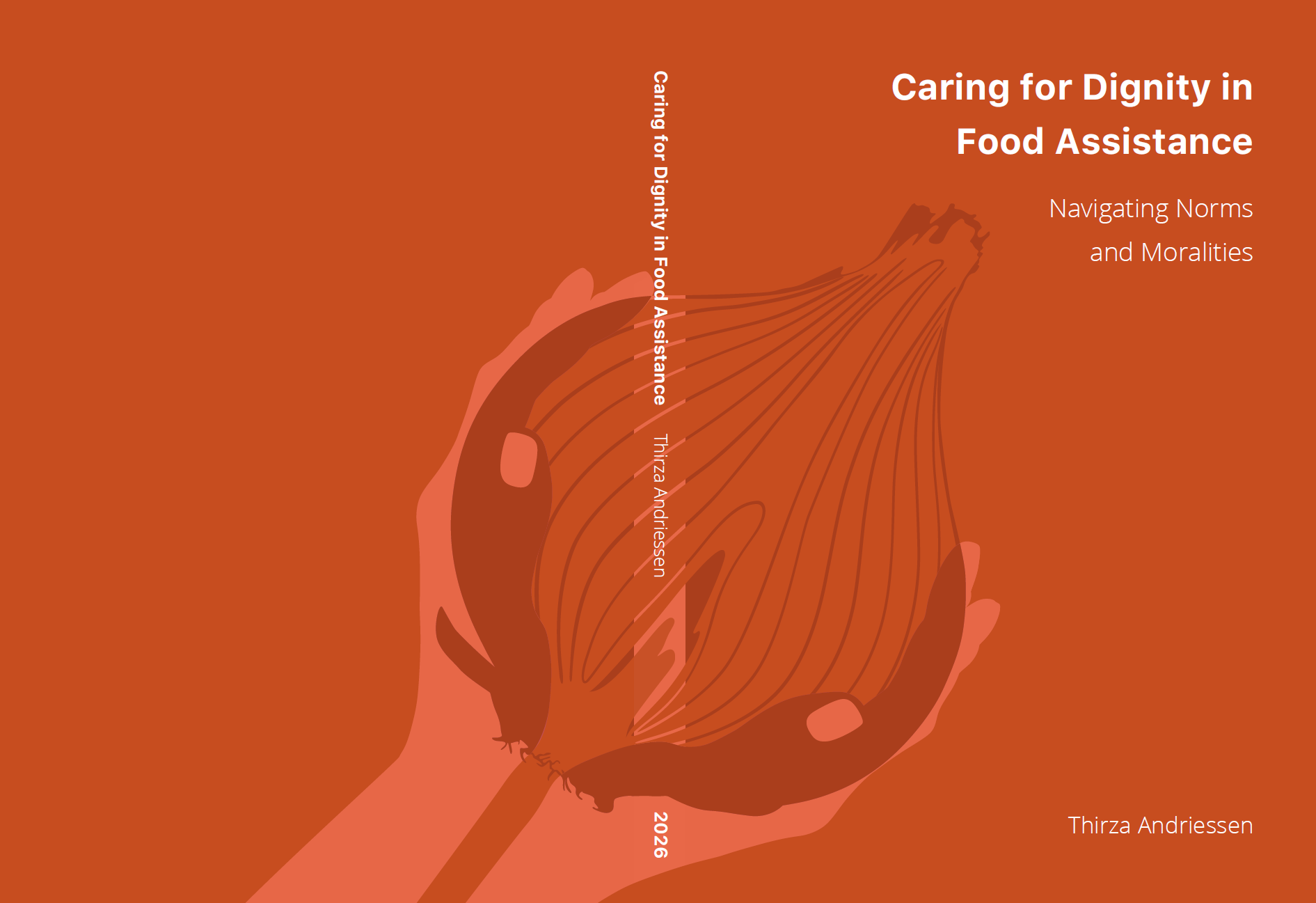
We are proud to share that Thirza Andriessen of the Rural Sociology Group will be defending her PhD thesis entitled “Caring for Dignity in Food Assistance: Navigating Norms and Moralities”.
When: February 20, 13.00 hrs Where: Omnia, Wageningen University
Abstract This PhD research explores how food assistance in wealthy countries shapes the dignity of recipients. Food charities are criticised for being stigmatising and for framing food poverty as an individual problem rather than a social and political issue. This study focuses on newer forms of food assistance, such as social supermarkets and grocery budgets, which aim to offer support in more dignified ways. Based on three case studies in Belgium and the Netherlands, supplemented by a literature review, the research shows that dignity is shaped in everyday situations: how people are treated, how much choice they have, and how rules are applied. Shopping in a “normal” setting and having product choice can support dignity, but these models can also reinforce moral expectations about financial responsibility and create new forms of dependence, for example on digital systems. The research concludes that there is no single “dignified” model; dignity is enacted through daily practices, care relationships, and wider social norms and moralities.
Online streaming The defence can also be followed online via a YuJa livestream. Note: the link will become available about 5 minutes before the start (click the 🔔 Event in the top-right corner and then select “Thirza Andriessen”)
Onlangs sprak promovenda Thirza Andriessen met Sprank magazine over het vierde paper binnen haar promotieonderzoek. Het paper beschrijft een studie naar de Beter Eten-pilot (2022), waarin huishoudens die in armoede leven een weektegoed ontvingen op een betaalpas voor het doen van gezonde boodschappen.
Thirza onderzocht wat deze vorm van ondersteuning betekent voor het gevoel van waardigheid van de ontvangers, vergeleken met andere vormen van voedselhulp. In het interview gaat zij in op hoe keuzevrijheid, kwaliteit en autonomie belangrijke elementen zijn van waardige ondersteuning.
🔗 Lees het interview hier. 📄 Lees het bijbehorende wetenschappelijke paper hier.