Unknown's avatar

About FoodGovernance

Jessica Duncan is Associate Professor in Rural Sociology at Wageningen University (the Netherlands). She holds a PhD in Food Policy from City University London (2014). Jessica’s main research focus concerns the practices and politics of participation in food policy processes, particularly the relationships (formal and non-formal) between governance organizations, systems of food provisioning, the environment, and the actors engaged in and across these spaces. More specifically, she maps the diverse ways that actors participate in policy-making processes, analysing how the resulting policies are shaped, implemented, challenged, and resisted, and she theorizes about what this means for socio-ecological transformation. Participation and engagement is at the core of her approach. In turn, she is active in a broad range of local, national and international initiatives with the aim of better understanding participation processes with a view towards transitioning to just and sustainable food systems. She is involved in several research projects including ROBUST, HortEco & SHEALTHY. Jessica is published regularly in academic journals. She recently co-edited the Handbook on Sustainable and Regenerative Food Systems (2020). Her other books include Food Security Governance: Civil society participation in the Committee on World Food Security (2015) and an edited volume called Sustainable food futures: Multidisciplinary solutions (2017). Jessica has received several awards for her teaching and in 2017 she was awarded Teacher of the Year for Wageningen University (shortlisted again in 2018 and 2019, longlisted in 2020). With the funds she has received for these awards she launched a story-telling workshop for students and faculty, with storytelling trainer, Emma Holmes. Jessica is on the Editorial Board of the journal Sociologia Ruralis and is an advisor to the Traditional Cultures Project (USA). She is a member of the Wageningen Young Academy and sits on the Sustainability Board of Experts at Wageningen University.

“The role of civil society organizations and system relationships surrounding participatory organic nutrient waste cycling

Laura Cerrato recently completed her M.Sc thesis entitled “The role of civil society organizations and system relationships surrounding participatory organic nutrient waste cycling.” The following post is a summary of her case study evaluation of the urban De Zuiderhof Voelkstuin community composting initiative (Compoststraat) and its relationship to the city of Rotterdam and the Netherlands.

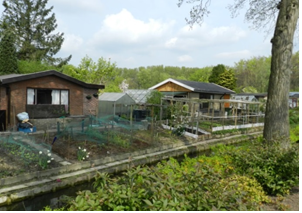
De Zuiderhof allotment

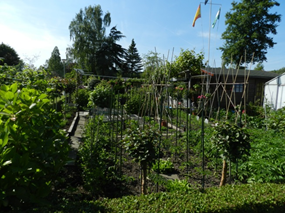
De Zuiderhof allotment

Examples of urban agriculture at the De Zuiderhof allotment garden in Rotterdam.

Examples of urban agriculture at the De Zuiderhof allotment garden in Rotterdam.

Continue reading

M.Sc. thesis: New opportunities and new constraints for Maasai livelihoods

 Part 3: Dispatch on M.Sc. thesis results    

Florian Neubauer has been working on a M.Sc. thesis with RSO titled `New opportunities and new constraints – Understanding changes in land tenure and livelihoods among the pastoral Maasai in southern Kenya´. In his third and last post, he shares some of the thesis` main findings. Florian’s second post can be found here.

Localized coping strategies increasingly gain in importance: Here, cattle which has accessed a fenced area where grass is preserved for stressful times.

Localized coping strategies increasingly gain in importance: Here, cattle which has accessed a fenced area where grass is preserved for stressful times.

Background

Pastoral livelihoods in Africa are characterized by a high reliance on strategic migration and livestock keeping as a source of social and economic wellbeing. However, over the past decades pastoral livelihoods in Sub-Saharan Africa were increasingly exposed to various pressures like a progressing privatization of land. The experiences of the Maasai in southern Kenya provide an illustrative example for livelihood changes due to land privatization. During the 1970s, a transformation from land held in trust to individual ‘group ranches’, as land communally owned and managed, took place in the Maasailand. During the 1980s, title deeds were privatized and group ranches subdivided into smaller, individually owned ranches. Focusing on Maasai households, this research analysed – with specific regards to impacts and implications on food (in)security – how these changes in land tenure shape the livelihoods of Maasai pastoralists in southern Kenya.

Main results – Summary

The research suggests that changes in land tenure – notably,  the privatization of title deeds and the commodification of land – shape Maasai livelihoods and can contribute to increase a household`s food security. It suggests furthermore that Maasai actively adapt their livelihood strategies as a result of these changes and use(d) the new land tenure system to develop new livelihood strategies. However, these new or changed livelihood strategies impact Maasai pastoralism both as a production system and as a socio-cultural way of life.

Continue reading

Thesis Opportunity: Stakeholder analysis for sustainability a in Central Mexico

A new and exciting RSO thesis opportunity: Stakeholder analysis for regional sustainability analysis in urbanizing landscapes in Central Mexico

Introduction

Around Mexico-city, rural landscapes have changed significantly – and continue to do so – due to the growth of the city into these rural landscapes. This so-called peri-urbanization occurs in many places in the world and is accompanied by a specific sustainability challenges regarding water management, the role of agriculture in rural communities and the cultural changes that result from this. This MSc thesis will be part of a study of how peri-urbanization has affected the sustainability of three case study regions or watersheds. Regional assessment of the sustainability of natural resource management is complicated by the large range of stakeholder priorities and perspectives. Obtaining an accurate idea of the existing stakeholder’s priorities with regard to the state of the region’s natural resources, the main challenges and their management, is thus an important first step. This gives a basis for the definition of indicators for the sustainability assessment. However, it does not yet enable giving weights to each indicator. A proposed answer to this challenge is to first distil a list of possible sustainability indicators from semi-structured stakeholder interviews, and subsequently ask those same stakeholders to attach a weight or value to these indicators, using pairwise comparisons. The resulting ranking can then be used as an important input to a regional sustainability assessment. Another challenge, still to be resolved, is how to weigh the perspectives of different actors, perhaps according to each actor’s influence and/or importance.

Objective: To define a list of regional sustainability priorities with quantitative weights attached to them, based on the analysis and integration of stakeholder perspectives.

Activities

  • Stakeholder selection
  • Semi-structured interviewing
  • Survey development and execution
  • Combining qualitative and quantitative approaches
  • Writing and defending an MSc thesis

Requirements

  • MSc student in (rural) sociology or related
  • Fluency in Spanish
  • Willingness to do research in Mexico
  • Financial self-sufficiency
  • 5-6 months for the project
  • Start date January 2015 or late July 2015

Contact details

This MSc thesis will be jointly supervised by Dr. Jessica Duncan (Rural Sociology) and Leendert van Wolfswinkel (Farming Systems Ecology).

The project will contribute to the PhD project of Leendert van Wolfswinkel, who will also be the daily supervisor in Mexico. The PhD project is a collaboration between Farming Systems Ecology (WUR), CIMMYT and the Universidad Autónoma Metropolitana.

For more information contact jessica.duncan@wur.nl with a statement of interest and a CV.

Invitation to learn about Fast Food in Ghana’s Restaurants (November 20th at 11:00)

On Thursday, November 20, 2014 at 11:00 am in the Aula (General Foulkesweg 1a, Wageningen), Rose Omari will defend her PhD thesis titled: Fast Food in Ghana’s Restaurants: Prevalence, Characteristics, and Relevance, an interdisciplinary perspective. 

The defence will include a public presentation which will explain why it is impossible to achieve an universal definition of fast food because of its continuous re-contextualization in time and space. The thesis also addresses questions related to health, technology and the environment, and reflects on these questions in the context of developing countries.

Everyone is welcome. 

The proceedings will also be streamed online at this site: https://wurtv.wur.nl/P2G/cataloguepage.aspx

Monday Sept 22: ‘Eat it all Food Market’ Leeuwenborgh

humble harvestNext Monday,  September 22nd, Humble Harvest will organise the ‘Eat It All Food Market’ in the Leeuwenborgh canteen! Super-local, organic, delicious foods which otherwise would have been wasted, will be sold at the market for very low prices.

The food comes directly from a farmer from the other side of the river Rhine and would have been thrown away because it does not conform to supermarkets’ standard for shape and size.

The market will be held from 12.00 to 1.30pm in the Leeuwenborch canteen. Bring some coins, your own bag and sustainable it is!!