Unknown's avatar

About FoodGovernance

Jessica Duncan is Associate Professor in Rural Sociology at Wageningen University (the Netherlands). She holds a PhD in Food Policy from City University London (2014). Jessica’s main research focus concerns the practices and politics of participation in food policy processes, particularly the relationships (formal and non-formal) between governance organizations, systems of food provisioning, the environment, and the actors engaged in and across these spaces. More specifically, she maps the diverse ways that actors participate in policy-making processes, analysing how the resulting policies are shaped, implemented, challenged, and resisted, and she theorizes about what this means for socio-ecological transformation. Participation and engagement is at the core of her approach. In turn, she is active in a broad range of local, national and international initiatives with the aim of better understanding participation processes with a view towards transitioning to just and sustainable food systems. She is involved in several research projects including ROBUST, HortEco & SHEALTHY. Jessica is published regularly in academic journals. She recently co-edited the Handbook on Sustainable and Regenerative Food Systems (2020). Her other books include Food Security Governance: Civil society participation in the Committee on World Food Security (2015) and an edited volume called Sustainable food futures: Multidisciplinary solutions (2017). Jessica has received several awards for her teaching and in 2017 she was awarded Teacher of the Year for Wageningen University (shortlisted again in 2018 and 2019, longlisted in 2020). With the funds she has received for these awards she launched a story-telling workshop for students and faculty, with storytelling trainer, Emma Holmes. Jessica is on the Editorial Board of the journal Sociologia Ruralis and is an advisor to the Traditional Cultures Project (USA). She is a member of the Wageningen Young Academy and sits on the Sustainability Board of Experts at Wageningen University.

Towards Implementation: Reflecting on 10 years of the Right to Food

Today an interim report by the Special Rapporteur on the right to food, Olivier De Schutter, made to the 68th Session of the UN General Assembly has been released. You can download a PDF copy here: Assessing a decade of progress on the right to food

The report – Assessing a decade of progress on the right to food– provides insight into practical aspects of realizing the right to food. It notes that the right to food has “become an operational tool” that is “widely recognised as a key to the success of food security strategies” (para 3).

Focusing on progress made since the 1996 World Food summit, the report identified:

  • Best practices
  • Roles of key actors: governments, parliaments, courts, national human rights institutions, civil society organisations and social movements.

The report also notes that systems of national protection are being redefined in terms of rights, a welcome move away from the understanding social benefits as charitable hand-outs. It argues that the right to food has entered a new phase: implementation. This is key as it moves from theory and law to practice. Grievance redress mechanisms (e.g. courts, social audits) are playing a role in promoting this change.
Continue reading

New to the Rural Sociology Group: Introducing myself

I have been here in Wageningen and at the Rural Sociology Group for two weeks now so it only seems appropriate that I introduce myself.  I’m Jessica Duncan and I have been hired to teach courses in food cultures and food policy.

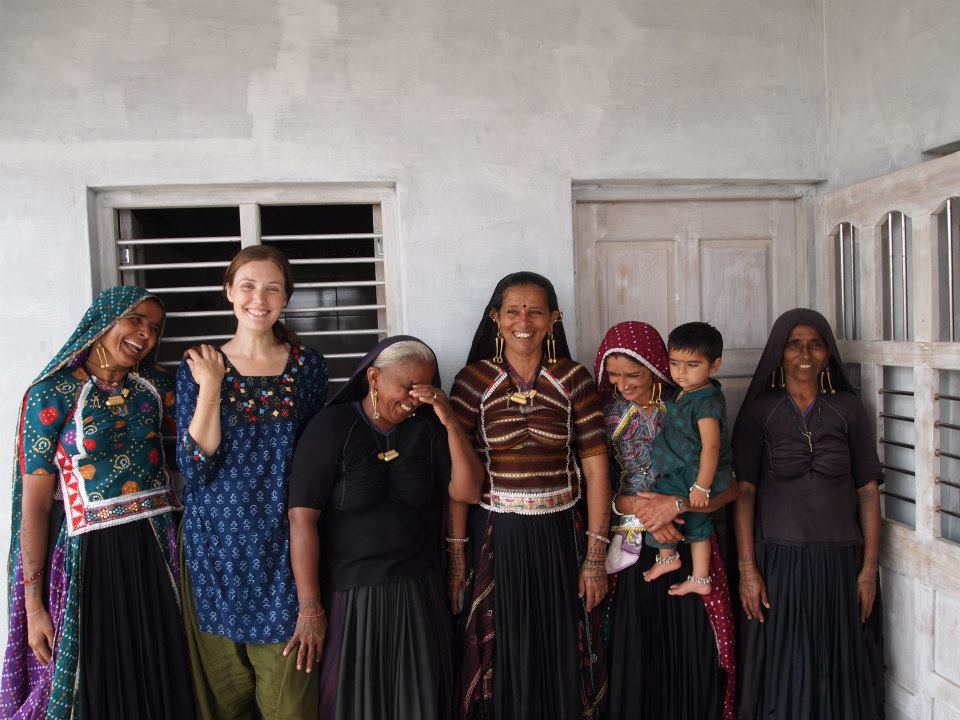
Conducting field work with women pastoralists in Gujarat, India (Summer 2012)

Conducting field work with women pastoralists in Gujarat, India (Summer 2012)

My teaching philosophy is based on the awareness of the central role food plays in socio-cultural and economic issues and across political discourse at all levels. Using food – with its physical, emotional and symbolic resonance – as a lens, allows us to approach complex problems and search for solutions that can impact our lives and the lives of others. I work hard to create a space where students feel encouraged to test ideas and tackle difficult questions with new concepts. Above all, I teach because I love to learn.

From 2008 to 2013 I worked in the Department of Food Systems, Culture and Society at the Universitat Oberta de Catalunya (UOC) in Barcelona. Here I developed and taught courses on research methods, food governance, and contemporary issues in food studies. I also supervised a broad range of post-graduate research students on topics related to food cultures and food security. The international nature of the programme gave me the chance to interact with students from around the world on key issues related to the study of food.

Continue reading