Verandering van spijs doet eten (1)

Eindelijk tijd voor allerlei niet-urgente boeken. En voor de catalogus voor het nieuwe moestuinseizoen. Ik lees in ‘Kost, nieuwe gezichten op eten’ over de herontdekking van de moestuin. Niet door moestuinierders, vele complexen zijn decennia oud. Maar door ‘cultuurmakers’. Zij ‘nemen het gangbare denken in onze samenleving niet voor lief’.

In gangbare stadsplanning was ‘t moestuincomplex tot voor kort een rafelig en rommelig stuk groen, bij uitstek verbannen naar ‘overgebleven’ stukjes stad zoals vanuit de trein goed te zien is. Zonder overkoepelend ontwerp en beheersplan een doorn in ‘t oog van menig landschapsarchitect of planner. Binnen ‘t nieuwe perspectief representeert een volkstuinencomplex ‘diversiteit’ zowel bio als cultureel.

Moestuinierders worden achteraf ingevoegd in het ‘locavore’ denken; zij weten immers nog waar hun eten vandaan komt en reduceren voedselkilometers nogal drastisch met de fiets. Een groot deel van de moestuinierders ontgaat deze ‘post-fitting‘. Zij zijn niet bezig met ‘heirloom’ zaden, biodiversiteit of eetbaar onkruid maar met gangbaar tuinieren; monocultuur op postzegel formaat. De biodiverse – lees rommelige – tuin van de buurman is hén een doorn in het oog.

Het is een goede zaak dat cultuurmakers inclusief beleidsmakers en stadsplanners nieuwe belangstelling hebben voor moestuinen. Zijn we zelfs het post-moderne falliet van die ene waarheid voorbij? Duizend bloemen bloeien en maken samen een groot verhaal.
AESOP; the government in the garden

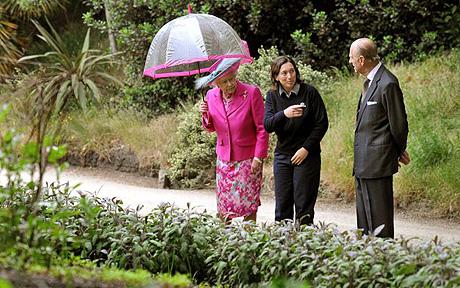
Queen Elisabeth's Vegetable Garden. Photo:John Stillwell/PA Wire

Why is the government in the garden? This was the title of the last presentation in our Working Group Urban Food Governance at the AESOP conference this weekend in Brighton. Some governments are getting into the garden, case studies presented by conference participants showed how and why. Food is ‘becoming public’ a process of taking responsibility for what has been seen until very recently as a pure free-market issue. Public planning and action occurs for various reasons; because of urban health and obesity, the Urban Heat Island effect, food security in poor neighborhoods or in response to civic actions and food movements.

Notwithstanding the promising examples, there is reason for worry too. The political climate has shifted markedly in countries such as the UK and the Netherlands and budget cuts are threatening the sustainable food agenda because this ‘additional’ issue came in last and is the first to be thrown out. A second reason is what seems to me a continuing planner’s identity crisis. The philosopher Hans Achterhuis admits in his recent book that neoliberalism became so much the norm that the process of how it slipped into virtually every policy by small pragmatic adjustments happened unseen even for many of the critics.

Planning seems the opposite of neoliberalism. At the conference, we were stimulated to start planning again, the word master plan fell and was heavily debated. Planning –by default – seems to restrict choice. And free choice is the symbol and myth of neoliberalism with which few people dare to interfere. It is an unproductive and misleading contrast. As if no planning takes place now. Urban planners who decide upon the location for a supermarket are planning, the question is, which criteria are used and which of those do conflict with other public interests? The neoliberal idea of planners restricting choices has encroached the belief that planners can counteract private business interests. They can and should I think. The case studies often showed that current successful examples developed from a particular local  ‘culture’ among those working with urban food planning incorporating public values such as equity, fairness, access and community.

The presentations and keynotes will be made available over the course of the coming week at the conference website

Sus Rinus: November

The pig slaughter process is not a visible part of our daily relation to food anymore. In fact hardly anything of the growing, rearing, processing and slaughtering is visible to us. We can therefore assume to be more civilised than our ancestors while eating meat because it is so easy to close our eyes for the killing and chopping done by others. How horrified would we be if we had to chop the head of the chicken that we intend to cook tonight. How awful and sad it would be to slaughter Rinus after you got to know him intimately.

Increasingly, I come to think the other way around; how awful that I eat an anonymous pig who had an anonymous life together with a few million others and who’s parts are being used in at least 187 products without us knowing. How horrible that this piece of meat sealed in a plastic box with a number of ‘stars’ (see Keuringsdienst van Waarde) does not really link my thoughts to a concrete animal. How outrageous that I shovel my food in without thoughts about that little piglet grubbing around, to the wiggling of a fully grown pig tail while he is playing pig, to the socializing that they do, to the little naps they take, to the way they run to be fed.

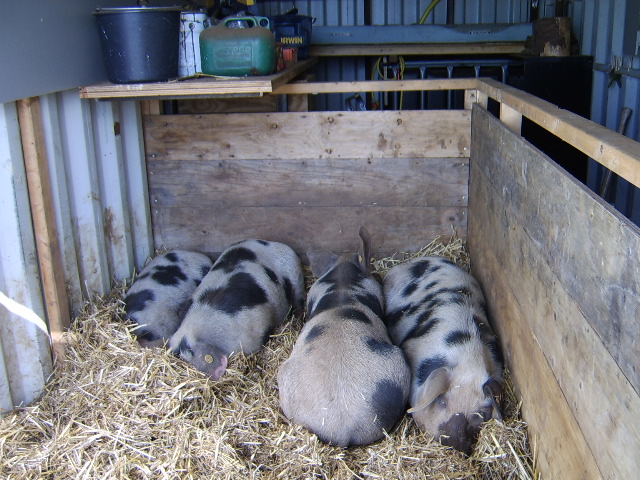
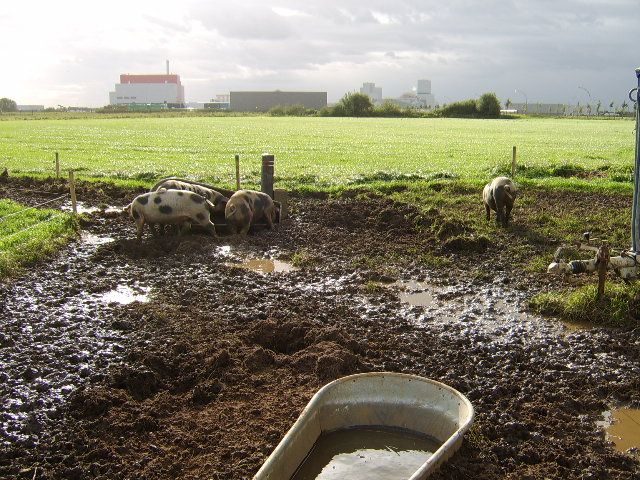
Anna, Bom, Rinus and Alie were not only literally digging up the border but they also symbolise the border between a pig and our food (see the wonderful report with lots of pictures of assistant farmer Onno van Eijk). A culture that values their food, is a culture that knows their food. Once you know, fed and cared for Rinus, his meat becomes precious, the slaughtering an intense and difficult ritual and nothing of him will be spoilt or mindlessly consumed (see also the Volkskrant article).

The care and attention which naturally appear when you are involved in all aspects of the food leads to a quality which is recognised elsewhere in the world as a strong food culture. The majority of us, however, are made to value brands instead of food.

Eat-in’s. Delicious Protest

Two Eat-in’s in two weeks; it is the newest trend. Eat-ins are an opportunity to meet colleagues from other groups, such as today in our first Eat-in at work. Eat-ins are dinners where, good, clean and fair food is being shared in a public place. Since those adjectives to the food are lacking in our canteen (see earlier blogs on an arising lunch food market) the Eat-in provided delicious home cooked lunch for some 30 people. We were told of course that we could not do this, that we could not bring home cooked food and share it, that we could not nibble from 20 different dishes. It is somehow different from bringing your home cooked lunch in a lunchbox for yourself only. The collective meal was a statement which did not need any additional words.

The next Eat in is organised by Rural Wageningen Foundation (RUW), the Farmer Foundation (Boerengroep) and Study Group Biological Farming on the 30th of September, 18.00 hours at Experimental Farm ‘Droevendaal’ (Kielekampsesteeg 32, Wageningen).  

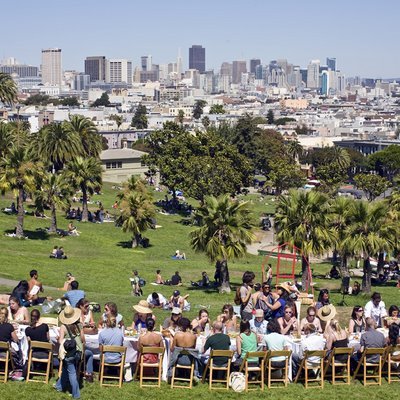
Delores Park SF 2008


According their press release, an Eat-In is also a potluck: a gathering of people where each person or group of people contributes a dish of food to be shared among the group. So bring your own food! At the same time local farmers and cooks will present themselves and sell food at a regional food market. But it’s more…Wageningen students, farmers and cooks will meet. Besides, in short interviews (max. 3 minutes) different actors (e.g. scientists, farmers) will answer the question: What do you contribute to our food? 

For more information visit the website: www.stichtingruw.nl or www.boerengroep.nl or send an e-mail to ruw@wur.nl.

Sus Anna; The Peergroup

The story continues with the feeding (see earlier blogs). Feeding Alie, Rinus, Anna and Bom was my task. For the afternoon snack I collected half a bucket of acorns along the street. They looked like vacuum cleaners, quickly hovering up the spread around acorns. For dinner they first ate some bananas, spread around again to make it possible for me to reach the feeding hod with cooked potatoes. The moment the potatoes hit the hod they stormed at it to be the first. The second round of soaked muesli in milk ended in my a narrow escape from being run over.

A proverb goes like ‘one pig won’t get fat’. Alone, they eat gently from your hand. It is the peer group which makes the pigs extremely competitive. How human. Among peers they aggressively have to assert themselves. It reminded me of someone’s story. Growing up in a family with ten kids in the early sixties, the fiancées of bigger sisters were put to the test at the dinner table. Leaving the precious meat for the last bite they always found an empty plate once their fork finally reached out for it.

Alie, is the leader of this small group and therefore the biggest. Anna is the smallest. She is always struggling to get enough. She only eats when she has assured herself that no one is coming after her. When I threw in some spread around bread pieces she just ate one, walking around with it searching a safe place while the others were grabbing the next pieces coming from me.