The Farm Experience Internship (FEI) : experiences from Brazil

Part of a joint initiative the Farming Systems Ecology group  of Wageningen University offers a new course the Farm Experience Internship (FEI). This course is presented and discussed in Grassroots Science event next July 4. See the earlier blog for more info. The course is inspired by a similar course in Brazil. Below Heitor Texeira, student from Federal University of Vicosa and currently intern at Stichting Otherwise and ILEA, tells about the Brazilian experiences and about course starting for the first time summer, from 11th to 30th of August. See for more information on the FEI course also the site of the Boerengroep.

By Heitor Texeira

The Estágio Interdisciplinar de Vivência

In Brazil family farmers and traditional communities play a very important role concerning food production and conservation of natural resources. They are responsible for the production of approximately 70% of the food consumed in the country and in many cases manage their production systems in a more sustainable way, seeking for the integration between nature and agriculture. Although their great contribution for society, the knowledge developed and disseminated in educational institutes of superior level is often disconnected from the reality and needs of family farmers. On the one hand their traditional knowledge is underestimated regarding research and extension at the University. Continue reading

Grassroots Science: Do the NL have an agro-ecology movement?

Stichting Otherwise organizes another Grassroots Science event. The new course The Farm Experience Internship (FEI) will be presented and the significance it can have for formal education and the agroecology network in the Netherlands. See http://www.st-otherwise.org/thu-4-july-grassroots-science-agroecology-in-the-netherlands/ for more info or the site of the Boerengroep for more info on the FEI course.

GS Agroecology

Tip of the iceberg

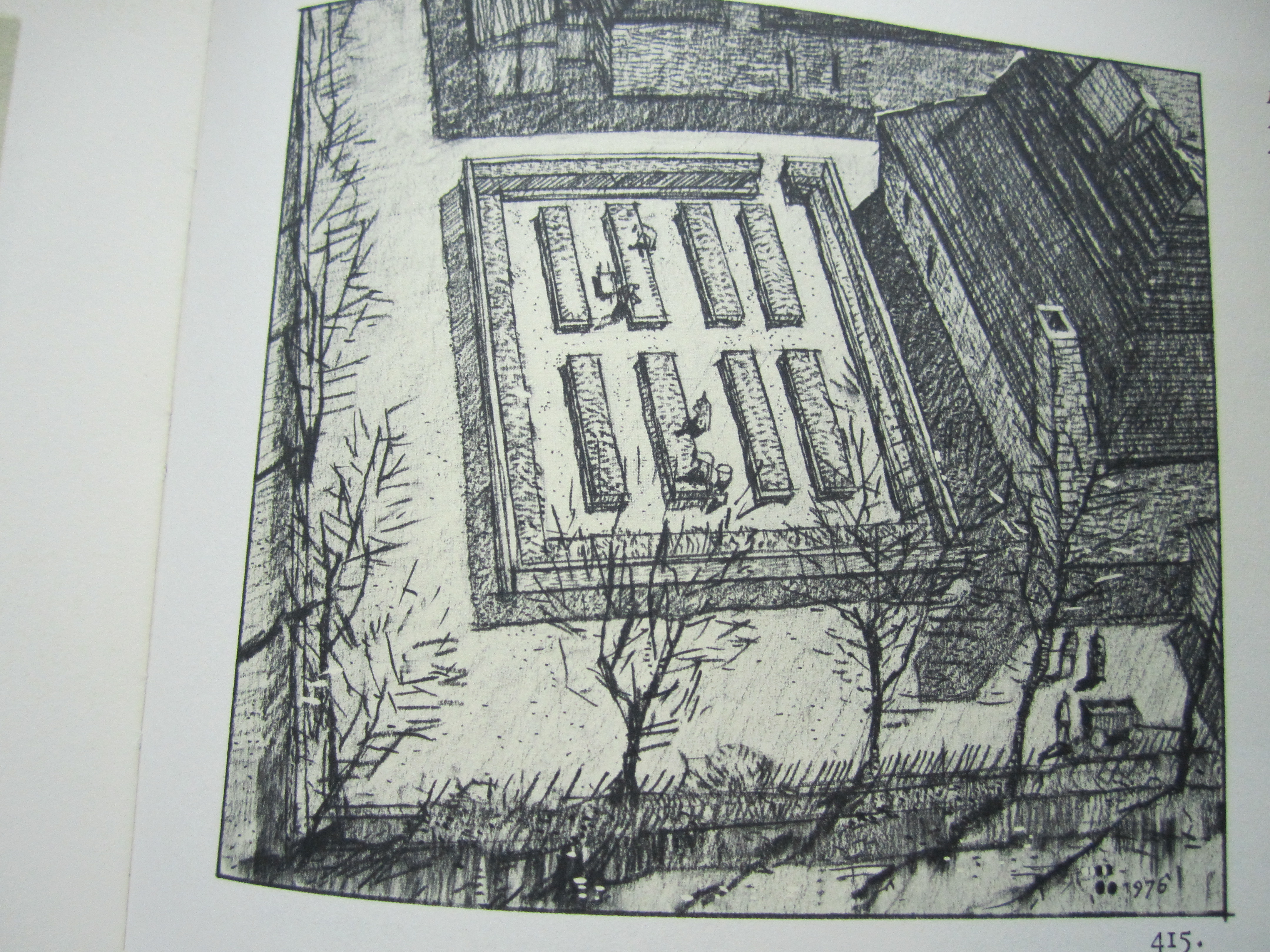
This weekend I gave a lecture twice in ‘Het Klooster’ (The Convent) at Oerol, a famous week-long festival with theatre, performance and music at 63 locations on the Wadden Island Terschelling. Het Klooster features at Oerol this year and in its full capacity next year. The Dutch State Forestry Commission (Staatsbosbeheer) Firma Rieks Swarte and Peergroup will remove the topsoil of lines drawn at a field this year. The lines represent the layout of the Convent of St Gall, a detailed model from the 8th C for a monastery that was never built but nevertheless served as a ‘roadmap’ for many convents all over Europe in the middle-ages. Removal of top soil will give older seeds of rare species a chance while the map will be visible from a tower in the middle of the field and will be part of a theatre show at next year’s Oerol.

IMG_0208What if the monastery was built at Terschelling? The geometric beauty and symbolism of the design is what fascinates Rieks, how man organises man is what fascinates the PeerGroup, and in line with that, what did they eat? That’s where I came in. Food culture before the invention of the printed book in the 15th C is always surrounded with many doubts and insecurities for lack of evidence. But in the case of Convent of St Gall, everything within the walls (a village almost) was detailed to the point of which herbs were grown in the herbal medicine garden. It was fascinating to see the books in which the plan has been studied. My earlier doubts based on other historical sources about how realistic this design would be in practice were confirmed.

One small example; the vegetable garden was divided in 2 x 9 beds of equal size with 1 vegetable planned for each bed. This then meant that cabbage received equal space to dill and that unions were occupying one bed whereas chervil a complete other. While the vegetable garden as a whole was far to small to feed the approx 200 people who would live there (where did we hear that discussion lately?), it seems highly impractical to have as many lettuces as poppy, unless they had a good use for poppy of course……..

Fruits of internship labor

IMG_0168Last week I visited Clara, a Master of Organic Agriculture student at her internship with the PeerGroup in Donderen near Groningen. This theatre group located at an old ammunition depot advertised a while ago that they were looking for a student who could set up their farming activity (see earlier blog). Over the past few months she worked hard to design and construct the first step, a vegetable garden near the communal and office spaces. At the same time of building a greenhouse and raised beds she kept a nursery going and when the weather (finally!) got better, planted the seedlings. Now the water pump is working, it will go fast.

This is just step one of a long-term plan to integrate more farming in the area, in collaboration with the community in the village and the care farm nearby. The PeerGroup is open to future students with skills to develop other parts of their unique location which inhabits rare species and special biotope, and is at the same time military heritage, creative work space and publicly open and connected to nearby recreation forests.

Edible Academic Garden in the making…

IMG_0077Since half a year, an enthusiastic group of students has set as their goal to establish a productive landscape garden in which education of various disciplines and agroecological design will fuse in a space where students and staff can learn and relax at the new University Campus. The process so far has shaped itself organically as a learning opportunity for many, very much in line with the principles behind the garden. Around 20 students take care of the daily organisation with around 80 active followers and up to 300 students interested. After an initial pre-proposal supported by many chairgroups that was received well by the Board of the university, the phase of making a full proposal has now arrived, including a design, the budget, and issues such as care taking and maintenance.

Last night, the first of two public participatory design sessions was held. It was inspiring to put our dreams of the space around the new Orion building on paper. Next week Monday the second one will be held. If you want to participate, please register yourself through this link or look at the website EAT website/email