The Rural Sociology Group of Wageningen University will celebrate its 75th Anniversary on the 13th of May 2022. Join our event entitled “Rural Sociology: past, present and future” and reflect upon the past and present of rural sociology and discuss its future challenges.
Professor Peter Oosterveer, from the Environmental Policy Group, first became aware of the Sociology Group as a student in the 1970s. When he came back to work at the Environmental Policy Group, he maintained strong collaborations with the group through research and education.
In this interview, he mentioned the way in which RSO has stayed ahead of the debates over the last 30 years. He also reflects on the influence of Bruno Benvenuti as a teacher, but also for his critical look at more macro developments (e.g. technologies) and how farmers deal with these. Peter highlights the value of the RSO Group’s focus on rural development, especially at a time when much attention is turning towards a globalizing, and urbanizing world.
For the future of rural sociology, he notes the importance of continuing to understand the way rural regions are changing in relation to other regions.
Thank you to Peter for taking the time to share these memories and to Yanick Bakker for her editing skills.
In this second interview in the Friends of RSO video Series, we speak with Gianluca Brunori, Professor of Food Policy at the Department of Agriculture, Food and Environment, at Pisa University. In our interview, he reflects on the central role the RSO group has had on his career. He notes the impact of the group, based in part on the methodological approaches and a strong, critical view: the attempt to go beyond the common discourse to challenge situations, while also looking the alternatives.
He reflects on the blurring of disciplines and the challenges and opportunities this poses for Rural Sociology. He makes a plea for enhanced engagement with economies to enhance our understandings of alternatives, without losing the “hard core” of the discipline.
Professor Brunori shares an experience of a rainy group camping trip that led to the consolidation of professional relations that have spanned more than 30 years.
Many thanks to Gianluca for sharing his reflections and to Yanick Bakker for her editorial work.
Over the last 75 years, we have made a lot of friends from around the world. In this short series, we interview a few of these friends with strong roots in RSO and who have gone on to have internationally recognized scientific careers.
In this interview series, we ask them to reflect on their connection to the group, the legacy of the group, and the future of rural sociology more broadly.
In this first interview, Professor Myriam Paredes, of the Latin American Faculty of Social Sciences, (FLACSO), in Ecuador, reflects on the novel approaches and contributions of the group to sociological debate, notably moving beyond traditional actor /structure dichotomies.
She also recalls fondly the deep conversations and good company she experiences while studying at RSO. She shares that students and staff would come together to debate the ageless question of what different realities mean, as a way to introduce non-sociological students into sociological debates.
She also shares her trajectory from MSc student to PhD candidate and reflects on the quality of the teachers, and ‘friends for life’ that supported her on her journey.
A special thank you to Myriam for sharing her memories and to Yanick Bakker for her editorial support.
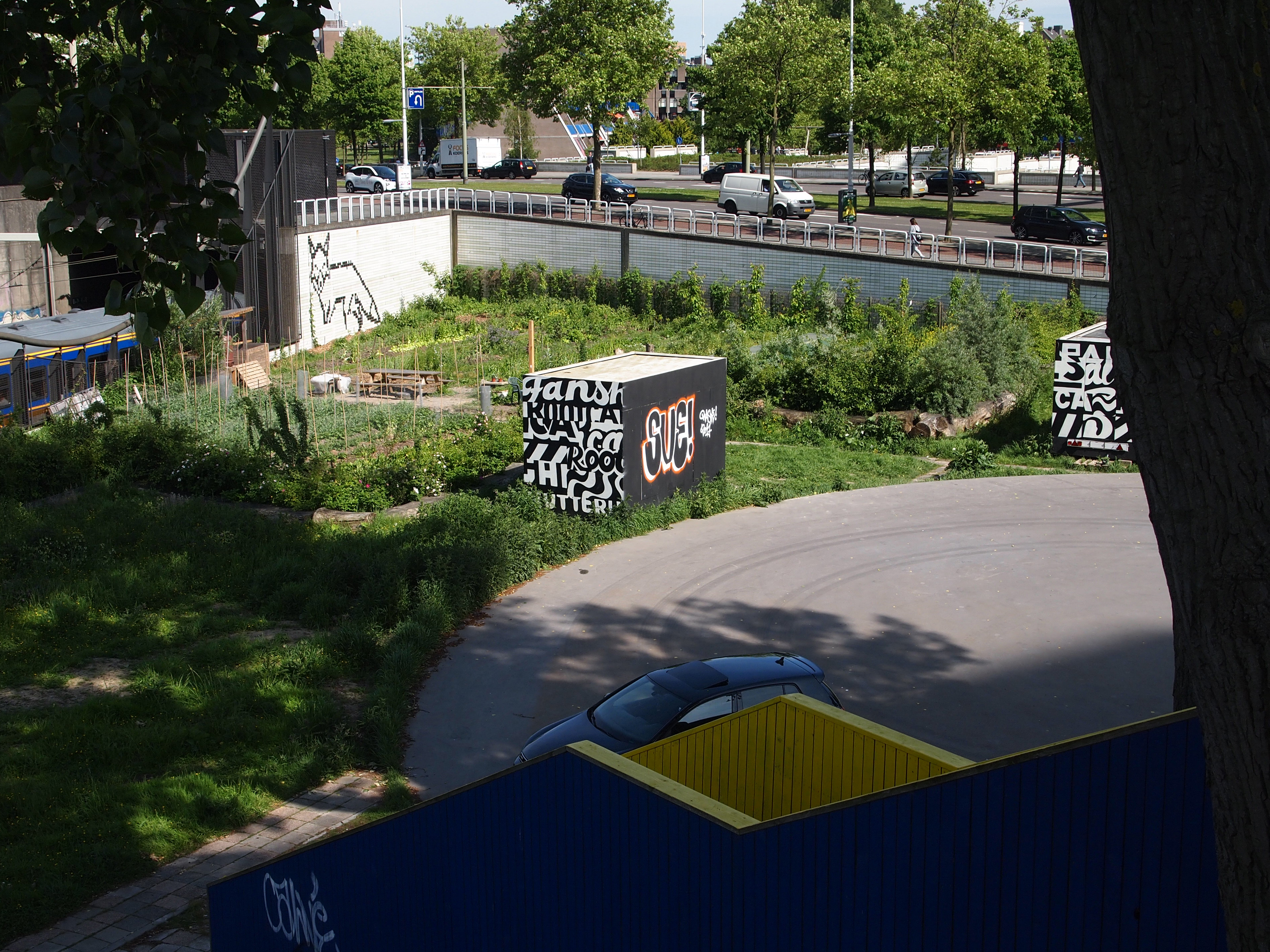
Examining urban agriculture projects in Rotterdam between 2008 and 2018, my research looks at the practice of urban food planning, its strategies, the actors involved and their roles and relations. Central to the research is the observation that in Western European society today, the increased participation of civic initiatives confronts planning with challenges related to governance, decision-making and representation. Sustainable urban food planning can be seen as a laboratory for planning concepts that deal with these challenges.
The purpose of my research is to investigate which conceptualisations of planning are relevant when 1) planning in and for a pluralistic, participative society and 2) planning for sustainable goals related to an unknown future. As there is no consensus in the planning field on what planning is or what it should do, conceptualisations of planning can range widely, from systems planning to advocacy planning and from collaborative to complexity planning. I work with a primary hypothesis that these concepts of planning are complementary rather than mutually exclusive and that in a complex, pluralistic society, different concepts of planning can be relevant in different circumstances.
The main research questions are as follows: What concepts of planning are effective in spatial planning for a common sustainable future when including multiple actors and stakeholders with a variety of frames and perspectives on sustainable food systems? How are different actors, their respective roles and action perspectives included in the decision-making process? What is the role of the planning practitioner in this, and what is the role of governmental planning at different levels?
The research is informed by my own position as a practitioner. Undertaking a professional PhD as an external researcher at RSO allows me to reflect upon and put in perspective my personal experiences in the field of spatial planning and design. Fifteen years of experience with promoting, researching, designing, planning and practicing urban food production in Rotterdam left me (and colleagues from the field) with many ideas and hypotheses on what municipal planners and urban food initiatives should and should not do when planning urban food production. Can municipal planning include the initiatives of societal actors (like myself and fellow urban farmers and activists) in their planning agenda? Would it be possible to do this in a way that respects the diverse world views of these actors? And can societal actors themselves operate in a way that aligns them with governmental planning agendas without losing sight of their own goals?
OLYMPUS DIGITAL CAMERA
Civic urban food initiatives represent a diversity of approaches to what a sustainable food system should be and how planning can contribute, but planners at different government levels struggle to facilitate and include these initiatives and their diverse approaches in their planning efforts. This has become apparent in Rotterdam but is also exemplary of a more general gap between bottom-up societal initiatives and top-down governmental planning in the Netherlands. Through a study of the Rotterdam urban agriculture movement – and taking the role of participant-observer – I examine this gap and address the questions above.
The case study of Rotterdam considers projects in which urban food production has been realised and focuses on the people involved in the planning process and their agendas and strategies, with a special emphasis on spatial planning. To avoid any bias due to my personal involvement in the object of study, I use a range of sources, including grey literature and interviews with different planners and societal actors. In terms of method, I combine this sociological approach with plan analyses (of the projects) derived from the discipline of urban planning. In combining different sources and methods from different disciplines, I try to incorporate the views of different actors and gain a more complete picture of what has happened during these past years and what lessons can be learnt for planners and urban food initiatives..
While the PhD is designed as a retrospective, transdisciplinary case study, it inevitably involves and interacts with my own practice as a designer/planner and, more recently, urban food forester. Interviewing planners about their ideas and influences and writing down their accounts of events has already provided insights that are informing my current work in urban agriculture and food forestry (including advocacy, design and realisation). Although this can sometimes be problematic, the meeting of practical experience with academic and applied research is developing a relevant knowledge base. A professional PhD makes knowledge from practice available to academic research and offers a place of reflection to practitioners.


 Rural Sociology Wageningen University