Webinar EU Farm to Fork

Feel free to join this online discussion about the EU’s new Farm to Fork Strategy from a food sovereignty perspective. It’s part of the now virtual World Social Forum of Transformative Economies

FoodGovernance's avatarFood Governance

Strategising from a food sovereignty perspective

As part of the World Social Forum of Transformative Economies we will discuss the collective response by 23 food sovereignty scholar activists to the European Commission’s new Farm to Fork (F2F) Strategy for a fair, healthy and environmentally-friendly food system. Our goal is to gather feedback, and strategize together.

Speakers: Christina Plank, Chiara Tornaghi, Ana Moragues Faus,
Tomaso Ferrando, Fernando García-Dory
Facilitation: Marta Rivera Ferre and Jessica Duncan

Join us: Wednesday 1 July 2020 at 15:00 GMT+02:00 (Brussels time)
Zoom Meeting: https://us02web.zoom.us/j/86422243952

For more information, contact: priscilla.claeys@coventry.ac.uk

View original post

EU Farm to Fork Strategy: Collective response from food sovereignty scholars

Two RSO scholars, Jessica Duncan and Jan Douwe van der Ploeg, have contributed to this analysis of the EU’s new Farm to Fork Strategy.

FoodGovernance's avatarFood Governance

On 20 May 2020 the European Commission (EC) released its new Farm to Fork (F2F) Strategy for a fair, healthy and environmentally-friendly food system. As scholars committed to supporting sustainable food system transformation, we commend the EC for delivering a  longer term vision, and proposing the development of a legislative framework for sustainable food systems by 2023. Binding mechanisms and coherent, integrated rights-based legislative frameworks are fundamental to ensuring compliance and meeting the proposed targets. We acknowledge that the F2F Strategy contains many positive points, but are deeply concerned that these remain embedded in an outdated framework.

The evidence overwhelmingly points to a need to move beyond the (green) economic growth paradigm. This paradigm, reified by the European Green Deal, perpetuates unsustainable lock-ins and entrenched inequalities. The Scientific Advice Mechanism[1] recently advised the EC to stop treating food as a commodity and start thinking about the implications of seeing food…

View original post 4,028 more words

Stage of afstuderen: Ontwikkeling Voedsellandschap en Moderne Marke Slijpbeek

  • Moderne Marke Slijpbeek – tussen Arnhem en Oosterbeek – is een samenwerkingsverband waarbij de korte keten van lokaal voedsel (van productie tot verwerking, distributie en afzet) het uitgangspunt is. Dit gebeurt in een bio-divers, cultuurhistorisch, hoogwaardig leef- en woongebied. Circulariteit (afvalstromen en mest) en fossielvrije mobiliteit liggen aan de basis en de beleving van de korte voedsel keten staat centraal. Het gebied functioneert als moderne Marke waar men met elkaar en vooral voor elkaar gewas en vee tot wasdom laat komen en waar de buitenruimte optimaal benut wordt om voedsel te produceren. De ruimte is verbonden door een padenstructuur die zowel distributie als beleving van voedsel mogelijk maakt. POP subsidie moet een bijdrage leveren aan het versterken van de samenwerking, de visie- en planvorming en de uitvoering van enkele voedselgebonden experimenten.

Doelstelling: Doel van het project is de consortiumpartners binnen het gebied rondom de Slijpbeek op professioneel niveau te laten samenwerken zodat er duurzame onderlinge relaties worden opgebouwd en er een duurzame voedselketen ontstaat. Het realiseren en innoveren van de duurzame korte voorzieningenketen gebeurt met een groep korte-keten-partners (niet alleen productie maar ook verwerking, distributie en afzet van lokaal voedsel) in ‘Slijpbeekpark’. De uit deze samenwerking voortkomende voedselproducten zijn met gesloten kringloop geproduceerd, emissievrij gedistribueerd en toereikend voor een zo groot mogelijk aantal afnemers in en om het gebied ‘Slijpbeekpark’. Bewoners van het gebied zijn ‘lid’ van hun eigen voedsellandschap.

Mogelijke opdrachten

Formuleren bedrijfsplan De partners hebben als doel samen te werken om een korte voedselketen te realiseren. De betrokken partijen willen de businesscase verbeteren, door meerwaarde toe te voegen aan de productie. Deze meerwaarde wordt bereikt door een gesloten grondstoffenkringloop en biologische en CO2-neutrale productie, waarbij de voedselproducten van het land zoveel mogelijk binnen het gebied en zonder verspilling worden verwerkt, gedistribueerd en afgezet voor en met bewoners en ondernemers.

Hiervoor wordt onderzocht: 1) Welke producten samen een interessant aanbod vormen als voedselpakket voor lokale bedrijven en bewoners, met oog voor technische eisen (landschappelijke ondergrond, mogelijkheden tot verwerking/houdbaarheid); 2) Hoe er tot een economisch haalbaar, kwalitatief product gekomen kan worden, met een overgang van intensief naar extensief beheer; 3) Welke innovatieve bewaar- en verwerkingsprocessen er zijn om jaarrond hoogwaardig voedsel aan te kunnen bieden en verspilling tegen te gaan; 4) Hoe en hoeveel (nieuwe) bewoners, bedrijven en belangstellenden het product kunnen en zouden willen afnemen (lid worden van een coöperatie, voedselpakketabonnement, etc).  

Formuleren voedsellandschapsplan Door middel van een voedsellandschapsplan krijgt de samenwerking van de korte-keten-partners ook fysiek in het landschap vorm. Hierin worden de locaties aangewezen waar natuur- en landschapsgericht wordt geboerd. In samenspraak met de gebiedseigenaren wordt onderzocht hoe en in hoeverre de korte-keten-partners het landschap kunnen beheren en bewerken ten behoeve van de lokale voedselproductie. 

Zichtbaar maken van lokaal voedsel Door de werkzaamheden in de voedselproductie, -verwerking, -distributie en -afzet beleefbaar te maken ontstaat er meer binding met het product en het landschap en meer bewustwording over voedsel in het algemeen. Hiervoor is behoefte aan een visie op beleving, educatie en burgerparticipatie met betrekking tot lokaal voedsel en een plan van aanpak hoe deze visie is toe te passen in de lokale zorg- en dagbesteding bij Hoeve Klein Mariëndaal en bij de beleving/ bewustwording van het lokale voedselsysteem door bewoners, lokale bedrijven en toeristen voor het gehele projectgebied.

Voor meer informatie: Jan Hassink, Wageningen Research: Jan.hassink@wur.nl en 0317 480576

BSc/MSc Thesis vacancy – Volunteers in Gelderland: does Corona provide new dimensions to an old fashion?

The Corona crisis brings about many social initiatives, lots of them along the lines of ‘helping out in the neighborhood’. This might appear innovative, but volunteer organizations are central to social life in Dutch countryside already for decades. From sports clubs to village centers (Dorpshuizen) and local public transport (buurtbus), many small-town-services are supported by volunteers. Yet, volunteer organizations in small villages heavily struggle with a lack of volunteers and an increasing workload, as their (local) governments ‘decentralized’ many tasks over time. This Science Shop research project is commissioned by ‘Vereniging DKK Gelderland’ and looks into the dynamics of local volunteer organizations in the context of austerity and decentralization. How do volunteers organize themselves? What can organizations do to attract new and young volunteers? What critical issues with regard to livability and social services are signaled by volunteers?

We are looking for students that are interested to study volunteer supported (social) services in Dutch countryside (Gelderland) through a literature review and (Skype) interviews, and/or to perform an online (inter)national QuickScan of inspiring examples of volunteer work. Should we learn from festivals (f.ex. Zwarte Cross) about the commitment of young adults to volunteer work? Or is activism and financial support the answer to overstressed volunteer services? In addition, we are keen to understand how an abundance of temporary Corona-initiatives relate to existing issues with permanent/long-term volunteer efforts.

The project runs from May to November, you can start any time from now. Research can be adapted to the Corona guidelines. Both suitable for bachelor and master students. Please contact dieuwertje.vanmuijden@wur.nl for more information. See also: https://www.gelderlandhelpt.nl/corona-hulp

Rural-urban relations in times of COVID-19

** Special online discussion on rural-urban relations**

Bettina Bock and Jessica Duncan

How are the interactions and dependencies between rural, peri-urban and urban areas changing at this moment?

Let us know! Comment below or #ROBUST #RuralUrban

The COVID-19 pandemic has shaken the foundation of our societies, painfully demonstrating the enormous difference residency makes for your risk of infection, as well as your chance of medical treatment. Shockingly clear are also the social differences in threats resulting from the societal lockdown – in terms of income security, access to education, as well as housing, shelter, and food. Though known before with earlier pandemics, COVID-19 has swiftly exposed and exacerbated social inequalities and injustice within and across countries.


It also triggers changes in rural-urban relations, while underlining their importance.  For example, rural areas have been widely perceived as offering a safe haven from the virus, given their lower population density. This has motivated some urbanites to seek shelter in the countryside. However, in reality, rural areas are extremely vulnerable to public health crises of any kind, as their populations are ageing and their primary health care infrastructures are extremely fragile, and often cannot sufficiently serve even the local population. Most urban residents are likely not aware of the risks they carry with them in their own search for security, leisure, or space (i.e. physical distancing). And this is not surprising.

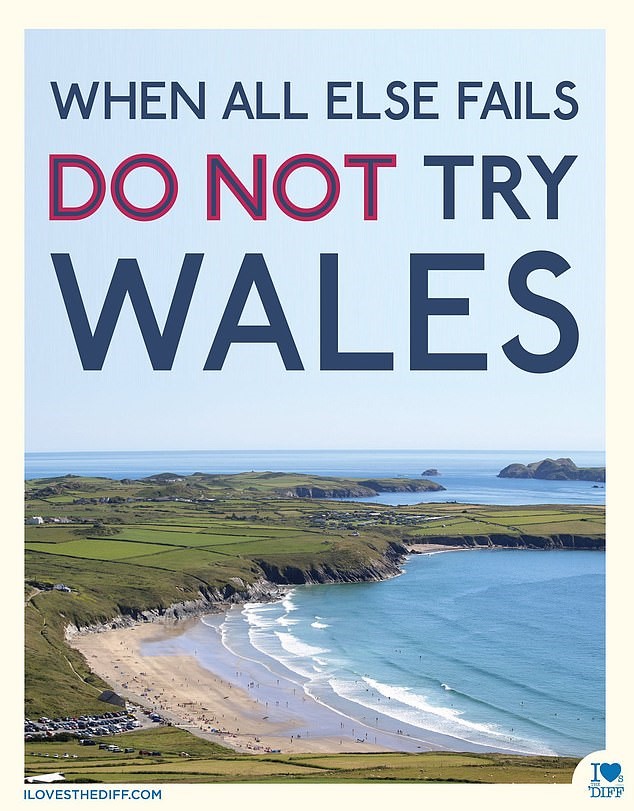
Research has shown that with urbanisation, rural and urban regions grew apart, leading to a lack of mutual awareness, understanding and affinity, as well as a difference in affluence, status, and recognition of interests. This may explain why some rural residents have accused urban security seekers of selfishness for travelling to rural areas (e.g. the rise of #dontvisit; Wales, UK where people have been warned not to travel to; The Hampton, US where some wealthy Americans are bunkering down; or Scotland, where the chief medical officer resigned over ignoring her own warnings by travelling to her second home).  But also students, returning to their rural family home, may have unintentionally brought the virus with them, for instance in the South of Italy.

Current times call for solidarity, for contributing to the security of others even at individual costs. And there is plenty evidence of that solidarity – also across rural-urban boundaries. This is reflected in the many initiatives taken to support local farmers, whether by directly buying the products they cannot deliver to restaurants and schools, or by offering to help with the local harvest, as seasonal labour migrants are also unable to travel and work abroad.

Nevertheless, rural areas, which have long experienced out-migration as people leave for educational and employment opportunities, are now experiencing a critical shortage of people who are capable of working in agriculture and harvesting food. This will also be felt in the urban areas eventually.

COVID-19 is having paradoxical effects. It reveals our vulnerability and our readiness to adapt our daily life if security demands it. It reveals our selfishness, at the individual and national level. It reveals our struggles understanding that we can be part of the problem, even when travelling on our own. It also discloses our compassion for others and the capacity of selflessness that many possess.

It underlines the importance of creativity and solidarity. Knowledge and a sense of affinity are crucial for promoting solidarity. Social distancing can promote discrimination and social division if we prioritise our safety and comfort. For good rural-urban relationships, knowledge, understanding and respect are crucial, as is awareness of interdependence. We need each other now and in the future.

Recognizing that rural-urban relations are not the urgent priority of governments, it cannot be denied that the pandemic is reshaping and will likely continue to reshape these relations in multiple and complex ways. The outcomes of this crisis on rural-urban relations will depend heavily on the decisions taken now by political leaders.

Governments need to play an important role in communicating this knowledge and promoting better cooperation and solidarity between rural and urban areas. In the case of COVID-19, they should set an example of unselfishness and solidarity, both locally and globally.

We are calling on governments to not impose measures that would negatively impact rural residents, or over the long term. Pandemic–related trends (e.g. migration for employment from urban to rural areas) should be carefully monitored to avoid unintentional long-term threats to rural communities.

We encourage governments to consider rural-urban relations explicitly when developing and implementing new policies, including an integrated strategy that clearly communicates that the rural is not a refuge – but a partner.

Finally, we encourage governments to strengthen local food production systems and consumption at a structural level and in line with a city-regional approach. Eventually, when it is safe to do so, we also encourage governments to promote sustainable local recreation and tourism, which is vital for many rural areas.

ROBUST is a European research project involving 24 partners from 11 countries. One of our main goals is to advance our understanding of the interactions and dependencies between rural, peri-urban and urban areas.

We are very interested in hearing from you. How are the interactions and dependencies between rural, peri-urban and urban areas changing at this moment?

Let us know in the comment section or online @bock_bettina  and @foodgovernance

#ROBUST #RuralUrban
ROBUST