
At the one year anniversary of starting my position as Assistant Professor in Food Sociology, I thought I should get around to writing a blog and reflecting on this wild year of getting to know RSO, WUR, and the Netherlands.
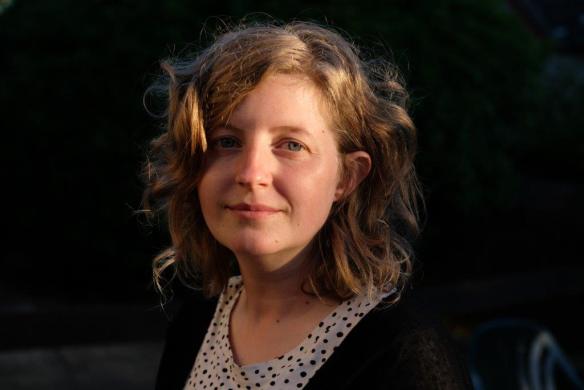
Oona Morrow; Photo taken by Jantine Messing, in Devon 2018
At the end of February last year I boarded a plane with my partner and our cat bound for Amsterdam. We were excited, but also had no idea what we were getting ourselves into. A few weeks later I began teaching Origin Food, a required course in the MFT Gastronomy specialization. And Dirk Roep and my patient students put up with me as I bumbled my way through EU food policies on GI protection, and lectured in a brand new course. We visited local cheese makers and gastronomic ventures, and my students helped me wrap my head around the many ways one could enjoy the humble cheese sandwich – with mustard, ketchup, or just plain (my personal favourite is now with Appel Stroop). Somehow we all survived, and now I am happy to be supervising some of these students on their thesis research on the diverse economies of Sago in Indonesia and food tourism and shellfish livelihoods in Portugal.
I gave guest lectures here and there, one as part of a seminar on co-creation at CSPS. And afterwards my colleague Anke approached me to discuss how we could incorporate co-creation more intentionally into our research practices. We decided to try out an approach that I had learned from the community economies research network in the CSPS Foodscapes cluster. The cluster now meets monthly to read papers, workshop research in progress, and offers a convivial environment for reflection, support, and co-creation. It has been such a great place for me to connect with colleagues from across the CSPS section who are interested in critical food studies, foodscapes, diverse food economies, and urban agriculture. Whenever I’m stressed or lost I can always count on this group for an outside perspective or a good laugh. We also organize the Critical Food Studies Speaker series. Several of us are also organizing a session on Cultivating Hope while Getting into Trouble with Community Food Initiatives at the RGS-IBG Conference in London this coming August.
Then in what feels like the blink of an eye, I found myself in the picturesque seaside and rolling hills of Devon, UK. Where I stayed with three other instructors and supervised a group international development students completing their first field work assignment, as part of Elisabet Rasch’s Field Research practical. I remembered how to drive, even on the wrong side, and visited students living with host families and researching everyday life in small towns, villages, and hamlets up and down the coast. I went on some gorgeous hikes and walks, and visited Cardiff for a workshop that Ana Moragues Faus organized on the role of cities in delivering food security and sustainability outcomes. I also spent some time hiding out in my bed/office finishing data analysis and preparing a conference paper for SCORAI. On my walks and drives through the region I couldn’t help feeling home sick, in this little piece of island that so resembled the coastal villages and mill towns I knew from my life in New England – and even with the same place names. Many people who settled New England emigrated from the South of England. The field research experience made a huge impact on my students, who researched everything from the trauma of hoof and mouth disease, to the Brexit feelings of farmers, to the livelihood strategies of fishermen, to the meaning and experience of sustainability in a Transition Town. I enjoyed watching them move out of their comfort zone and connect with strange new humans, while further developing their research skills.
I also found time to write a few papers, including an article entitled Sharing Food and Risk in Berlin’s Urban Food Commons, for a special issue of Geoforum on urban food sharing economies. The paper brings together current thinking on food commons and urban commons to examine the challenges of managing public fridges in Berlin as commons. The research that the paper is based on was completed with foodsharing.de as part of the ERC Horizon 2020 funded SHARECITY project, led by PI Anna Davies. The special issue is edited by Anna Davies and David Evans and profiles many of the ethnographic findings from the SHARECITY project, as well as research on solidarity food economies, foraging, and food waste presented in an AAG session in Boston that we organized on food sharing. I encourage you to check it out, and many of the papers are open-access.
Over the summer and fall I began supervising a growing cohort of thesis students who were developing research proposals on everything from food policy in Berlin, to urban agriculture in Almere, to vegan instagram influencers in the UK. While they all had me in common as a supervisor, they also shared an interest in understanding agri-food practices from a critical sociological perspective. So, we committed ourselves to organizing as a cohort, sharing tips and resources along the way, enjoying thesis potlucks, and meeting up to celebrate important milestones like finishing proposals, going off to the field, and writing. The 2019 “Foodies” cohort and thesis ring is going strong, and I look forward to continuing the tradition with the next batch of thesis students.
Fast forward some months, in which I even managed to take vacation, and I began teaching the MFT Gastronomy course Food Culture and Custom. This is a course that has been thoughtfully designed and redesigned by RSO’s resident Teacher of the Year Dr. Jessica Duncan. The course covers similar topics and theoretical frameworks to those I had taught in the MLA Gastronomy program at Boston University, so I was pleasantly in my comfort zone. But I also got to dig into some fascinating new material on ethics, moral philosophy, and cultured meat with Professor Cor van der Weele. Jessica has gone to great lengths to make the course extremely well structured and as interactive as possible, so although we all work really hard – we also have a lot of fun. However, all of these interactive components take a lot of extra time and coordination, so I was very happy to have support from my two excellent teaching assistants – Adele Wilson and Jesse van de Sande. Thank you both!
During my time here, one constant sources of inspiration and belonging has been the Centre for Space, Place, and Society – and especially the CSPS Foodscapes cluster. When I go to a CSPS event or teach in the CSPS Social Theory Phd Seminar I feel that I’ve found my people at WUR. So when Martijn Duineveld suggested that we apply for the CSPS Scientific Director position together as a team – I thought, that sounds great! We’re looking forward to working together to organize an engaging and inclusive CSPS. See you at the next CSPS event and the CSPS Annual Day.
The days and months have flown by. But here I am again, drinking raw milk with my gastronomy students, preparing my lectures, and feeling much more at ease in my new role than this time last year. I’ve contributed to a few funding bids. And together with Anke de Vrieze and Chizu Sato I was recenty awarded WASS excellence funds to organize a workshop with artists and academics on Arts-Based Methods and Diverse Economies. I have also been granted funds for a research visit to Hamburg University’s Center for Advanced study on the Futures of Sustainability, where I will be Visiting Professor next fall. But, what I’m most excited about right now – besides teaching Origin Food again (with a super engaged group of MFT Gastronomy students), is working together with our CSPS foodscapes colleague Hilje van de Horst to co-supervise my first PhD student Thirza Andriessen. Thirza has been awarded the prestigious and highly competitive WASS PhD fellowship for her research on dignity in alternative forms of food aid. We are so thrilled to be able to work together on this important project and support the development of a budding social scientist at WUR.


