
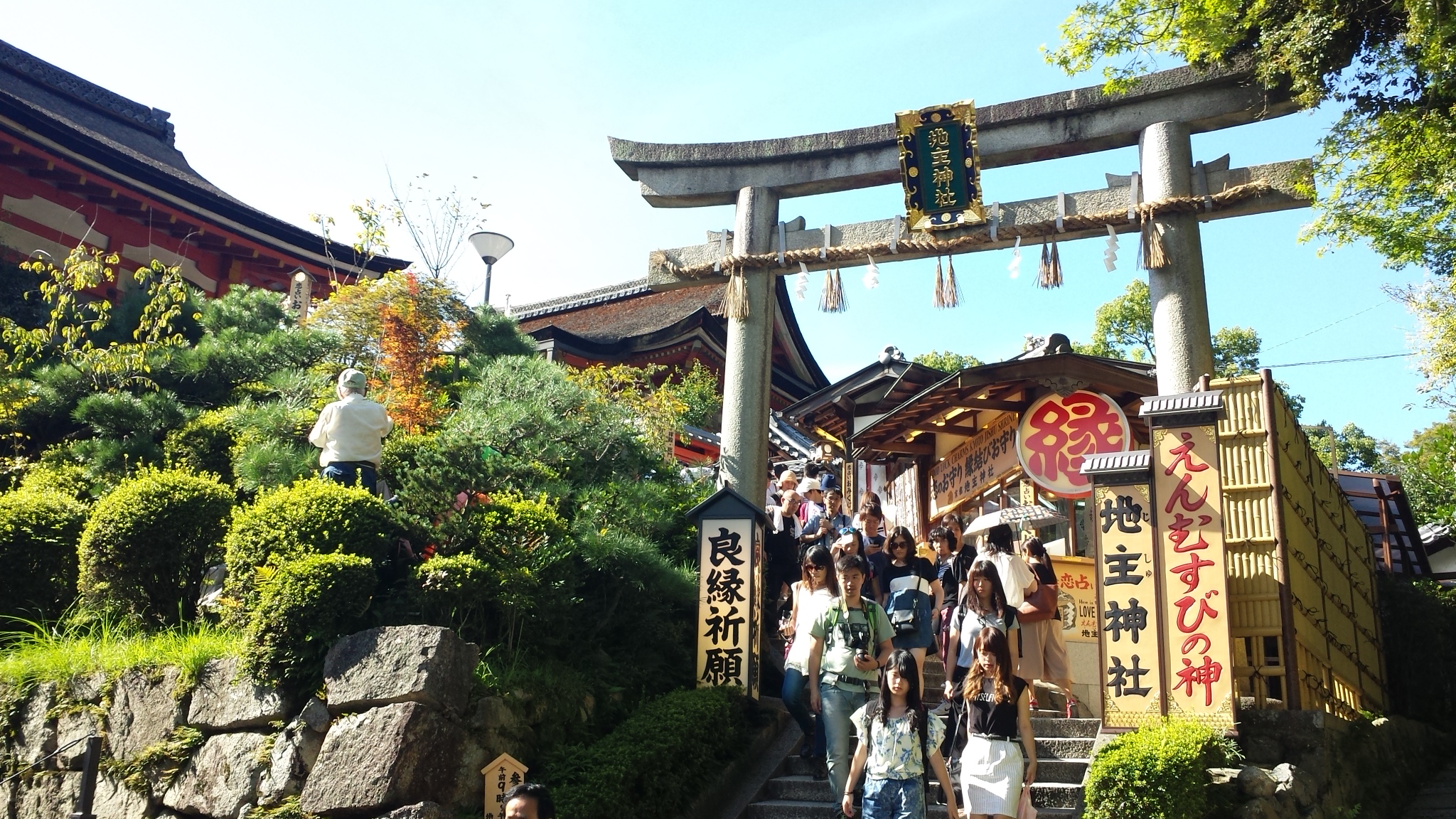
 On the fifth day of our program of the 2015 Kyoto Graduate Seminar on Economic Development and Sustainability Studies we went on a field trip excursion on food, agriculture and environment. The bus from Kyoto University brought us into the beautiful foresty hills just outside of Kyoto, where we visited Yamaguni Sakikage Center and Tagayashiuta Farm. The Yamaguni Sakikage Center makes, grows and develops various typical Japanese products such as the basic ingredient for the well known miso soup. The miso is made by fermented ecologically produced soybeans and said to have many health benefits to it. The center is a reaction to the increasing depopulation of Kyoto’s rural backyard, mainly populated by elderly part-time farmers, and dependency on overseas import of genetically modified soybeans. Continue reading
Category Archives: General
Call for Paper Abstracts – Sustainable and Just Rural Transitions: Connections and Complexities

 XIV World Congress of Rural Sociology
August 10-14, 2016, Toronto, Canada
Call for Paper Abstracts: Open May 19 – November 1, 2015
Sustainable and Just Rural Transitions: Connections and Complexities
Global environmental changes, shifting resource scarcities, deepening social inequalities, both innovation and crisis in urban centers, and new patterns of voluntary and involuntary migrations are among the conditions and dynamics now shaping the futures of rural places and people. Intensifying and intertwining forces of commodification, industrialization, neoliberalization and globalization over the last several decades have produced uneven and arguably illusory gains, given evidence of the increasingly precarious position of labour and livelihoods throughout the rural world and the widespread distribution of environmental harm and ecological degradation. Within these general patterns and trends, circumstances can vary greatly across rural contexts within and between continents.
Rigorous analysis of the interconnected challenges now experienced by rural people and places, as well as…
View original post 275 more words
On Becoming: MSc Thesis on Undocumented Migrants in the Netherlands
On Becoming: An Ethnographic Account on the Importance of Social Relationships for Undocumented Migrants in the Netherlands
This ethnographic and descriptive account argues for the importance of personal relationships for the ‘integration’ of undocumented migrants in the Netherlands from the perspective of those who ‘live it’. Following three personal stories we can see that social networks are crucial as they provide access to necessary resources and enable undocumented migrants to practically arrange their existence. But in addition, because these interactions are built on personal connections and allow for intimacy they enable a deeper sense of belonging. This indicates that, although undocumented migrants are formally excluded from any state services, they may in fact participate economically and socially due to their personal social network. As such, they enable a different perspective on the meaning and methods of integration. Because in a domain highly controlled by the state these three personal stories show that integration may also be seen as a trajectory of becoming; as a constant social process based on affective and personal relationships that take place in the social domain. Integration as such should not be seen as a procedural process as only described by the state but instead as an affective process in which people assemble socially. This enables a reconceptualization of integration and a re-envisioning of the role of the state in social life.
On Becoming is a MSc thesis written by Vera Ribbens and supervised by Alberto Arce (SDC) and Joost Jongerden (RSO). The thesis can be accessed by following this link: http://edepot.wur.nl/356124
Student Exchange with Kyoto University


The Kyoto University (KU), Japan and Wageningen University (WU) have agreed to a BSc and MSC Student Mobility Agreement. Under the agreement, it is possible for students of both universities to follow courses at the partner university. For students at WU any academic credit earned at the KU will be transferred back to WU, and vice versa. For students in Wageningen, the agreement gives the great opportunity to follow courses in comparative development studies, Asian studies, and transcultural studies in one of the oldest and most beautiful cities in Japan. Founded in 1897, Kyoto University belongs to the world’s top universities. Students at Kyoto University have the opportunity to follow courses at Wageningen University, a top university in the life sciences and development studies.
Students who are interested in studying at KU can contact Joost Jongerden for more info (joost.jongerden@wur.nl, Leeuwenborch room 3027).
Interreg project Rural Alliances: final report
 The Interreg project Rural Alliances brought together 12 partners from North West Europe to tackle the challenges of demographic change in rural areas. These challenges included: young people leaving rural towns and villages; the elderly becoming increasingly isolated & in need of social and medical care; shops, post offices, pubs, public toilets and telephone boxes closing; and increasingly difficult environments for setting up and running sustainable businesses.
The project tackled these challenges by actively bringing rural communities and businesses together, capitalising on their two distinct attributes: rural businesses with their “make it happen” attitudes, with the values of rural communities of loyalty, pride and self-esteem to create over 76 Rural Alliances. Together they have reshaped their areas to make them friendly, buzzing and vibrant, creating a more stable future for all their residents.
Ina Horlings from the Rural Sociology Group was a member of the Policy and Advisory Panel of Rural Alliances. The project developed handbooks on rural governance and financial engineering, inspiring videos, a skils plotting exercise, and various fact sheets and policy papers, all available on the website. For communities who want to know how vibrant their community is, a new tool was developed to measure rural vibrancy.The final report can be downloaded here.

