MSc Thesis | Receiving and Giving: How BPNT, a Government Food Aid Program, Facilitates Reciprocity

– By Rima Ayulestari, MSc Student

When I started my thesis on the dignity of recipients of governmental food aid in Indonesia, one question stayed with me: Is dignity always lost when one receives charitable aid?

Many studies have shown how recipients of food assistance often feel ashamed, as if relying on charity makes them less of a citizen. For instance, a study conducted in the Netherlands found that the food and social interaction at food banks evoke emotions, such as shame, gratitude, and anger, that reflect recipients’ experiences of social inequality (Van Der Horst et al., 2014). In the UK, stigma portraying food bank recipients as lazy, violent, and undisciplined has led to feelings of shame and embarrassment, often discouraging people from using aid unless they are in a deep crisis (Garthwaite, 2016). These findings made me wonder whether the same feelings of shame would appear in other cultural contexts and to what extent cultural values shape how people experience receiving aid.

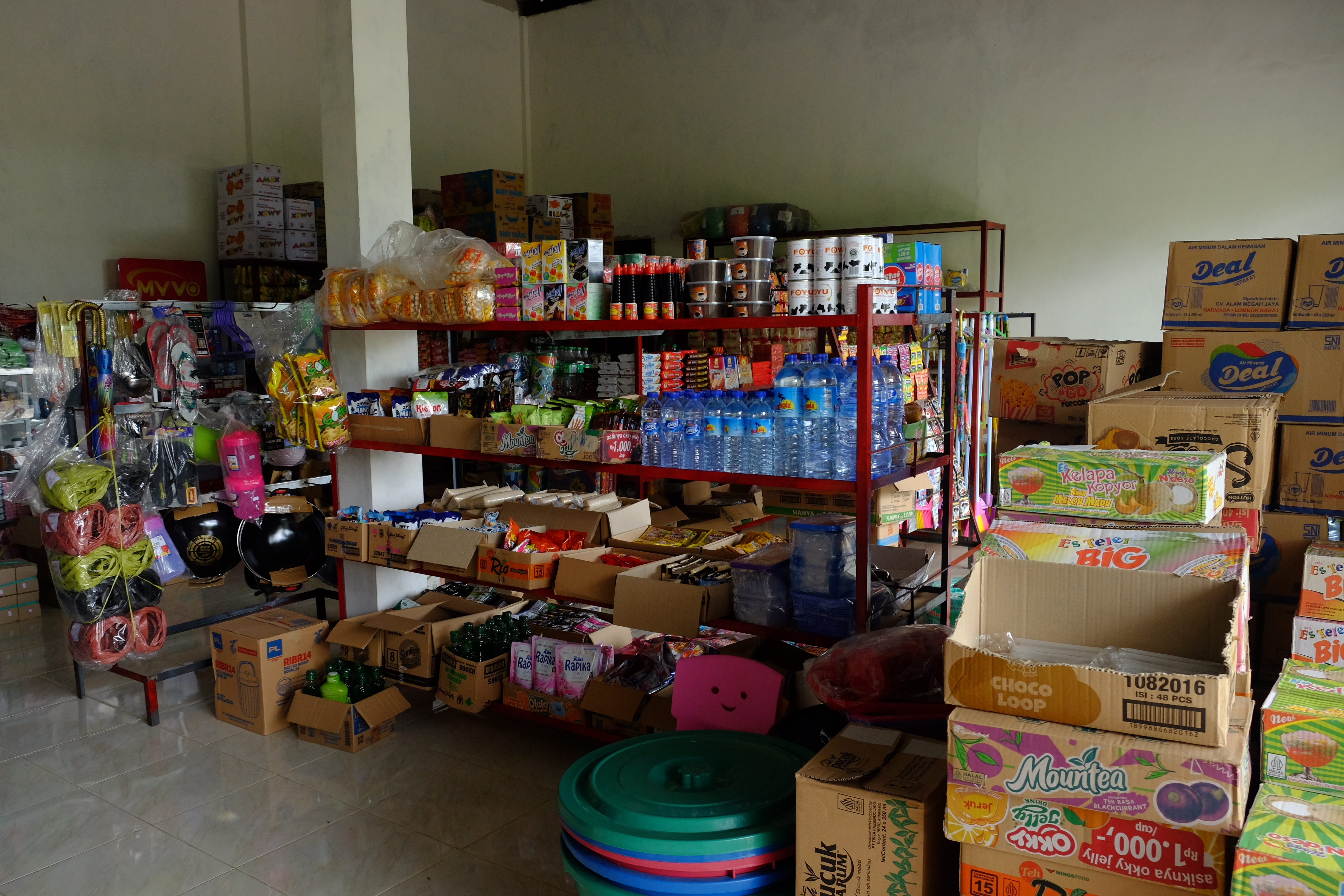
BPNT Distribution Point

This led me to conduct fieldwork in Indonesia to study how cultural values might shape food aid recipients’ sense of dignity, focusing on BPNT, the government’s Non-Cash Food Aid Program that helps low-income households access food. I conducted my fieldwork in the village where I grew up, hoping to understand how people live with, and perhaps redefine, the idea of receiving charitable aid.

During my time in the field, there was a situation that I will always remember. In one afternoon, children were playing hide and seek in a small field while some villagers returned from the rice paddies. A few gathered to chat as the sun began to set. That was when Aminah, one of my research participants, said to me:

“Wait a minute here, I want to return Mrs. Suri’s bowl first,” holding a bowl filled with a vegetable dish. I nodded, watching her walk away.

That simple scene has stayed with me. In the village, people still nurture this kind of practice of food sharing, and the BPNT program has helped recipients to participate even more actively. It quietly challenged everything I had read about shame and dependency. Many studies describe dependency as a condition marked by discomfort, where recipients feel inferior and try to stay unseen. In contrast, within the BPNT program, recipients appeared to be comfortable acknowledging their status, participating in food sharing, and offering others the aid they received. This openness challenged the idea that receiving charitable aid always involves shame and dependency. It shows that even while receiving aid, people were giving, sharing, and returning. Their relationships were defined not by what they lacked, but by what they could still offer.

Throughout my fieldwork, I often heard stories such as rice shared with a neighbour, oil passed to a cousin, or eggs given to a relative. My participants did not describe embarrassment about being food aid recipients. Instead, many expressed happiness and pride. In these moments, I began to see that dignity was not lost through receiving aid. In the Indonesian context, aid can actually enable dignity, because it allows people to reciprocate, to give something back, to participate in social life. The ability to share, however small, is what makes people feel involved in the community.

If you are interested in reading my thesis, you can find it here: https://edepot.wur.nl/691659

A glimpse of the village

Reference:

Garthwaite, K. (2016b). Stigma, shame and ‘people like us’: an ethnographic study of foodbank use in the UK. Journal of Poverty and Social Justice, 24(3), 277–289. https://doi.org/10.1332/175982716×14721954314922

Van Der Horst, H., Pascucci, S., & Bol, W. (2014). The “dark side” of food banks? Exploring emotional responses of food bank receivers in the Netherlands. British Food Journal, 116(9), 1506–1520. https://doi.org/10.1108/bfj-02-2014-0081

Constructing Ties: How Security Narratives Led to the Defunding of UAWC in Occupied Palestinian Territories

The thesis Unpacking the Dutch Ministry of Foreign Affairs’ Decision to Stop Funding UAWC examines how security narratives led the Netherlands to end its funding in 2022 for the Union of Agricultural Work Committees (UAWC). For many years, the Dutch Ministry of Foreign Affairs had supported this Palestinian NGO, which worked to improve the livelihoods of Palestinian farmers, particularly in Area C — the part of the illegally occupied Palestinian territories in the West Bank that remains under direct Israeli military control. The research into the reasons behind the decision to defund UAWC is based on documents obtained through the Dutch Transparency Act (Wet Open Overheid, or WOO), comprising more than 1,100 pages of written communications.

Continue reading

Agricultural Innovation and Social Sustainability: Gender, Social Reproduction and Labour

This PhD thesis by Daun Cheong explores why social progress towards gender equality in agrarian societies remains slow by analysing policies, academic research, and empirical evidence of farmers’ lived experiences and their interrelationships, paying particular attention to the relationship between agricultural innovation and gendered agrarian labour.

It examines the impacts of innovation that extend beyond the technical and material, investigating the reconstruction and renegotiation of gender and labour dynamics, which ultimately shape the lived experiences of subsistence farmers. By employing post-structuralist feminist approaches, including feminist critical discourse analysis, social reproduction, and capabilities framed as relational autonomy, the thesis demonstrates the gender discourses produced by policies and research, the new subjectivities they construct and frame, and the processes through which they shape reality. Empirically, the research adopted a mixed method approach including micro-focus group discussions, surveys, key informant interviews, and systematic document reviews focusing on women subsistence farmers in Nepal’s Terai region.

Continue reading

Video | Rural Sociology vs. Sociology of Development and Change Explained

Video | Are you a student interested in Rural Sociology (RSO) and wondering how it compares to Sociology of Development and Change (SDC) at Wageningen University & Research?

At Rural Sociology, we study societal change, inequality, and power with a focus on food, agriculture, and rural development. In this video, we explore how RSO and SDC approach these topics differently and what that means for your studies and research opportunities.

How does this relate to your interests? Our PhD researchers take you to Fruitproeverij Zandberg, an alternative agriculture site, to show how both groups conduct real-world research—helping you discover which themes and methods resonate with you.

Watch now to explore your options for courses, theses, or future research. Still unsure? Reach out to our education coordinator or drop by our hallway for a chat. A special thanks to Fruitproeverij Zandberg for allowing us to film at their inspiring location!

You are where you live

“Your house is more than the place where you happen to live. Student houses and residential communities often have their own character. How does that happen? And how does the house influence its residents? Judith Rommens (International Development Studies) wrote her thesis about the house she lived in for eight years – De Wilde Wereld – from the perspective of the building itself.

A student of International Development Studies wrote a thesis about the house where she lived, as well as her supervisor before her. Resource interviewed her to learn what inspired her to conduct this research and write a thesis not only about the house she lived in but also from the perspective of the house itself.

Read more here: https://www.resource-online.nl/index.php/2024/11/15/you-are-where-you-live/?lang=en