
By Marc Wegerif. PhD Candidate, Rural Sociology Group Wageningen University, contact: marc.wegerif@wur.nl.
 The grey concrete buildings and high rusty brown gate we were outside in a suburb of Lagos were not encouraging. Especially as we were looking for a farm, a fish farm, this did not look like any kind of farm. The yard beyond the gate with half finished buildings and concrete with rusty steel reinforcing sticking out was also not inspiring.
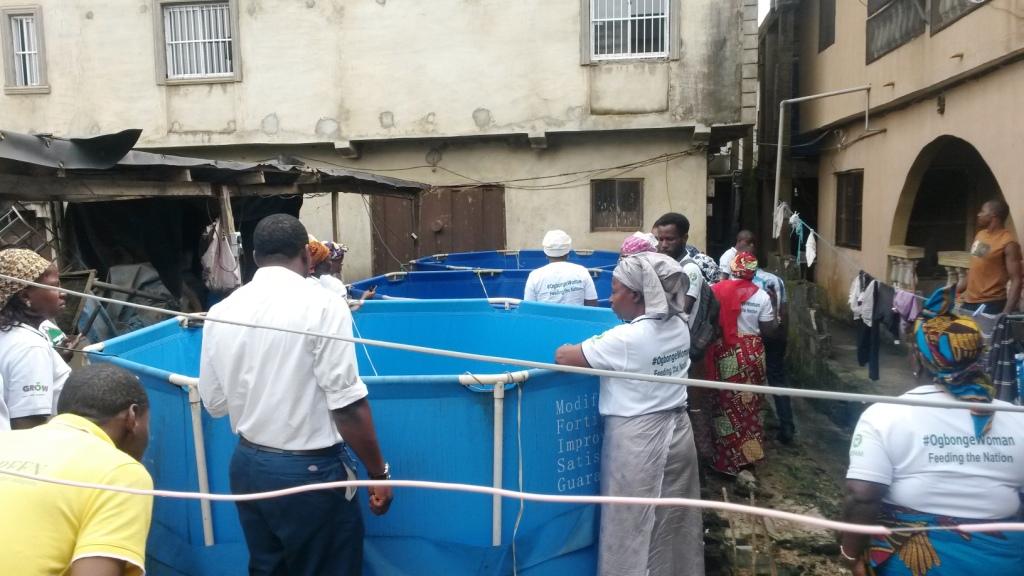 I was with a group of 12 amazing women farmers from all geographic zones in Nigeria, finalists in the Female Food Hero awards in Nigeria. This was an exposure visit for them as part of their training and build up to the announcement of the female food hero of the year (https://www.facebook.com/ffhnigeria?fref=ts).
 When we looked a bit closer, behind an apparently collapsing shed, we saw three blue plastic water tanks. We gravitated to wards them as they were the newest and most functional looking things in the yard. Looking inside the first blue tank we did at least see some fish and a young man appeared from one of the buildings and admitted that he worked there. He was not the most talkative person, but did start to show us around. When he threw some fish food into the murky water it suddenly came to life, hundreds of fish rushing to get to the food, water splashing even outside the tanks.
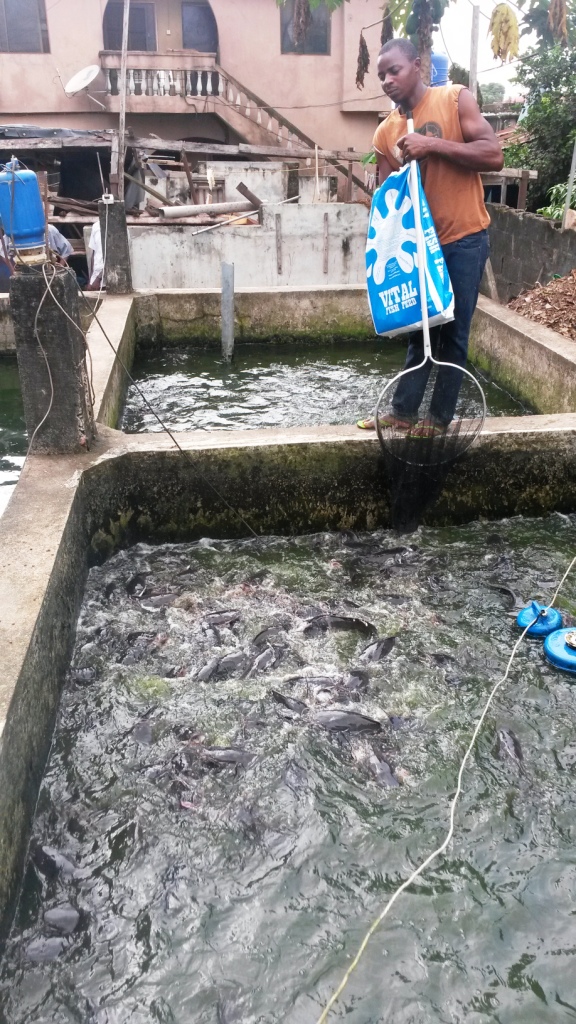
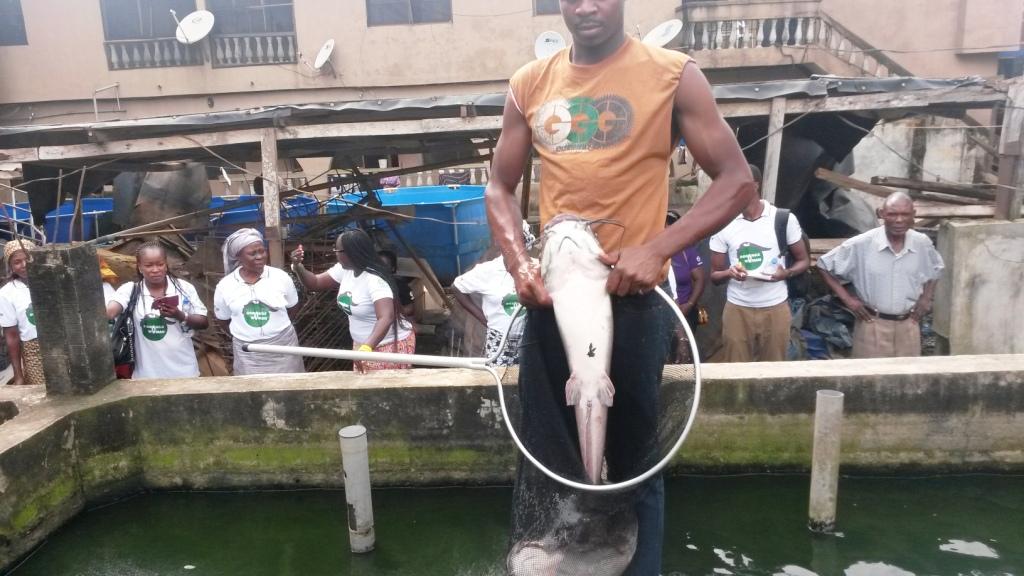 When he threw feed into the slimy green water, of what I had thought were empty concrete tanks, these also exploded into catfish filled life. I was at last convinced we were not wasting our time. With a net he pulled some fish out, including a catfish that was probably weighed about 5kgs. There were close to 9,000 fish in the outside tanks. Most of them catfish in the concrete tanks, but one of the plastic tanks had about 1,000 pangasius fish as well.
In an incomplete building in a corner of the yard we were shown breeding tanks and the thousands of juveniles/fingerlings in them. The breeding tanks on the upper floor of the building contained exotic fish for aquariums. These days this fish farm sells only on Saturdays and focuses on selling parent stock as they get a better return, thousands of dollars a week. We did also see a few fish in a smoker, for the fish farmers own consumption.
This urban fish farm is part of a rapid expansion of fish farming and related industries in Nigeria. It was good to see that the fish feed came from a Nigerian company. The government has got ambitious programmes to promote fish farming with an aim to replace the 1.9 million tons of fish imported each year, at a cost of over $700million, with local production (http://www.fmard.gov.ng/news_inside/96 ). The Ministry of Agriculture and Rural Development gave each of the 12 female food hero finalists start-up kits including fish for them to go into or expand their own fish farming.
The yard remained a mess, but the fish production did impress, and fish farming at quite large scale in small urban spaces clearly has potential that I had never realised before. We got back on our bus and into the Lagos traffic. Along the way we saw women selling smoked fish from buckets on their heads and we also had cat fish as part of our dinner.


