
By Peter R.W. Gerritsen, Department of Ecology and Natural Resources, South Coast University Centre, University of Guadalajara, Av. Independencia Nacional 151, 48900, Autlán, Jal., Mexico. Email: petergerritsen@cucsur.udg.mx
The local effects of global processes in the Mexican countryside are well documented; describing problems related to the quality of rural producers’ life, identity and traditional practices, as well as their resource management practices. Alike initiatives all over the world, also in western Mexico local actors joined forces to counter these problems and created ‘a place of their own’ in a globalised world, a place for their own wellbeing.
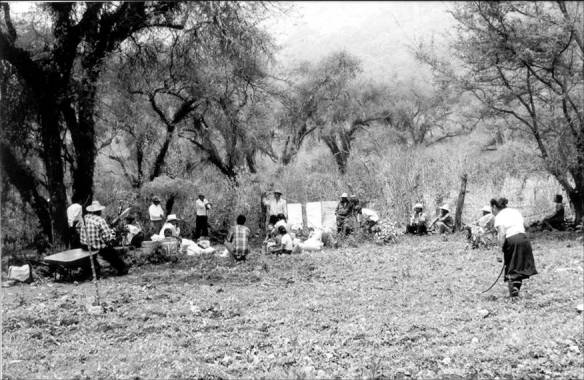
In the state of Jalisco, located in western Mexico, 20 groups of peasants and indigenous farmers, supported by professionals from non-governmental organizations and local universities, joined forces in 1999 and created the Red de Alternativas Sustentables Agropecuarias (RASA: the Network for Sustainable Agricultural Alternatives). As such, the RASA can be considered an umbrella organization for many local organized producer groups.
The RASA is also a social organization with characteristics of the so-called new social movements. New social movements have emerged since the late 1970s in the Mexican countryside, due to the problems created by global processes. The struggles that have led to their emergence originate from the demand to defend local structures and to remain control over the different domains of daily life. As such, these movements stress the need for endogenous development approaches. Closely related to the issue of specific life styles is the defense of the territory, being the place of local identity formation. It is also here, where innovative forms of resource management have emerged.
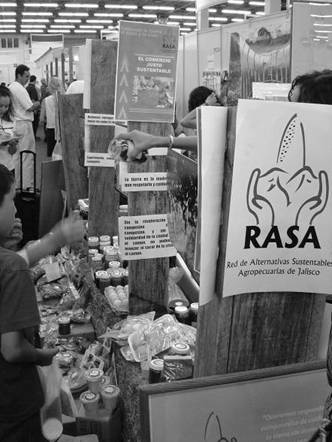 The RASA´s main objective is strengthening a development model that aims to mitigate the local impacts of global processes and that permits the transition towards sustainable local development. In practice, the RASA organizes workshops on organic agriculture and fair trade, and organizes farmer-to-farmer meetings for sharing experiences (including political discussions on the countryside). These activities take place in the rural and peri-urban areas of Jalisco. The RASA also designs and implements new fair trade-channels, mainly in the metropolitan area of the Jalisco state capital Guadalajara. As such, the RASA´s actions are also directed at urban consumers. Finally, articulation with other social movements is actively sought for. Thus, the RASA seeks to create new room for maneuver by establishing strategic alliances with different societal actors.
The creation of local transition paths towards sustainable development, such as promoted by the RASA, is related to the issues of agency and power. These, in turn, are (often) related to resistance and autonomy. Both elements are also recognizable in the RASA experience.
To start with, the RASA has created its own socio-political space in the Jalisco countryside, which has permitted to resist to and counter the dominant rural development model in Mexico and in Jalisco that follows global tendencies. However, the RASA´s efforts must be understood as heterogeneous in nature; not all groups are involved in fair trade, but only those with a production surplus. Moreover, some groups focus more on basic grain production, while others cultivate horticultural crops. Furthermore, the RASA emerged outside the realm of governmental intervention in rural areas. In fact, it has been systematically neglected by formal institutions, as the RASA has been considered a threat to the established formal – historically-determined – political spaces in the rural arenas. Moreover, within the rural communities the RASA-members are perceived as outsiders. In this sense, the RASA conceptual approach has permitted strengthening their self-consciousness and self-organization, as well as improving their position in their communities. It has also led to the dimension of autonomy in the sustainable development model, as designed and implemented by the RASA.




 Rural Sociology Wageningen University