
Earlier the Capita Selecta course ‘A global sense of place’ was announced here as optional course for master students in the 2nd period, starting Monday October 31, 2011. Seen the number of students attending the course, the earlier outlined weekly lectures and workshops are now replaced by a tutorial reading group that will meet once a week with the lecturers to discuss the literature of the week (as was listed in the earlier course outline). Those interested in joining the reading group can contact Joost Jongerden (joost.jongerden@wur.nl).
Tag Archives: place-based development
Capita Selecta ‘A global sense of place’
In the 2nd WU education period running, starting October 31, Rural Sociology will again offer the Capita Selecta course ‘A Global sense of place’ (course code RSO-50806). Course outline is available here.
The course offers a comparative perspective on place-based approaches in rural and spatial development. Next to lectures and readings on place-based development, five guest lecturers are invited to present a case and discuss the relevance of place-based development.
The interdisciplinary course is open to MSc-students from different Master programs that want to broaden their understanding of place-based approaches for sustainable development. The course aims to make students acquainted with different disciplinary approaches to study and understand the sustainable development of places, necessary for thoroughly understanding transformation processes, rural and territorial development.
From the course outline:
A global sense of place gives a critical overview of approaches and discourses on sustainable place-based development and is a constituent and contingent expression of three interrelated, interdependent and relational processes: economic, ecological and social-cultural. Places can then be seen as the constructs wherein the varied interactions between these three interconnected processes are expressed. We will focus on an action-perspectives based on ecological and cultural processes as a starting point, which can create autonomy and a repositioning of economic relations, a regrounding in ecological capital and self-efficacy in the cultural sphere.
We will focus on two main approaches: 1) places as arenas for negotiation, conflicting interests and power struggles, influenced by capital and global forces, where place-based struggles occur as multi-scale, network-oriented subaltern strategies of localization; 2) Spaces endowed with meaning and the constitution of identities, subjectivities and difference.
The themes for the six weeks and invited quest lecturers are:
Week 1 Analysis of place-based development (Dirk Roep)
This lecture introduces an analytical model for sustainable place-based development where place-shaping is a constituent and contingent expression of three interrelated, interdependent and relational processes: economic, ecological and social-cultural. Places can then be seen as the constructs wherein the varied interactions between these three interconnected processes are expressed. The lecture deals with the issue how place-based development based on an action-perspective takes practices based on ecological and cultural processes as a starting point, with the aim of creating autonomy and a repositioning of economic powers, a regrounding in ecological capita and self-efficacy in the cultural sphere. Continue reading
Human Values and Place-based Development – WASS seminar by dr Marilyn Hamilton
WASS Seminar Human Values and Place-based Development by dr Marilyn Hamilton: Tuesday August 30th, 13.30-15.30, Venue: Room C75, Leeuwenborch
How can human values be the starting point for community and regional development? How can capacities be built, leadership developed and community learning in multi-cultural places be enhanced? How can we create an integral framework for place-making and place-caring?
This seminar is a unique opportunity to hear about Dr. Hamilton’s work in cities and eco-regions and how she sees that sustainability for both are interlinked as a complex adaptive system. Marilyn Hamilton ‘meshworks’ or weaves people, purpose, priorities, profits, programs and processes to develop strategies for resilience. She facilitates sustainable development programs, develops practical tools and supports multi-stakeholder groups in transforming cities and eco-regions into a glocally resilient ‘meshwork’. She states that we need to balance subjective/ intersubjective capacities of people (‘the inner dimensions’) with objective/interobjective capacities (‘the outer dimensions’).
An example is Abbotsford, which had been headlined by the media as the ‘murder capital of Canada’. Here the youth perceived that community didn’t value them as a resource for community. Community workers wanted Abbotsford’s food-based agricultural sector to “cook up cultural harmony” by renewing opportunities for the youth linked to the food chain. The research project used an integral framework and meta-mapping (based on the theory of ‘spiral dynamics integral’) to identify differences and opportunities for the city and develop a monitor (the vital signs monitor) for strategic planning.
Dr. Marilyn Hamilton is Professor of Sustainable Community Development and Leadership Studies at Royal Roads University in Canada. She is a leader, coach, teacher, researcher and Founder of “Integral City Meshworks Inc” http://www.integralcity.com/, and Jury Member of Globe Sustainable City Awards. She wrote the book, “Integral City: Evolutionary Intelligences for the Human Hive”.
More information: Ina Horlings, Rural Sociology Group (lummina.horlings@wur.nl) or Anouk Brack, Education and Competence Studies (anouk.brack@wur.nl).
Guest lectures on ‘A global sense of place’
In the context of the new Capita Selecta course ‘A global sense of place’ several guest lectures are organized by the Rural Sociology Group. These lectures are open for all students, PhD’s and staff members. Coming up are the following events, please join! More information: lummina.horlings@wur.nl.
Monday May 23th (15.30-17.00, room C63): Will Day.
Will Day is a PhD candidate in Harvard University’s dual PhD program in Middle Eastern Studies and Social Anthropology. His main interests are in economic and political anthropology, Marxist thought and its legacy in anthropology, urbanization and urban political economies defined by displacement and dispossession, and political geography and political ecology. He has carried out two years of ethnographic fieldwork in Diyarbakir, Turkey (June 2007-June 2009). His dissertation is focused on urban livelihoods and cultural politics in Diyarbakir the wake of massive state counterinsurgency campaigns that led to the displacement and dispossession of, very likely, well over 1,000,000 rural Kurds. He is interested in how family histories of rural displacement and dispossession and subsequent urban realities of mass unemployment have resulting in the transformation of not only the practices of work, but also the meaning of productivity, work, and masculinity, wealth, value, masculinity, and, ultimately, political belonging and citizenship and the imagination of political futures in this space of rapid and radical political economic transformations.
Content of the lecture: Will Day will talk about urban development in a place in Turkey. He will focus on ”political economy and urban livelihoods in the city through the lens of Massey’s concepts about thinking spatially which might help to clarify what it means to think of a space (a city, a village, etc) as less a fixed, stable entity and more a temporary, contingent crystallization of dynamic processes that link localities to wider geographies and relations of political community, economic life, and cultural imagination”.
Join the Rural Sociology excursion place-based development to Lent-Nijmegen!
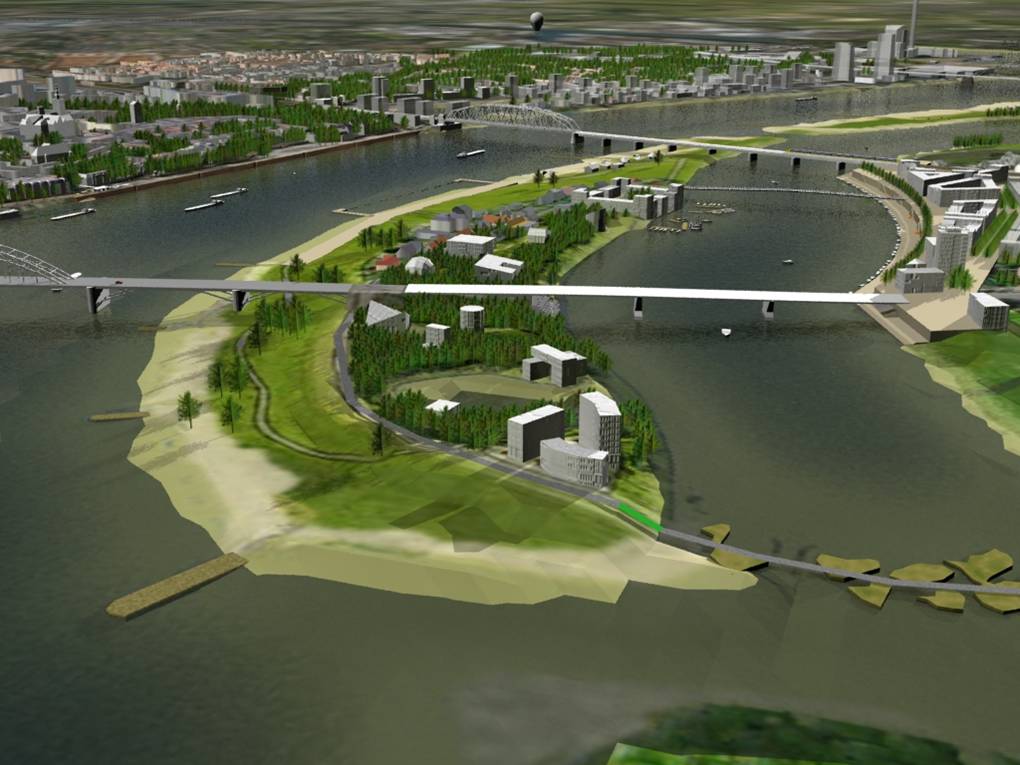
At Wednesday morning 23th of March, an excursion will be organized to Lent/Nijmegen on place-based development. This excursion is not only for students who follow the course Understanding Rural Development, but also open for other students. Karolien Andela of the city of Nijmegen will inform us about recent projects such as: ‘Space for the river Waal’ to adapt to climate change), the shift of the river dike which will create a new island and space for recreation and events, ‘the Waal jump’ (new urbanization in Lent), the ‘Waal front’ (reconstruction of a business area) and landscape development.
If you are interested, please sign in by sending a mail to lummina.horlings@wur.nl before March 16th.
 Rural Sociology Wageningen University