Sustainable Food Planning Conference

De KemphaanIn her recent blog, Petra already reflected on the Sustainable Food Planning Conference that was held in Almere (at De Kemphaan) on 9 and 10 October. My personal impression is that it was a very successful kick-off of the AESOP thematic group on sustainable food planning. In addition to lots of interesting presentations, there were interesting discussions and the strong will and desire among the participants to continue collaboration. One of the ways to continue collaboration is by means of an annual conference. Another is to create an electronic platform to facilitate exchange of experiences, examples, articles, reports, etc… Soon we will launch such a platform by means of a weblog similar to this one. For the time being, this post provides the links to the dowloads of the presentations and the discussion.

De Kemphaan, 9 and 10 October 2009, Almere, The Netherlands

The program
The participants
Presentation 1 Mr. Henk Mulder Including food and agriculture in urban planning: The Almere approach
Presentation 2 Prof. Han Wiskerke An integrated and territorial perspective on food studies, policy and planning
Presentation 3 Mr. Henk de Zeeuw Feeding the city: Practices, challenges and lessons from developing countries
Presentation 4 Prof. Gianluca Brunori Reconnecting consumers and producers: Dynamics, diversity and potentials of alternative food networks
Presentation 5 Dr Roberta Sonnino Urban food and public spaces: Planning for security and sustainability
Presentation 6 Dr Marin Caraher Food and the city: The links between food, public health and sustainable urban development
Presentation 7 Mrs. Lenie Dwarshuis Food and agriculture in Europe’s peri-urban regions
Presentation 8 Dr. Nevin Cohen The practice of food planning in New York City
Presentation 9 Mr. Bart Pijnenburg, MSc Amsterdam’s food strategy (“Proeftuin Amsterdam”)
Presentation 10 Prof. Jerry Kaufman Including food in planning studies and planning practices: Experiences from the USA
Report of the discussion

Planning sustainable food systems

Planners are discovering food. Until recently, planners left food to the market. But times are changing and so are attitudes towards planning for food. This was the general notion during the first European Sustainable Food Planning conference, held last friday and saturday in Almere (see blog for program).

There is less timidity to interfere with what until recently was seen as the private sphere of consumer choice. Neoliberalism has lost its credibility and the myth of consumer choice is weakening. Food becomes part of the urban public agenda again. Jerry Kaufman, professor emeritus in Urban and Regional Planning at University of Wisconsin showed how food slowly gained the interest of the US planning community over the last ten years with many young people interested nowadays.

R0020679

Food is back in the public realm for two reasons. First the recognition that access to healthy food is a citizen right. People with low income eat less well, pay more and have less access to healthy foods. Planners have a task in changing obesogenic environments. We were reminded that the first health policies 150 years ago started with food.

And second, food is related to a large number of domains which all are facing food related problems. Transport congestion through consumer shopping and supply delivery; health and well being of a rapidly increasing obesogenic population; environmental problems related to food miles, food scares and pollution of industrial agriculture and so on.

The sustainability agenda which is now penetrating to all sectors of the economy demands a holistic view. We saw examples of how city departments can not work in isolation to this problem in a meaningful way. We need cross-department and cross-disciplinary working to bring planning, health, transport, supply, production and consumption knowledge together. “We spent 20 years defining sustainability, we now can design it”.


Food and urban planning

MorgenTomorrowLast week the municipality of Amsterdam, together with the Netherlands Institute for Planning & Housing and the Ministry of  Housing, Spatial Planning & the Environment, organized and hosted the International Urban Planning Conference entitled MorgenTomorrow. The two-day conference was a combination of plenary sessions in the morning and parallel workshops in the afternoon. I had the honour and pleasure of convening a workshop entitled ‘Food and the City’. Although the food system is, as Pothukuchi and Kaufman (2000) rightfully state in their article in the Journal of the American Planning Association, a stranger to the field of urban planning it was good to see that the conference organizers had put food very prominently on the conference agenda. Not only by means of the workshop I convened but also by means of keynote lectures in the plenary sessions by LaDonna Redmond and Tim Lang. Both are extremely critical about the prevailing food system.

LaDonna is a community activist as well as founder and CEO the Institute for Community Resource Development (ICRD) in Chicago (Illinois). The ICRD’s mission is to rebuild the local food system by building grocery stores that bring access to sustainable products to urban communities of color, organizing farmers markets, converting vacant lots to urban farm sites and distributing local grown produce to restaurants. I was unable to attend LaDonna Redmond’s keynote, but she participated in my workshop and reflected on the different presentations.

Tim is Professor of Food Policy at the Centre for Food Policy of City University London. He has authored and co-authored many articles and books about food policy, especially focussing on the relation between food, health, social justice and the environment. His current work is about ‘omni-standards for sustainable diets’. I attended his keynote lecture and what I very much appreciated about his vision is that, despite the food system being a major contributor to climate change, devising sustainable food systems is not simply a matter of creating ‘climate neutral’ food systems. It will only be truely sustainable if it is able to meet a whole range of sustainability standards (a set of omni-standards as he calls them) in which social and health aspects are as important as economic and environmental ones. What struck me most in his presentation, and which will undoubtedly become the new issue in food debates, is the water footprint of the conventional food system.

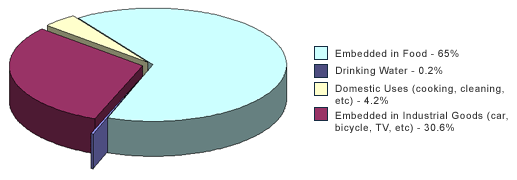
Around 65% of all fresh water is used for food production and with growing water scarcity and an increase in water-stressed countries, water use is likely to become the main threat for food production. The table below, of which Tim displayed a part in his presentation, is rather shocking. It shows how much water is needed to produce one portion of a whole range of mainly food products and drinks. It surely makes one (at least is does make me) aware of the urgent need for change.

Portion Litres Portion Litres Portion Litres
Pint of beer, 568ml 170 Cup of coffee, 125ml 140 Glass of orange juice, 200ml 170
Glass of milk, 200ml 200 Cup of instant coffee, 125ml 80 Glass of apple juice, 200ml 190
Cup of tea, 250ml 35 Glass of wine, 125ml 120 Orange, 100g 50
Slice of bread, 30g 135 Bread with cheese, 30g + 10g 90 Bag of potato crisps, 200g 185
Egg, 40g 135 Tomato, 70g 13 Hamburger, 150g 2400
Potato, 100g 25 Apple, 100g 70 Bovine leather shoes 8000
Sheet of A4, 80 g/m² 10 Cotton tee-shirt, medium 500g 4100 Microchip, 2g 32
Source: http://www.igd.com/index.asp?id=1&fid=1&sid=5&tid=48&cid=326

Sustainable food planning conference – reminder & update

As mentioned in my blog of 28 August 2009 the Association of European Schools of Planning (AESOP), the International Studygroup on Multiple Use of Land (ISOMUL) and the Rural Sociology Group are hosting the first European Sustainable Food Planning conference. The conference will take place at De Kemphaan in the city of Almere in the Netherlands on 9 and 10 October 2009. It is still possible to register for this conference. If you are interested to participate in this conference, please apply by e-mail to corine.diepeveen@wur.nl. Costs for participation are € 100,- (incl. drinks, lunches and diner).

City estate De Kemphaan

Since the first announcement a couple of weeks ago, the conference programme has changed slightly. Below you can find the most recent version of the programme:

Day 1 – Generating ideas, exchanging experiences and comparing perspectives

09.00 – 09.30

Welcome and coffee/tea

09.30 – 09.45 Food and planning: an introduction to the conference Prof. Kevin Morgan (Professor of Governance & Development, Cardiff University, UK)
09.45 – 10.00 Including food and agriculture in urban planning: the Almere approach Mr. Henk Mulder (director urban planning Almere)
10.00 – 11.00

Session 1: Setting the scene

10.00 – 10.30 An integrated and territorial perspective on food studies, policy and planning Prof. Han Wiskerke (Chair of Rural Sociology – Wageningen University, Netherlands)
10.30 – 11.00 Feeding the city: practices, challenges and lessons from developing countries Mr. Henk de Zeeuw (director of the RUAF Foundation)
11.00 – 11.30

Coffee/tea break

11.30 – 13.00

Session 2: Theoretical perspectives and academic issues

11.30 – 12.00 Reconnecting consumers and producers:  dynamics, diversity and potentials of alternative food networks Prof. Gianluca Brunori (Professor of Agriculture Economics – Pisa University, Italy)
12.00 – 12.30 Urban food and public spaces: planning for security and sustainability Dr. Roberta Sonnino (Lecturer in Environmental Planning – Cardiff University, UK)
12.30 – 13.00 Food and the city: the links between food, public health and sustainable urban development Dr. Martin Caraher (Reader in Food & Health Policies – City University London, UK)
13.00 – 14.00

Lunch break

14.00 – 15.30

Session 3: Food planning practices and policies

14.00 – 14.30 Food and agriculture in Europe’s peri-urban regions Mrs. Dwarshuis (President of Peri-Urban Regions Platform Europe – PURPLE)  
14.30 – 14.50 The practice of food planning in New York city Dr. Nevin Cohen (Associate Professor in Urban Studies – New School for Liberal Arts, New York)
14.50 – 15.10 The practice of food planning in New York state Mr. Bob Lewis (senior planner New York State)
15.10 – 15.30 Amsterdam’s food strategy (“Proeftuin Amsterdam”) Mr. Bart Pijnenburg MSc (Programme manager Proeftuin Amsterdam)
15.30 – 16.00

Coffee/tea break

16.00 – 18.00 Excursion to City Farm Almere Tineke van den Berg (urban farmer)
19.30 – 22.30

Diner (Restaurant De Kemphaan – Almere)

Day 2 – Towards an agenda for sustainable food planning

09.00 – 09.30

Welcome and coffee/tea

09.30 – 10.00 Including food in planning studies and planning practices: experiences from the USA Prof. Jerry Kaufman (Professor Emeritus of Urban and Regional Planning – University of Wisconsin-Madison, USA)
10.00 – 10.45 Issues, topics, themes for a sustainable food planning agenda (plenary inventory) Moderated by Prof. Arnold van der Valk (Chair of Land Use Planning – Wageningen University, NL)
10.45 – 11.15

Coffee/tea break

11.15 – 12.45 Developing the building blocks for a sustainable food planning agenda (parallel working sessions)
12.45 – 14.00

Lunch break

14.00 – 14.45 Plenary presentation of and discussion about results of parallel working sessions Moderated by Prof. Terry Marsden (Professor of Environmental Planning – Cardiff University, UK)
14.45 – 15.00 Sustainable food planning in Europe: concluding reflection and look ahead Prof. Kevin Morgan (Professor of Governance & Development, Cardiff University, UK)
15.00

Coffee & tea / end of conference


Sustainable food planning conference

AESOP logoOn 9 and 10 October 2009 the first Sustainable Food Planning Conference will be held. This conference is an initiative of the AESOP (Association of European Schools of Planning), the ISOMUL (International Studygroup On Multiple Use of Land) and the Rural Sociology Group of Wageningen University.

The sustainable food planning conference is organized to examine the role of food in urban and regional planning. Although political, societal and academic interests in food and the city are rapidly increasing, food largely remains a stranger to the field of urban and regional planning, spatial planning policies and planning studies. Recently the American Planning Association launched its Policy Guide on Community and Regional Food Planning. Inspired by this policy guide, this conference seeks to explore ways in which food can and should be incorporated in planning practices, policies and research and develop strategies for enhancing sustainable food planning in Europe. The character of the conference is primarily agenda-setting by establishing a network of planning practitioners, policymakers and agrifood and planning scholars in Europe and beyond.

.

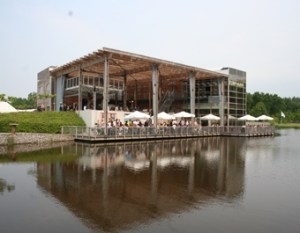
Restaurant and meeting centre De Kemphaan (source: http://www.restaurantdekemphaan.nl/content/ons_bedrijf)

Restaurant and meeting centre De Kemphaan (source: http://www.restaurantdekemphaan.nl/content/ons_bedrijf)

The conference will take place at De Kemphaan in the city of Almere in the Netherlands. If you are interested to participate in this conference, please apply by e-mail to corine.diepeveen@wur.nl. Costs for participation are € 100,- (incl. drinks, lunches and diner). The number of participants is limited to 50 persons. For more information have a look at the conference programme below:


Day 1 – Generating ideas, exchanging experiences and comparing perspectives

09.00 – 09.30

Welcome and coffee/tea

09.30 – 09.45 Food and planning: an introduction to the conference Prof. Kevin Morgan (Professor of Governance & Development, Cardiff University, UK)
09.45 – 10.00 Including food and agriculture in urban planning: the Almere approach Mr. Henk Mulder (Almere municipality – director urban development and planning) 
10.00 – 10.30 An integrated and territorial perspective on food studies, policy and planning Prof. Han Wiskerke (Chair of Rural Sociology – Wageningen University, NL)
10.30 – 11.00

Coffee/tea break

11.00 – 12.00

Session 1: Agri-food policy issues

11.00 – 11.30 Food and agriculture in Europe’s peri-urban regions Mrs. Dwarshuis (President of Peri-Urban Regions Platform Europe – PURPLE)
11.30 – 12.00 Feeding the city: practices, challenges and lessons from developing countries Mr. Henk de Zeeuw (director RUAF foundation)
12.00 – 13.00

Session 2: Urban food planning practices

12.00 – 12.20 The practice of food planning in New York City Dr. Nevin Cohen (Associate Professor in Urban Studies at the New School for Liberal Arts, New York
12.20 – 12.40 The practice of food planning in New York State Mr. Bob Lewis (Senior Planner New York State)
12.40 – 13.00 Amsterdam’s food strategy (“Proeftuin Amsterdam) Mr. Bart Pijnenburg(Programme manager Proeftuin Amsterdam)
13.00 – 14.00

Lunch break

14.00 – 15.30

Session 3: Theoretical perspectives and academic issues

14.00 – 14.30 Reconnecting consumers and producers:  dynamics, diversity and potentials of alternative food networks Prof. Gianluca Brunori (Professor of Agriculture Economics – Pisa University, Italy)
14.30 – 15.00 Urban Food and Public Spaces: Planning for Security and Sustainability Dr. Roberta Sonnino (Lecturer in Environmental Planning – Cardiff University, UK)
15.00 – 15.30 Food and the city: the links between food, public health and sustainable urban development Dr. Martin Caraher (Reader in Food & Health Policies, City University London, UK)
15.30 – 16.00

Coffee/tea break

16.00 – 18.00 Excursion to City Farm Almere Tineke van den Berg (urban farmer)
19.30 – 22.30

Drinks & Diner

Day 2 – Towards an agenda for sustainable food planning

09.00 – 09.30

Welcome and coffee/tea

09.30 – 10.00 Including food in planning studies and planning practices: experiences from the USA Prof. Jerry Kaufman (Professor Emeritus of Urban and Regional Planning – University of Wisconsin-Madison, USA)
10.00 – 10.45 Issues, topics, themes for a sustainable food planning agenda (plenary inventory) Moderated by Prof. Arnold van der Valk (Professor of Land Use Planning – Wageningen University, The Netherlands)
10.45 – 11.15

Coffee/tea break

11.15 – 12.45 Developing the building blocks for a sustainable food planning agenda (parallel working sessions)
12.45 – 14.00

Lunch break

14.00 – 14.45 Plenary presentation of and discussion about results of parallel working sessions Moderated by Prof. Terry Marsden (Professor of Environmental Policy – Cardiff University, UK)
14.45 – 15.00 Sustainable food planning in Europe: concluding reflection and look ahead Prof. Kevin Morgan (Professor of Governance & Development, Cardiff University, UK)
15.00

Coffee & tea / end of conference