Onderwijsboerderij scriptiemogelijkheid

Voor een deel van de leerlingen in het primair en voortgezet onderwijs werkt een schoolse omgeving soms (tijdelijk) contraproductief. Het gaat vooral om leerlingen voor wie de structuur en aanpak van een school te ingewikkeld is, kinderen die moeite hebben met sociale relaties en het in stand houden van vriendschappen, kinderen met hechtingsproblemen, kinderen die door een beperking niet uren achtereen op een stoel kunnen zitten. Kinderen dus die het moeilijk hebben met zichzelf en hun omgeving en daarom op een gegeven ogenblik niet meer naar school willen, kunnen, mogen, of durven. Voor deze groep is vaak geen passend onderwijs in de regio beschikbaar, en deze leerlingen komen vaak noodgedwongen thuis te zitten. Dit kan leiden tot moeilijk gedrag, een negatief zelfbeeld en een toekomst zonder perspectief.

Verschillende zorgboeren bieden deze leerlingen onderwijs op de boerderij. Een groep van ongeveer 20 van deze zorgboeren heeft een netwerk gevormd om ervaringen en knelpunten te delen. Problemen zijn bijvoorbeeld gebrek aan uitwisseling en onderbouwing van kennis, knellende regelgeving en de kloof tussen zorgboerderijen en scholen. Bovendien is geen goed zicht op het aantal leerlingen die onderwijs volgen op de boerderij (en hun specifieke problemen), en de ervaringen van boeren, leerlingen, ouders en scholen.

Om deze vragen te beantwoorden en uiteindelijk te komen tot een sterke, geaccepteerde en professionele onderwijssector, is de wetenschapswinkel van Wageningen UR een onderzoeksproject gestart. Binnen dit project zijn wij op zoek naar één of meerdere MSc studenten die voor een scriptie of stage onderzoek willen doen op verschillende gebieden zoals:

  • Het in kaart brengen van de huidige situatie (omvang en inhoud van onderwijs op de boerderij, type leerling, samenwerkingsvormen tussen boerderij en school, financieringsvormen), alsmede ervaringen van boeren, leerlingen, ouders en onderwijspartners;
  • Advies geven over mogelijke strategieën voor het versterken van de sector (belangrijkste knelpunten voor onderwijsboeren in kaart brengen, best practices beschrijven);
  • Literatuuronderzoek naar de voor- en nadelen van de boerderij als onderwijslocatie.

Een specifieke opdracht kan samen met de student worden opgesteld. Studenten zullen onderdeel worden van het wetenschapswinkelproject (stages worden begeleid door Jan Hassink van Wageningen Plant Research). Voor meer informatie: esther.veen@wur.nl


Foodscapes of the sharing economy

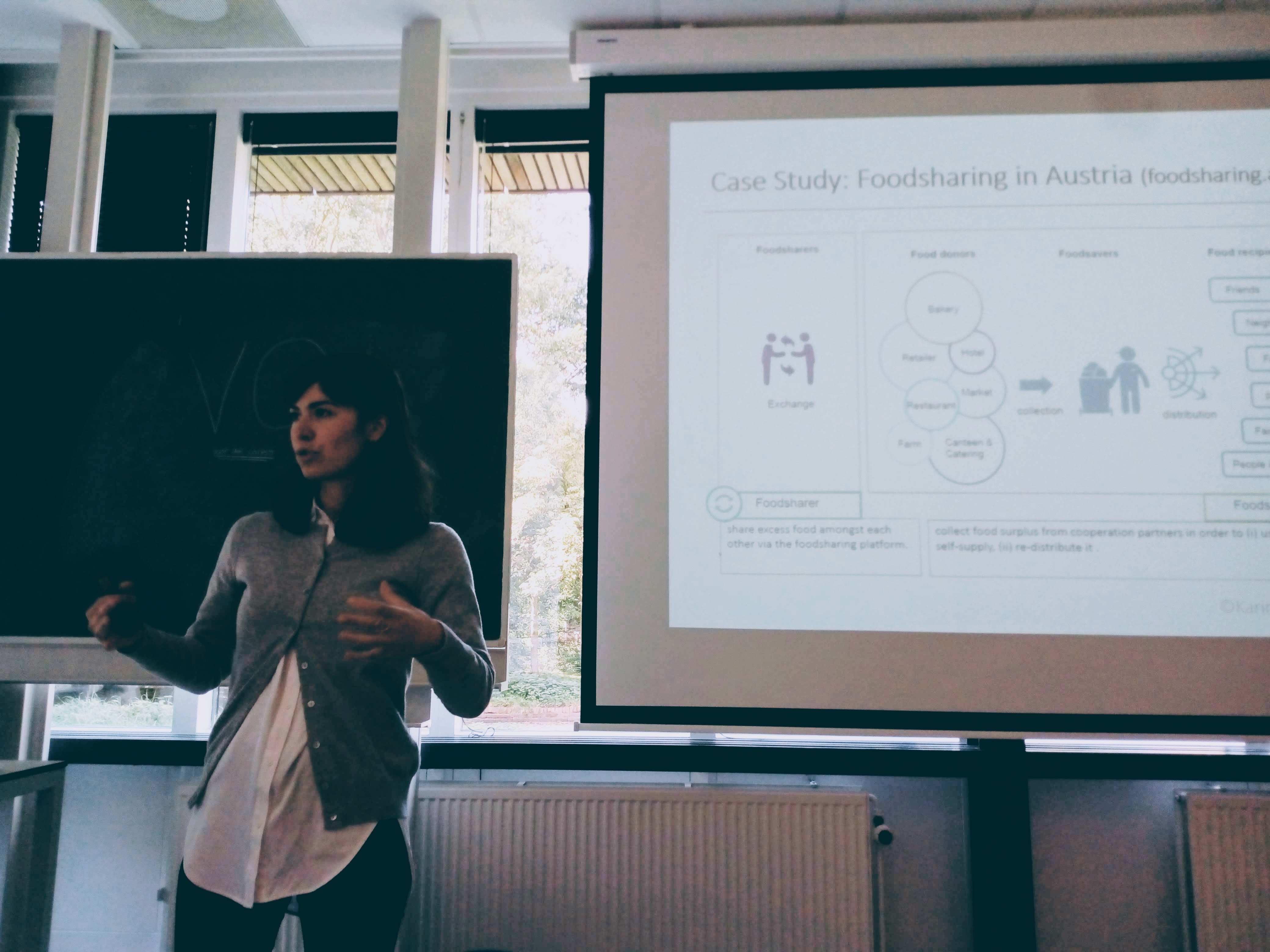
On the 25th of September, the Foodscapes cluster of the Centre for Space, Place and Society (CSPS) organised a critical food studies work shop on the food sharing economy. We invited Karin Dobernig from Vienna to talk about the research that she conducted with her colleague Karin Schanes.

Karin gave a very interesting and inspiring talk on “Collective Action Around Food Waste: Investigating the determinants and characteristics of participation in food sharing initiatives”.

After the talk there was plenty of time to discuss food sharing in more detail. We tried to link the concept of foodscape to that of food sharing, and raised and discussed various questions. For instance, to what extent is food sharing an urban phenomenon? When sharing food, who is liable and should food savers and food sharers accept responsibility? How is this organised in different countries? Also, to what extent does food sharing cross the binary opposition between consumers and producers? Who are the recipients of food sharing, and should they always be in need? There were no clear answers to these questions that can easily be reproduced here, but the discussion was insightful.

This was the first activity organised by the Foodscapes cluster. We much enjoyed the presentation and the discussions. Hoping for more inspiring meetings in the future!

Critical food studies workshop and seminar series

The Foodscapes cluster of the Centre for Space, Place and Society (CSPS) is pleased to announce the following workshop:

Foodscapes of the sharing economy

25 September 2018 – 13.45-17.00

Room C 62 in de Leeuwenborch (Hollandseweg 1, Wageningen)

During the recent decade, new modes of food provisioning have emerged under the guise of the sharing economy. A dominant picture of initiatives in the sharing economy is associated with platform capitalism and the gig economy. Yet, a variety of initiatives are using the tools of the sharing economy to promote sustainable consumption, thereby reducing our dependence on commercial activity and reducing the use and reliance on material possessions. This seminar will scrutinize the interconnections of the sharing economy and food, people and places. We are interested in food in the sharing economy, how exchanges are performed, by whom, and to what end. We want to provide an embodied understanding of food and place in the sharing economy. We are interested in issues of social, spatial and environmental justice, health and well-being in the sharing economy.

Program

13.45 – 14.00   Walking in

14.00 – 14.15   Introduction

14.15 – 15.00   Karin Dobernig and Karin Schanes: Collective Action Around Food Waste: Investigating the determinants and characteristics of participation in food sharing initiatives

15.00 – 15.15   Discussion

15.15 – 15.30   Coffee break

15.30-16.30     Roundtable discussion

With Karin Dobernig, Karin Schanes, Esther Veen, Oona Morrow, Stefan Wahlen

16.30-17.00     Drinks

About the foodscapes cluster:

The Foodscapes cluster brings together a variety of academic researchers and PhD candidates at Wageningen University, who are engaged in the multi-disciplinary domain of critical food studies.


Thesis opportunity: food banks as contested spaces for identity struggles

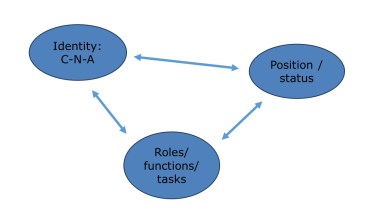
In general a person’s identity has cognitive-descriptive (C), normative-ethical (N) and affective-emotional qualities (A). Besides a person’s identity, a person can find him or herself to be in a certain position or have a certain status, and a person can have certain (un)officially assigned roles, tasks and functions. See the figure below. These three elements can ‘agree’, or be ‘in line’ with each other, but they can also diverge from each other, or be ‘in conflict’.

Plaatje fb identity

These distinctions are to a certain extent superficial: they are analytical distinctions. In that capacity they can help us discover different elements and qualities of peoples’ experiences. Moreover, a person’s identity is not once and for all a ‘given’. Identities develop and keep doing so in interaction with other people: first with primary caretakers and later with a host of significant others who also have an identity, certain roles and functions, a certain position or status, and corresponding expectations towards others.

In this MSc thesis proposal this interaction is taken to be located at the food bank where volunteers distribute food parcels among recipients. Volunteers and recipients have short or longer conversations about the food parcels and/or the reasons for being there at the food bank. In scientific literature on food banks it is an almost unquestioned assumption that the food bank is a charity organisation, very often inspired by religious ideas or values of love and kindness for fellow human beings in need, and an attitude of gratefulness and humility on the side of the recipient. A sociological understanding of charity would indeed point at these expected roles, functions and attitudes that the concept of charity implies. The general research question of this proposal is: To what extent is this general, unquestioned assumption supported by evidence?

Sub-questions are:

  • What are feelings and emotions towards, and what are normative opinions of volunteers and recipients about the existence of food banks and their activities?
  • To what extent do recipients experience discrepancies between the status in which they, (in)voluntarily, find themselves, and the way in which they see themselves or would like to see themselves? (In other words: to what extent do we see conflicts between the three elements in the figure above?)

Proposed research methods are participatory observations, interviews with volunteers and recipients, identity tests and conversation analysis. Starting literature is available.

The thesis will be supervised by Leon Pijnenburg (Philosophy) and Esther Veen (Rural Sociology). Interested? Contact Jessica de Koning: jessica.dekoning@wur.nl.

Knowledge clips reading for the social sciences

Students often ask us how they should read a scientific paper or book chapter, and what they should learn or remember from them. They may struggle with what they see to be too many readings, or express that they have difficulty understanding the main message of the articles we assign for our lectures.

In order to help students make the process of ‘reading for the social sciences’ more efficient and more targeted, Jessica Duncan and me (Esther Veen) designed four knowledge clips to pass on little tips.

The first one discusses the structure most sociological papers follow. In the second we give suggestions on how to read effectively. The third is on the different strategies you may use when you read for different purposes, and the last gives tips and tricks on how to keep track of your reading.

You can watch the clips here. You are welcom to send your feedback to jessica.duncan@wur.nl or esther.veen@wur.nl.