
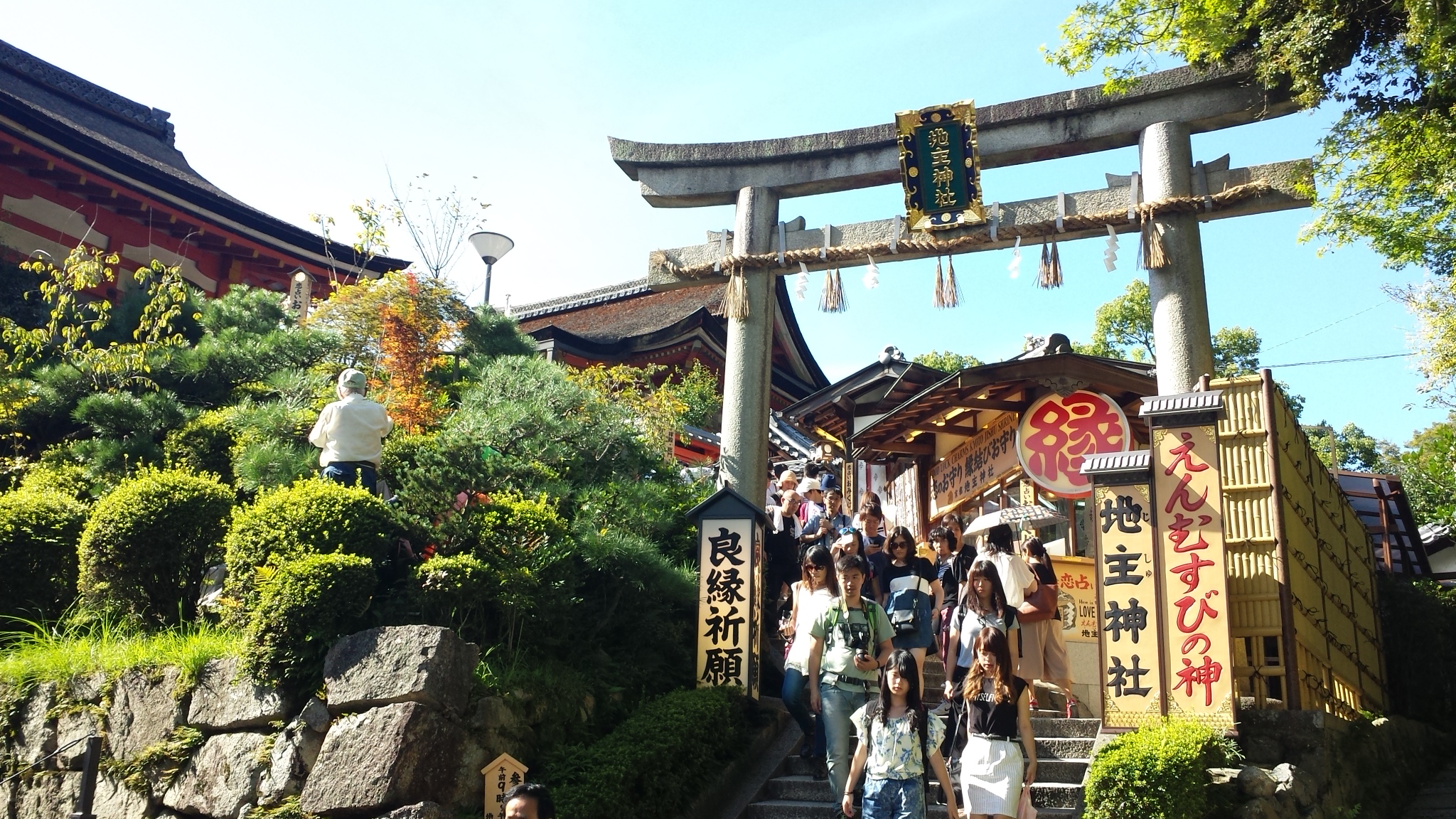
 On the fifth day of our program of the 2015 Kyoto Graduate Seminar on Economic Development and Sustainability Studies we went on a field trip excursion on food, agriculture and environment. The bus from Kyoto University brought us into the beautiful foresty hills just outside of Kyoto, where we visited Yamaguni Sakikage Center and Tagayashiuta Farm. The Yamaguni Sakikage Center makes, grows and develops various typical Japanese products such as the basic ingredient for the well known miso soup. The miso is made by fermented ecologically produced soybeans and said to have many health benefits to it. The center is a reaction to the increasing depopulation of Kyoto’s rural backyard, mainly populated by elderly part-time farmers, and dependency on overseas import of genetically modified soybeans. Continue reading
Author Archives: Joost Jongerden
PhD course on spatial thinking in the social sciences
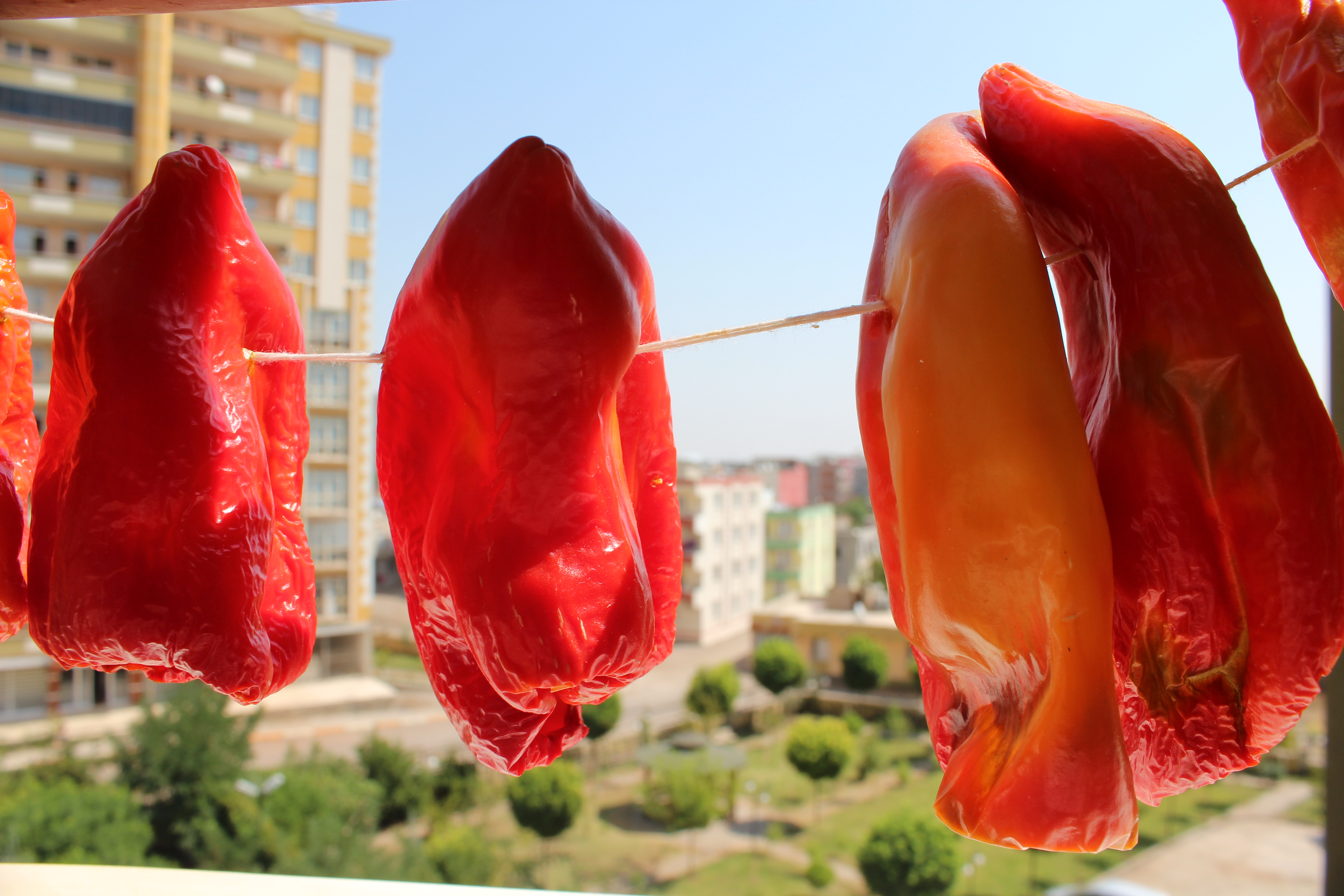 Today, the concept of socially produced space appears in publications with little apparent need for justification or explanation. Yet it was not so long ago that “space” was generally ignored in social theory. In this course we critically engage with the spatial turn in social sciences. This spatial turn brings into focus a relational approach, showing how the social comprises the spatial, and the spatial comprises the social.
Building upon a brief introduction about the return of spatial thinking in the social sciences, we will discuss three themes: the construction of the rural, in relation to the urban, our understanding of local in relation to the global, and constructions of nature. The course ends with a special session by prof. Ash Amin of Cambridge University on the spatial dimensions of democratic renewal.
The course “Spatial thinking in the social sciences ” is meant for PhD students in the social, environmental and political sciences. In the course we will switch between close reading of texts, workshops, and discussion. Students following this course will not only learn to think about place as an analytical category, but also learn to ‘work with place’ by applying various perspectives to concrete cases.
The course will be given from April 22 to April 29, 2016.
For more information contact Joost Jongerden at joost.jongerden@wur.nl
RSO student participation in Kyoto University summer school

By MSc-students Sacha Buisman and Susanne Maenen (pictures).
It is the third day of the Kyoto Graduate Seminar on Economic Development and Sustainability. Three professors, respectively called sensei, from the Kyoto University gave lectures today on topics related to the theme: ‘agriculture, environment and sustainability’. The whole week, we will discuss a wide range of themes with a very multi-disciplinary group of students coming from Thailand, Laos, Korea, Denmark, the UK and Wageningen. In the city where the Kyoto Protocol was signed in 1997 and in the country where there was a massive nuclear disaster in 2011, we will look back at the economic development of the Asian continent while we try to envision possible sustainable pathways for the future economic developments. Today we discussed if, and how, economic growth and environmental conservation can be achieved simultaneously. In the last lecture of today we looked at food security from a Japanese perspective. One of the main challenges that Japan faces, just like almost every other country in the world, is the population shift from the rural areas to the urban areas. The average age of a Japanese farmer is 65 years, which will soon cause the diminishing of active farmers and the utilization of farm-land. How is the Japanese politics responding to this scenario? Mainly by following the US way of reasoning: ‘increase the efficiency and the productivity’. Which might be not the right solution, given the fact that a Japanese farm has an average of 2 hectare farmland. There are multiple Japanese bottom-up movements, such as the shura ku-eino (village farming collectives), who suggest ‘another’ sustainable pathways that focuses on small-scale farming of ‘diverse local actors with a diverse and multi-layered commitment’. Continue reading
On Becoming: MSc Thesis on Undocumented Migrants in the Netherlands
On Becoming: An Ethnographic Account on the Importance of Social Relationships for Undocumented Migrants in the Netherlands
This ethnographic and descriptive account argues for the importance of personal relationships for the ‘integration’ of undocumented migrants in the Netherlands from the perspective of those who ‘live it’. Following three personal stories we can see that social networks are crucial as they provide access to necessary resources and enable undocumented migrants to practically arrange their existence. But in addition, because these interactions are built on personal connections and allow for intimacy they enable a deeper sense of belonging. This indicates that, although undocumented migrants are formally excluded from any state services, they may in fact participate economically and socially due to their personal social network. As such, they enable a different perspective on the meaning and methods of integration. Because in a domain highly controlled by the state these three personal stories show that integration may also be seen as a trajectory of becoming; as a constant social process based on affective and personal relationships that take place in the social domain. Integration as such should not be seen as a procedural process as only described by the state but instead as an affective process in which people assemble socially. This enables a reconceptualization of integration and a re-envisioning of the role of the state in social life.
On Becoming is a MSc thesis written by Vera Ribbens and supervised by Alberto Arce (SDC) and Joost Jongerden (RSO). The thesis can be accessed by following this link: http://edepot.wur.nl/356124
Student Exchange with Kyoto University


The Kyoto University (KU), Japan and Wageningen University (WU) have agreed to a BSc and MSC Student Mobility Agreement. Under the agreement, it is possible for students of both universities to follow courses at the partner university. For students at WU any academic credit earned at the KU will be transferred back to WU, and vice versa. For students in Wageningen, the agreement gives the great opportunity to follow courses in comparative development studies, Asian studies, and transcultural studies in one of the oldest and most beautiful cities in Japan. Founded in 1897, Kyoto University belongs to the world’s top universities. Students at Kyoto University have the opportunity to follow courses at Wageningen University, a top university in the life sciences and development studies.
Students who are interested in studying at KU can contact Joost Jongerden for more info (joost.jongerden@wur.nl, Leeuwenborch room 3027).
 Rural Sociology Wageningen University