Eat your landscape Part II: Lupine

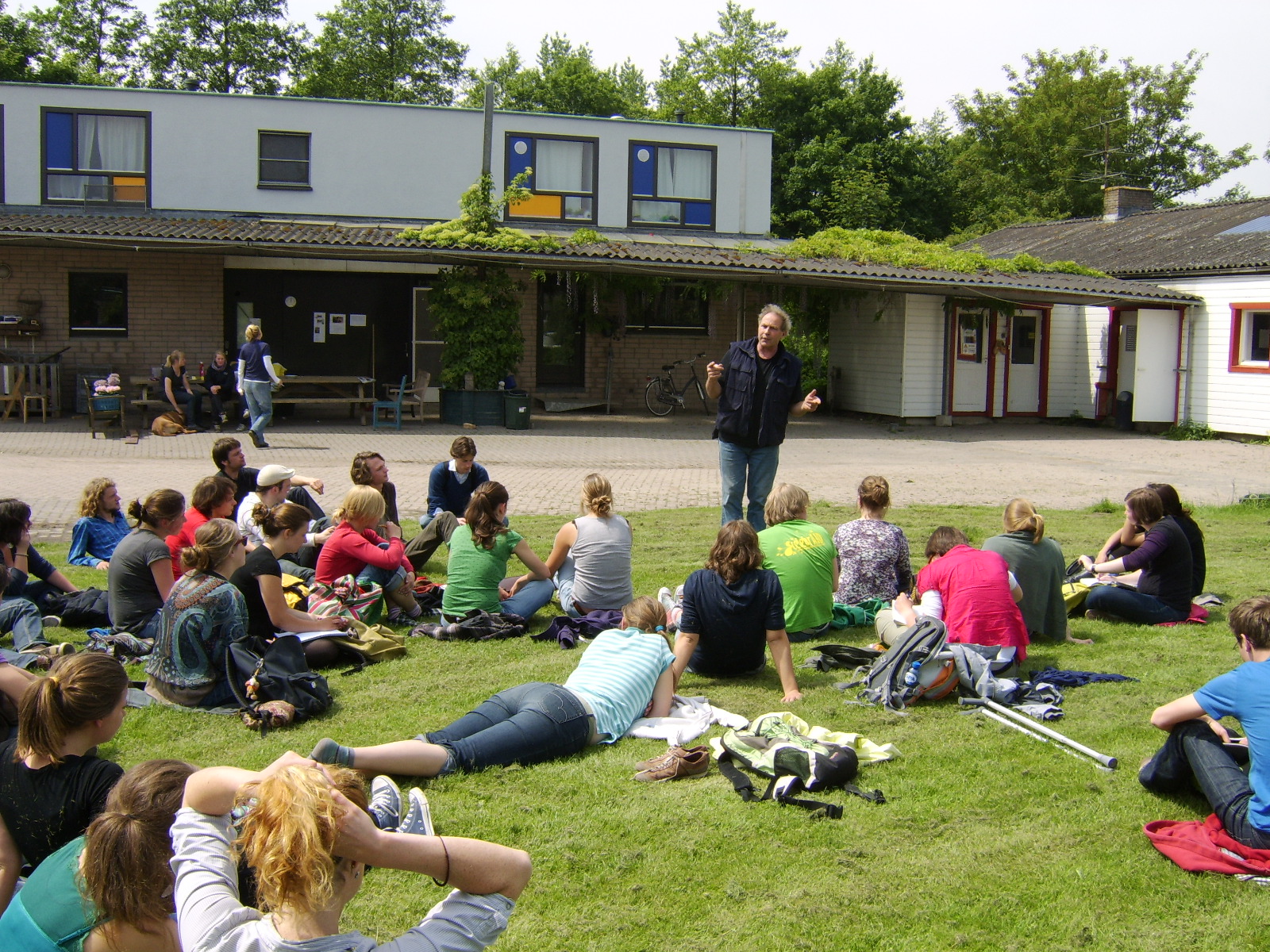
Fresh back from a break, lets continue where a line was dropped earlier (see Par I). In June the lupine of farmer André Jurrius blossomed for weeks. A beautiful view, a big field of white or pink flowers (see picture 4 in the link). An idyllic site for a picnic… But the weather turned suddenly hot and the flowers neared the end of their blossoming. Just a bit too quick for the scheduled picnic in the middle of the field organised by the Vegetarische Slager (the vegetarian butcher). Guests enjoyed several courses with products made of lupine. They ate the landscape quite literally albeit with a time lag of a year. Last year’s harvest of André is being developed into edible products.

The Vegetarische Slager, an initiative of Jaap Korteweg, develops new meat substitutes from lupine, a plant from the legume family with high amounts of protein. With even higher ratio’s of protein and oil as soja, lupine can become the alternative in our moderate climate for imported (genetically modified) soja, the expansion of which is now destroying rainforest. However, the cultivation has to be improved and developed further before it can be a serious competitor of soja according to the LEI last year. That doesn’t prevent André from growing it. He is one of the two farmers who are currently cultivating lupine organically. Dreaming about next year’s picnic or who knows a Hemmens Land event with mobile cooking unit amidst a sea of flowers……
The ‘Suit’ of Urban Agriculture

Marlinde Koopmans of Van Hall Larenstein presented her thesis results yesterday in a workshop at Stroom, The Hague. Her thesis will be online available in September. For now she presents her main results in the below article.

By VHL student Regional Development Marlinde Koopmans (marlinde.koopmans@gmail.com):

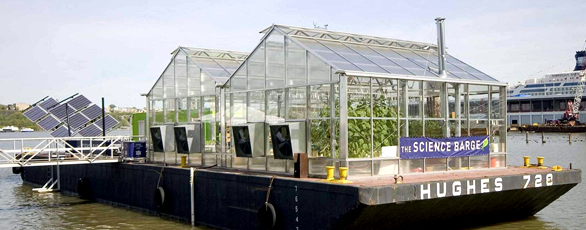
groundworkhv.org/programs/environmental-education/science-barge/faqs/

Lately urban agriculture has gained interests of scholars, policy makers and citizens. Urban agriculture forms a unique integration with the urban system. It uses resources from the city and produces for the city. For the Foodprint program, Stroom has investigated the potentials of urban agriculture for the city of The Hague.In terms of flows of energy and food is a city one giant glutton, consuming tons of high valuable material coming from the countryside and only leaving tons of waste in return. The Hague therefore has, like other cities, to increase its environmental sustainability, for example the reduction and reuse of waste, the improvement of the urban climate.

It requires a systematic change of the metabolic system of the city. Various, often costly, measures are undertaken in order to change this unsustainable metabolic system of the city. Yet these are all very specific solutions to specific problems for example: the assigning of ecological protected areas to certain regions in The Hague and municipality buildings being covered with solar panels to supply energy.Since agriculture can form an ecological circular system, urban agriculture will be able to combine a multitude of environmental facets.

The research investigated the potentials of urban agriculture to contribute to the sustainability of The Hague.Organizations active in The Hague were asked about the possibilities to integrate urban agriculture in the city; how and where could this happen, and how can the respondents participate? Continue reading

Art and social interaction on Mando; Call for Researchers

The Wadden Sea coast of Denmark from Tønder to Blaavand is a beautiful natural and rural area with three wadden islands Romø, Mandø and Fanø. For the third time, the biannual Wadden Sea Festival from 4 to 12 september draws attention to this area with various forms of Contemporary Art at many different places. One of the art projects is organised by Foundation Waddenart on the island Mandø. This is a special island, very small and only accessible at low tide through a gravel road at the sea bottom.

The project Any Questions on Mandø is an interdisciplinary project, an experiment to integrate art and research in one project and at the same time embed the project in a local place. Foundation WaddenArt started in collaboration with SDU to explore the question of quality of life for the inhabitants at Mandø in October 2009. The findings fed into the Call for Artists to attract Contemporary Art in Installation art, Performance art and Landart. Five different artist(groups) have been selected to work daily to create works of art during the festival in september. 

There is also space for three researchers to be involved in the project in september. We ask researchers to reflect from a research background in the social sciences or art & humanities to what they observe during the festival. We ask you to observe and write a short story based on personal experience and empirical observation which can be performed during the closing event on Mandø. Are you interested questions such as; How does contemporary art relate to the cultural and social life of the community on Mando? How do the people on Mando relate to a festival that is not theirs? How is Mando expressed? What symbols the links between past, present and future? What are defining factors in change and stability? Then please look at this link for the full Call text and the way to submit your interest to Foundation Waddenart.

Food initiatives in Amersfoort


eemlook website

 “Eating is an agrarian act” said Bart Pijnenburg at a meeting last Thursday in Amersfoort. So we ate together with 50 people a meal based on regional products and lots of garlic from the farm Eemlook. The meeting was organized by Transition Town Amersfoort, the Eemlook and two consultancies Mensenland and Eemstad Lab.

“We” were all those interested in progressing new thinking about regional and urban food production and consumption. The Amersfoort food strategy; this was the topic. There is no such a thing yet, and the meeting was meant to inspire each other and the city government to undertake action.

There were lots of ideas; after a few brainstorm sessions at least 25 ideas were presented – in an elevator pitch situation. From community gardens to Meatless Monday, and mobile cooking units to dine in a field, the variety of ideas surprised many people. Maybe some of these ideas can be submitted to the “Sustainable Food” call of the Ministry of Agriculture it was concluded. Well then, be prepared for heavy competition.

At the launch of this grant-funding on the 9th of June at least a hundred people were present to explore their opportunities for submitting a project. This high interest is starkly contrasting the amount of funding available; half a million euro with individual project limits up to 75.000 euros. This funding is – according to the explanation that day – an experiment which may or may not be repeated. The piecemeal funding is underlying one of the three policy goals; to enable Dutch consumers to choose for sustainable food products. A bit meager I thought given the huge ambition to become ‘world leader in sustainable food production in 15 years’.

The Black Gold

Last week, students of the course ‘Agrarische en rurale ontwikkeling, sociologische perspectieven’  had two days of excursions and could choose from 4 different excursions to see different models of multifunctionality and institutional arrangements in farming (see Birgit’s blog about a different excursion). With our group, we visited the Stadsboerderij Almere and the nearby Zonnehoeve in Zeewolde. Both farms have different other activities related to farming, such as school education, cattle in nature reserves, home sales of products, relations with care institutes.

Both are also organic farms, or better; bio-dynamic farms, which goes a step further in closing the nutrient cycle than organic farming. The nutrient cycle turned out to be the key to understanding the multifunctionality of these farms. At the very core of it all was what Tineke called ‘the black gold’; good quality manure, the essential ingredient for a healthy and productive farm without dependence on external input.

To illustrate her point, she took a handful of manure from last year and encouraged students to smell it. Hesitantly a few did. To their surprise it did not smell bad. The mixture of straw, urine and feces of the beef cattle was far into the composting process. It smelled more like soil than like shit….

At the Zonnehoeve they heard again about the importance of building soil. Piet told many unusual stories which illustrated that building soil is quite literally building a resilient farm. He showed his long list of activities in which he diversified which dazzled the students (amongst others, a bakery, permanent housing for caretakers, facilities for therapy with horses, internet shop). But starting with his dairy herd, he emphasised the importance of  Tineke’s ‘black gold’ too.

The centrality of the herd in the farming philosophy of both the Stadsboerderij and the Zonnehoeve, illustrates very well the theoretical framework which the students had learned in class (see Ploeg et al 2003). Grounding the farm in this vital resource  for a healthy nutrient cycle, both farmers deepened their farm strategy by shortening the supply chain whilst delivering high quality organic produce and from that solid base they broadened their farm with new additional functions. Tineke explained this by showing her ‘black gold’, which had brought good economic revenue of their core activity; producing food (e.g. onion, pies, carrots) which made it possible to invest in an entire new facility consisting of a farm-house and barn for a further expansion into care farming.