Prof. Anne van den Ban is generally regarded as the founding father of the Wageningen communication sciences. He was appointed as Professor of extension communication (‘Voorlichtingskunde’) in 1964, which became the cradle for a rich and influential array of academic endavours at the intersection between communication, innovation and change in the sphere of health, environment and agriculture. These activities have continued until today and now take place across several chairgroups and sections at Wageningen University.
Hofstee and Van der Ban
While Prof. Van den Ban certainly deserves a lot of credit for developing the new discipline and building an internationally recognized group, it is important to acknowledge the contribution of Prof. E.W. Hofstee in getting Van den Ban started. Hofstee was promotor of Van den Ban’s 1963 PhD dissertation on the communication of new farm practices in the Netherlands, and he no doubt inspired Van den Ban in choosing his topic. In fact, already in 1953 Hofstee wrote about the importance of studying ‘sociological aspects of agricultural extension’ in the first (!) ‘Bulletin’ that was published by his group (Hofstee, 1953). He was also in touch with the public extension services that had been established by the Ministry of Agriculture a few decades earlier, and gave lectures to Ministry staff on the significance of group-based agricultural extension approaches (e.g. Hofstee, 1960). Reading these early works by Hofstee made me -as one of the successors of Van den Ban- realize how much we still owe to Hofstee today.
In essence, Hofstee criticizes the then prevailing extension services and practices for assuming that farmers take decisions according to an individualistic economic rationale. He points to the importance of social, collective and cultural dynamics in shaping what farmers do or do not, and also to the importance of social differentiation and regional ‘farming styles’ in explaining farmers’ economic activity. In order to be effective, extension organisations and professionals should -according to Hofstee- understand the importance of such ‘sociological aspects’ and anticipate these in their work (Hofstee, 1953). This implies that extension workers should look at extension and knowledge transfer as an inherently social process rather than as a series of communicative ‘tricks’ and also be reflective about their own social positions (Hofstee, 1960) The concern with the ‘effectivess of extension’ (or better: the lack of it) demonstrates Hofstee’s commitment to the post second world war modernisation project and his own normativity in this regard. Despite his sensitivity for social and normative issues, he continued to talk in terms of ‘good, progressive’ and ‘bad, backward’ farmers (Hofstee, 1953), thereby (re)producing the paternalistic connotations of the Dutch word for extension communication: ‘Voorlichting’. This term literally means something like ‘holding a light in front of someone to lead the way’ assuming apparently that people are ‘in the dark’ and need to be ‘enlightened’ by those with scientific training.
While today’s studies on communication, innovation and change have arguably left this ‘enlightenment’ and ‘deficit’ thinking behind, we also see traces of Hofstee coming back in our current work. We still criticize simplistic individualist conceptualizations of change, as is reflected in today’ attention for ‘social-technical configurations’, ‘system transformation’ and ‘responsible innovation and scaling’. Similarly, Wageningen trained communication scientists are known for their interactional and socio-political conceptualization of both professional and everyday communication and meaning making, and for their interest in the social challenges to facilitating dialogue among different interpretative communities. These sociological perspectives on communication and change have now spread to other Universities in the Netherlands and elsewhere. The continued prevalence of sociological connotations is not surprising if one considers that most of Van den Ban’s successors indeed had a sociological training as well. Clearly, that is not accidental but part and parcel of Hofstee’s legacy.
*Cees Leeuwis is Personal Professor at the Knowledge, Technology and Innovation group, Section Communication, Philosophy and Technology
References
Hofstee .E.W. (1953) , Sociologische aspecten van de landbouwvoorlichting. Bulletin 1, Afdeling Sociale en Economische Geografie, Landbouwhogeschool, Wageningen.
Hofstee .E.W. (1960) Inleidende opmerkingen over de voorlichting: Groepsbenadering in de voorlichting. Voordracht gehouden op de Tuinbouwdagen 1960. Mededelingen van de Directeur van de Tuinbouw, 23, 10, pp 621-624
Van den Ban, A.W. (1963) Boer en landbouwvoorlichting: De communicatie van nieuwe landbouwmethoden. Pudoc, Wageningen.
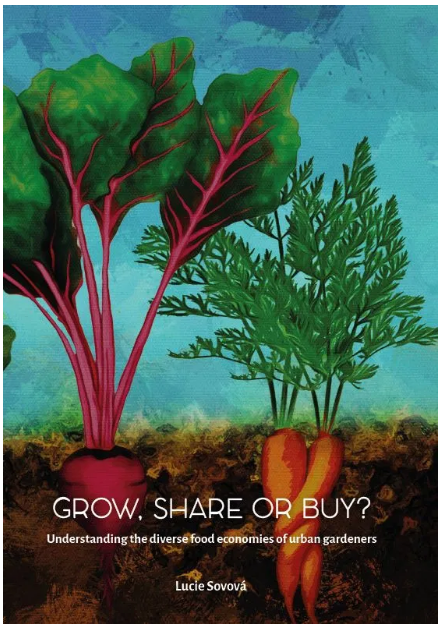
My doctoral research explored the role of urban gardens in people’s food provisioning practices, framing them as spaces of diverse food economies operating largely outside the market. In order to understand how gardens work as food sources, I observed the food provisioning practices of 27 households involved in gardening in Brno, Czechia, throughout a period of one year.
The research contributes to the broader discussion about more sustainable ways of food production and consumption, alternative food networks and urban agriculture. Research on sustainable food systems is often biased towards initiatives embedded in market relationships (Rosol 2020). Literature on urban gardening in global North mostly focuses on a specific kind of this practice (community gardens), and it discusses the multiple non-productive functions of these spaces, such as community building (Veen et al. 2016), place-making (Koopmans et al. 2017) or the improvement of urban environment (Timpe et al. 2016). Another stream of literature presents urban gardens as activist spaces questioning the status quo of neoliberal urbanism (Tornaghi 2017, McClintock 2013). This literature recognizes the potential of urban gardens to contribute to localized and sustainable food provisioning (Kosnik 2018). Nonetheless, actual data on food self-provisioning (FSP) in urban areas of the global North remains insufficient (Taylor and Lovell 2013).
Furthermore, some geographical areas seem to be excluded from the debate. FSP is wide spread in the post-socialist countries of Central and Eastern Europe (CEE): 50% inhabitants of the region grow some of their food, compared to 10% in Western European countries (Alber and Kohler 2008). Despite this potential, lessons from CEE are only recently appearing in the literature on urban gardening or alternative food networks. This discrepancy can be explained by an unequal geography of knowledge production, in which CEE rarely figures as a source of original knowledge (Jehlička 2021). In light of the failed experiment of state-socialism, CEE countries are often regarded as underdeveloped and in need of catching up with the West (Kuus 2004, Müller 2019). This transition discourse results in the framing of local informal economies (such as FSP or informal food sharing) as remnants of the past which will be eventually substituted by market economy (Alber and Kohler 2008, Acheson 2008). My research adds to more emancipatory works showing the relevance of these traditional practices for sustainable food provisioning (Jehlička et al 2020, Goszczyński et al., 2019, Mincyte 2012).
My theoretical approach is further inspired by the diverse economies framework (Gibson-Graham 2008) which points out that economic practices are not limited to capitalist markets and monetized transactions, and which calls for attention to alternative, nonmarket and informal economies. This approach is increasingly adapted in the study of more sustainable food provisioning, which recognizes the importance of economic arrangements fostering social justice and environmental wellbeing (Rosol 2020, Tornaghi 2017, Morrow 2019). It is also particularly pertinent for the post-socialist context, seemingly caught between the gloomy heritage of state socialism and the sweeping neoliberalization of the last three decades.
Recent representative surveys show that the share of Czechs involved in FSP remains steady at around 40% of the population, spread equally across income groups and educational levels (Smith and Jehlička 2013, Jehlička and Daněk 2017, Sovová et al 2021). Unpacking these statistics, my research assessed the role of FSP in terms of quantity of food produced as well as its position within broader food provisioning practices and the diverse economic arrangements they constitute. Inspired by the perspective of social metabolism (González de Molina and Toledo 2014, Burger Chakraborty et al. 2016), I used food logs to monitor the flows of fruits and vegetables entering and leaving respondent households. These flows were categorized based on the type of economic arrangements as non-market, alternative-market or market economies. Using conceptual borrowings from social practice theory (Reckwitz 2002, Shove et al. 2012), I further investigated the meanings and competences these material flows entailed.
The field work consisted of four rounds of data collection of one month, spread over the course of one year. During each round, respondents recorded fruits, and vegetables which they produced at their gardens or obtained from other sources. Next to the amount, type and source of food, they also kept track of the use of these foods, i.e. own consumption, preserving, sharing or other forms of distribution. The purpose of the multi-staged research design was to observe seasonal variations and to gradually build theory with the respondents’ participation, accompanying the quantitative accounts with a qualitative understanding of their food provisioning practices.
The results reveal complex interactions between gardens, other food sources, respondents’ eating habits and dietary preferences. FSP plays a central role in gardeners’ food provisioning practices. The gardens provide a significant amount of food, covering on average one third of fruits and vegetables consumed in gardeners’ households – results consistent with a national survey using self-reporting (Sovová et al 2021). In addition, respondents’ experience as producers shapes their food provisioning practices beyond FSP. Home-grown food is seen as the best in terms of taste, freshness and transparent origin. This creates a hierarchy of food sources, in which FSP and other nonmarket and semi-formal food provisioning practices (e.g. receiving home-grown foods from family and friends, foraging or buying directly from producers) are preferred over shopping for food in conventional venues. Alternative food networks typically associated with conscious consumerism (community supported agriculture, farmers’ markets, organic food shops) were marginal in respondents’ shopping practices. Instead, they provisioned food from a number of diverse channels spanning market and nonmarket relations, in which social relations merged with environmental considerations and subjective notions of food quality. The centrality of FSP in these practices also resulted in strong seasonal patterns in both food sources and diets.
None of the respondents aimed to be fully self-sufficient, nor did they grow their own food in order to save money. Instead, they saw gardening first and foremost as a hobby. The link of this way of food provisioning to leisure, fulfilment, and, broadly speaking, gardeners’ identities, strengthened the position of FSP in gardeners’ food provisioning practices. Similarly, other informal and semi-formal food practices were often grounded in social relations, such as visiting family and acquaintances in the countryside. Gardeners’ food practices also contributed to fostering social relations, for instance when they shared home-grown food with others, a practice which was common for most respondent households. Indeed, FSP is a generous practice in which the joy of sharing and appreciation of home-grown food prevails over expectations of reciprocity or economic considerations, as also documented by Daněk and Jehlička (2017) or Pottinger (2018).
While practiced as a hobby, FSP is mobilized as a food provisioning practice through a number of specific competences. Using the conceptualizations of social practice theory, I interpret FSP as intersection of two sets of practices, those relating to the garden (‘gardening’), and those relating to the kitchen (‘food provisioning’). Based on both quantitative and qualitative data, I identified four different types of relations between gardening and food provisioning. Put simply, some respondents were keen gardeners but did not necessarily integrate their harvest into their diets. Others strived to eat plenty of fruits and vegetables but were not always successful in their gardening efforts. Gardens are multifunctional spaces which hold different meanings for different users. Using the gardens as food sources requires not only gardening and cooking skills, but also coordination and integration of both on a daily as well as seasonal basis.
My research shows that when thinking about sustainable food provisioning, scholars and practitioners need to look beyond market venues and beyond people’s roles as consumers. The search for future-proof urban food systems cannot be restricted to environmentally-minded affluent Westerners, but it needs to consider everyday practices already existing in diverse contexts. I have shown that there is a plethora of under-researched informal food practices whose potential for sustainable provisioning, diverse economic arrangements and mutually beneficial human–nature relations merits further investigation.
Sovová, L. (2020). Grow, share or buy? Understanding the diverse economies of urban gardeners. Wageningen University. https://doi.org/10.18174/519934
It is almost 44 years since my first research project; it considered the position of women in non-academic positions at the University of Nijmegen. More studies into gender and professions followed; in academia and public service, as well as technical and assumedly masculine occupations such as woodwork and firefighters, and eventually farming.
Women farmers stole my heart – first in Italy and later in the Netherlands when working on my PhD on the role of women in rural development practice and policy. They were so creative and courageous, developing new business activities and conquering a position in a sector in desperate need of transition but often so stubbornly holding on to conventions. In this case, the conventional image and success formula of the male farmer running his farm as a modern business striving to increase production and growth, with the farmwife offering assistance. In the early 90s, some women stood up against these beliefs – men being the head of the farms and farming as regular businesses interested in increasing production and profit. There were women pioneers innovating agriculture by initiating a new model and paradigm of farm diversification and multifunctionality. They introduced new income-generating activities and created new markets with direct communication between producers and consumers. In doing so, these women farmers and their partners developed new knowledge and skills and adapted their agricultural production methods, with less monocultural and more environmentally friendly production methods. Hence, women significantly contributed to the continuity of farming financially through such new business activities, others by gaining off-farm income. Initially, the turn towards diversification and multifunctionality met a lot of criticism and suspicion by mainstream farmers and the farm union – this was not real farming anymore, they said. Or this meant the end of agriculture as a real business and profession. As a result, many women farmers downplayed their activities as hobbies or downplayed the importance of their money. In time, however, the success of these new businesses became evident, and multifunctional agriculture became formally recognised even by the farm unions.
In academia, the role of women in multifunctional farming was cherished in two ways: first as a proof of long due empowerment and recognition of the vital role of women in agriculture; second as one of the elements of the transition of farming, with multifunctionality, high-quality production and direct marketing as the way forward, and thirdly as proof of the sustainability of family farming. Studies into gender relations in agriculture confirmed the presence of more equal gender relations on farms engaged in diversified productions and novel production methods. The situation is quite different in most production-oriented farms that remained conventional also in terms of gender relations. The political interest in women farmers diminished over time, at least at the national level. The EU continued to call attention to the position of rural women, stressing their vulnerability and the importance of strengthening their position in farming and rural areas. However, gender agriculture and rural development did not figure prominently in public, political or academic debates for a long time – in Europe. In international development debates, this was quite different, and gender remained a prominent issue and target of policymakers, donors and academics. Women were presented as important actors, able to enhance production and warrant food security, yet needing support to overcome traditions and realise their potential. Maybe, the global South was again ahead of the North when it came to gender debates – as they were when research into gender and agriculture took place in Europe in the seventies.
Most recently, the interest in gender and rural development seems to be reawakening also in Europe. Looking into a recently published HORIZON, the EU expresses high hopes for women’s engagement in innovations. They expect women to ensure the future of agriculture and rural areas and significantly contribute to climate change mitigation and, hence, our future. It is interesting to see that women who figured in agricultural and rural policies so far, mainly as a vulnerable group, become suddenly framed as our saviours. However, as the EU calls for ways to boost women’s innovations, women are still expected to need a hand to realise their potential, with many hurdles arising from what we may best identify as institutionalised sexism.
What does that mean for academics like me who have fallen for these amazing women who experiment with new ideas, innovate new products and methods, and institutions? Should we worry about their instrumentalisation, as some warn us (reference)? I always have difficulty with that argument – because are we instrumentalised if we choose to do what needs to be done? Do we not all carry the responsibility to be instruments in the realisation of a better world? And is women’s agency to innovate against all odds not in itself transforming structures, identities and relations, self-empowering? Is innovation, hence, not their instrument of empowerment? Yes, they deserve more respect, reward, and support. What they do is valuable and critical, and we need to ensure their engagement has an impact.
In my view, it is not up to me as a researcher to protect women from instrumentalisation. However, I can be of more assistance when understanding what drives, enables and hinders them and where change is essential to realise their potential. The transformation of gender relations is part and parcel of that process, be it explicitly or implicitly. We should also not forget that women do not necessarily view their actions as individual or independent; farm women often feel part of the family business, and many collaborate with others and men. The latter does not make gender equality less relevant yet nuances women’s interest in gender transformation. And what about the kind of innovations in which women engage? Many are novel, of course, but not all are about agroecology or climate change. Or that might not be the leading motive. Women’s primary reason is often to assure the business’s profitability, and not all they do is good for the environment. Does that mean we should then not support their initiatives and engagement in innovation? Do women only as saviours deserve support? The right of agenda-setting is another matter to consider. Which issues should politics and science address, and when are women ‘invited’ to join? Even formulating the question is awkward as, of course, women have the right to set the agenda. Reality is more complex. Generally, interest groups are involved in such negotiations, and as studies report time and again, women farmers are hardly represented in farm organisations.
Intriguing questions that are difficult to answer. As an academic, I might argue that my first task is to understand how innovations emerge when ‘female’ agency fights traditional structures, irrespective of their motive. On a more personal note, I believe it is our responsibility as scientists, policymakers, and practitioners to choose which innovations to support, whether promoted by men or women. In today’s world, it is irresponsible to support innovations that add to the problem of climate change and social injustice.
Some suggestions for overviews of rural gender literature
Asztalos Morell I. and BB. Bock (2008) (eds), Gender regimes, citizen participation and rural restructuring, Elsevier: Rural Sociology and Development Series, pp. 3-30
Bock B.B. and S. Shortall (2006) (eds), Rural Gender Relations: Issues and case- studies, Oxfordshire: CABI
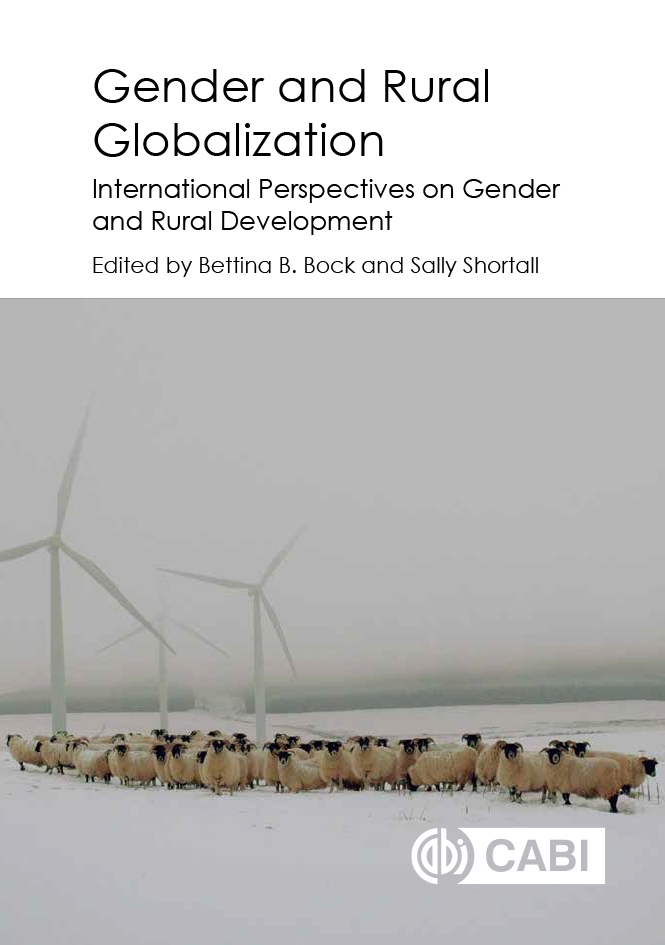
Bock, B.B. and S. Shortall (2017) (eds), Gender and rural globalisation: international perspectives on gender and rural development, Oxfordshire: CABI
Bock, B.B. and M. van der Burg (2017), Gender and international development, in B.B. Bock and S. Shortall (eds) Gender and rural globalisation: international perspectives on gender and rural development, Oxfordshire: CABI
Bock B.B. (2016), The Rural, in: I. van der Tuin (ed.), MacMillan Interdisciplinary Handbooks: Gender, volume 2: Nature, MacMillan, 199-216
Cornwall, A. , E. Harrison and A. Whitehead (2007) (eds),. Gender myths and feminist fables: the struggle for interpretive power. Gender and Development, 38(1998) (special issue)
Mohanty, C.T. (2003), Feminism without borders; decolonizing theory, practicing solidarity, Durham & London: Duke University Press (reprint from 1984)
Pini B., B. Brandth and J. Little (2015) (eds). Feminisms and Ruralities. London: Lexington Book
Plas van der L. and M. Fonte (1994) (eds). Rural gender studies in Europe. Assen: van Gorcum
Sachs C. (2019) (ed.), Gender, agriculture and agrarian transformations, changing relations in Africa, Latin America and Asia: London: Routlegde, Taylor & Francis Group
Shortall S. and B.B. Bock (2015) (eds) Rural, gender and policy; Rural women in Europe: the impact of place and culture on gender mainstreaming the European Rural Development Programme; Gender, Place and Culture, 22(5), special issue
How do rural people make their livelihoods? What determines who prospers and who is left behind? How should we study and understand rural development and agrarian change? These questions are core to critical development studies of Global South countries with significant rural populations. The answers, however, often reflect deeply held ontological and epistemological differences and assumptions about what counts and what doesn’t (or what’s important and what isn’t) in the analysis of rural development. Despite parallel developments in social theory in recent decades to bridge these divides (e.g. Elder-Vass 2010), approaches to rural development in low-income countries tend to fall in one of two camps: those that emphasize structure; and those that privilege agency. Although there are exceptions that integrate across analytical approaches, two exemplars of this agency/structure divide in development studies are actor-oriented livelihoods analysis, and agrarian political economy. Each has been critiqued and often dismissed by the other for what they don’t do: livelihood or actor-oriented approaches critique agrarian political economists on grounds of determinism and for discounting the diversity of practices and actors at the micro level; while agrarian political economy dismisses livelihoods research for its failure to account for broader relations of power, production, reproduction and property. Both approaches also imply rather different outcomes for policy or praxis: the former focuses on increasing autonomy and individual choice; the latter focuses on the role of the state and/or class-based political movements.
According to Scoones (2015: 37), this debate is summarized by the question “what is more important: what people actually do or the factors that constrain or enable their actions?” This question has animated my research on small farming, rural development and agrarian change in South and Southeast Asia over the last decade. My research shows that not only, as Scoones notes, is the answer to this question quite obviously neither, but also that we can consider both livelihoods (agency) and political economy (structure) simultaneously in studies of rural development. The shortcomings of each approach correctly identified by the other should not be taken as further encouragement to retreat into theoretical or methodological fortresses. Instead, I argue it is possible to productively combine the contextual richness of livelihood approaches with the structural insights of agrarian political economy (Scoones, 2015). By moving beyond an agency/structure dualism in critical development studies, we can pay attention to both at the same time as part of the same process. Put differently, livelihoods are central to understanding agrarian change, and vice versa. We can therefore begin to ask questions such as what does it mean to be a poor or rich rural household? What do the livelihood pathways of different social groups look like? How do livelihood practices produce, reproduce or challenge patterns and processes of differentiation in rural areas? And, how do broader patterns of structural change in turn act back upon livelihoods?
In fact, the rationale for combining the insights of agrarian political economy and rural livelihood analysis can be read as coming from Marx himself. In the Grundrisse (1973), Marx argues that to arrive at a concrete understanding of historical change, one must dialectically move in from the abstract towards the “many determinations and relations” that make up the whole, what Marx called the “unity of the diverse”. The core questions that inform contemporary agrarian political economy (Who owns what? Who does what? Who gets what? What do they do with it? See Bernstein, 2010) are also inherently questions about livelihoods. The idea of a combined approach that asks these questions at multiple scales is that on the one hand, a deep understanding of rural livelihoods can unpack the complexity of everyday practices, whereas political economy can make concrete the ways in which social relations at various scales shape livelihood practices and trajectories and ultimately determine patterns of winners and losers in rural spaces. I have used such an approach, what I call the everyday political economy of livelihoods, to try and understand the multiple determinations of agrarian change and the everyday experiences of such change in smallholder farming communities in India, Myanmar and Indonesia (see Vicol, 2017; Vicol, Pritchard & Htay, 2018; Vicol et al. 2018; Vicol, 2019; Vicol & Pritchard 2021).
In India, this approach was applied to explore the implications of contract farming for household livelihood trajectories and broader patterns of agrarian change. In a case study of potato contract farming in three villages in Maharashtra, a wealth ranking exercise, along with household interviews, was used to construct local understandings of differentiation (Vicol, 2017; 2019). Participants in each village constructed three ‘wealth groups’ of best off, middle and lower households, with each category associated with particular landholding patterns, income sources, balance of on- versus off-farm livelihood activities, use of wage labour, and caste. Dominant narratives around contract farming typically conceptualize it as either ‘win-win’ (for farmers and agribusiness) or ‘win-lose’ (agribusiness wins, farmers lose). My research showed that a) participation in contract farming was concentrated in the ‘middle’ group of households; and b) that rather than sparking dynamic new processes of accumulation among contract farmers or leading to new forms of exploitation, contract farming is contributing to processes of agrarian change already under way. More specifically, participation in contract farming tended to reproduce the middling livelihood trajectories of middle households, while best off households concentrate on non-farm activities for their accumulation strategies (engaging in what Gillian Hart has called ‘diversification for accumulation’). These findings challenge existing policy narratives centered around ‘value chain development’ interventions such as contract farming that promote a simplified vision of ‘market-led’ agricultural development and agrarian change.
My research in India and elsewhere demonstrates that processes of rural development and agrarian change can’t be reduced to simplified narratives. Instead, it is the complex interplay of everyday livelihood practices and social and economic structures that shape patterns of winners and losers in agrarian spaces. To paraphrase Marx (1852; see also de Haan and Zoomers, 2005), what an everyday political economy of livelihoods reveals is that rural people in the Global South do make their own livelihoods, but not necessarily under conditions of their own choosing.
References
Bernstein, H. (2010). Class dynamics of agrarian change. Halifax, Nova Scotia: Fernwood.
de Haan, L., & Zoomers, A. (2005). Exploring the frontier of livelihoods research. Development and Change, 36(1), 27–47.
Elder-Vass, D. (2010). The causal power of social structures. Cambridge: Cambridge University Press.
Marx, K. (1852/2008). The Eighteenth Brumaire of Louis Bonaparte. New York: Cosimo.
Marx, K. (1973). Grundrisse. London: Penguin.
Scoones, I. (2015). Sustainable livelihoods and rural development. Rugby, United Kingdom: Practical Action.
Vicol, M. (2017). Is contract farming an inclusive alternative to land grabbing? The case of potato contract farming in Maharashtra, India. Geoforum, 85, 157-166.
Vicol, M. (2019). Potatoes, petty commodity producers and livelihoods: Contract farming and agrarian change in Maharashtra, India. Journal of Agrarian Change, 19(1), 135-161.
Vicol, M., Pritchard, B., & Htay, Y. (2018). Rethinking the role of agriculture as a driver of social and economic transformation in Southeast Asia’s upland regions: The view from Chin State, Myanmar. Land Use Policy, 72, 451-460.
Vicol, M., Neilson, J., Hartatri, D.F.S., & Cooper, P. (2018). Upgrading for whom? Relationship coffee, value chain interventions and rural development in Indonesia, World Development, 110, 26-37.
Vicol, M. & Pritchard, B. (2021). Rethinking rural development in Myanmar’s Ayeyarwady Delta through a historical food regimes frame. Singapore Journal of Tropical Geography, 42, 264-283.
Gert Spaargaren[i] (with illustrations by Emily Liang)
‘Modern Environmentalism’
Environmental problems are of all ages, but in historical perspective one could argue that the awareness that something can and must be done about the deterioration of soils, water and air quality is of rather recent origin. In his book on ‘modern environmentalism’, David Pepper (1984, 1996)[ii] identified three landmark publications that expounded the principle ideas of ‘modern environmentalism’ as emerging from the 1970s onward.
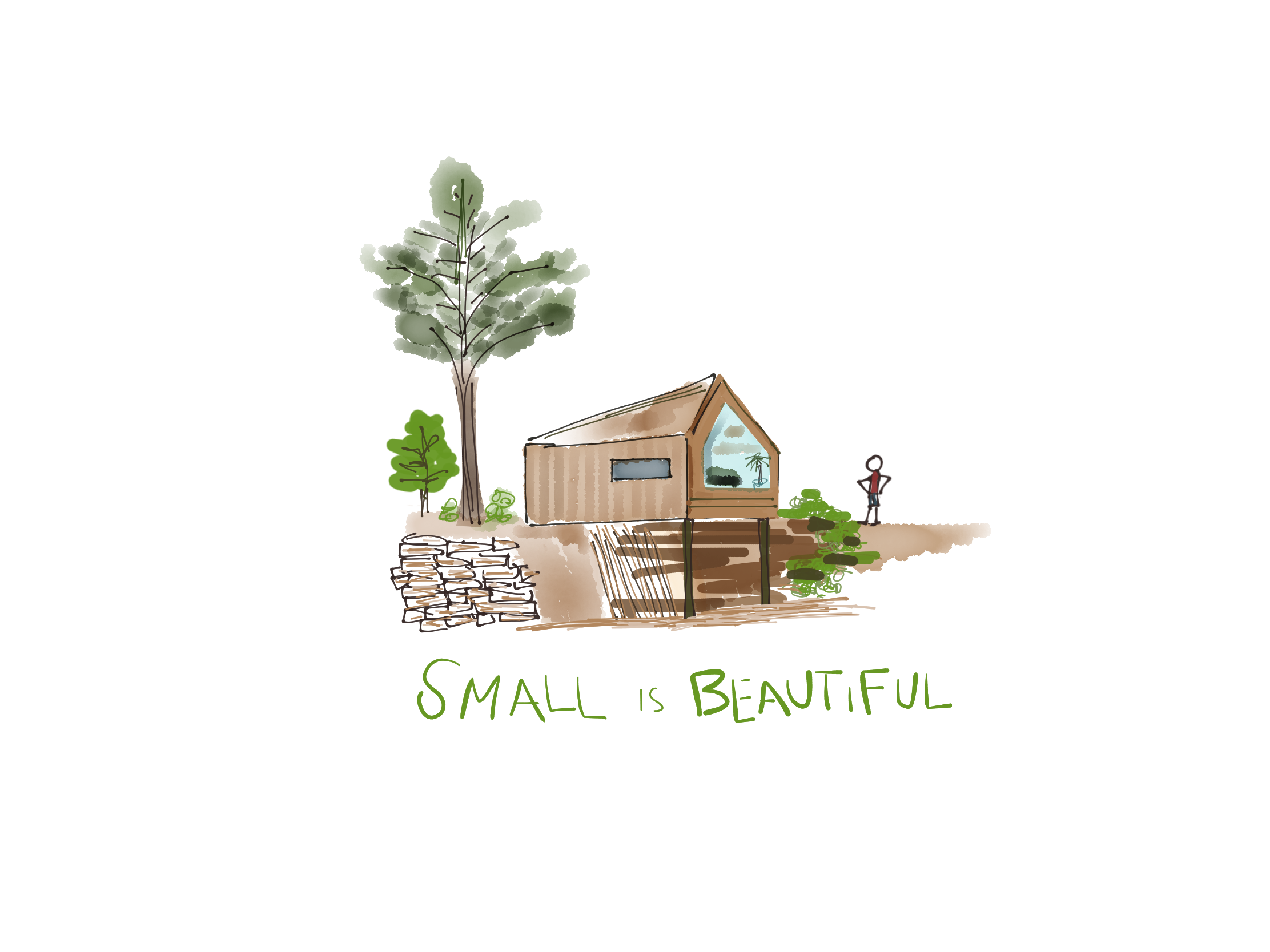
First and most important has been the ‘Limits to Growth’ report to the Club of Rome (Meadows et al, 1972)[iii]. With hindsight, this MIT[iv]-based modelling of the planetary limits to industrial societies must be regarded as the single most important trigger for environmentalism to become a permanent issue both for politicians and citizens around the world. It was ‘modern’ environmentalism since the report was science based and because it urged key actors in society to take their responsibility for a common future at risk. Secondly, the ‘Blueprint for Survival’ (Ecologist, 1973), a special issue of a journal published by the emerging environmental social movements in the UK, has been an important trigger. The ‘new social movements’ in the UK and Germany in particular aimed at translating the Club of Rome message to the local (UK; EU) situation. They did so by translating the call for ‘limits to growth’ into a design for a strictly closed loops oriented, local, de-central, bounded network of eco-communities, sharing and caring for natural resources in a way we would later on come to refer to as ‘sustainable’ or ‘circular’. To underpin their design of the Blueprint Society with socio-cultural, economic and political arguments, they heavily relied on the third major source of modern environmentalism: Fritz Schumachers’ ‘Small is Beautiful’ book series (Schumacher, 1973; 1979)[v]. Schumacher was an enlightened British economist who resigned from a leading position in the energy (coal) sector to dedicate the rest of his life to the promotion of a radically different kind of society. His books became popular around the world and in the late 1980s, Schumacher himself came over to Wageningen to address a lecture hall[vi] filled with eager and critical students to discuss his core idea that recognizing limits to growth should lead one to consider new, small-scale, local, size-limited forms of (agro)industrial production and consumption from now on.
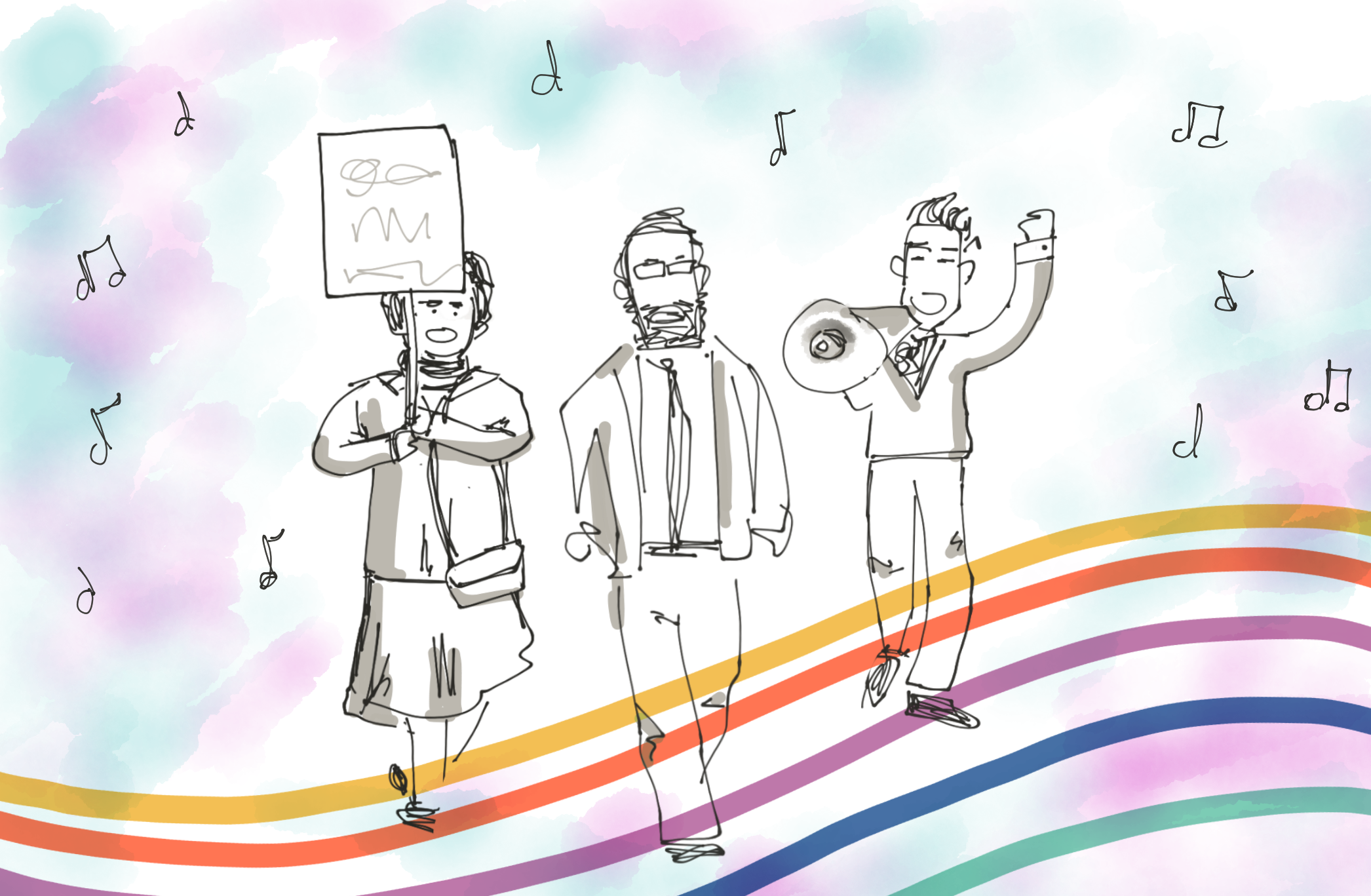
Three publications with a different character – one scientific modeling report, one NGO-article and one popular book series for a broad audience – but on a similar topic: the ‘environmental future of modern industrial societies’. From a contemporary point of view, they were positioned more on the sideline of society, were more Eurocentric, and did not confront climate and biodiversity issues in ways we are familiar with today. But the idea of radical change, the framing of the planet as resource for future generations, and the sense of urgency and unconventional forms of action I would argue to be pretty much the same. It is the engagement with transitions and transformation as we know of them today, but at the background you should imagine the sound of the pop-music of the second half of the 1960s (Dylan, the Beatles, folk-music) and pictures of student revolts and the rise of the so-called counter-culture in the 1970’s.
E.W. Hofstee and ‘Modern Environmentalism’ at WUR in the 1980s
When I started my academic career in Wageningen in the late 1970s, all ‘engaged students’ were more or less familiar with the wake-up call that was represented by the three publications introduced in the above. So were staff members and even some professors…. Evert Willem Hofstee (1909 – 1987) being one of them.
Professor Hofstee was a social scientist who very early on recognized the urgency of environmental problems and the fact that the future of modern societies would be affected by problems of (air, water, soil) pollution and the exhaustion of resources. As early as mid-1971, he drafted an advisory Report for the Dutch Royal Academy of Science Committee on the task for social sciences to confront “Milieubederf en Milieubeheersing als maatschappelijke verschijnselen” (environmental deterioration and environmental control as societal phenomena)[vii]. During the period of redrafting this advisory report, the Club of Rome Report was published, and Hofstee in his preface to the final version of his KNAW report noticed that one of the remarkable characteristics of the Club of Rome report was the fact that it “hardly mentions the social scientific aspects of the environmental problem” (Hofstee, 1972, preface).
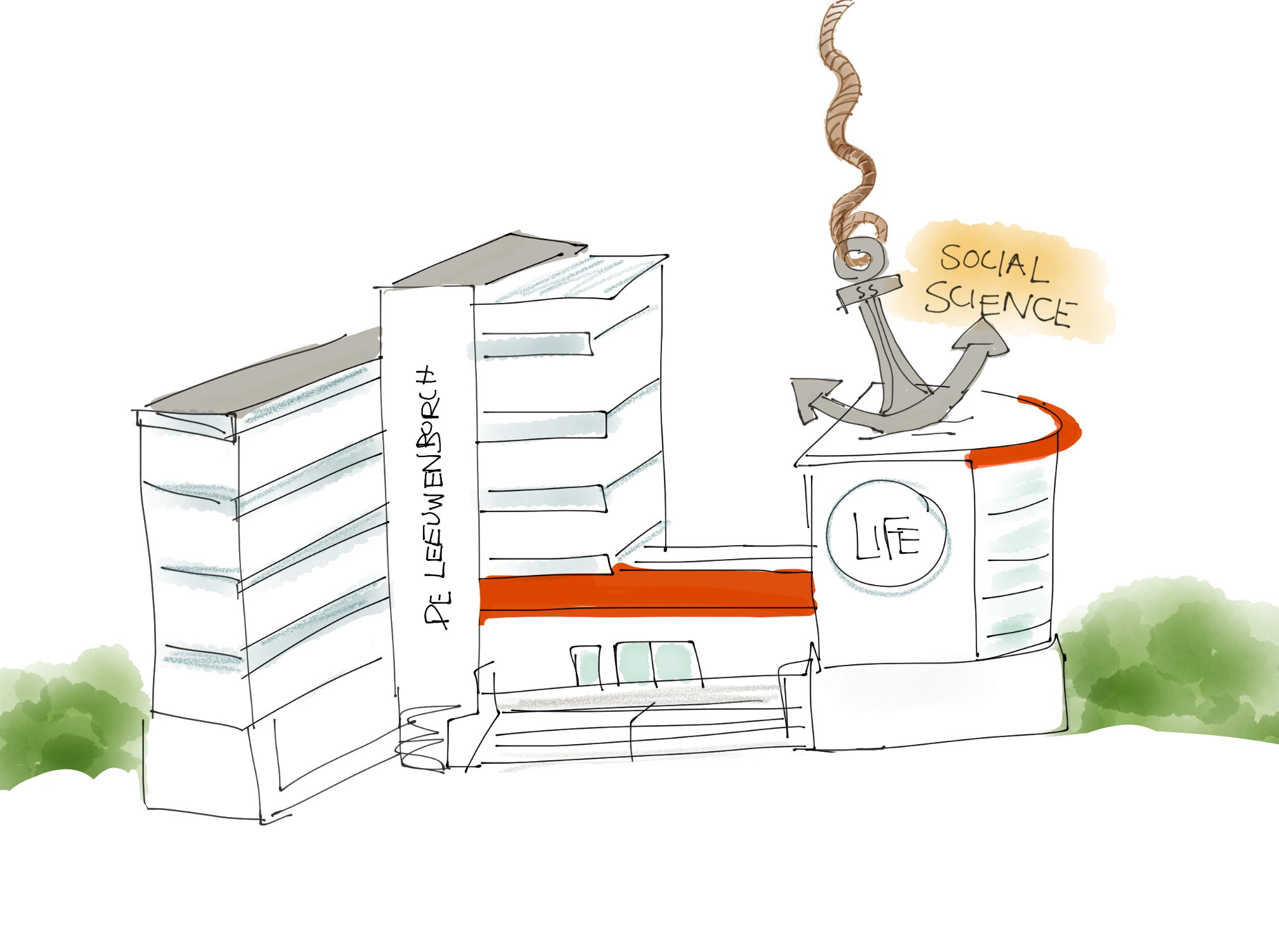
Hofstee himself was in a position to do something about that. He was a respected professor in (rural) sociology at the Landbouw Hogeschool (the predecessor of WUR) and one of the driving forces behind the construction of the Leeuwenborch-building as an anchor point for the social sciences. Hofstee was an empirical sociologist, raised in the tradition of demography and sociography e.g. historically informed, applied and policy relevant social science research. I was told that Hofstee was standing member of more than 150 committees and advisory boards that were involved in the socio-spatial redesign of the Netherlands after the second World War. So he knew ‘from within’ that policy makers were confronted with all kinds of expected and not expected negative consequences of the accelerating modernization process as it was happening in rural and urban spaces in the Netherlands and in Europe at the time. Hofstee noticed as well that in the Netherlands ecological/environmental issues were not eagerly taken up and given any serious theoretical or empirical consideration by sociologists. Only Nico Nelissen in Nijmegen and Egbert Tellegen – in collaboration with Peter Ester and later on with Maarten Wolsink- in Amsterdam were publishing on ecological issues. Nelissen was building on the ecological sociology of the Chicago school in the USA, while Tellegen and colleagues depicted environment and energy as new societal issues, thereby providing support for the new social movements without much theorizing. In his theoretical work however also Hofstee himself did not pay much attention to environmental issues. His (three volumes) reader we as students were instructed to read, was titled “Differentiële Sociologie” (Sociology of Differentiation) and it did not consider the modernization process from an environmental point of view. Wageningen sociology was first and for all agrarian, rural sociology, focusing on the differential adoption of modern ideas (on religion, family life etc.) and (life)styles – interior design, diets, styles of farming – by different segments of the population in different parts of the Netherlands.[viii]
Sociology, Environment and Modernization at WUR after Hofstee
Because Hofstee was aware of the need for environmental sociology and because he was still leading the ‘vakgroep sociologie van de Westerse Gebieden’, it was decided that someone in Wageningen should be appointed as ‘environmental sociologists’ to confront the challenges put forward by the Club of Rome and the emerging Environmental/Energy movements in the Netherlands and Europe. Henry Hilhorst – specialized in the sociology of religion – was asked to take environmental issues on board. He tried to make a start with a course in environmental sociology in 1985, building upon the study of Hofstee (1972) on ‘Environmental Deterioration and Control’. Along the way however, he discovered that his heart was not in environmental sociology and the ‘material matters’ (flows of energy, water, waste, nitrogen, phosphate) associated with it. Henry left for a job in the sociology of religion in Utrecht, and in 1986 I was assigned the task of developing for the (chair)group ‘Sociologie van de Westerse Gebieden” a Wageningen relevant version of environmental sociology[ix].
Since the course had to start right away and I only just took office as staff member, a guest lecturer from the USA was attracted to join me/guide me in giving the first course on ‘environmental sociology’/milieu-sociologie in Wageningen. Rabel Burdge came over to stay with me for a month, telling the students about ‘social’ (SIA) next to ‘environmental’ impact assessments (EIA) as happening in the USA. He used the classes to discuss with the students his survey results of SIA-studies, but as well for sharing his family holidays pictures of lake Michigan and the natural beauty it represented…..The students liked his American style, his story telling and his holiday pictures in particular. I was however not convinced that impact assessment would be the (restricted empirical) way forward for environmental sociology at Wageningen University. I used the first years to reflect on the society-nature interactions from a sociological perspective, using social ecology as well as ‘eco’- neo-Marxism as sources of inspiration.
In the years to follow, a team of environmental sociologists was build. Kris van Koppen and Arthur Mol became close colleagues, and the first PhDs were attracted to build not just a relevant theory but to develop at the same time a body of empirical knowledge on Environmental Deterioration and Control. Ecological Modernization, with an emphasis on the environmental damage stemming from material flows running through socio/ecological systems, was the general heading of this theoretical and empirical work. It resulted from a critical confrontation with ‘small-is-beautiful’ (romantic?) thinking as the dominant paradigm in the grassroot environmental NGOs in Germany in particular. Instead of de-modernization, we argued that the environmental side effects of simple modernization should be dealt with by redesigning/reforming the agro-industrial structures of production and consumption. Enlightenment thinking versus Romantic thinking; Europeanization and Globalization versus localization; market dynamics next to policy dynamics etc. The debate on ‘how to green modern societies’ had begun.
The number of students and staff members were (gradually) growing. In the meantime other social science groups in the Leeuwenborch started with research and specialized courses on environmental topics. Next to economics, also history, law, extension sciences and spatial planning developed their own portfolios in the environmental field, with their activities being coordinated in the context of the so called Leeuwenborch Milieu Overleg (LMO).
By the end of 1990s, it was decided that the environmental sociology section of the Western Sociology Group should become a separate group, including not just sociologists but political scientists and cultural geography scholars as well. The Environmental Policy Group (ENP) – from 2000 onwards headed by Arthur Mol and since 2015 in good hands of Simon Bush – became one of the leading groups both within WUR and in the national and international social science (RC-24 of the ISA) arena’s. The excellent reputation of the ENP-group is based on characteristics that I would argue to go well along with Hofstee’s worldview, and they run as follows. First,look at differentiation (now at different regions of the global network society in particular). Second, combine innovative theoretical work always with sound empirical research. Third, try to investigate why social groups at different levels of society do or do not want to engage themselves with processes of change for a more sustainable world in the future. The present ENP-work on energy/water/sanitation transitions in different continents, and on global (fish) food system transformations can be regarded as adequate responses to Hofstee’s wake up call for the environmental social sciences in the 1970s. Their education and research are examples of social science knowledges that help shape the ‘great transition’ towards a more ecological sound, reflexive, and global modernity.
[i] I would like to thank Anton Schuurman for his useful comments on the draft version of the present text
[ii] D.Pepper (1984) The Roots of Modern Environmentalism. London, Croom Helm
[iii] The Limits to Growth (1972) D.H. Meadows et al. Potomac Associates.
[v] E.F. Schumacher (1973) Small is Beautiful. London, Blond and Briggs; E.F. Schumacher (1979) Good Work. New York. Harpers & Row
[vi] The big lecture-hall of the Leeuwenborch building was named the ‘Hofstee-room’ at the time, but unfortunately this name is no longer in use to refer to the main lecture hall of the social science building of WUR.
[vii] E.W. Hofstee (1972) Milieubederf en Milieubeheersing als maatschappelijke verschijnselen; poging tot een overzicht van de maatschappij-wetenschappelijke problematiek van een actueel onderwerp. Amsterdam. Noord-Hollandsche Uitgevers Maatschappij
[viii] The concept of differentiation was offered by Hofstee as a critique of ‘generalizing, functionalist’ analyses of modernization as dominant in the USA (Parsons) at the time. Mainstream drivers have to be specified – so Hofstee argued – in terms of time-space specific trajectories and dynamics
[ix] The chairgroup (at the time named ‘vakgroep’) Sociologie van de Westerse Gebieden already had several thematic sections to organize the empirical work. Next to the dominant rural sociology section, there were section on the sociology of family life, on the sociology of leisure, and on methodology.



 Rural Sociology Wageningen University