The Yale University Program of Agrarian Studies and Journal of Peasant Studies jointly organized the International conference on Food Sovereignty: a critical dialogue, 14-15 September in Yale, celebrating both the 20th anniversary of La Via Campesina and the 40th anniversary of the Journal of Peasant Studies.
Various reknown scholars in peasant studies will present a paper and discuss the food sovereignty concept as advocated by the La Via Campesina movement. Conference papers are online available and a selection will be published in the Journal of Peasant Studies. See for more information also the Food First weblog of the Institute for Food and Development Policy. Eric Holt-Giménez is the executive director of FoodFirst/Institute for Food and Development Policy.
Also Prof. dr ir Jan Douwe van der Ploeg, former chair of Rural Sociology and currently Professor Transition Studies at Wageningen University, presents a paper titled ‘Peasant driven agricultural growth and food sovereignty‘ with the following abstract:
The concept of food sovereignty represents an important theoretical and practical challenge. The political economy of agriculture can only take this gauntlet by developing a better understanding of the processes of agricultural growth. Without such an understanding it is difficult to address the issue of food sovereignty. Developing such an understanding involves a (re-) combination of the political economy of agriculture with the Chayanovian approach. This paper gives several explanations (all individually valid but stronger in combination) as to why peasant agriculture results in sturdy and sustainable growth – it also identifies the factors that undermine this capacity. The paper also argues that peasant agriculture is far from being a remnant of the past. The different peasantries of the world are shaped and reproduced by today’s capital (and more specifically by current food empires), and equally, they help to shape and contribute to the further unfolding of forms of capital related to food and agriculture. It is important to understand this two-way interaction between capital and peasant agriculture as this helps to ground the concept of food sovereignty. This article is underpinned by three assumptions. First, the debate about enlarging total agricultural production is very real. Although this debate is currently used to assess the hegemony of food empires and imperial science, we cannot throw away the baby with the bathwater. Secondly, the capacity to produce enough (at different levels, distinguishing different needs, etc.) needs to be an integral part of food sovereignty discourse. Thirdly, I am convinced that peasant agriculture has the best credentials for meeting food sovereignty and has the capacity to produce (more than) sufficient good food in a way that can satisfy the (many) objectives of producers themselves as well as for society at large.

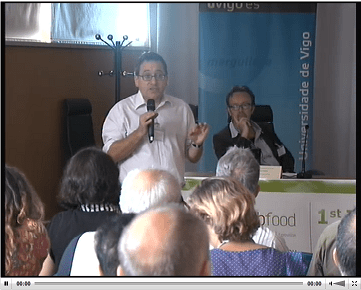
 In June, the SUPURBFOOD First International Seminar took place in Vigo (Spain). In order to contribute to improving the agro-food system’s ecological performance researchers, policymakers and SMEs from Europe and developing countries discussed the links between short food supply chains and other flows (e.g. nutrients, water, and urban waste) at the seminar. With attendance of over 60 people from 14 countries, a North-South dialogue has started on improving the agro-food system’s ecological performance.

 Rural Sociology Wageningen University