Since 2025 I have been working with the Rural Sociology department on a project about the labour and the wellbeing of workers in regenerative agriculture. My interest and passion around the topic of labour and rural development grew during my master’s in Cultural Anthropology at Leiden University in 2022. My topic was how Yazidis experience, practice, and construct motherhood and family while being displaced in the Kurdistan Region of Iraq (KRI) and the Netherlands. I spent time with Yazidi families in asylum centres and homes in the Netherlands, as well as time with mothers in refugee camps in KRI. I looked at the division of labour in the household, changes in the perception around the role of mothers in Yazidi families, and how displacement has impacted family life.
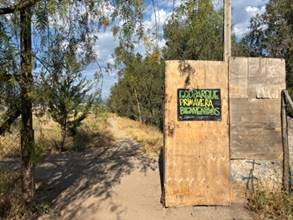
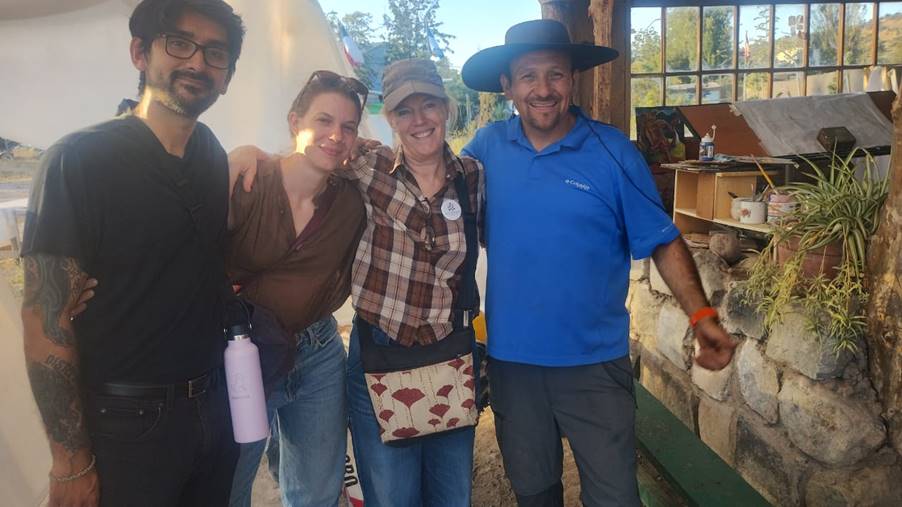
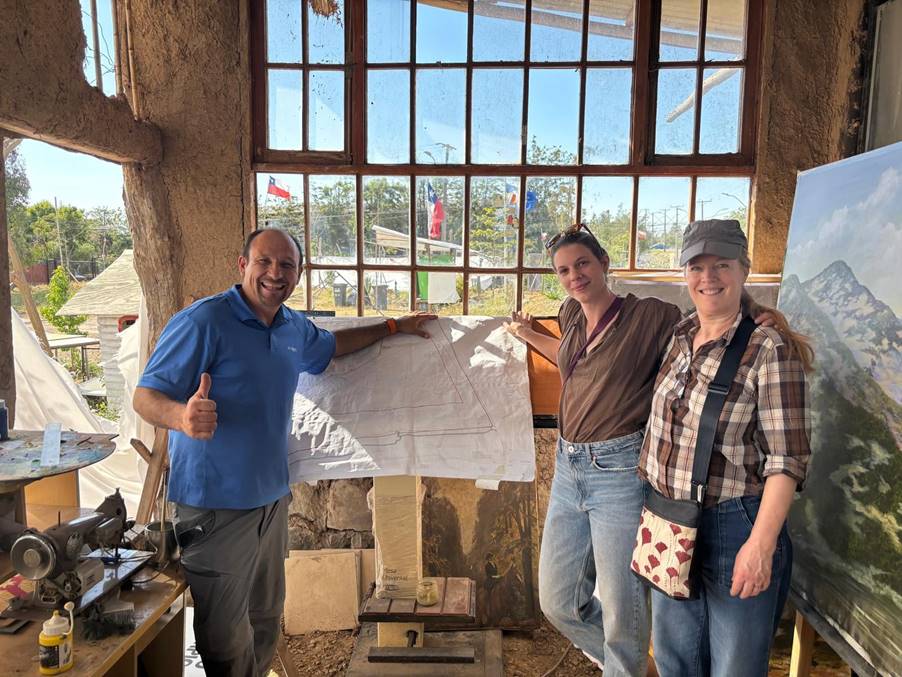
Artist and co-initiator Jorge Guerrero walks toward us enthusiastically. Eleonora has already conducted research here, in the way she prefers most: working with her hands as much as with her head. While helping out, she listens to stories and plans. Alongside her job, she has been immersed in her PhD research on urban place-making, and she feels slightly self-conscious about suddenly reappearing after a period of absence – together with her partner and supervisor from the Netherlands. That feeling quickly fades in the face of the warm welcome. We, in turn, are struck by how much has visibly been realised in this ecoparque. The park has just celebrated its five-year anniversary.
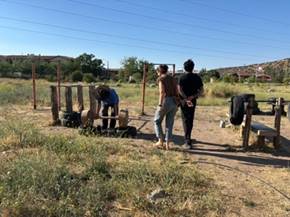
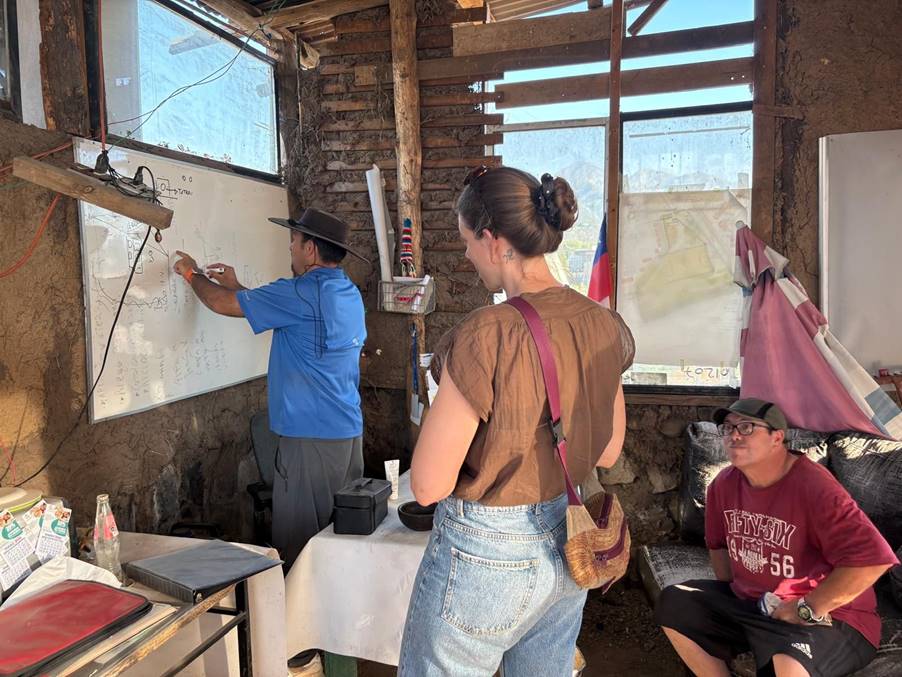
Pictures taken during our visit to the Ecoparque, December 8th, 2025.
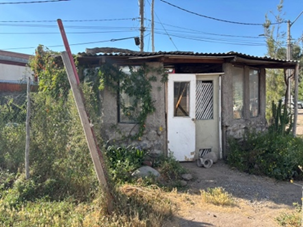
As is typical of urban fringes, this corner of the neighborhood was once filled with trash. Residents recall it as a place that attracted unwanted activities. Apart from a decent football field used by the local club, there was little else – except a clear need for a park. The idea emerged to transform the more than three hectares into a space accessible to everyone: a place to walk, celebrate birthday parties, and do things for which there is no room elsewhere in the neighborhood. Residents plant trees, their species carefully marked on a large, dust-covered map in the small structure at the entrance. There are playgrounds, a recycling point, and a fitness area with serious equipment made from local materials.
All the structures – a workshop, a semi-circular building “like an eye,” as Jorge describes it, overlooking the entire site at the entrance, and a tipi with kitchen facilities – are built from what could be found nearby: glass doors from soft-drink refrigerators, tree trunks, clay, and car tires. Many car tires. In the future, space will be needed for infrastructure, meaning the municipality cannot guarantee permanent usage rights, however, neighbors perceive the potential end of the Ecoparque Primavera as a a scenario that will not happen anytime soon. Funding remains a challenge, yet through countless volunteer hours and the reuse of materials, the project has already come a long way. By the end of 2025, they succeeded in obtaining legal recognition, formally establishing the “Eco Parque Primavera Environmental Committee”. This committee coaches a group of volunteers, recruited via Instagram. They managed to bring together neighbors of all ages, including people from different crafts and professional backgrounds. Many of the trees have been growing here for about a year and a half and appear to be surviving the harsh weather conditions. Large water tanks, filled by the municipality, are used to irrigate the plants. And there are still many ambitions: to host more activities, to create guided tours with stories. Jorge sketches one out for us on the spot.
Places like this inspire admiration, but also raise questions. Will residents be able to sustain the care this park requires over time? This is not a wealthy neighborhood – shouldn’t the state be responsible for providing such amenities here? Is twenty years enough? This initiative emerged from the bottom up: people are quite literally claiming their right to the city. It is a right of use rather than ownership – a commons, or meent in Dutch, where shared use takes precedence. How communal is this space in practice? Formal structures failed here in the past – how far does governmental support extend today? And inevitably: what will this place look like in twenty years, when the trees are larger and use may be more intensive? And in the shorter term, now that the ultra-right-wing Antonio Kast – who emphasizes private property and advocates for a smaller state – was elected president in December 2025, will community initiatives like this one prove to be especially vulnerable?
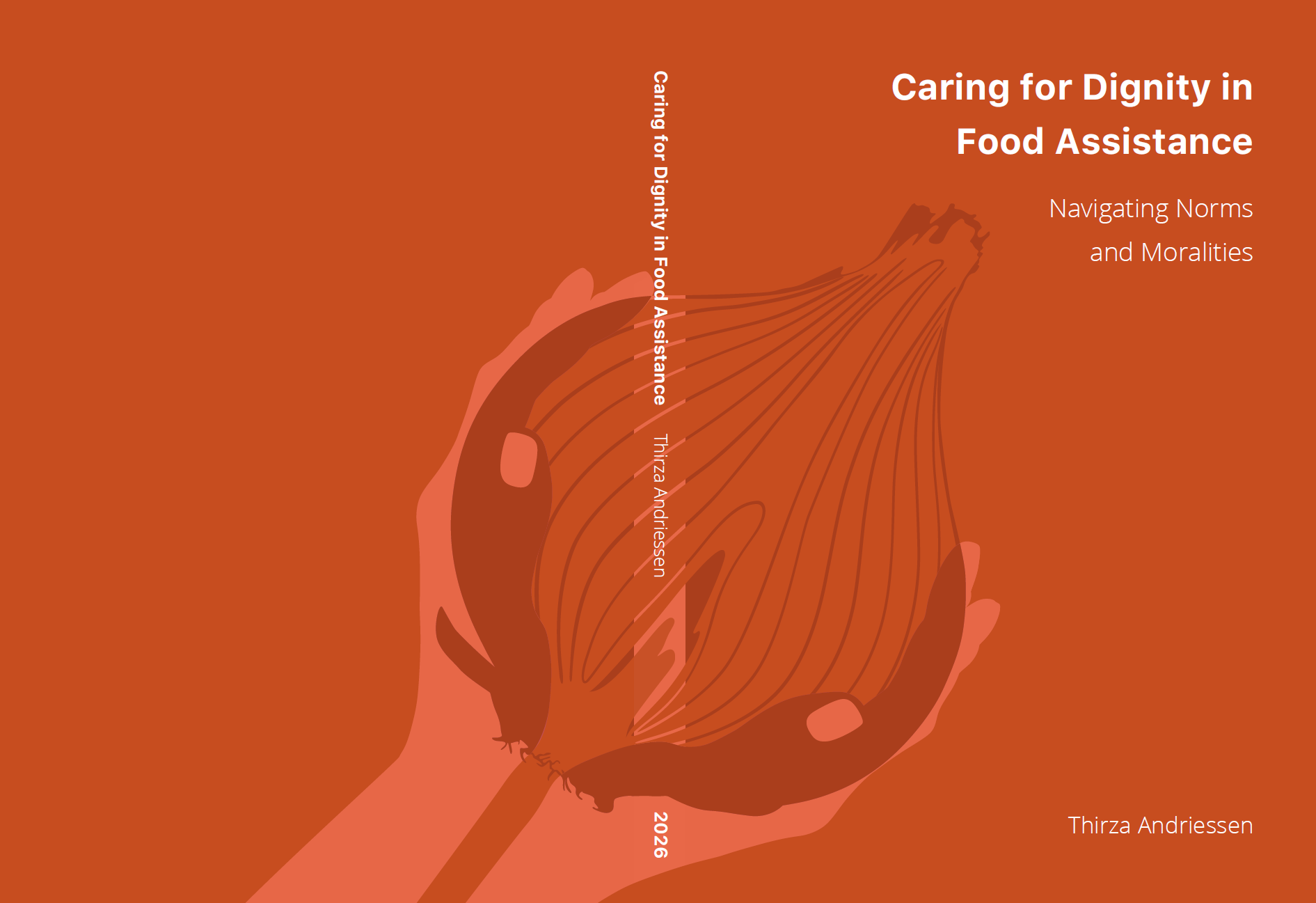
We are proud to share that Thirza Andriessen of the Rural Sociology Group will be defending her PhD thesis entitled “Caring for Dignity in Food Assistance: Navigating Norms and Moralities”.
When: February 20, 13.00 hrs Where: Omnia, Wageningen University
Abstract This PhD research explores how food assistance in wealthy countries shapes the dignity of recipients. Food charities are criticised for being stigmatising and for framing food poverty as an individual problem rather than a social and political issue. This study focuses on newer forms of food assistance, such as social supermarkets and grocery budgets, which aim to offer support in more dignified ways. Based on three case studies in Belgium and the Netherlands, supplemented by a literature review, the research shows that dignity is shaped in everyday situations: how people are treated, how much choice they have, and how rules are applied. Shopping in a “normal” setting and having product choice can support dignity, but these models can also reinforce moral expectations about financial responsibility and create new forms of dependence, for example on digital systems. The research concludes that there is no single “dignified” model; dignity is enacted through daily practices, care relationships, and wider social norms and moralities.
Online streaming The defence can also be followed online via a YuJa livestream. Note: the link will become available about 5 minutes before the start (click the 🔔 Event in the top-right corner and then select “Thirza Andriessen”)
!!New publication based on the RSO thesis of Astrid Olaerts!!
Food loss in horticultural values chains is a key challenge for regional development in Global South. Yet, existing literature tends to focus on the instrumental factors behind food loss, posing technical interventions. In this new article published in Australian Geographer, we argue that we need to understand food loss through a socio-political lens. Applying such a lens to a case study of horticulture values chains in Lembang, Indonesia, the article argues that food loss is shaped by the power dynamics between different actors in interconnected market channels, including the unfair quality standards and trading practices imposed by powerful firms like supermarkets. Producers and other less powerful actors demonstrate resilience in navigating these power imbalances, however they also struggle to mitigate food loss. The article suggests several strategies that could be adopted to empower marginalised actors and reduce and prevent food loss.
by Priscilla Claeys, Sylvia Kay and Jessica Duncan
In what ways can food sovereignty or agroecology act as a viable joint framing for systemic convergence? The third Nyéléni Global Forum in Kandy, Sri Lanka, brought together over 700 activists with the aim of weaving convergence and strengthening alliances between food sovereignty and social justice movements. The authors reflect on their experience at the Forum, highlighting successes in cross-movement collaboration as well as frictions in organising, representation, and frameworks. Looking ahead, the Kandy Declaration calls for actions to deepen dialogue, transform governance, and build collective capacity to advance systemic transformation.

 Rural Sociology Wageningen University