Factoren die beleving van maaltijd bereid uit lokale producten beïnvloeden – MSc-thesis onderzoek

Door Marina van Maanen,  MSc-studente Gezondheid en Maatschappij

Lokaal betrokken en streekproducten staan steeds vaker op het menu van zorginstellingen. Waar eerder een trend was van steeds meer geïndustrialiseerde maaltijden als gevolg van kostenbesparingen, lijkt nu de ambachtelijke maaltijd terrein te winnen. Er zijn veronderstellingen dat een maaltijd op basis van lokaal betrokken en streekproducten een toegevoegde waarde kan hebben op de maaltijdbeleving en gezondheid van ouderen in zorginstellingen. Hier is echter (nog) geen wetenschappelijk bewijs voor.

Doel van mijn thesis onderzoek was daarom een verkenning van de mogelijke relatie tussen een maaltijd op basis van lokaal betrokken producten, maaltijdbeleving en kwaliteit van leven in een zorginstelling. Hier doe ik verslag van in mijn MSc-thesis getiteld:  Beleving van de maaltijd bereid uit lokaal betrokken producten in zorginstelling Joris Zorg.

Om deze vragen te onderzoeken heb ik een casestudy gedaan in zorginstelling Joris Zorg in Oirschot. Binnen Joris zorg worden op dit moment al maaltijden geserveerd op basis van lokaal betrokken en streekproducten. Binnen de casestudy heb ik interviews gedaan met bewoners, gastvrouwen in het restaurant, de koks en met vrijwilligers. Ook heb ik op verschillende dagen meegegeten en geholpen met het afruimen van de tafels. Opvallend was dat bewoners niet of nauwelijks op de hoogte waren van de herkomst van hun maaltijden. Ook waren bewoners niet bekend met termen als lokaal of streek. Dit maakte het doen van ‘gewone interviews’ lastig. Als een ‘verbeterde’ interview methode heb ik een vragenlijst ontwikkeld op basis van een menukaart, waarmee meer waardevolle informatie werd verzameld. Reden hiervoor is waarschijnlijk dat deze vragenlijst beter aansloot bij de belevingswereld van ouderen in zorginstelling Joris Zorg.

Maaltijdbeleving in Joris Zorg: uitkomst na proef met menukaart

Het verband tussen de maaltijd en kwaliteit van leven zoals verondersteld door literatuur, heb ik niet kunnen bevestigen op basis van mijn onderzoek. Kwaliteit van leven binnen Joris Zorg wordt voornamelijk geassocieerd met verzorging, rust en georganiseerde activiteiten. Wat de maaltijd aangenaam maakt en wat factoren zijn die bijdragen aan de maaltijdbeleving zijn: de juiste bereiding van de maaltijd, sociale factoren van de maaltijd, maaltijdsamenstelling en de versheid van producten. De toegevoegde waarde van het gebruiken van lokaal betrokken producten voor de maaltijd zit nu voornamelijk in de kwaliteit van deze producten en de interesse en het leuk vinden van deze producten in de Week van de Smaak. Wat zeer opvallend is, is dat bewoners buiten de Week van de Smaak niet of nauwelijks op de hoogte zijn van de lokaal betrokken achtergrond van de maaltijd. Uit de menukaartjesproef komt naar voren dat wanneer bewoners wel op de hoogte zijn, dit kan leiden tot goede herinneringen, verhaal en discussie aan tafel en herkenbaarheid. Dit kan een zeker een toegevoegde waarde zijn voor de maaltijdbeleving.

Aanbeveling voor Joris Zorg is dan ook om meer/beter te communiceren naar bewoners over de achtergrond van de maaltijd. Dat kan bijvoorbeeld in de vorm van een nieuwe menukaart (deze heb ik ondertussen samen met het keukenteam ontworpen). Aanbeveling voor vervolgonderzoek is het gebruiken van onderzoeksmethoden welke aansluiten bij de belevingswereld van ouderen. Met als voorbeeld in dit onderzoek de menukaartjesproef.

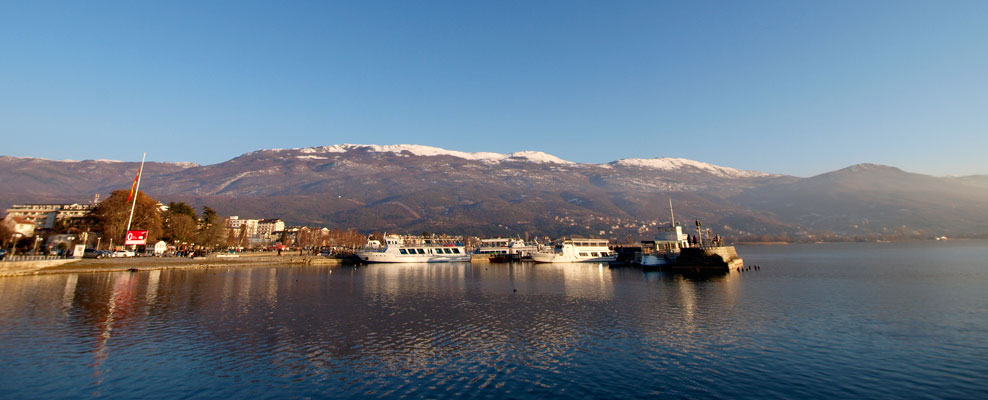
Sense of place in National Park Galicica – using new media in MSc-thesis research

By Bojan Rantasa, MSc-student International Master of Rural Development

Last Friday, 23 March 2012, I presented my MSc-thesis research proposal for fellow students and researchers of the Rural Sociology Group. My thesis research is titled “The Sense of Place of National Park Galicica” is part of my Msc-study International Master Rural Development (www.imrd.ugent.be). Joost Jongerden of the Rural Sociology Group is my sepervisor. My thesis presentation can be viewed at www.galicica.rantasa.net, a website on my thesis research where I will post research proceedings as well.

In my research I will use new media as tools for communication with the public but also as research method. I developed a website at the proposal stage of the research (www.galicica.rantasa.net). It enables dedicated communication with stakeholders and public, by offering updates on the research and a contact form. The web page also hosts the questionnaire on the sense of place of “Galicica”, thus becoming an important and integrated tool to the research. The information on the research currently presented on the web page is limited. This is not to lead the visitors of the web page, thus creating biased answers in the questionnaire.

To spread the questionnaire, I will use Facebook and targeted e-mail messages that are disseminated by the participants, causing a domino effect. This approach resulted in more than 50 completed questionnaires in the first week.

Continue reading

Growing food in the neighbourhood

Tilburg’s City Garden- Lise Alix

This winter I did an internship in which I set up a city garden in Tilburg. I found ten enthusiastic, mostly female neighbours, ready to cooperate in creating their neighbourhood’s kitchen’s garden. We learned about designing and preparing a garden, working together, and about physical endurance while spreading manure, transporting unwanted sand, and carrying and breaking paving stones.

I was assigned to manage this project by the Brabantse Milieufederatie (BMF), an organization that tries to protect the  environment. One of their focus points is on food, because food is a daily need that links many environmental problems like food transport, food packaging and unsustainable agriculture with use of pesticides and fertilizers.
One way of solving these problems is by growing our local vegetables, for example in neighbourhoods kitchen’s gardens. The BMF has, in cooperation with other organizations, tried to raise consciousness and support by the municipality of Tilburg on city gardens. As an example of how well it functions, BMF wanted to have one tangible kitchen’s garden in Tilburg. That’s where I came in.

Continue reading

Gracious Empowerment?

By Alexandra Rijke

Minor Thesis
Title: Gracious Empowerment? Evaluating the impact the GRACE-network project had on the empowerment of female university students in their stance against Gender-Based Violence.

This minor thesis (click here for the complete thesis) is part of the Research Master International Development Studies at the Wageningen University and Research Centre. The objective of this minor thesis was to evaluate the GRACE-network project. This project was conducted in Irbid, Jordan. The aim of the GRACE-network project was to investigate how ICTs could be used to empower female university students in their stance against Gender-based Violence (GbV). The project was evaluated during four months of field work in Irbid, Jordan. During these four months the women participating in the project were interviewed and a focus group discussion was organized. The women, participating in the project as participants and as researchers, were asked during these interviews what empowerment meant for them, how they had experienced the GRACE-network project, if they felt empowered because of their participation in the GRACE-network project and how their stance against GbV was influenced.

Continue reading

Torri Superiore Ecovillage: resisting the abandonment of rural marginal areas in Italy

 MSc-thesis by Alberto Giani

Modernization of agriculture has clearly shown not to be a viable solution for marginalized areas, while a mix of retro-innovation, fantasy and passion is showing a possible novel way forward for the re-utilization of abandoned areas and the revitalization of its socio-economic life.

Torri Superiore Ecovillage is such as case, that I studied in my MSc-thesis (click here for my full thesis report), part of my Master Organic Agriculture in Wageningen Univesity.

Torri Superiore Ecovillage can be defined as a bounded space re-created by in-migrants (new-rurals) that came and establish their lives in a place out from the mainstream society, utilizing external resources (both human resources and capital) and skills to revitalize through a neo-endogenous process the economic potential of a semi-abandoned low productive rural area.

Agriculture in a marginal area can rarely be a remunerative activity. In particular if an area has been abandoned for years and offers no opportunity for mechanization. Making a living in agriculture thus demands a break with the mainstream perspective on agricultural production. A capitalistic approach to land use, based on the integration in markets, is barely impossible in these areas. However from a different rural development approach still work can be created in the production of quality food remunerating a little salary to built a decent life, allowing people to live as much as possible in harmony with the environment without depleting it from its natural resources. Patrimonialization, broadening, deepening, re-grounding, creating local outlets are all strategies that can stimulate the rebirth of a local nested economy embedded in the territory, as is the case in Torri Superiore Ecovillage. This case represents a positive experiment in the restoration of economic efficiency in a marginal rural area.

Current policies discourses do stress the importance of creating proper conditions to make people stay in or return to marginal areas, but in practice the cost of the land, the bureaucracy and the taxes make it almost impossible for anybody to stay in marginal rural areas or for people without any experiences (so called new-rurals) to return to these areas.