Sign in now for the course A global Sense of Place!

vechtdal 1

A Global Sense of Place (RSO-55306) is an optional interdisciplinary course on sustainable place-based development for students from various master programmes (e.g. MDR, MES, MID, MLP, MUE, MOA, MFN). The course builds on the BSc course RSO-56806 Sociology and Anthropology of Place-shaping providing an introduction to place-based approaches in development. Knowledge of this introductory course is an advantage, but is not assumed.

The course aims to make students acquainted with an interdisciplinary and place-based approach to development. A relational place-based approach is seen as key to the understanding of interrelated rural and urban transformation processes and ergo sustainable development.

By means of this course students will achieve profound understanding in key-concepts and methods on place-based sustainable development. Work from key thinkers in sustainable place-making will be critically discussed and examined on the basis of various cases. Guest speakers are invited to reflect on place-based approaches to sustainable development and illustrate these through case studies. Ultimately students will acquire a place-based perspective on development.

Different interdisciplinary themes will be addressed such as:
• a relational approach of place and space;
• key thinkers on place and space and politics of place;
• community development
• cultural approaches of place-based development
• ‘the human dimension’, encompassing collaboration and leadership
• ‘defence’ of places and conflicts

If you are interested or want to register for this course, please send a mail before October 4th to lummina.horlings@wur.nl

RSO Internship in Ecuador/Amazon on cocoa/sustainable livelihood

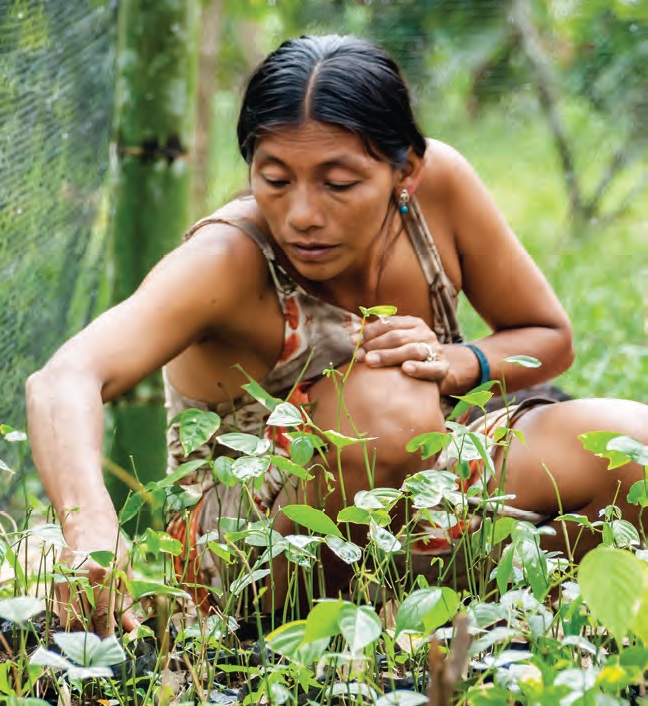
Heavy hunting pressure to supply up to 10 tonnes of wild meat every year to Ecuador’s largest wild meat market in Pompeya has led to the rapid depletion of all the large animal populations found in the nearby Yasuní Biosphere Reserve, a region consisting of more than one million hectares of rainforest in the Ecuadorian Amazon, with one of the highest levels of biodiversity in the world. Such exploitation places at risk the food security and livelihoods of the local 3000-strong Waorani people, an indigenous group living within the Reserve, who are committed to making efforts to conserve their resources, culture and way of life. Conservation of the region’s dwindling resources is therefore of the utmost urgency.

To this end, the project “Strengthening Biodiversity Conservation and Management in Waorani Territory: creating sustainable economic alternatives for diminishing wildlife trade” was initiated by TRAFFIC and the Association of Waorani Women of Ecuador (AMWAE) in 2010 that aimed to identify economic alternatives that would replace incomes generated from the sale of increasingly overexploited wild meat resources and maintain the variety of wild animals and plants that live in this region. TRAFFIC worked with some nine Waorani communities to devise strategies that would have multiple positive environmental and social impacts, not only to improve livelihoods and enhance food security, but also to promote sustainable use, empower women, offer job/income opportunities and increase territorial stewardship and economic integration.
TRAFFIC ARTICLE ON WAO CHOCOLATE jpg 2

A package of economic practices, the project says, has served to reduce the unsustainable use of resources while preserving and reinforcing the identity of an indigenous group and its cultural values, which too often in the region have been eroded or lost. In South America, traditional approaches for regulating the wild meat trade have been dominated by interventions which prioritize enforcement and control systems. The innovative initiatives described here, which are directly benefiting some 660 Waorani people. It demonstrates, according to the project, that, in the context of such high biodiversity, poverty and lack of institutional capacity to deal with illegality, implementing innovative sustainable economic alternatives, while simultaneously developing enforcement strategies, is the most viable way to reduce illegal wildlife trade and address resource depletion. Further, one of the key achievements of the project has been the empowerment and participation of the Waorani women in important decision-making processes such that they now command strong and prestigious roles which has been critical in revitalizing these communities.

One of the economic alternatives identified was the planting of cocoa trees to produce ingredients for top quality chocolate, which would not only provide a sustainable source of income but also raise the social profile of the Waorani.

Internship/thesis will be in one of the following fields

a) Organic production methods and certification
b) New economic activities and food/place security
c) Socio-economic and livelihood analyses of new economic activities

We are looking for students with knowledge in one or more of the following areas: organic agriculture, certification, rural sociology and sociology of food systems.

For more information contact Els Hegger (els.hegger@wur.nl) of Joost Jongerden (joost.jongerden@wur.nl)

Stage bij de Christenunie

Symposium

Door Monique Jongenburger (Boerefijn) – MSc-student International Development

Als onderdeel van mijn studie heb ik zes maanden stage gelopen bij de Tweede Kamerfractie van de ChristenUnie. Mijn stage bestond uit het ondersteunen van de beleidsmedewerker landbouw & natuur en daarnaast het schrijven van een nota over voedselverspilling.

De werkzaamheden tijdens mijn stage waren heel divers. Ik mocht concepten schrijven voor debatteksten, schriftelijke vragen en moties over allerlei onderwerpen, van asbestverwijdering in boerderijen tot genetische modificatie. Naast deze werkzaamheden heb ik me verdiept in het onderwerp voedselverspilling en hoe verspilling kan worden aangepakt op nationaal niveau. De start van deze nota was een mini-symposium met verschillende partijen in de keten (zie foto). Met de ideeën die tijdens dit symposium naar voren kwamen ben ik vervolgens aan de slag gegaan. Uiteindelijk bevat de nota zeven voorstellen van de ChristenUnie voor het kabinet. Op dit moment worden de laatste puntjes op de i gezet en daarna zal de nota worden aangeboden aan de staatssecretaris van Economische Zaken.

Voor meer info, neem contact op met Monique: monique.boerefijn@wur.nl

Request for (graduated) students (on short notice) interested in effective cooperation

The province of North-Brabant is organising two events in September and October and is looking for student who want to take part in the preparation and participate in various activities, such as sessions with young students on ‘learn to cooperate’.

This in the context “Learning about cooperation” in the European Social Innovation Week ESIW.nl) in Tilburg from 15 till 19 september 2014 and the Dutch Design Week (DDW.nl) – from 18 till 26 oktober 2014.
In a creative process concepts will be developed so that participants in both events experience cooperation. Input will be provided on themes such as trust, connectivity and translation in the context of the topsectors (such as AGRO).
Students of various disciplines can contact the organiser and do these activities in combination with other activities such as a secondment or master thesis. Follow-up activities are also possible. This can offer graduated students experience, as a step towards employment.

Interested students should directly contact: Ernest van Hezik
Advisor TGLE. Tel.: 06-53296993

VALUES IN PLACE – MSc Thesis opportunity on the role of values in sustainable places

At the rural Sociology Group we would like to do research on values, place and sustainability. Therefore we are looking for students who are interested in doing a MSc Thesis.

Place based approaches to sustainable development are increasingly favoured, assuming that place specificities really matter in the form of social, cultural and institutional characteristics. People shape places which is expressed in practices, relations, rules, symbols and place-identities. A central question is how human values play a role in place-shaping – aimed at sustainable development – and how to analyze and map values.

Values are not self-standing concepts which can be analysed as atomized issues, but intertwined, context determined, culturally varied and linked to how we see our self and how we perceive our environment. A value-driven perspective on sustainable place-shaping benefits dialogues based on people’s values and beliefs, and aims to provide a more in-depth insight in what people consider as worthwhile, feel responsible for and are willing to commit to in the context of their own place. This is relevant as we can see a trend towards forms of self-organisation, the ‘do-democracy’ and the participative society where people (are expected to) take responsibility for their own environment.

Our goal is to analyse how values are expressed in places, distinguishing between the following dimensions:
• The economic dimension: adding value to places;
• The intentional dimension: why people contribute to sustainable change in places
• The symbolic dimension: how people appreciate place and attach meanings to place
• The integral dimension: how cultural worldviews and levels of human behaviour play a role in place-shaping.
Does this make you curious and/or do you have an interest in this research theme, please contact Ina Horlings at: Lummina.Horlings@wur.nl